
Episode 49: Stress Is Stealing Your Body’s Healing Power
This episode is also available on:








Most people aren’t fighting for their lives, but their nervous system thinks they are. In this episode of the Beljanski Cancer Talk Show, Nathan Crane joins us to explain how chronic stress, fear, and fight-or-flight responses shut down healing, and how breath, meditation, and mindset shifts can help restore the body’s natural ability to repair and recover.
🔑 Three Key Takeaways
- Discover why living in constant fight-or-flight keeps the body stuck in survival mode instead of healing.
- Understand how stress, fear, and unresolved trauma can weaken immune response and influence whether illness progresses, returns, or resolves.
- Learn how simple tools like breathwork, meditation, and mindset shifts can help move the body into a parasympathetic state.
⏳ 00:00 Understanding the Impact of Stress on Health
⏳ 02:18 Nathan Crane’s Journey to Holistic Health
⏳ 05:19 The Role of the Nervous System in Healing
⏳ 13:29 Stress and Cancer: A Complex Relationship
⏳ 18:12 Mindset Shifts for Cancer Patients
⏳ 26:19 Practical Steps for Managing Stress
⏳ 31:27 Guided Meditation for Healing
⏳ 42:54 The Search for the Sacred: Nathan’s New Book
⏳ 45:55 The Belgianski Integrative Cancer Conference
Nathan Crane (00:00.142)
The problem is in modern society, 99 % of the time, you do not have to fight for your life. But your nervous system believes you’re fighting for your life. And so it’s taking the energy away from all the healing systems, immune system, all the rejuvenating factors. It’s increasing cortisol, it’s increasing neuroepinephrine, adrenaline, which is increasing inflammation in the body. And it’s sending all the energy to the fight or flight system, which means you’re not healing.
Sylvie Beljanski
Welcome to the Beljanski Cancer Talk Show where integrative science and holistic healing come together. I am Sylvie Beljanski and in each episode we explore nutrition, lifestyle, mental health and research-backed approaches to support the whole person through cancer and chronic diseases. Today I am pleased to have with me Nathan Crane. I’ve known him for a few years already and I think…
Having him around is a blessing and that’s why I wanted to have him on this podcast and have given him opportunity to share with you the gift of his journey and his experience. Nathan Crane is an inspirational speaker, meditation teacher, bestselling author, award-winning filmmaker, holistic health professional, and certified breast work and meditation teacher.
With over 20 years of experience in holistic health and spiritual practice, he brings a fresh and dynamic approach to helping people awaken to their potential and experience greater clarity, purpose, and happiness. So Nathan, thank you for joining the Beljanski Cancer Talk Show. It’s a pleasure having you with us today.
You have an amazing journey going from a very hard, difficult life to becoming a cancer holistic advocate. that now you have moved to this place of meditation, peace, and emotional place where you have found some kind of wisdom that you share with the rest of the world.
Sylvie Beljanski (02:18.182)
And that’s a beautiful journey. Would you tell us a little bit more about what happened to you and how you got there?
Nathan Crane
Thanks, Sylvie. Yeah, thanks for having me on your podcast and pleasure to see you and look forward to seeing you at the Badjanski Conference in June, by the way. I know it’s going to be a good one. You know, the short version of my life story is I grew up in Montana, goes in Belgrade, Montana, and I ended up homeless at 15, dealing with a tremendous amount of self-
doubt, stress, anxiety, fear, leading to depression, and even attempted suicide led me to drug addiction, alcohol addiction, and it just spiraled downhill from there. And it’s a long story and I actually share a lot of those stories and the lessons from them in the book that I just wrote that’s coming out soon where I was almost dead at 17, 18 years old and I had a beautiful family take me in.
And it kind of planted a seed and started me on this new journey, the spiritual journey. And so that was 2005. I was 18 years old. I moved to San Diego and I started my life over. And at that time I started reading motivational blogs. I started learning how to meditate. I started exercising, eating healthy. I stopped eating fast food. I stopped smoking cigarettes. It took me a number of years after to finally completely stop all alcohol. I stopped all drugs before that point.
My whole early 20s was this deep spiritual path. At times I was meditating hours and hours a day. I was spending a lot of time with Buddhist monks and Taoist masters. And I had a spiritual teacher who I was with almost every single day for about four or five years. You actually recently met him. He’s part of the Holistic Leadership Council, Arturo Gaetan. So he was one of really early spiritual mentors. And we really went deep into meditation and self-healing and power of.
Nathan Crane (04:19.84)
our thoughts and our minds and emotions. And so I continued this journey of like wanting to learn everything I could about the physical body, physical health. I was getting him to go to the gym with me and doing yoga and stuff like that. And he was, and I was, you know, teaching him about diet and physical health. And he was teaching about mental health and emotional health and spiritual health. And then I was spending the weekends with Buddhist monks at the monastery in Escondido. And once that kind of spiritual yearning, desire to want to
live life to the fullest, to truly be happy, healthy, vital, abundant, joyful, peaceful. Once that sparked in me at about 17, 18 years old, it’s just been a never-ending journey since. And over the last 20 years, it’s shown up in a lot of different ways. Whereas you said, I worked with cancer patients specifically for about 13 years. A lot of what I did with cancer was helping people to take control of their health from a holistic point of view. So yes, we focus on diet, nutrition, supplements, detoxification, cleaning up the heavy metals, helping reduce inflammation in the body, using integrative approaches, working with hundreds of doctors around the world and seeing incredible results with cancer patients, even reversing, you know, quote unquote, incurable stage four cancers by using these holistic and integrative methods. But a big foundation that I always implemented in my Conquering Cancer docuseries called The Missing Link in my book, Becoming Cancer Free, in our coaching programs and everything I did is I always came back to this foundation of we have to get control of the nervous system. We have to get your body into a safe mode out of fight or flight. We have to get your nervous system into parasympathetic, what I call parasympathetic mastery. I’ve been teaching this for many years is that once you’re in parasympathetic mastery, you master your parasympathetic nervous system.
then your body can actually start to heal itself.
Sylvie Beljanski (06:19.032)
When cancer enters your life, the questions don’t stop at treatment. You start asking, why? What else? And what more can I do to support my body? At the Beljanski Foundation, we believe cancer care deserves deeper answers, answers rooted in science, not in shortcuts.
For decades, groundbreaking molecular research by Dr. Mirko Beljanski explored how specific natural compounds selectively target cancer cells while spearing healthy ones. That work continues today through independent research, education, and global collaboration.
At Beljanski.org, you will find evidence-based resources, expert-led conferences, books, and conversations that explore integrative approaches to cancer and chronic disease alongside conventional care. Whether you are a patient, a caregiver, or practitioner, this is the place to learn, to question, and to think more expansively about healing.
Visit Beljanski.org to explore the research, attend upcoming events and connect with the Beljanski community. Because informed choices begin with people’s
The problem is with this go, go, go, go, go, go, go mentality we have for society, do more, achieve more, be more, then you’ll be happy, then you’ll be healthy, then you’ll be successful. That is causing people to be in sympathetic overload, which means the nervous system stays stuck or it’s constantly in or vacillating between this fight or flight and rejuvenation.
Nathan Crane (08:04.738)
Let’s be honest, most people today are stuck in fight or flight, chronic, low grade, fight or flight, sympathetic nervous system response. And what that means is when you’re in that state, your immune system is down regulated and it can’t do what it’s designed to do, which is identify, target, and eliminate cancer cells, as well as pathogens, arterio, viruses. And the more that we’re stuck in that sympathetic state, weaker our system is and the more we struggle with chronic diseases like cancer, heart disease, diabetes, autoimmune disease, all these chronic inflammatory diseases. And so what I’ve actually been helping people do for almost 20 years now, as I’ve been learning this, implementing the things into my own life, seeing the transformations through my own life, and then guiding others and teaching others through it, is really how to take back control of the mind, the thoughts, take back control of the nervous system and create a truly holistic picture of health and vitality and happiness in the body. You know, we all chase happiness in honestly a lot of the wrong places, but we don’t realize that if you’re truly happy or if you’re peaceful or you’re content, that’s the greatest solution you have to actually create health and healing in your body.
you know, we’re looking for health and healing and more pills and more supplements and more diet changes and all these things. And all those things are good. They’re part of the holistic strategy. But what I found in the patients that I worked with was if you’re only doing those things and you’re not focusing on the bottom part of the iceberg and the bottom part of the iceberg that’s hidden under the water, the massive part is the nervous system. And the people that we worked with when their nervous system gets in harmony, then all of sudden everything they’re doing seems to work better. The supplements work better. The diet works better. The nutrition works better. The detoxification works better because the body is functioning the way it’s supposed to. But what causes sympathetic nervous system overdrive? Stress, specifically chronic stress, anxiety, fear, worries, doubts.
Nathan Crane (10:19.17)
Worrying about the future, paying the bills, the debt collectors, what’s gonna happen to your child that just went away to college. All these worries, they kick on that sympathetic. Or the regrets of the past. All these things are kicking on the sympathetic. You’re driving in traffic, you yell at somebody, you’re in sympathetic. You know, it’s like, boom, sympathetic. You know you’re in sympathetic, because you feel it. What happens? Increases heart rate.
you cut me.
Nathan Crane (10:47.278)
Sometimes you might feel sweaty, tension. know, if you just look at your shoulder, most people are sitting in sympathetic right now, listening, and they don’t even know it. Take your shoulders and see if you can drop them down. And if you can drop them down, you know you’re already in a tight situation. Your body’s already tense and tight. And that’s a place that is causing your nervous system to be dysregulated out of harmony and preventing your body from being able to truly heal.
itself. And so this is all the cool thing is this is all within our control. They need to change the name. The name of parasympathetic and sympathetic is autonomic, which means automatic. All of these automatic functioning is happening. Your digestive system and your immune system, your lymphatics, all this stuff is tied into the autonomic nervous system, which is regulated by the vagus nerve, which determines, you know,
what it tells the different organs to do. Hey, let’s close the sphincter to the bladder. Let’s open the bladder. Let’s increase blood pressure, decrease blood pressure. Let’s send blood and nutrients out to the limbs or let’s bring them in towards the organs. All of that’s controlled by the nervous system. Let’s send out natural killer cells, T cells, B cells, go gobble up all those cancer cells and all those invaders, or let’s hold it back. Let’s not do that. Let’s put the energy
into the legs and the arms because we might have to fight or run for our lives. problem is in modern society, 89 % of the time, you do not have to fight for your life. But your nervous system believes you’re fighting for your life. And so it’s taking the energy away from all the healing systems, immune system, all the rejuvenating factors. It’s increasing cortisol, it’s increasing neuroepinephrine, adrenaline, which is increasing inflammation in the body, and it’s sending all the energy
to the fight or flight system, which means you’re not healing. And so if we want to get into that healing state, as often as possible, we have to use certain, one, you have to have the knowledge, and then two, there are tools and strategies that I teach that help people over time take back control of that, nervous system. And what happens is not only do you feel more calm and peaceful and content as basically a side effect,
Nathan Crane (13:09.176)
But that calm and content and peace in return makes your body go into healing and rejuvenation and digestion and relaxation, all the things that create healing in the body. So I know that was a mouthful and we covered a lot, but let me hand it back to you in case you want to go.
So would you consider, for example, that for people, were most specifically speaking of people with cancer and helping them, would you consider that it is because they are at a place of stress that they are not doing well? Would you consider that stress is a cause of cancer? Stress is a cause to prevent them to overcome cancer?
stress is a cause of for cancer coming back. But at the same time, most people would tell you that, I mean, it’s a very stressful diagnosis. When they hear you have cancer, suddenly, I mean, it looks like that feels like the sky is falling on them. And then they are thinking of all the responsibilities, the kids that they are responsible for. It’s a very stressful situation. How do you practically can help people in this extreme situation and help them relax.
The short answer is yes to all of those questions. Stress is directly related to whether cancer may show up in the body, whether cancer’s going to come back in the body, whether cancer remains in the body. All of these things are directly related to stress. And we know it. It’s all scientifically backed. And we’ve known it for a long, long time. The problem is most people don’t know it. If you’re a health researcher and you really look at the data and you’ve been looking at
Nathan Crane (15:01.58)
hundreds and hundreds if not thousands of studies like I have and then hundreds and hundreds of interviews with the top leading functional medical doctors on the planet and worked with many clients and patients. You will see that stress is directly related to cancer in the body. And we also know that many cancers are directly related to some trauma that happened. And the trauma that happened got stored in the body. Dr. Candice Pert’s work in the, this was
well over 20 years ago, I believe, or even in the 90s. She already identified the whole pathway of when you have a traumatic experience and how you release neuropeptides and those neuropeptides can stay stuck in tissues and organs in the body and they are chemoattractants and they can cause chronic inflammation. That chronic inflammation can lead to diseases like cancer. And so how do we get those neuropeptides out of the system? Well, we have to do
This is where the ancient wisdom comes in, is our ancient ancestors already knew all of this thousands of years ago. And the cool thing is all our modern science is backing up and saying, yeah, all that stuff actually works to flush these neuropeptides out of the system to rebalance and harmonize our nervous system so our immune system can do its job. So on one end, it’s important that if you have cancer, you’re concerned about cancer, you realize how essential your nervous system is in the process. That’s so, like to me, it’s 80 % of it. It’s 80 % of it. So if you’re not spreading 80 % of your time and energy and focus, understanding the nervous system, how to regulate it, which we’ll get into some things you can even do today, how to regulate it, how to harmonize it, and then doing all the other things that can support the diet, the nutrition, the supplements, exercise, all that stuff, right? All that stuff supports, but to me, that’s 20%.
80% the whole cake, the whole organic, vegan, healthy cake is the nervous system and is balancing harmony, harmonizing. And that starts with the mind. It starts with the thoughts and emotions. It goes down to the subconscious mind as well. But our physiology, by changing our physiology and using things like our breath, we can take back control of the nervous systems. I just want to say like, that’s so important because I talked to people about this in there.
Nathan Crane (17:28.078)
They’re like, yeah, that sounds good. And then they don’t do anything and they don’t change anything. And they go back to buying a thousand dollars of supplements a month and they never address the 80 % of what could actually help them. Right. And so if you focus on that and make it a priority, then everything else can work so much better. And we know that it’s scientifically validated that when your nervous system is in harmony and your immune system is working properly, whatever other protocols you do, they can have a potentially much better impact on your body.
So what would be the first practical baby step you would recommend for somebody who has been diagnosed with cancer and is overwhelmed with fear and stress?
Yes. So first step, okay, is let’s look at the mind. First step, and this also comes from research that was done on cancer conquerors or cancer thrivers, those who are most successful in overcoming cancer and being healthier and happier in life versus those who are not. And the first one is how you look at your diagnosis and how you look at your prognosis. And in this
And in this research, what they found was if you deny the prognosis, but accept the diagnosis, you will be significantly in a much better place mentally, emotionally, and physically. And what that means is the prognosis, you have three months left to live. You have a year left to live if you do this, if you don’t do that, right? Whatever the prognosis is, you say, no, I don’t accept that. I don’t accept what you’re telling me, which is these statistics are based on averages of
Nathan Crane (19:11.54)
all kinds of different people, different backgrounds, different lives, different genetics, the things they do and don’t do. And so how can that huge massive average of a prognosis you told me, have six months left to live if I don’t do chemo, maybe I’ll live three years if I do chemo, that has nothing to do with you and your mind and your body and your life and who you are and where you’re at and your background and where you come from and your potential and your connection to God and your belief system has nothing to do with you at all.
And so where the fear comes is the prognosis. Prognosis, right? You have cancer, here’s your odds, here’s what you need to do, here’s what will happen if you don’t, which is, as Dr. Thomas Lodi often says, is witchcraft, basically. He’s like, doctors should be in prison for that. I don’t necessarily say that, but he does. And, you know, he’s saying, look, you are putting witchcraft on people. And I’ve seen it. It is, it destroys people. They’re totally fine. And then they’re told, you have X amount of time left living there, whole life goes downhill. So you have to deny the prognosis. No, I don’t accept that. I will find the way that is meant for me, that’s best for me to live the healthiest, happiest that I can with whatever time I have left on Earth.
When you are facing cancer, you are suddenly facing a myriad of questions. Questions about nutrition, lifestyle, mental and emotional support, and how integrative approaches can work alongside conventional care.
The Beljanski Integrative Cancer Conference brings the conversation together in one place. From June 26 to 28, join leading oncologists, integrative physicians, researchers, and survivors in San Diego, California for three days of science-informed whole-person cancer care.
Sylvie Beljanski (21:07.126)
These live events expose evidence-based integrative strategies, emerging research, and practical tools you can apply immediately while connecting with the community that understands the journey. Whether you attend in persona virtually, this conference is designed to educate, empower, and support informed decision-making. Learn more and reserve your spot at integrativecancerconference.com.
because better outcomes begin with better conversation.
That’s number one. Number two is accept the diagnosis. So, and that means you don’t deny it, right? You may be told you have cancer, but oftentimes we go into denial or we go into blame. And neither of those are going to be helpful. Blaming God, blaming your spouse, blaming yourself.
None of those are going to be helpful. So you accept the diagnosis. This is what I have right now. This is part of my life. This is what God has given me. The universe has given me. This is what I’m going to deal with. And I’m going to find a way to use this for my highest good, to become the best human being I can possibly be. Years ago when I was producing cancer conferences in San Diego, I would sit and I’d talk with one person who had cancer who said it was the worst thing that ever happened to them.
Another person with the exact same cancer, same age, same background, same, you know, just about everything and said cancer is the best thing that ever happened to them. And they both still had cancer. And so I’d see it and I’d ask them and I’d say, why is this the worst thing that ever happened to you? And oh, you know, it’s, I’m filled with fear and I, that’s all I can think about. And my life is terrible now and I have pain and it’s, and it’s, you know, I can’t do this and it’s.
Nathan Crane (23:02.382)
the worst thing and it’s so-and-so’s fault and so there’s blame, there’s judgment, there’s fear around it. And I’m not saying, you know, you can’t have that. That’s your right to feel that way. But it was the worst thing that happened to them. In their mind, it was terrible. It continued to spiral them down and it didn’t help them move forward in any way. In fact, it made their life worse because of their outlook on it. And here’s another person still with the same diagnosis.
and yet living happy, smiling, joyfully saying, cancer is the best thing that ever happened to me. And I said, okay, tell me why. They said, because it made me learn to love my body more and to take more ownership over what goes in my mouth and to learn about diet and health and to get out of that dysfunctional relationship I was in and started loving myself more. And I started meditating and I started exercising and I started loving people. started.
I stopped that job I hated and I started gardening. Like all these stories where people took back control of their life with joy. With joy, they started living with joy again because they looked at cancer as an opportunity to grow as a human being and to be happier versus the mindset of cancer’s the worst thing that ever happened to me and it’s gonna continue to make my life worse. What’s the difference between these two people? Yeah, what’s the difference between these two people?
You’re asking me? Well, their mindset where they look at the disease, the decisions they make upstairs to look at the disease as a fatality and as a stress and as a thing that is going to make them miserable, or they look at it as an opportunity to grow and to learn and to, and an opening actually to a…better understanding and awareness of their life. Yes.
Nathan Crane (24:55.156)
Exactly, exactly. And that’s it. So it’s mindset. Mindset is everything when it comes to cancer, when it comes to anything related to health in our lives, in our relationships. It’s about mindset, right? Is this person against me or is this person just living the way that they were conditioned to live, they were trained to live, they were brought up and that’s the way they’re living and it has nothing to with me. In fact, maybe I can.
become more calm and patient and loving in myself, and that I can be a better person to be around them. It’s all about our mindset. the world is against me. God’s against me. It’s all survival out there, survival of the fittest. And then your life looks that way. It’s always you’re up against another challenge and everything’s attacking you and nobody’s supporting you. We’re versus you just switch your mindset.
Everything’s working in my favor. God loves me and is supporting me. The universe is supporting everything I do. You know what? Miracles happen all the time. If you look at the little things to be grateful for, you see that life is actually on your side all the time. But where you put your focus, where your attention goes, energy flows, right? Where your focus goes, energy flows. And so where we focus, we’re going to bring more of that into our lives, into our minds, into our bodies, into our…
whether our body is able to heal itself or not. So getting control of the mind is essential. And this is one thing that none of us were really taught. Most of us were not taught growing up is how do you get control of the mind? How do you get control of your thoughts and emotions? Because it’s the thoughts and emotions that run off the rails. Boom, you have a worry and then it just starts spiraling out of control. Well, what if this and then that and then this and what about this and that and that? And now you’re in sympathetic again, right? And you’re in fight or flight. Now your body is not healing itself.
So the way is you have to get reins back on that. So these are three things. One is, you ask simple things people can do. Number one, completely deny the prognosis and change that in your mindset. Number two, accept the diagnosis. Just say, this is what I’m dealt with. And you know what? My spiritual teacher, Gurudev Sri Sri Ravishankar, he says that nature or the universe or God will never give you a challenge that you’re not equipped to deal with.
Nathan Crane (27:19.01)
to handle. And I look at that and I’m like, yeah, it’s true. Every major challenge I’ve ever had in my life, the health conditions I’ve gone through, the being homeless, the drug addiction, the loss of businesses, the loss of family, divorce, you name it, every major challenge I’ve ever been to in my life. If I kept my mind focused and I kept looking for solutions and I stayed focused on being positive throughout it, being honest with reality, but being positive, looking for solutions.
I always found a way through and something better on the other side. And so it’s so true and I see that in so many people’s lives, not just my own. It is your outlook and your perspective. So the third thing is really work on the mind, on where you’re putting your thoughts and the best solution for that, the best tool we have that goes back thousands and thousands and thousands of years that is also backed up by thousands of studies now.
today, probably thousands, have to look how many, so many studies. It’s two things is one is our breath. And the second is meditation. Breath allows us to gain control over the nervous system and the mind. And meditation allows us to let these thoughts and emotions and what the ancient in Sanskrit, from India call, what we call impressions or the Sanskrit word is Samskaras, impressions.
these deep impressions, rooted impressions of beliefs and ideas and systematic subconscious programming that’s happened for a very, very long time. It basically determines, as my colleague Bruce Lipton teaches, 95 % of your daily actions and thoughts come out of your subconscious. So if your subconscious is directing your life, 95 % of your life,
then you really should know what’s going on in your subconscious. What are these impressions? What are these samskaras? Well, if you look at your life, you can see what they are. They show you what they are. There’s the mere reflection. If your life is one of constant struggle and worry and doubt and fear and anger and physical illness and stress, well, that’s what your impressions are bringing to you. Meditation, just sitting in meditation. And we can even do a little simple breathing practice and a little meditation for your
Nathan Crane (29:41.122)
viewers and listeners, just even a little bit every day will clean and clear out these impressions and what it’ll do is it’ll start to give you more control, more agency over your thoughts and your mind and your nervous system and your immune system. So then you can actually become the director of your life and your health instead of just a bystander sitting in a chair watching the movie and watching your life fall apart.
When facing cancer, the choices can feel overwhelming, conflicting advices, endless options, and very little clarity. At Maison Beljanski, everything begins with science. For decades, molecular biologist Dr. Mirko Beljanski studied how specific plant extracts interact with cancer cells, work that continues today through independent research and real-world use.
Maison Beljanski offers carefully formulated supplements inspired by that research, along with targeted support for immune health, cellular resilience, digestion, detoxification, and overall wellness. You will also find educational books, organic teas, personalized health coaching, and wellness programs designed to support the whole person, not just the diagnosis. This is not about quick fixes.
It’s about informed choices, thoughtful formulations, and supporting the body alongside conventional care. Explore the products, the research, and the resources at maisonbeljanski.com. Because when science leads, wellness follows.
So yes, actually I would love, I think the audience would love to have the privilege to be guided by you on a meditation.
Nathan Crane (31:37.326)
Yeah, so. Yeah, yeah, of course. So yeah, if you want, we could do that now. Obviously those who are driving, don’t do this while you’re driving. If you’re listening, pull over and do it or do it later. But basically, a little bit of context on this and then we’ll do something. Your breath holds the secrets. This is what the ancient wisdom keepers knew, that our breath holds the secrets to so much of our health and well-being.
Nathan Crane (32:05.26)
as well as our spiritual awakening, that the breath is not just oxygen, but in fact it is the vehicle for life force energy. was called prana in the Indian tradition or qi in the Chinese tradition. Traditional Chinese medicine you may have heard of qi or qigong or prana, pranayama. Pranayama is breathwork practices. So if you’ve heard of breathwork today,
that all comes from thousands and thousands of years ago called Pranayama, which means to, there’s a couple of meanings. One is to expand our capacity to store and utilize prana. And prana means life force energy. That’s your life force energy, that’s a vitality. And we get prana from multiple sources. One of the easiest access we get source of prana from is through our breath. It’s attached to the air.
It comes in, which is why you can do these breathing practices and within a few minutes you can have significantly more energy. Why is that? It’s not just oxygen giving you energy. It is, and you can overdo it on oxygen and you won’t feel more energy. It’s because the life force energy is coming through the air into our bodies. It also comes from food, from sunshine, from nature, from other places, which is why these things make you feel so good. But we can control our nervous system, our mind.
our entire body through breathing practices, pranayama practices. And I’ll guide just a simple one here. This comes from some of the ancient texts out of India. And this is something you can do just if you’re ever feeling stressed at all. And so sitting comfortably, ideally your spine is erect and you can close your eyes. This practice is called Samvritti.
which is, you may have heard of box breathing. There’s a couple versions of it. Samvritti means balanced breathing or box breathing. And with eyes closed, palms can be face up on your lap. Sitting comfortably, let’s take a deep breath in through the nose. And let it go. And on my count, breathing in through the nose, in two, three.
Nathan Crane (34:29.23)
Hold the breath.
Nathan Crane (34:33.784)
Breathe out through the nose.
Nathan Crane (34:38.434)
Hold t-
Breathe in through the nose.
Nathan Crane (34:46.958)
Breathe out through the nose.
Nathan Crane (34:55.324)
Into the nose, two, three, four. Hold, two, three, four. Breathe out, two, three, four. Hold, two, three, four. In, two, three, four. Hold, two, three, four. Out, two, three, four. Hold, two, three,
In two three four, whole two three four, out two three four, whole two three four. In two three four, whole two three four, out two three four, whole two
three four. In two three four. Hold two three four. Out two three four. Hold two three four. Last round. In two three four. Hold two three four. Out two three four.
Hold, two, three, four, one, and relax. Two breaths, return to normal, in and out through the nose, eyes closed.
Nathan Crane (36:43.946)
Noticing how you feel.
Nathan Crane (36:50.286)
observing your mind, your body. Notice the difference from just a couple of minutes ago when we started.
Nathan Crane (37:01.688)
Take a deep breath in to the nose.
And let it go.
Nathan Crane (37:10.506)
When you’re ready, you can open your eyes.
Sylvie Beljanski (37:25.614)
Thank you.
How do you feel?
Thank you for that. Yeah, yeah, it’s very, very relaxing experience. Thank you for that.
Nathan Crane
very relaxing, right? And so, you know, this is one of many different breathing practices. Yeah. Yeah, this is a very, very basic, very simple pranayama, very beginner version. And there are more experienced, more profound versions that will not only calm your nervous system, but then also energize you. So you can see even just a couple of minutes of some very basic breathing.
can start to calm your nervous system. Now, when you’re in a sympathetic state, very often, which most people are, in a chronic, low-grade, inflammatory, sympathetic state, you doing something like this once a day, it will help, but it won’t be enough. It will at least help center you in that moment, which is good. So it’s better than nothing. But when you’re dealing with a chronic health condition like cancer, you need bigger
Nathan Crane (38:33.426)
know, manpower, bigger woman power. You need more breathing practices that will go much deeper into the nervous system, that will start to retrain your entire nervous system, retrain your brain, get you out of the amygdala and the limbic system, which is where depression is stemming from, which is where anxiety and these things come from and is fight or flight. And so what these breathing practices do, even this one, which has a lot of scientific evidence, very…
Simple, you do eight to 10 rounds of this. If you’re starting to feel overwhelmed, feeling just anxious, just sit down and just do eight or 10 rounds and it’ll start to calm your nervous system, which is great. But if you really want to start going in and cleansing and nourishing and reharmonizing your nervous system so your body can get into that healing state, then you need to go deeper into something like sky breath, for example, is one.
I volunteer for the Art of Living Foundation as a certified teacher. And so we teach Sky Breath courses, which has over hundred studies in reducing cortisol and activating immunity, in reducing stress and improving sleep, all kinds of benefits. It’s called Sky Like the Sky, Sky Breath. And I’m teaching those courses online. For me, this is my volunteer work and it’s changing so many people’s lives. And that will give you a daily practice.
It’s a three day workshop, you do a few hours a day. It’s very transformational. And then it’ll give you a daily at home practice. It’ll actually start to re nourish, re harmonize, re center your entire nervous system. And this is where we see so many incredible things happen for people. So, you know, I’ll give a link. People can go learn more about that. It’s nathancrane.com forward slash sky breath.
Nathan Craner, conforce, sky breath. And I’ll post every time I’m doing a new course there. This changed my life. And so I’m just teaching these as a volunteer because I know how much it can change other people’s lives for the better. The key here though is yes, getting a daily practice like that. And then even getting into like meditation and starting to bring in like sky breath. What it does is it cleanses your whole system, but then it takes you into a deep state of meditation. And so getting a daily meditation practice will also be incredibly.
Nathan Crane (40:54.958)
powerful and I lead free meditations on YouTube as well at Meditation with Nathan so you can you know go listen to some of those free guided meditations, but this is not just Woo-woo, you know People kind of like this is woo-woo new-age stuff. No, it’s not first of all This has been around for thousands of years that have been scientifically verified by These were scientists that were discovering this stuff because they would sit in meditation, they would discover how all this works and then they would scientifically verify it with other people and replicate, replicate, replicate. And now they do the same thing in laboratories and go, oh wow, yeah, that’s reducing inflammatory markers and oh, it’s activating the immune system and it’s killing cancer cells. Oh, it’s sending more natural killer cells. Oh, it’s reducing cortisol by 28 % and oh my gosh, it’s reducing adrenaline and it’s increasing.
increasing sleep and human growth hormone and all this cool stuff.
Science is finally, modern science is finally catching up.
It’s catching up and it’s showing in a really cool way for people who really want to know. Like me, I like to geek out and nerd out on a lot of that stuff. I’m like, that’s really cool how that works. But the simple of it is this is the core. This should be breath work, meditation.
Nathan Crane (42:23.47)
spiritual knowledge, positive psychology, these things should be the foundation of any cancer healing protocol. And if they’re not, you need to find somebody to work with that can help you through that. You know, and that’s, yes. And so, you know, if you’re interested in that kind of stuff too, you can just go to nathancrane.com, get on my newsletter, I’ll connect you with all those things and resources that you need to know about. You can just reach out, email us, you know, or reach out on Instagram or whatever. And I’m happy to…
connect you into the right direction.
And you have a new book coming up. Can you tell us a little bit about that?
Yeah, the book is called The Search for the Sacred. It’s basically the last 20 years of my life and even before that of, you know, all the struggles with depression, with anxiety, with self-doubt, addiction, and all the spiritual teachings and the psychological practices and all the mystical experiences and things like that that completely have shifted and transformed my life from being hopeless
helpless, sick, addicted, lost to honestly living my dreams and living happier and healthier than I’ve ever been in my life. And so it’s a lot of these stories, but in a way that is very personal growth focused and very spiritual focused so that people who read it, there are takeaways there for them. There are action steps they may want to implement. There are strategies and protocols and things that you can start doing.
Nathan Crane (43:59.144)
I teach something called the SOM method, which is a mindset principle. It’s helped me overcome just about every major strategy I’ve ever been through or every major challenge I’ve been through in my life. And so I teach that in the book and share some very crazy mystical experiences and then what that means for me and what it may mean for you. And yeah, just overcoming these challenges. So it’s called the search for the sacred, a journey from suffering and addiction to healing and awakening. And that’ll be
If you’re on my newsletter, we’ll email that out to everybody when it’s ready. But yeah, it’s been a labor of love this whole past year and I’m excited to share that. It’s a little, I’m sharing some really, really crazy stories that I’ve never shared with anybody before. So it’s quite revealing and raw and vulnerable, but I think, you know, we need that in today’s world so we can open up and feel that, hey, we’re not alone with this stuff.
We’re all going through a of the same stuff.
Yeah. And I just happened to have been blessed to learn some things along the way that have helped me, you know, helped me deal with it. I’m overcoming it really.
And you are also going to join us in San Diego for the Beljanski Integrative Cancer Conference. What are you going to, what can you tell us about going there and what are you looking to share?
Nathan Crane (45:26.272)
Yeah, the Beljanski Integrative Cancer Conference. I’m excited. This will be the third year, right? The last two years I’ve been there actually have helped produce it and it just keeps getting better every year. So I’m excited to see what’s going to be happening this next year. I’m just coming as a speaker this time and we’ll be sharing some really cutting edge stuff with people specifically about nervous system regulation and cancer and help go deeper into this for people. What the Beljanski Integrative Cancer Conference
does is it brings hope and inspiration and real tools and real strategies based in science to help people deal with and support themselves with cancer or loved one with cancer or their patients with cancer or even prevent cancer. The speakers are top-notch. The knowledge and information is next level. The community is strong and you know, we have a good time.
It’s for a good cause as well. You know, the funds go towards furthering cancer research into natural solutions for cancer, which I love. And it brings a community together to learn, to grow, to be inspired, to be empowered so that cancer doesn’t have to feel so much like a death sentence. But in fact, maybe it could be that wake up call, a wake up call that says, hey, you know what? I’m ready to take back.
more control of my life, not in the sense that I to control everything, but like, I can take control of my emotions and how I feel in my mind and what I choose to do instead of being a ping pong ball in society, everything bouncing me around and I’m at everybody else’s will, that you get more centered in yourself, you get more calm and peaceful in yourself, you get more empowered inside yourself so you can take better actions for your own life.
Sylvie Beljanski
Thank you. Thank you, Nathan. And that was awesome. And we look forward to seeing you in San Diego and to read your book when it comes out.
Nathan Crane (47:26.572)
Yes, thank you, Sylvie. Thanks for having me and appreciate you so much. I wish everybody so much health and happiness.
Sylvie Beljanski
Thank you. Thank you, Nathan. Thank you for listening to the Beljanski Cancer Talk Show. If this conversation supported or inspired you, please follow the podcast, share it with someone who may benefit, and leave a review to help us discover these integrative perspectives. For more resources and to see what we offer, please visit Beljanski.org.
Nathan Crane is an inspirational speaker, meditation teacher, bestselling author, and award-winning filmmaker with over two decades of experience in holistic health and spiritual practice. His work focuses on helping individuals regain clarity, purpose, and vitality by addressing the mind–body connection and nervous system regulation.
Having overcome homelessness, addiction, depression, and severe emotional trauma in his youth, Nathan brings lived experience to his teaching. He has worked extensively with individuals facing cancer and chronic illness, emphasizing breathwork, meditation, and mindset as foundational tools for restoring balance, resilience, and healing.
Connect with Nathan Crane


Related Episodes
Episode 40: What Are the Best Natural Ways to Boost Immunity? Expert Insights with Sylvie Beljanski
Is your immune system defending you—or turning against you? Discover the simple science-backed shifts to protect your health [...]
Stream Now
Episode 44: How Red Light Therapy Targets Cancer Cells and Heals the Body featuring Jonathan Otto
Jonathan discusses the benefits of Red Light Therapy, a treatment supported by over 120 years of clinical [...]
Stream Now
Episode 47: Most Cancer Research Never Reaches Patients. AI Is Changing That featuring Mark Taylor
Mark Taylor shares how AI is making vast cancer research more accessible to patients and [...]
Stream Now
Episode 38: How Naturopathic Oncology Is Changing Cancer Care with Dr. Dan Rubin, ND, FABNO
Dr. Dan Rubin reveals how naturopathic oncology and the Resilience Model are transforming cancer care with integrative, personalized [...]
Stream Now
Keep yourself updated!
Sign up below if you want to hear more about the weekly updates of The Beljanski Cancer Talk Show!
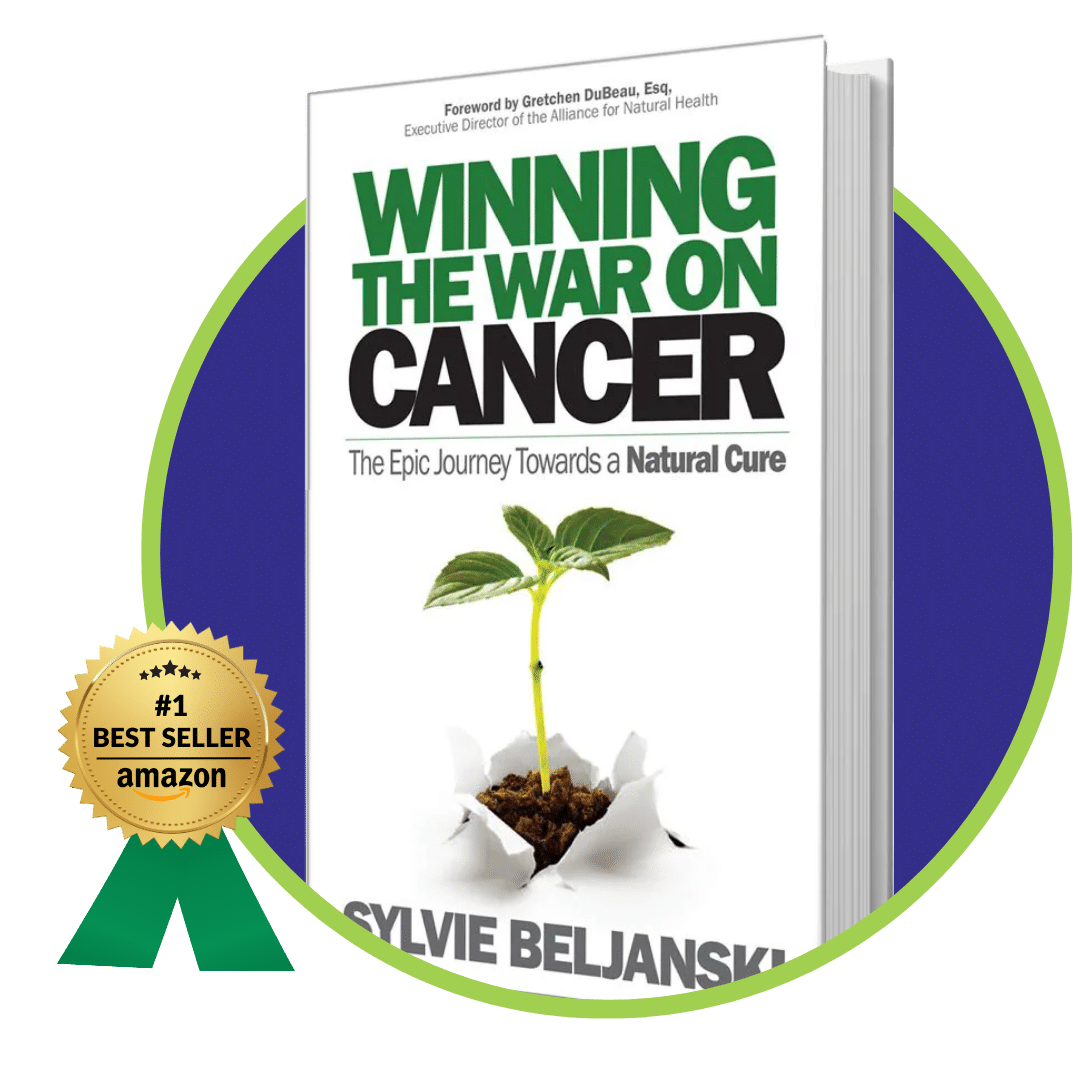
Award-Winning Book On Naturally Fighting Cancer
“For me personally, I think that Winning the War on Cancer by Sylvie Beljanski is one of those books that people should read. I have for a long time believed more in natural remedies than pharmaceutical cures, so I was involuntarily drawn to read the book.
It still preys on my mind on how the government can take up war against something that can save a lot of lives. I mean I know that a sort of thing like a more natural cure would likely actively threaten the pharmaceutical industry, but isn’t the industry on the side of saving people with something that has very little, or indeed no, toxicity at all? It’s so eye-opening and harrowing and I can’t yet state how I feel about everything that I learned.
I would recommend the book to anyone because many people these days are constantly being kept in the dark about natural remedies. What I love most about the book is that, though the book’s main point is cancer and its treatment, it also touches on areas that are vital to leading a healthy life. It points out the importance of detoxifying our body, especially since we live in a world where toxins are constantly released into the air by our technological marvels.”
4 out of 4 stars – Review by Nmesoma – OnlineBookClub.Org