Episode 47: Most Cancer Research Never Reaches Patients. AI Is Changing That featuring Mark Taylor
This episode is also available on:






Most cancer research never reaches patients in a clear, usable way.
In this episode of The Beljanski Cancer Talk Show, Mark Taylor, Founder and CEO of Patient Led Oncology and the Hacking Cancer Research Portal, explains how artificial intelligence is helping organize and navigate cancer research for patients and doctors. We explore how AI-powered research tools, integrative oncology insights, and clinical studies can help reduce information overload as cancer research continues to expand rapidly.
Mark Taylor is the Founder and CEO of Patient Led Oncology and the Hacking Cancer Research Portal, platforms focused on improving access to cancer research and helping patients and clinicians better understand available scientific evidence.
In this conversation, we discuss why so much cancer research never reaches patients, how AI can structure and interpret clinical studies, and how integrative oncology research is being cataloged and reviewed. The episode also touches on patient-led research, emotional health, and the challenges doctors face in keeping up with rapidly expanding medical knowledge.
This discussion focuses on education, research access, and decision support. It does not provide medical advice or treatment recommendations
🔑 Key Takeaways:
• Personal cancer scare and early detection limits
• Information gaps in conventional oncology
• Patients navigating research independently
• Clinical studies not reaching real-world care
• AI structuring cancer research at scale
• Integrative oncology evidence mapping
• Research filtering by cancer type and access
• Budget and location shaping real options
• Emotional health and stress factors
• Future of patient-led research system
⏳ 00:00 Introduction
⏳ 02:22 The Concept of Patient-Led Oncology
⏳ 07:39 Navigating the Hacking Cancer Portal
⏳ 12:34 Endgame Strategy Map for Cancer
⏳ 17:47 Comprehensive Cancer Testing
⏳ 19:32 Accessing the Hacking Cancer Database
⏳ 20:22 AI Tools for Cancer Research
⏳ 20:55 Personalized Coaching Sessions
⏳ 23:30 Mental Health and Cancer
⏳ 25:28 Psychedelics and Alternative Therapies
⏳ 33:06 Global Perspectives on Oncology
⏳ 34:12 Conclusion and Resources
Introduction and Guest Welcome
Mark Taylor: By doctor number 10, I found I was actually educating the doctor and I thought, “This is crazy. It’s cancer. How is it that doctors cannot know everything in such an important field?”
Victor Dwyer: Hey, everyone! Welcome to today’s episode of The Beljanski Cancer Talk Show. We’re joined today by Mark Taylor, Founder and CEO of Patient Led Oncology and the Hacking Cancer Research Portal.
Diagnosed with cancer in 2016 and denied standard care, he made it a mission to help cancer patients find effective integrative solutions supported by real world data.
Get ready for a powerful conversation on patient led cancer care, the Hacking Cancer Research Portal, and what an end game strategy map for cancer might look like.
Sylvie Beljanski: Hello, Mark and welcome to The Beljanski Cancer Talk Show. We are delighted to have you today from Hong Kong, and I actually met you in, I heard you talk in London a few months ago. It was a Yes To Life conference, and I was really blown away by your presentation and the idea of a map of resources for patients suffering from cancer.
I thought it was so innovative and so helpful idea, I wanted to have you come here at this podcast and explain what this is about. But first of all, because our audience is mostly here in the states, is this resource available to American Cancer patients?
Mark Taylor: Yes, it is. Yeah. We’re not selective. We have two broad clients. So, our first target were doctors themselves. So, we’ve got some US doctor clients because they’re the people that really need to be kept up to date with the research, but the online resource is available for everyone on hacking cancer health.
And we have a Facebook group called Patient Led Oncology, which we publish, like, research that we think could be useful for patients as well.
The Concept of Patient-Led Oncology
Sylvie Beljanski: Okay. So can you explain to us what is this map about and how it can help the patients and also their doctors?
Mark Taylor: Yeah, so I, it’s, it’s probably best me introducing how I got into it.
It started with me having a cancer scare. So I had elevated tumor markers. I was going for scans. There was a biopsy taken for my pancreas. It was inconclusive. And then I used to play hockey with a naturopath and he suggested this test called Circulating Tumor Cell Test. And I ignored it for a while ’cause I was like, no one was really talking about it on the internet when I searched into Google. And then I was persuaded. I thought there’s nothing to lose. So I did the test and it came up positive for CTCs.
Sylvie Beljanski: What was the name of the test?
Mark Taylor: It’s the RGCC Onconomics Plus Test.
Sylvie Beljanski: RGCC. Yes. We have been working with them also for years.
Mark Taylor: Oh yes, of course. Yeah. Your products are, a lot of the products are mentioned and they test, on the test. So, it came up positive, and then I spoke to a surgeon and I said, what do I do? ‘Cause it was very early stage. There was, the biopsy was inconclusive. And the surgeon took me aside and I said, I recommend you look into alternative medicine, but don’t tell anyone I told you about this ’cause it, it’s not conventional medicine he was directing me to.
And I was a non-believer in alternative medicine. I brought up in finance and trusting the medical system would look after me and, and I started exploring alternative medicine with cancer. And then, and going through the journey that most cancer patients go through, I think, these days, particularly at the terminal stage or where conventional medicine really doesn’t have a solution, which was for me because they were unwilling to treat me in the conventional medical system with just CTCs, which is identical, identifying at a very early stage of cancer.
So, I just panicked and I ran around and I started reading everything I could. I just flew to any doctor I could that had a solution. And the first treatment I did, which was high dose vitamin C, seemed to work. My tumor marker started falling. My CTC started falling. But then after a while they started creeping back up.
And then I thought, so I understood the concept of resistance coming to treatment, and I thought I need to find other things that I’m not resistant to. So I just, I literally flew around to as many doctors as I could and had consults with many doctors as I could around the world. And now that number’s probably up to 50.
But at number 10 I realized that each doctor I was seeing had something that they were uniquely intelligent about, and knowledgeable that they practiced, and then a whole gap in their armory that they knew nothing about. And by doctor number 10, I found I was actually educating the doctor.
And I thought, “This is crazy. It’s cancer. How is it that doctors cannot know everything in such an important field?” And I came up with this concept of, of collating the research for them because I realized it was very difficult for doctors to keep on top of the research.
So that, that was the, that was where the idea came up. And, and then along the way I created this Facebook group, Patient Led Oncology, to collect information from other patients who were also seeing experimental doctors to find out what other doctors were doing. And I, and then through doing this, what I realized is, let’s say I had a patient who was with a doctor in Malaysia and they would do a whole host of things. Some things I knew nothing about. I would go away and do research, but I’d find that the research would always be there. So, when you started searching on PubMed and things like that, you would always be able to find out the logic behind what the doctors were doing. And it was stored on all these research databases.
And then we thought, why don’t we just try and collect all the research that’s out there that can help cancer patients that your traditional oncologist is not gonna tell you about? And that started this idea of the Hacking Cancer Portal. So, it’s basically we have a couple of scientists and myself and Gabrielle, and we built AI tools to extract data, and we’re reviewing clinical trials on a weekly basis through clinical trial results.
And then we’ve documented it all in a structure, curated structure on this Hacking Cancer Health Portal. And it has a chatbot so people can search it because it’s become huge. We, we didn’t realize at the start how big it would be. We thought it would be, you know, a small pamphlet of clinical trials that have been done that could help patients, but in the end, it was a quarter of a million words, more than 4,000 clinical studies. And it’s, yeah, it’s become too big to actually read as a book. So, we’ve started moving more into AI tools to help patients navigate the science that’s out there, that they don’t know about effectively.
Sylvie Beljanski: So, it is a huge library dedicated to integrative treatments of cancer.
Mark Taylor: Exactly. Yeah.
Sylvie Beljanski: Yeah. And that’s available both to the patients and to the doctors?
Mark Taylor: Correct, yes. Yeah.
Sylvie Beljanski: Correct. And this is giving them the information. But how do they really search into this maze, actually, of documents and of information?
Very often what I hear is, it is overwhelming. I don’t know where to start.
Mark Taylor: Yeah. That is, I can show you on…
Sylvie Beljanski: Sure.
Mark Taylor: I can demonstrate the portal, too. It’s something we’re developing over time. So we’re, we started doing the research. We launched the book.
And then we realized with, you know, certainly for a newly diagnosed patient to go through quarter of a million words and read a book prior to making a decision on the treatment was impossible. So we, we’ve had to move into more AI tools and that’s the direction we’re moving in now.
Navigating the Hacking Cancer Portal
Mark Taylor: So this is the portal. So, you log in to hackingcancer.health, and then the original book is all down the left here and you can navigate it and it’s huge. When you start researching, so off-label drugs, all the things they need to know about off-label drugs, all the studies that have been done, testing options that exist.
So, things like RGCC are in there, cell therapies, chemotherapy, how to boost the effectiveness of chemotherapy, how to boost the effectiveness of vitamin C. So, it’s just, it’s, it tries to answer every high level category question that you could come up against. But you’d have to do a lot of reading to, to understand it all.
So, what we then built was a chatbot. And you can ask the chat bot anything. So you can say what can I do for GBM? And what we’ve what we’ve trained it to do is, so is, it guides the patient, it asks questions that, that are relevant to be able to find what you can. So, it guides a patient on the relevant questions.
Sylvie Beljanski: Okay.
Mark Taylor: You’re in New York, right? And budget, unfortunately, with cancer is a, is an issue.
Sylvie Beljanski: Okay, so you can put all the parameters where you are, how much you’re ready to spend and so on, and the AI will guide you to the options which are available to you. And also a database of doctors that they can visit.
Mark Taylor: Yes. We, one, one thing we’ve not completed yet is the doctors. We’ve got some in there. But our next phase is to try and make that exclusive. So, we’ve put, we, it guided all the questions now. I don’t, is the screen showing?
Sylvie Beljanski: Okay.
Mark Taylor: And then yeah, it’s coming up with all the clinical trials of things that they can try so, there’s some very interesting studies that when you start looking for glioblastoma, for example, this CUSP9 version 3 protocol, typically glioblastoma is, is terrible in terms of outcomes.
But this nine off-label drug combination, around 30% of patients were alive five years out. It’s offering, it’s offering really significant chances to patients and almost no one we come across, and knows about this. And we can guide a patient to doctors willing to do that.
So, we know of one that’s doing this at the moment. And then, eventually, we’ll start going out to more doctors to find out who’s willing to do it. Testing options that people can try, cancer vaccine locations, they can do it. And the idea is it to be tumor treating fields, which is now part of standard of care hyperbaric oxygen, intranasal ivermectin, which is some great results in animals, Ommaya device.
Victor Dwyer: This is incredible.
Mark Taylor: Yeah.
Victor Dwyer: This is like the future of cancer and cancer treating.
Mark Taylor: Yeah.
Victor Dwyer: This is super cool.
Mark Taylor: Yeah.
Victor Dwyer: ‘Cause you’re limited to the knowledge of your doctor. Exactly what you’re saying before, like if you go to a doctor you’re basically limited to the knowledge of that particular doctor or what they have, but this AI will have, technically, the knowledge of all the research that you provided to it, which is amazing.
Mark Taylor: Yeah.
Victor Dwyer: It’s really cool.
Mark Taylor: And we’re building it up over time. So the start, I mean, what’s interesting about this space is the research. Wait, it’s becoming a little bit over. We started off as a pet project and thought this would be useful for people and then, along the way we found that medical knowledge is doubling every three months in the 1950s that used to be 50 years.
So, the rate of change of information that’s coming out is becoming overwhelming and we’ve got two dedicated people literally capturing studies and then curating it and then putting it in our structure. So, it’s gonna become increasingly complicated for people to keep on top of it.
And, and increasingly important for people to get hold of this information. It literally can be lifesaving. And if someone with glioblastoma was to get hold of this information at the start, there’s, there’s a high probability that they could end up in a long term survival situation in a cancer that’s, with standard of care, which is like diabolical outcomes.
And then what we realized is just, through rationality, as medical knowledge increases and as all, as these studies start coming out, that gap between standard of care and what people can get from, you know, it’s like science-based medicine that your oncologist’s not offering is gonna get bigger.
And I think we’re gonna start to see, for those that can access this information quickly, it’s gonna be a life or death decision between someone who gets hold of it and someone who doesn’t. So yeah, so that’s the concept and it, but the issue I suppose for us now is how do you get it to patients early? Because the majority of patients only start looking once once they’ve run out of options.
Sylvie Beljanski: So, that’s a hacking approach, is to hack the knowledge, right?
Mark Taylor: Yes, exactly. Yeah. To, yeah.
Endgame Strategy Map for Cancer
Sylvie Beljanski: And then what you presented in London was also the endgame strategy map.
Mark Taylor: Yeah, I can demonstrate that as well now.
So, I can, yeah, this is The Endgame, the one I presented in London. So, what I do is in, in every podcast I do, in every conference I give I try and give the updated one. So this is version, not point, not .8, because it’s real time, it’s updating and the concept behind this is manyfold.
One is, it’s our opinion, we’ve limited the focus to adenocarcinoma for now. So, it doesn’t include things like neuroendocrine or germ cell cancers. And it’s everything that we can see in the research that a patient can do to improve their outcomes. It’s incredibly complicated because cancer is complicated, but what you’ll find is that any drug out there, whether it’s in a clinical trial or whether it’s in the clinical papers, will map onto one of these areas on this map.
And in theory, this map is the ultimate way to treat cancer. It’s very hard to understand and you really need to read a lot of our book to, to get to that point. And it’s typically more useful for the doctors we work with because they’ve had time and months to comprehend how it fits together.
But it’s really the view of how to treat cancer based on our knowledge of reading more than 4,000 studies. And we’re willing to have it discussed and debated with doctors or scientists or other patients to see if there’s anything missed. It can, it’s all inclusive, so it includes one prop one. I coach patients as well, so people can book consults with me to know what’s available out there.
And what I realized is that no patient situation is the same. So, for example, where they live matters, what they can access in, in France is very different from what they can access in parts of the US or Germany.
Sylvie Beljanski: Mm-hmm.
Mark Taylor: The budget matters. Unfortunately, increasing a lot of these treatments when you enter the experimental space they’re private. Knowing your budget is quite important and it’s a difficult conversation with patients when, when I talk about this topic, ’cause no one wants to put a financial figure to, to what they do. But I invite patients to do that exercise because once you really know your budget, you can be laser-focused in finding the treatments that are gonna improve your odds.
What doesn’t work very well is when a patient’s like dilly-daling between, oh, I think I can find money here. I think I can do this. And they’re not clear and they can’t build a cohesive strategy around their budget point. There’s pretty much something you can do at every price point.
And on the bottom right corner, we have this called Innate Healing. And there’s two big studies that have been done looking at exceptional responses. So, there’s the Radical Remissions Project by Kelly Turner that most people know about, where she looked at exceptional responders in a Harvard study. And then there’s a new one released by a doctor called Sam Watts in the UK from Southampton University who did the same.
And basically the synopsis was, as it appears the exceptional responses are more emotional in nature. And I see this from following patients and a lot of people do in that shifting the emotional state seems to have a huge impact on cancer outcomes…
Sylvie Beljanski: Yeah.
Mark Taylor: …and tends to be where the exceptional responses are starting. When…
Sylvie Beljanski: So, in your resources, you have a number of entries related to dealing with emotions and spiritual work, and some mind depression and these kind of things.
Mark Taylor: Exactly. Yeah. Yeah. So, we detail, so we take a different stance on that because there’s not that many studies that directly correlate, say, meditation to cancer outcomes.
There, there isn’t good studies in that, say, for example. But what there is a huge amount of studies on the impact of emotions on things like the microenvironment of the cancer. And there’s some high level studies that kind of general emotional state measured by heart rate variability that correlate with outcomes. And most people now have come to terms in acknowledging that cortisol pumping through the body when you’re stressed is not a good thing for cancer at the very basic level. But there’s a lot more going on where the emotions really make a difference.
And these two studies highlight it. And then what we do is we, this is where we’re not necessarily looking at cancer outcomes. We’re looking at things that have been shown that they can improve the emotional state. And I had to, myself, spend a lot of time studying with experts in this space.
So I studied Qigong, a lot of meditation techniques. I’ve worked with a lot of shamans, monks, people who’ve really worked out how to hack the emotional system. And this details the methodologies that you can use that have been shown evidence to help with that.
Sylvie Beljanski: You have put the Beljanski RNA Fragments somewhere.
Mark Taylor: They are, yes. It’s in…
Sylvie Beljanski: To help also with the depression.
Mark Taylor: Yeah. Yeah. It’s a very good, it is in the book under managing side effects.
Sylvie Beljanski: Okay.
Victor Dwyer: Yeah. One thing I wanted to ask. So, you have a lot of things on this chart. Do you have, like, a comprehensive test that covers, I don’t know, is there any, like, cancer test that you can take for, like, people that don’t know that they have cancer potentially? That would, like, maybe test these markers or test if you’re at a risk for cancer? Does anything like that exist?
Mark Taylor: Yes. Yeah, there’s lots. What I can do now is again, go back to the, so let me, I can share now.
Comprehensive Cancer Testing
Mark Taylor: So, this, so what can I do for managing the side effects of platelets? And then so, here you go, Real Boost Beljanski RNA fragments are listed here. Yeah, there.
Sylvie Beljanski: So it works. I can say it works
Mark Taylor: And it has the study listed here. Yeah, so it, it’s there and then you can ask it, what can I do to, what can I test to see if I have cancer?
Sylvie Beljanski: Yeah, so for diagnosis, diagnosis test, and for people also to see other cancer is evolving…
Mark Taylor: Yeah.
Sylvie Beljanski: …once they’ve been diagnosed.
Mark Taylor: So yeah, you got the traditional methods and then, so, the big trend is in circulating tumor cells and ctDNA testing. So, these are liquid biopsies, the one that was done for me, RGCC, but there are lots of others now that are coming out into the market.
Sylvie Beljanski: Yeah.
Mark Taylor: There’s Galleri, which is this panel that’s coming out. And Datar have just really one as well. So we’re, and we’re trying this, this, this is an overwhelming area because we’re coming across more and more in this space and struggling to keep up a little bit with the amount of developments here.
And this is interesting because what does this mean for society? I think there’s a, there’s gonna be a bit of a challenge for people working in this space soon and I’m starting to see it with patients. Increasingly, there are a lot of patients coming to me, including myself, who don’t have a conventional diagnosis, but do have a positive CTC or CTD8 and then the medical system doesn’t treat them because there are really, they don’t wanna put you on high dose chemo. They can’t do radiation or surgery. There’s not really options out there. And this is where everyone’s gonna have to go into this alternative space for solutions. So there’s a market, I think, in this space of people who have this early diagnosis that comes up.
Accessing The Hacking Cancer Database
Sylvie Beljanski: So how do people get access to this database?
Mark Taylor: To, to my database? So, let me share. So, it’s a Hacking Cancer. I’ll go through the, I’ll share my screen again.
Sylvie Beljanski: It’s available to everybody. You have to be membership.
Mark Taylor: Yeah.
Sylvie Beljanski: Or how does it work?
Mark Taylor: Yeah. So it’s it’s, Hacking Can, Hacking Cancer Health is the website, so you can type in hacking cancer and then it comes up. And then yeah, there’s a login screen. There’s a free sign up for a small section of the research. It’s quite, it’s not that small. It’s about 70,000 words. And then there’s a login here for, I’m, I’ve already got access, but for those that want the chat, chatbot, there’s a 1999 a month version for the full version as well, so that they pay 1999 a month, and then they get access to the chatbot as well. And then you,
Sylvie Beljanski: Okay.
Mark Taylor: And then you log in and then, and then we’re looking to build this out over time because we’re testing it on, on, on patients and doctors right now.
AI Tools for Cancer Research
Mark Taylor: And the big challenge for people right now is how do you synthesize the information for your case quickly. Because when we, when we first launch it without the chatbot, it was just, it was just overwhelming for patients, it was stressing them out more than anything. So, now we’re increasingly moving to AI tools to help someone, like, very razor sharp get the information for the, for their situation quickly, because there’s no point in knowing about an expensive dendritic cell vaccine in Mexico for 110,000 US dollars.
Sylvie Beljanski: Yeah.
Mark Taylor: If you’ve got $10,000 to spend.
Sylvie Beljanski: Yeah, absolutely.
Personalized Coaching Sessions
Sylvie Beljanski: You mentioned also a coaching session with you. Can you walk through the experience? What does it look like? How do people get in touch with you? What do they get out of coaching session with you that they will not find with the portal?
Ad: Womabel®
Victor Dwyer: Ever wondered about a supplement just for you? Introducing Womabel®. Made for the unique health needs of women. The natural choice for everyday wellness. Our formula? Carefully picked, deeply researched, for real results. Packed with the power of Pao Pereira, exclusive Green Teas and Rauwolfia extract.
Every capsule is a step towards better health. Hear from those who felt the difference. Visit our website, maisonbeljanski.com.
Womabel®. Feel the natural difference because you matter. Unveil the power of nature through Maison Belsky sourced from nature perfected by science. Get 15% off your first purchase with coat EP two. Feel better naturally.
Personalized Coaching Sessions (continued)
Mark Taylor: First off, they need to find me. So, you can go in through the portal or you can go in through the Patient Led Oncology website.
So, let me just pull that up so people can see it. We’ve got lots of ways to contact us. Let me share the screen now. So, there’s a website, there’s a integrative clinic consulting or coach, coaching is increasingly what I’m encouraging people to do. So, they come in and they book a time with me. And then it’s a monthly coaching service.
So, what they do is they’ll book a time, they’ll send me their information, their background, what cancer they’ve got, what treatments they’re currently on, what treatments they’re coming up, it’s coming up on standard of care, what supplements they’re doing and things like that. I’ll review anything and then I ask them distinctly, what information are you after? Because there’s a, it might be, the question might be, what do I do to improve my chemo? And then it can be very razor focused on that. Or, it might be as broad as just tell me about everything that exists out there.
This is my, it’s, it can go from very specific to very broad. We teach ’em how to use the portal. So we, so a lot of them are just, a lot of people don’t like using technology and they want to to have their hands held. And then quite often, if it’s, that most of the cases The Endgame chart will be the structure of the conversation.
Mental Health and Cancer
Mark Taylor: So, it will move from, like, the importance of the inner work and the psychological side, which I think is the thing that most don’t appreciate when they’re newly diagnosed. And what I’m also realizing is most don’t understand how to deal with it in, that the solutions in the mental health space are even more hidden than the experimental cancer treatments. When you go to…
Sylvie Beljanski: What do you recommend? What are your favorite kind of treatments for that to address those issues?
Mark Taylor: Yeah. This is where it gets a bit weird. So I, I do two things. One is I experiment with everything myself. So, I’ve, I’ve worked with Shaolin monks. I’ve, I’ve been with Shamans in the Amazon, meditation teachers, like, I’ve gone out energy healers. I’ve worked with all of them to experience things myself, but I also look at the clinical research for the basis of not triggering a lot of people by going into tuhoo land. Let’s look at the clinical research.
There is a British Dr. Simon, psychiatrist Simon Ruffell, who has gone to the Amazon to work with some Shipibo shamans, and they took 28 war veterans who were suffering from complex PTSD, where the Western medical system had no solutions and the shamans, in 14 days of ayahuasca treatments plus the sha the shamans do a whole host of things, including singing these songs called Icaros into the, into the, the patients and the shaman cured all 28 of the war veterans. A hundred percent results.
Sylvie Beljanski: Okay, but what, you have somebody who is, let’s say in Arizona, you are not going to send that person to, to the shaman in the Amazon foreign forest. So, what are the tech, the techniques, the approach that you generally, commonly recommend to people who are concerned with dealing with their, the emotions that first led them to cancer and then may prevent them to, to fight successfully cancer.
Psychedelics and Alternative Therapies
Mark Taylor: So, I will talk about the impact of psychedelics and I do have people have gone to the Amazon, I do have. Not late stage patients, but people who have started the process of healing and understood the, the value.
Magic mushrooms are also becoming increasingly well-studied. There’s two studies, one at NYU and one at Johns Hopkins, with outstanding results in reducing cancer, anxiety and depression.
And in a number of states now in America, it’s now become legal. There’s a cancer charity that’s just been launched to help cancer patients, specifically, with this. In, in a number of places now in Europe it’s becoming legal. So, in Germany, Czech Republic, Spain, Holland. It’s decriminalized in Portugal. So, in Europe now, these, these treatments are becoming accessible and even in Asia, actually, Thailand is starting to legalize these treatments so you can get ibogaine treatment, magic mushrooms, now in Thailand. So, the world is opening up for these things and there’s nothing I see that works as quickly as the psychedelics.
But let’s say it’s someone who cannot access it. Who’s, it’s too difficult. I’ll, I’ve got a number of hypnosis teachers who can, can have a session online with, with patients. And then, we’ll guide them through basically a meditation. I may recommend something like transcendental meditation which, typically, in a lot of places you can find they have a buddy system.
So, if you’re in a big city, you go on their website, they’ll partner you with someone, they’ll teach you how to meditate in transcendental meditation, and that’s one of the more easy ways to do it. Or, I’ll recommend they, they look for their local holistic center. So, it might be their yoga center or a Buddhist meditation hall.
And quite often, when you go to these places, you’ll find on the wall a lot of flyers of healers who work in this space. And that’s, it’s best to have someone who’s there locally, and it might be, say, a breath work instructor. It might be someone who does body work. There’s some good studies out, out there showing how the mental state can be improved with a lot of massage techniques. Might be doing yoga. So yeah, it was a, on a case by case basis, and there’s those that want to stick locally and then there’s those that are willing to go and travel for treatment as well.
Sylvie Beljanski: Okay. And you mentioned a book also. Can you give us, do you have the book here, the cover to show us also?
Mark Taylor: Oh, the book. I talk about book, but it’s, it’s not really being published. So, it started off the concept of a book and then it went online because it became too big. So, when we printed it off, it became like a, one of those old phone books.
Sylvie Beljanski: Okay.
Mark Taylor: We do intend, so we’re trying to, we’re about to start writing to publishers to see if they will help us. We’ve got too many things going on. Condense the book and make it more accessible and easy to read for some patients. That’s the end, probably a year away before it’s launched.
Sylvie Beljanski: How many people and doctors and clinics now have you, what, the database that you have put together is so impressive.
How do you interact after that with those those clinics, those doctors? Those, on the patients you just told us, you, you have those coaching sessions, but how do you get in touch with the entire world and make sure that the information you have continues to be up to date?
Mark Taylor: So, we have various mechanisms for communicating. Facebook our, we have a Facebook group, Patient Led Oncology, and we have about 7,600 patients on there and doctors as well. So, that’s, we use that really to communicate, behind, behind the scenes is a mission going on.
And it’s really us, going through this process of trying to help patients and doctors stay up to date with the research. So, that talks about the process we’re going on to, to do that. And we also, we publish any interesting clinical studies that we come across. There was a very interesting one on homeopathy that came out where, so we, we will publish that and, and keep people up to date with, on the ones that we think are relevant to everyone.
And then we do conferences. We do podcasts. We have five doctors we’re working with currently. And they consult with us on a, it’s a bespoke case by case basis. So in some, we’re reviewing every patient file. It’s really a time saving effort from the doctor. So they, they’re getting very advanced testing, 130 pages and we use our AI tools and our own understanding to, to give that doctor all our understanding of how to help his patients. There’s another clinic we’re doing even more detailed. We are literally following the patients on a week by week basis, and we attend conference calls to give them updates on, on things we’re noticing on the, on their results or their blood work and things like that.
And we act as basically a right hand man for the doctors ’cause they’re busy and just really giving them a research view of what they can be doing with their patients. And then, what’s interesting with that specific client based in Spain is because it’s changing so quickly, it’s, it’s very interesting for the doctors to experience, like, how much new is coming in, in, in the three, four years I’ve been working with this doctor. The approach that the clinic is doing has gone, has totally transformed over those four years as more researchers come in.
And now, and then what I sense is with this endgame chart that we’ve finalized on, there seems to be actually an experimental space, a movement towards what I’d say is like the perfect view of treating patients in adenocarcinoma and, and that’s interesting. We’re sort of chemodosing is, and regularity is a key topic. Metronomic dosing of chemo is a common modality in experimental clinics.
Sylvie Beljanski: Yeah.
Mark Taylor: And all the doctors are trying to work out what the right dosing is. But there’s been some good studies in mice showing that the 15% every week seems to be the, the most immunogenic dose. So, there’s a point where the chemo can be given that’s in harmony with the immune system and that seems to be at the 15% every week. And then you can build treatments around it, like high dose vitamin C, hypothermia, to, to boost that 15% effectiveness with things that also synergize with the immune system.
And then, if you, if you use the immune system as the context for how to treat cancer, then everything becomes cohesive as it were. Because that’s your primary, that’s your primary objective, is like, how do you use everything that works in harmony with the immune system? Both chemo, targeted therapy, monoclonal antibodies. And then that, that sparks a big topic of dosing. And then, what’s also interesting is that standard of care doesn’t consider this at all. It’s quite the opposite in how they dose. They, standard of care dosing is designed in a way to get that drug into medicine and yes, the incentive of
Sylvie Beljanski: Yes, it’s not about the immune system. Never.
Mark Taylor: They don’t care. They just wanna get their drug into standard medicine and they’re incentivized to give it at the maximum tolerated dose to ensure that it does something against the cancer.
Sylvie Beljanski: Yeah. And to sell as much as possible.
Mark Taylor: Yeah. Yeah. And they don’t want to take a risk at 15% where, on its own, it barely does anything. But when you synergize it with lots of other things, it can be very powerful and protect the immune system. And there’s some interesting studies coming out now that show there’s not a great correlation in a lot of studies between the objective response and the outstanding survival.
So, what that means is a drug can get int,o into clinical practice with an objective response, but not necessarily increase survival in some cases.
Sylvie Beljanski: That’s what we see all the time with a lot of chemotherapies.
Mark Taylor: Yeah.
Sylvie Beljanski: The survival is just a few months and in terrible conditions. Absolutely.
Mark Taylor: Yeah. Yeah, and I think that’s a, that was a bit almost a scary finding for us because the incentive model is just not there. How does that shift? Does, there’s no solution out there currently for the standard oncology model to adapt. Who’s gonna start funding a trial of 15% dose drugs in combination with, say, five other things?
Sylvie Beljanski: They have no interest in it.
Mark Taylor: Yeah. Yeah. So, that’s a, it’s an uncomfortable finding that we, we come to and yeah.
Global Perspectives on Oncology
Mark Taylor: But what I think that we’ll end up, because I just come back from a clinic in India, we’re working with. And that’s very interesting because it’s a, everyone looks to the USA as the kind of blueprint for how to treat oncology.
And that’s pretty much, it’s the US FDA system that most people follow, but the poorer countries cannot afford these new drugs.
Sylvie Beljanski: And then they are much more open to integrative medicine as a result. Absolutely
Mark Taylor: Yeah. Yeah. And they’re reducing the doses and they’re doing trials on lower doses of things. So, I think what’s gonna happen is the poorer countries are gonna start defining the future of oncology because they cannot afford 20,000 US dollars for a single drug per month, per patient.
Sylvie Beljanski: Yeah. Yeah. And, and they will end up doing much better for sure.
Mark Taylor: Yeah. Yeah.
Sylvie Beljanski: So, it sounds like you’re doing a public service work, almost, to the transforming oncology with knowledge and making this knowledge available to all. I think this is really commendable and thank you for doing so.
Mark Taylor: Yeah, it’s a pleasure. Thank you. And thank you for your work as well. So I think we’re all on the same ride to, to try and improve things.
Conclusion and Resources
Sylvie Beljanski: Have we covered everything you wanted to speak about today?
Mark Taylor: Yeah. I think so. Just some resources. So, there’s my yeah the Patient Led Oncology Facebook group if people wanna access us, and that’s, that’s the place to see our work and follow our mission.
And then, yeah, people can book consults or access our book online. And, yeah, I think that they’re the main things. We’ve covered most of the kind of key topics, so
Victor Dwyer: Yeah.
Mark Taylor: Thank you.
Victor Dwyer: Thank you so much, Mark. And thank you for everyone else that has listened up to this point. This is The Beljanski Cancer Talk show and we’ll catch you next time.
Victor Dwyer: Thanks.
Mark Taylor: Amazing. Thank you.
Mark Taylor is the Founder and CEO of Patient Led Oncology and the Hacking Cancer Research Portal, where he focuses on evidence-driven, patient-centered approaches to integrative cancer care.
After being diagnosed with early-stage pancreatic cancer in 2016 and finding himself ineligible for standard treatment, Mark began an intensive search for credible integrative options. What started as skepticism became a deep, data-driven effort. He has analyzed thousands of scientific studies, worked with leading integrative oncology clinics worldwide, and invested extensively in advanced diagnostics and therapies.
Through Patient Led Oncology, Mark leads a large patient-trials community that tracks real-world outcomes from individuals using integrative cancer strategies. By combining patient data with peer-reviewed research, his work aims to bring clarity, transparency, and accountability to integrative oncology, empowering patients to make informed decisions grounded in science.
Connect with Mark
Social Media

Facebook Group
Websites

Patient Led Oncology
Hacking Cancer Research Portal
Related Episodes
Episode 2 – Unlocking Nature’s Secrets in Cancer Treatment & Immune Support with Dr. John Hall, PhD
In this insightful episode, Sylvie and Victor, alongside Dr. John Hall, delve into groundbreaking cancer research, showcasing nature's prowess [...]
Stream Now
Episode 20 – Understanding Death, Grief, and Healing in the Face of Cancer with Andrea Wilson Woods
Join Andrea Wilson Woods, founder of Blue Faery, as she shares her emotional journey of turning grief into action while tackling liver cancer through [...]
Stream Now
Episode 37: Healing Strong: The Cancer Journey Few Talk About with Suzy Griswold, MPH
From stage four cancer diagnosis to founding a global movement of hope, Suzy Griswold reveals the healing journey few ever talk [...]
Stream Now
Episode 36: What Your Urine & Tumor Tissue Reveal About Your Cancer featuring Dr. John A. Catanzaro N.M.D., Ph.D
Dr. John Catanzaro reveals how personalized peptide therapy is reshaping the future of cancer care—one patient at a [...]
Stream Now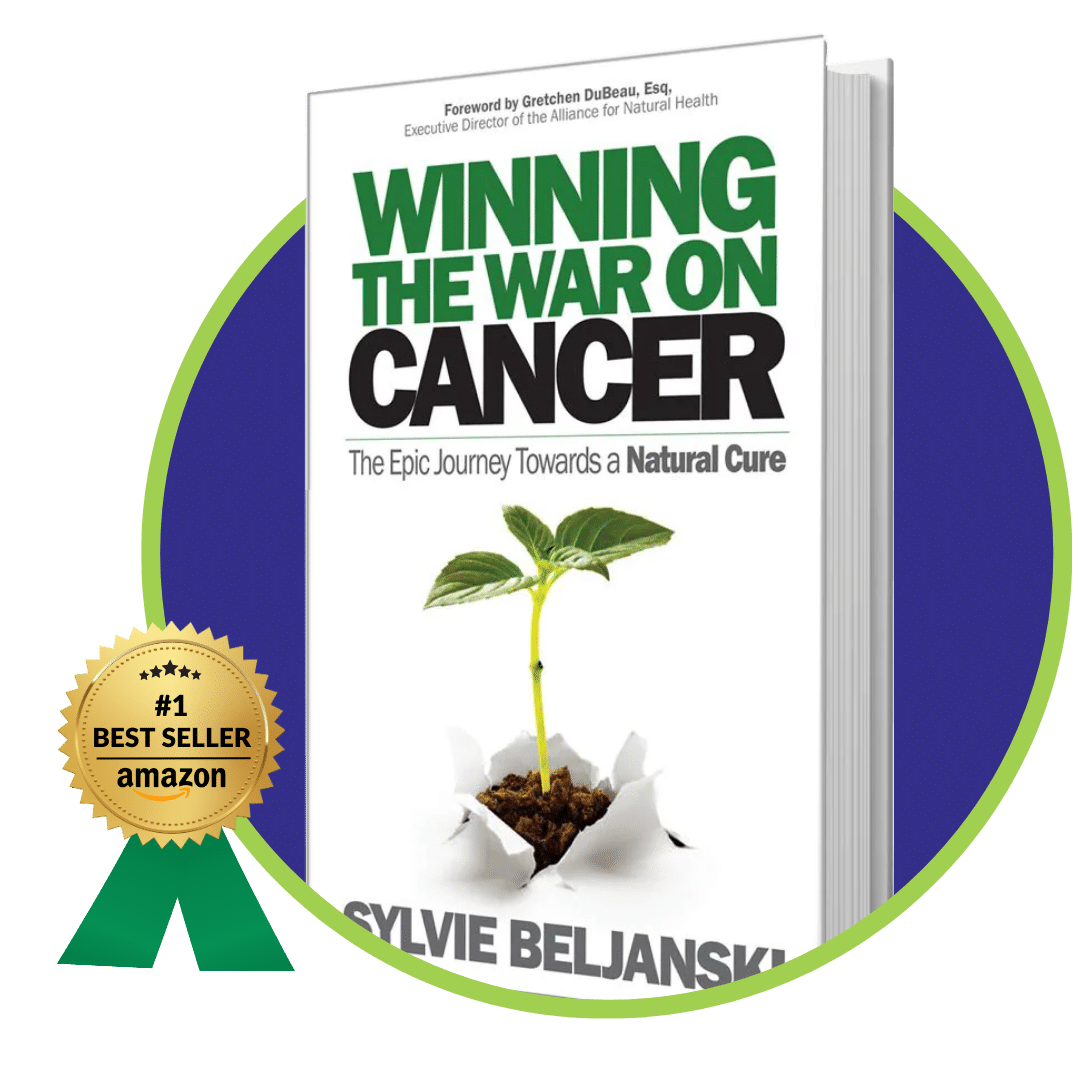
Award-Winning Book On Naturally Fighting Cancer
“For me personally, I think that Winning the War on Cancer by Sylvie Beljanski is one of those books that people should read. I have for a long time believed more in natural remedies than pharmaceutical cures, so I was involuntarily drawn to read the book.
It still preys on my mind on how the government can take up war against something that can save a lot of lives. I mean I know that a sort of thing like a more natural cure would likely actively threaten the pharmaceutical industry, but isn’t the industry on the side of saving people with something that has very little, or indeed no, toxicity at all? It’s so eye-opening and harrowing and I can’t yet state how I feel about everything that I learned.
I would recommend the book to anyone because many people these days are constantly being kept in the dark about natural remedies. What I love most about the book is that, though the book’s main point is cancer and its treatment, it also touches on areas that are vital to leading a healthy life. It points out the importance of detoxifying our body, especially since we live in a world where toxins are constantly released into the air by our technological marvels.”
4 out of 4 stars – Review by Nmesoma – OnlineBookClub.Org