Episode 44: How Red Light Therapy Targets Cancer Cells and Heals the Body featuring Jonathan Otto
This episode is also available on:






Discover the cellular revolution happening right inside your body. Award-winning filmmaker and investigative health journalist Jonathan Otto pulls back the curtain on Red Light Therapy—a scientifically-backed healing modality that’s helped over 100 million patients worldwide transform their health, fight cancer at the cellular level, and reclaim their vitality.
In this groundbreaking conversation, Jonathan reveals:
- How specific red light wavelengths (particularly 660nm) can reduce breast cancer tumor proliferation by 40% in just 24 hours
- Why most red light devices on the market DON’T deliver therapeutic results (and how to know the difference)
- The cellular mechanism behind why red light triggers your body to produce ATP—the energy currency your cells depend on for EVERYTHING
- Proof from 120+ years of clinical research showing red light therapy benefits 80+ health conditions—from cancer to cognitive decline to fertility
- Why combining Red Light Therapy with plant-based compounds like Pao Pereira creates extraordinary synergistic effects
- Specific protocols from peer-reviewed studies: sometimes just 1 minute of exposure triggers 72 hours of healing chain reactions
- Real-world clinical evidence: 100% resolution of long COVID symptoms within one week using red light therapy
- The proven wavelengths for specific conditions—because not all red light is created equal
Whether you’re facing a cancer diagnosis, dealing with chronic inflammation, looking to optimize your brain health, or seeking world-class longevity strategies—this episode delivers the science, the proof, and the actionable protocols you need.
Best part? Red Light Therapy has zero adverse effects reported across 100 million patients. You can’t hurt yourself with it.
⏳ 00:00 Introduction to Red Light Therapy
⏳ 00:20 Welcome to The Beljanski Cancer Talk Show
⏳ 01:26 Jonathan Otto’s Journey and Mission
⏳ 05:04 The Science Behind Red Light Therapy
⏳ 08:04 Applications and Benefits of Red Light Therapy
⏳ 13:56 Devices and Practical Use
⏳ 18:19 Ad: Womabel®
⏳ 19:23 Devices and Practical Use
⏳ 23:56 Synergy with Other Therapies
⏳ 29:04 Promotions and Resources
⏳ 35:22 Conclusion and Final Thoughts
Introduction to Red Light Therapy
Jonathan Otto: You can’t hurt yourself with red light even with your eyes open, which is proven, for three minutes. Not only improve the eyesight, but it’s the best way to treat the brain and get light into the brain. The good news is that…
Welcome to The Beljanski Cancer Talk Show
Victor Dwyer: Hey, everyone! Welcome to today’s episode of The Beljanski Cancer Talk Show. We’re joined today by Jonathan Otto, an award-winning filmmaker, investigative health journalist, and passionate humanitarian on a mission to uncover natural answers to today’s chronic health crisis. Through his powerful documentaries like The Truth About Cancer and Autoimmune Secrets, Jonathan has helped millions around the world access lifesaving information on cancer, autoimmune disease, dementia and more. Get ready for a bold conversation on truth, healing, and the power of taking your health into your own hand.
Sylvie Beljanski: Hello, Jonathan, and welcome to The Beljanski Cancer Talk Show! So happy to have you today. I have known you for a few years. I have seen you at The Beljanski Cancer Conference. Thank you for joining the conference.
I’ve heard you talk and you are a very energetic young man doing a lot of projects and one of your projects is this company called RedLife, and you speak about red light therapy.
Jonathan Otto’s Journey and Mission
Sylvie Beljanski: But I’m curious, you did not grow up thinking well, the day I grow up, I want to become an expert in red light. How did you get there and why red light?
Jonathan Otto: No, thanks for asking Sylvie. And with you, you may have been one that grew up thinking, well, how do I solve cancer because you had a father that was, you know, one of the best and is one of the best and he’s still with us in spirit. And so my, my mission was similar in that it was about putting an end into suffering in the things that I knew were happening that were visible to me. And it was a humanitarian crisis ’cause I was aware from under the age of 10 that people were suffering due to lack of food, education, and systems of injustice. And I started getting more clear on the systems of injustice that exist into my early teen years. And would, I would do a lot of research on these things. So, which doesn’t sound normal, but, look, when you’re in school you often have the option to choose what your assignment’s gonna be on. So I chose injustice and systems that created poverty and how those could be solved. And how human trafficking was actually a thing that was happening and it was happening in the world that I lived in.
Jonathan Otto: And so I just felt that my fulfillment was deeply connected to putting an end to that suffering for as many people as possible, and in the best and deepest way I could. I didn’t know anything about health. All I knew is from a young age I was struggling. But because you don’t know any different, you also think that’s kind of normal.
But later into my teen years, my mom was just trying everything she could do to help me because I had chronic fatigue syndrome. And then I had a lot of blood viruses and chronic boils break out on my body and like big abscesses and they were very painful and so, I didn’t know why these things were happening to me.
And I, and then I would talk to doctors, and the doctors would often not be able to give any solutions and whatever they would give me, any information at all, I would then take that, and then I would go to natural health food stores and then I would talk to the staff and ask them questions, and this is all the access that I had and then I then started learning business.
I took the degrees that I graduated in which had a high focus in journalism and media production. Hence, the filmmaking and the postgraduate degree I did in education. And I took that into the realm of business and understanding how to, you know, take an idea and launch it.
And so I’d travel out to America and so I, you know, there was a lot of opportunity. I could see that you could take something that you believed in and you use it to, to fund things you believed in. And when I was doing humanitarian trips and, which I’m still doing in Northern Kenya and some of your close colleagues, people like Nathan Crane has come with me on these trips and helped them be an integral part of it.
That if I could help create systems and financial success by getting things out to the world that I believed in, I could fund these things. And so then it became very important to me then to find those things that if I could get behind technology that was beneficial and then could also support these other projects that I was doing when it came to food relief, famine relief, long-term sustainability, that, that became my dream come true. And so then I just went all in on that and research, and finding out answers and solutions and became very innovative in that field, which is super interesting ’cause it’s the wild, wild west.
The Science Behind Red Light Therapy
Jonathan Otto: You know, why does an investigative journalist have, like, a voice in a medical arena?
And why is it that some of the top experts and doctors that were at the Beljanski Institute, why did they reach out to me and me to them? Why? But why is there this dialogue between us to seek to solve the most difficult issues for the patients? And that is because if you are committed, you can actually solve these problems and you can actually help people with cancer and you can create incredible products.
And that’s what we did with Red, RedLife. We created some of the best products on the market when it came to harnessing the power of red light therapy based on all the clinical studies that have existed for now over 120 years. And we took that knowledge and that information to produce products that were extremely effective and, to me, the best I know of on the market. I would love to find anything better, but I think that we’re, we’ve proven that and time again. So that’s kind of how that all happened, Sylvie.
Sylvie Beljanski: You mentioned the best products on the market. So you, what you’re saying is that basically not all red light therapy products are made the same and are equal?
Jonathan Otto: Yeah. Yeah, exactly. Not, yeah not all are equal. And it matters like, for example, what wavelength you’re choosing. And I’ll give an example, and I presented this when we were at the recent event. Breast cancer, both triple negative and non triple negative breast cancer origin cell lines were tested with various wavelengths of light of red, all specifically red.
So red is all within that six to, 600 to 700 about 780 range. And so you would think that it’s very close and they’re all visibly red, so they would probably all work very similarly. And if one worked, then the others would. But in this particular study, which is a peer reviewed study on PubMed, it showed a 40% drop in 24 hours on one of those wavelengths, which three, four were tested, 615, 630, 660, and 730. All very close. But it was 660 that could drop the breast tumor proliferation by 40% in 24 hours. So, if you had breast cancer and you were wanting a red light device, then you would be foolish or just uneducated which is, not foolish, but if you knew this and then you didn’t act on that and you chose a wavelength other than 660, then you may not get either as quick benefit or any benefit.
So, then wavelengths matters which wavelength for which condition. And what we did was we put nine of the most proven wavelengths into a single device so that you could get all those wavelengths at the same time. So, those are some of the examples that we chose. And then the other thing is the radiance. How much power is coming out of the device and is that therapeutic enough or at the optimal standard? And so we made sure that was the highest clinical standard, which was over 200 milliwatts per centimeter square at three inches. And that’s the highest delivery that you can get into the body. So those were the things that we looked at.
Applications and Benefits of Red Light Therapy
Sylvie Beljanski: You were just speaking of cancer and breast cancer and, of course, it’s a very important issue, but red light therapy, I believe, can be used for many other different things today. For example, I have a headache and my headache is always because I have a stiff neck.
I’m sure that if I was close to you, I mean, you would put one of your devices and that would help, right?
Jonathan Otto: Yeah, absolutely. Then…
Sylvie Beljanski: What are the other, beyond cancer, what are the other opportunities to benefit from this, from this approach?
Jonathan Otto: Yeah. Well, firstly it’s almost unbelievable. And so it’s very hard for people to, to think, you know, that one thing could do so many things.
Typically, when people say that, it’s exaggeration, right? So the people are exaggerating. They’re kind of, they’re a little hopeful and it has some benefit, but not a lot. But what we’ve found is because it’s working with the mitochondria, which is the powerhouses of the cells of how cells generate and store energy that cells can do everything with cellular energy and nothing without it.
So, because of that, and I’ll show you, even though some people will listen to this and some people will watch this, is it good for me to share screen or not? Yeah?
Sylvie Beljanski: Yeah. Absolutely.
Jonathan Otto: Awesome. So, I’ll share a screen and I’ll give examples. So these are all based on clinical studies here.
So this is, for example, the clinically proven wavelengths, and it’s, they’re not the only wavelengths, but they’re the ones that have the most data behind them. And so, you’ve got to, at the end of the day, choose wavelengths based on the, the condition and the depth by which you’re trying to treat.
So, the deeper the wavelength, the more optimal that will be for anything deep inside the bones or the lungs or the brain, all the way up to, in this case, 1060, which is falling onto the highest end. So 1100. Once you get over that, then you’re no longer in the near infrared spectrum and near infrared and red is the optimal delivery into the mitochondria receiving that light, producing ATP, adenosine triphosphate, storing that energy. But then on the shallower end, which we just talked about, 660 and then 630 has a lot of studies on it as well, at 670, all the red wavelengths we’re seeing tremendous benefits.
And so you can see where they penetrate. And then now to answer your question the epidermis, dermis, subcutaneous tissue, muscle, bone, interior tissue. So, they’re all falling at varying degrees into shallower and deeper regions, which mean that the shallower are more important for certain things and the deeper are more important for certain things.
But look at the studies on weight loss, fat burning, cellulite reduction, metabolism. Those are, those affect people, and there’s a lot of issues that people have as a result of having those challenges like, like weight as an example. Anti-aging would be one that, I would say, everyone cares about once you get over the age of maybe 30.
Acne, scars, rosacea, hair growth, sun damage. So again, certain wavelengths proven for certain conditions. Wrinkles, fine lines, droopy eyelids, under eye circles, broken capillaries, pain relief, wound healing, injury healing, oral health, muscle building the, all the athletic aspect, the cognitive performance, mental stamina, asthma. You could go for days on this because there are literally about 80 studies coming out per month, and there’s been about a hundred million patients treated under red light therapy to date. Depression, anxiety, tinnitus, no, no adverse effects reported. Period. Arthritis, multiple sclerosis, stem cell regeneration which is the most expensive therapy, but if and often, and you may have seen this as well, often I see people don’t get results on stem cell therapy because the terrain hasn’t changed and the stem cells that you’re putting in your body are having the same issue that the stem cells that are circulating in your body is having which you know all about cancer stem cells.
They’re not making the complete transition into normal healthy cells because they lack the energy to do so, and they’re deprived, and there’s toxins that are blocking that proper formation of the cells. So, light into the cells then, not only will give the cells energy to perform all the cellular functions including the mitochondria within the stem cells, then driving the cells destiny to become a normal eye cell, heart cell, but then also they’ll work to detoxify the cells of toxins at a cellular level using light as the driver, which is the best way to detoxify the cells. And then there’s Parkinson’s, high hypertension, liver function, which is a big part of cancer. And again, of all conditions, liver is almost always implicated.
Breast cancer, as we mentioned, fertility, sperm mobility, herpes, cold sores, genital and other simplexes, eye health which, by the way, was a 17% improvement in eyesight after a three minute exposure immediately, which is almost unbelievable. But that’s in, that’s a UCL study. And then the 480 in the blue was all to do with the skin as you can see there.
And then same with 590, but they’re all things that relate to people’s, yeah, the the quality of their skin, which also is preventative of other skin conditions like skin cancer.
Sylvie Beljanski: So, you want to have a device where you can pick and choose the length of the wave, right?
Jonathan Otto: Yeah. Or just it’s all going at the same time, which is what we do.
Sylvie Beljanski: Okay. Okay. Okay.
Jonathan Otto: Yeah.
Sylvie Beljanski: And yes, because I guess there is no bad side effect. It’s all good.
Jonathan Otto: Yeah, exactly. Like, like yeah, out of a hundred million patients, then you’ve got every type of wavelength tested. And there’s none that are bad for people, just some that are better for certain conditions but all that are good for cellular function.
So even if you’ve got one condition that you still want that maybe you need red light for, but you’d still want near infrared because you’ve, you’ve got bones and you want the light that goes into your bones and you, so you want to strengthen your skeletal system, and that’s where you’re producing stem cells.
So you want to strengthen everything as well as going after your problem.
Devices and Practical Use
Sylvie Beljanski: But you have different little machines, so it’s adapt to the anatomy better, right?
Jonathan Otto: Yeah.
Sylvie Beljanski: So I’m sure you have some kind of helmet or something?
Jonathan Otto: Oh, yeah. Yeah.
Sylvie Beljanski: Pretty pretty, I mean, it was, just to look at it, it was kind of fun and futuristic. Can you tell us more about that?
Jonathan Otto: Oh, yeah, sure. Like, because you the good thing is that you could use very simple devices that, like, you, you put onto your body. You know, for example, you’ve got the ability here to, I mean, this has five different wavelengths going through it. So, it’s a triple LED and people get confused about LEDs as well.
They think that they’re bad, they’re not. All the studies are on either lasers or LEDs. That’s it. And the lasers are about 20 to 30 times more expensive without any additional benefit. And the reason why people get confused about LEDs is if the LED flickers, then that’s a problem. So, the flicker rate is everything.
LED just means light emitting diode, so then, and so you can see how much that’s lighting me up, by the way. And you can see that there’s no, there’s no flicker as with the one behind me here, which I’ve got this set on about 10% of the intensity so I’m not blowing out the screen, but you could see that, you again, you don’t have a flicker. And hence why the studies on the light therapy when it’s a light emitting diode, LED, that is non flicker based. They’re the ones that are showing all the most amazing results for cancer. So, these are examples. And so you just, you basically, you know, put yourself in front of it.
And you could see all the different wavelengths here because there’s different tones of color. So, anything like this is a 590, which is an orange color. Red is gonna be 630 and 660 and 670. Kind of hard for the un, unaided eye to work that out, but you see a deeper red that’s gonna be 660 and a, and not a steep red is gonna be more like 6, 630. But then, and then everything you can’t see is near infrared. It’s non-visible. You can’t see it. And the reason why then you see all this lit up is because it’s dual LEDs. You’ve got two different wavelengths coming out of the same LED. As with this as well ’cause there’s near infrared, three different wavelengths of near infrared, which is 810, 850, and 1060, but they’re coming out of the same LED that the red is going out of, which allows you for a complete even distribution and it doubles up. It makes the device, in this case, the device three times bigger than what it actually is, but while still being concentrated over the area, so it’s just higher value. But then, a greater intensity of those frequencies over the most important areas, in this case, over all your organs, which is really awesome.
Sylvie Beljanski: So, how many different, let’s say, widget? I don’t want to, not to, I mean, for lack of a better word. Yeah. How many, what is the extent of your offering?
Jonathan Otto: Yeah, absolutely. Yeah. No problems. Well, like in simple terms, it would be like, you know, with something like this would do everything right. So like, regardless of all the different things that we have.
Like if somebody has a device like this that covers all their organs, then you could say like, well, this is all I need. But then if you’re traveling, then you’d say, yeah, well I’d probably bring this. I can’t really bring this. And so, and then so that, that’s the reason for that. But then like, then you’d say, yeah, well you can get this on the top of the head.
You probably notice they don’t have a single gray hair, which is kind of nice considering I’m 41 and I have baldness on both sides of the family, so I’m not going gray and I’m not losing hair, which is nice. And that is one of the side benefits. But I, you know, I guess I don’t care about that, I guess, ’cause I haven’t lost hair, but I probably care about it if I started losing hair.
What I do care about is not getting any of these conditions that I, everyone wants to escape, but then you got hats that will go on the top of their head. As an example. And I’ll just reach down. So, you’ll see, like, the LEDs inside of a hat like that.
Sylvie Beljanski: Okay.
Jonathan Otto: And then that gives you ability to get it right at the top of the head and you can kind of keep working away and get the treatment.
But it’s not just the it’s not just for the cosmetic benefits. It’s also proven to remove formaldehyde from the brain and assist cognitive performance. And it will fire infrared will go into the brain, not just hair follicles, which would be more of the red.
Sylvie Beljanski: So how long do you have to keep this, this cap on your head? Or how often do you have to do that? To see benefits?
Ad: Womabel®
Victor Dwyer: Ever wondered about a supplement just for you? Introducing Womabel®. Made for the unique health needs of women. The natural choice for everyday wellness. Our formula? Carefully picked, deeply researched, for real results. Packed with the power of Pao Pereira, exclusive Green Teas and Rauwolfia extract.
Every capsule is a step towards better health. Hear from those who felt the difference. Visit our website, maisonbeljanski.com.
Womabel®. Feel the natural difference because you matter. Unveil the power of nature through Maison Belsky sourced from nature perfected by science. Get 15% off your first purchase with coat EP two. Feel better naturally.
Devices and Practical Use
Jonathan Otto: Yeah. Well, it… A lot of the studies show as little as 20 minutes twice a week, which is pretty easy to find that amount of time.
There are studies that go as, as short as a single minute of exposure which is, sounds like you won’t, wouldn’t get much done, but the Birmingham University study on a minute of exposure showed an increase in cell viability by 45% in one minute of exposure. So, so, like, I think, like, that’s really amazing to think about because you may not have any time that day, but you might have enough time to literally turn it on for a minute, and that minute of exposure is not just effective for the time of the minute that you’re in front of it.
It’s that you, your body is setting off chain reactions that then last for around the next 72 hours. And then once you’ve had a benefit, like, there are studies on thyroid health, for example, where they do five weeks of treatment, 10 sessions total, 20 minutes twice a week on chronic autoimmune thyroiditis. And they do a nine month follow up, which means they’ve been off the light for eight months almost. And they’re half of the group, 47% in this particular study didn’t need LT four at all anymore. So, the thyroid was producing the thyroid hormone naturally just because they did it eight months ago over just five weeks.
But my, my assumption is, ’cause not all of these things have been verified, but that probably over the next year or so, or next several months, it will diminish in its effect and then you’ll end up, then, needing it again. Like, you’ll need the drugs again for the thyroid as an example.
So, the key is to be using it ideally on at least, at least, a weekly basis. But even if people were doing it every few months for, you know, a few weeks or a couple of weeks, they would still continue to see dramatic benefit and changes.
Sylvie Beljanski: Okay.
Victor Dwyer: And question for you, as far as them when you say the energy goes into the cell, so I know that, like, plants get energy from light.
Jonathan Otto: Yeah.
Victor Dwyer: So I understand that. How do humans get energy from the cell as far as the light emitting into the cell?
Jonathan Otto: Yeah, so, it’s the light causes the body to produce light. So it, it is like light produces light, light produces light.
And so the mitochondria will receive the light. And so you have receptors in the body, and these are these, some of these are called chromo fours. And where you see the word chromo, not always, but chromo is, it means color or light. And so you’ve got receptors that pick up the light and then when they produce substances like ATP, which is adenosine triphosphate, phosphorus, which was first discovered in the urine in the 1700s means bringer of light.
And so your body then will produce these fluorescent substances like singlet oxygen and, which is really interesting because that’s a reactive oxygen species, which will target cancer cells which, I think, that people need to be talking a lot about singlet oxygen for cancer therapy because your body can produce it under red light and it’s highly lethal.
Like it’s, it, I gotta be careful with how I say this because you know, when you make a comparison to something like chemo which is universal, like it’ll target healthy and unhealthy cells. Singlet oxygen will only target unhealthy cells when it comes to destroying them, but that same oxygen that’s produced by the body is stimulatory and effective for healthy cells.
So in short, in comparison to plants, plants produce energy through the consumption of light, which is photosynthesis, photo light synthesis. So, it’s synthesizing the light into energy. So that’s, the plant uses it for the circulation and the production of oxygen and breathing of the plant. The same process with the body.
So there’s a few different mechanisms all at once. And so it’s causing the respiration of cells. So the cell, the cells are then able to breathe in, which is nitric oxide signaling and cytochrome oxidase signaling so that your cells then are using this light to then produce energy and to complete the cycle, which is in the, something called the electron transport chain.
And by completing these processes, then cells are performing all of their functions and acting normally aiding in detoxification. And then, you know, reconstructing and working on wound healing and repair and destroying disease cells like, senescent cells and even senescent mitochondria, which is called mitophagy.
So anyway, very nerdy and long-winded answer. There you go.
Victor Dwyer: Yeah. Thank you.
Synergy with Other Therapies
Sylvie Beljanski: Yeah. I always find fascinating this link between anti-cancer activity and light because the plant extracts we work with at The Beljanski Foundation, the Pao Pereira and Rauwolfia Vomitoria happens also to be naturally fluorescent and selective to cancer cells.
Jonathan Otto: Wow.
Sylvie Beljanski: And that’s exactly, seems to be a kind of similar mechanisms, and what, what is happening with red lights?
Jonathan Otto: Amazing.
Sylvie Beljanski: That’s amazing. Yeah.
Jonathan Otto: Yeah. So that’s interesting. So. I didn’t know that. And I am familiar with your studies, which is why I’ve, like, felt compelled to donate to The Beljanski Foundation.
Sylvie Beljanski: Thank you. Thank you.
Jonathan Otto: Welcome. And I, I mentioned that to just underpin the importance of your work. And I know how important the work you’ve done in cancer stem cell research and how to kill cancer stem cells, how important it is, so it’s, but I didn’t, I didn’t actually make that connection that it’s a fluorescent substance and, but that’s what I’ve found, the exact same thing. That the most fluorescent substances, either naturally fluorescent or they activate the body’s ability to absorb light. So, then that they’re called photosensitizers. And I think that what you’d find is that they would class as photosensitizers and then when used in combination with red light, they’re extraordinarily effective.
Sylvie Beljanski: Yeah. I am sure there, I mean, we don’t have studies about that, but I’m sure we would see a very nice synergy of action between the two approach. Absolutely.
Jonathan Otto: Exactly. No, it’s amazing that you say that. And I’ll quick, I’ll give you an example on that. You’ll absolutely love this on photo sensitive compounds and you’re probably familiar with methylene blue.
Sylvie Beljanski: Yeah.
Jonathan Otto: And it’s an example of a photosensitive component which, there’s debates on it, like, you know, is it good, is it bad? But for cancer and its ability to activate apoptosis, it’s very profound. But this is a before and after on cutaneous B-cell lymphoma, it’s on PubMed, you could see.
This was only two sessions on, on red light or photodynamic therapy, which is combining with a photoactive, photo sensitive component, which is methyl aminolevulinic acid, which is MAL. And that’s the before and after. And the li, the Cutaneous Lymphoma Foundation found that it was a 60 to 90% effectiveness rate.
If people are listening just audibly, this is a complete response. So, the person goes into complete remission after two treatments of photodynamic therapy. And this is using a topical form of aminolevulinic acid. And the only reason why they’re using that is to make the light more sensitive to the cells.
And, and here’s the clinical study, which was a pilot study from 2006 which is on PubMed, which was a peer reviewed study that used the 630 nanometer wavelength, and then it says specifically that all treated patients had complete remission, defined as a clinical and histologic complete absence of cutaneous B-cell lymphoma after a maximum of two photodynamic therapy sessions at a one week interval.
No patient experience particular side effects, and the pain was easily managed after the PDT sessions.
Victor Dwyer: Cool.
Jonathan Otto: Yeah. Pretty awesome. Yeah, so they keep using it. By the way, that was the study on the 24 hours post-exposure, and it was a 40% drop in 24 hours on, on cell viability. And it was specifically showing the anti-proliferative effects, meaning that it was stopping the growth of the tumors.
And there’s the studies on lung cancer, and I know that people don’t just follow this show for cancer, but I mean, certainly that’s a huge focus. So, it’s 87% improved. Overall response of 87% of the participants got significant results with light therapy. And this was in cases of unresectable lung cancer, meaning that they couldn’t perform surgeries on the lung cancer.
And then, if you look at the bone cancer results, again, it’s using this mechanism to reactivate reactive oxygen species within the bones through photodynamic therapy. So, the one that’s most well known is the methyl, methylene blue. But then, then, to combine that with the compounds that you’ve studied with the two properties.
And they were, again, the Vomitoria, Vomitoria, right? What was that one again?
Sylvie Beljanski: Vomitoria, yea. Rauwolfia Vomitoria.
Jonathan Otto: Yes. And then, and then the other one.
Sylvie Beljanski: Pao Pereira
Jonathan Otto: Yes. Yeah, and I am familiar with them, so I’m very familiar with those names once they said to me that they arguably could work in a similar fashion, but, like, if you look at this prostate cancer from, study from that was published in the Lancet Oncology.
This was a largest study than the one I mentioned before, which is 413 participants. It’s a two year study and 49% go into complete remission. And this is just a, like, basically a single therapy that was added in conjunction to the, I would argue, toxic therapies. And the control group that didn’t take the light was 13.5%, so it was a 400% increase and it was using the vascular targeted photodynamic therapy, which is using a deep sea bacteria.
And so, you know, you have a lot of amazing experimentation happening that is showing incredible results that people can start using today.
Promotions and Resources
Victor Dwyer: And Jonathan, do you have any books or events, materials that you wanna make sure you promote to the audience today?
Jonathan Otto: Yeah, absolutely. So, we have The Cancer Off-Switch. So this book here?
Victor Dwyer: Mm-hmm.
Jonathan Otto: Yeah.
Sylvie Beljanski: Okay.
Jonathan Otto: And so that’s an example. And so it goes through a lot of really cutting edge therapies all the way down to even why urine therapy was a go-to therapy for, for cancer for millennia now is actually being used. And why there’s anti-cancer cells in urine called antineoplastons and all the other enzymes and antibodies specifically, but then you’ve got, you know, photodynamic therapy and red light therapy specifically. And all different types of protocols, liver cleansing, et cetera. So that’s a great tool. And then obviously the red light products with myredlight.com. And, and the using the code BELJANSKI will activate the discount that you can see on the page.
Is that fine for us to use that coupon?
Sylvie Beljanski: Oh, thank you. Thank you.
Jonathan Otto: Yeah, no, it’s great for the audience to be able to access that discount and one that we didn’t talk about which is PEMF, Pulse Electro Magnetic Field Therapy, which we, you, so you could learn more about that either on that page or on mypemfmat.com.
And I know you got I, I’m supposing Dr. William Pawluk on, on the show, and I love what he’s doing with PEMF and so, huge supporter and recommendations around what he’s doing. I think it’s a game changer. And so yeah, people can totally check out what we’re doing with that. And, and then you could use those codes as well.
But we do have a 25% off code on the PEMF, which is mypemfmat, MAT.com, and, which is BELJANSKI25 or, if it’s the bundle, it’s 30, so 25 or 30% off, which is a huge saving there. But we’ve found that those therapies then become the most affordable and cost effective therapies because one device like this, or like, or whether it’s a PEMF mat or a light device, can get used for the whole family and it, these are used for a lifetime.
This is cast iron. It’s one of the, you know, hard, most kind of robust devices, and we don’t have failure rates with them. They continue to last a lifetime which is amazing. And so, then it becomes like it ends up costing nothing. The energy consumption is low because of the, how it uses the energy for light versus heat.
And then, so because of that, it becomes a very, very, it costs nothing to run, practically speaking. And then people can basically just get, like, world class treatments from their home. They can do it before they go to bed to get deeper sleep and things that you couldn’t do at clinics, right? So that, that allows people to really get massive benefits.
Sylvie Beljanski: So once again, what is the website where people can get those machines? And is there a place where if people are serving or say a specific condition have this issue, what is the recommendation, how often should I stay in front of my panel and how, for how long and how often?
Jonathan Otto: Yeah, absolutely. So, so the site to go to with the red light is myredlight.com and then mypemf, which is Pulse Electro Magnetic Field, mat.com, mypemfmat.com. And so, then you use the codes BELJANSKI. For the red light checkout, just BELJANSKI. For the PEMF Mat, BELJANSKI25 or BELJANSKI30 if it’s the bundle.
But, you know, to get that specific information, you’ll see I do a presentation on both of those sites and it’s like a two and a half hour presentation on, on both of the sites. And then you can kind of, you know, watch the whole thing or watch it in double time or skip through to the slides that you want to focus in on.
And, and then you can also use, you can use Google and ChatGPT because what you’ll find is that, and like one, the good news is that you actually, you can’t hurt yourself with red light. That’s just the reality. And I don’t care what people say or don’t. Even with your eyes open, which is proven, for three minutes, having the eyes open will incredibly, not only improve the eyesight, but it’s the best way to treat the brain and get light into the brain.
And then you can arguably influence a lot of the state of your body through the brain. And so, hence, why I am helping people get their head and their brain, their eyes around that issue. But you can use those resources and basically say, like, show me the best studies on this, like ChatGPT is, it’s good.
And people are gonna be doing this more and more on, you know, this type of condition. What type of wavelengths are used in this study? How long were they in front of it? What photosensitizers did they use? How soon did they take that before they went into the red light, or light therapy?
And, and then how long were those sessions, and how many times a week, and how long should I expect benefits based on these studies? And so, then people can then get very specific advice. Even though we go into a lot of that in those presentations, but the Internet then becomes limitless and it also allows people to keep up with what might be published next month and then month after that and the month after that which is really amazing, but the, you know, there’s a lot of people that are suffering post COVID and there’s a study on which is done by the European Society of Medicine that showed that a hundred percent resolution of long COVID under light therapy, that long COVID often is the, you know, I’d be careful how I say it, but what people got when they put that thing into their body or got it put into their body, maybe they got forced to do it or whatever, but that often is the driver for what’s called long COVID.
Or it could be that people, you know, still have that lingering condition or their health was never the same. And the reason, part of the reason why they had a complete resolution was because it was whole organ, like, so all their organs were getting affected or touched or irradiated by the light.
Hence, why you see a device like the one I showed you like this, it’s going over all your organs. So that’s head to groin area. So all your organs are covered. And the other reason why it was effective is because they used longer sessions. They were 64 to 84 minute long sessions and it was a hundred percent resolution for all 62 participants.
And 62 outta 60 had a complete resolution, total resolution of all symptoms within one week after those parameters, so
Sylvie Beljanski: That’s very impressive. Very impressive.
Jonathan Otto: Yeah.
Conclusion and Final Thoughts
Victor Dwyer: Well, yeah, Jonathan, thank you so much for joining today. Thank you for all the amazing insights. Really appreciate it.
Victor Dwyer: This is The Beljanski Cancer Talk show, and thank you for joining.
Jonathan Otto is a multiple award-winning filmmaker, investigative medical journalist, and humanitarian. His acclaimed documentaries and educational series—including The Truth About Cancer, Cancer Secrets, and Autoimmune Secrets—have reached hundreds of millions globally, providing free access to healing protocols for cancer, autoimmune disease, dementia, and other chronic conditions.
He collaborates with hundreds of leading medical experts, scientists, researchers, attorneys, and activists to challenge the status quo and deliver natural, regenerative solutions that save lives. Jonathan advises top holistic health leaders who apply the protocols he develops and distributes.
He leads humanitarian missions in famine relief and sustainable development through a foundation he founded in sub-Saharan Africa and works to combat human trafficking in partnership with Tim Tebow, the Tim Tebow Foundation, Eagle Freedom Fund, and others.
Jonathan frequently appears on top social platforms and hosts prominent thought leaders, including Robert F. Kennedy Jr., Ben Greenfield, Del Bigtree, Dr. Daniel Amen, and Nobel Prize-nominated and winning experts.
Connect with Jonathan
Social Media

Linktree

Websites & Webinar

RedLife (Use code: BELJANSKI for discount)
RedLife PEMF Mat (Use code BELJANSKI25 & BELJANSKI30 for discount)

FREE: Red Light Therapy Webinar
Related Episodes
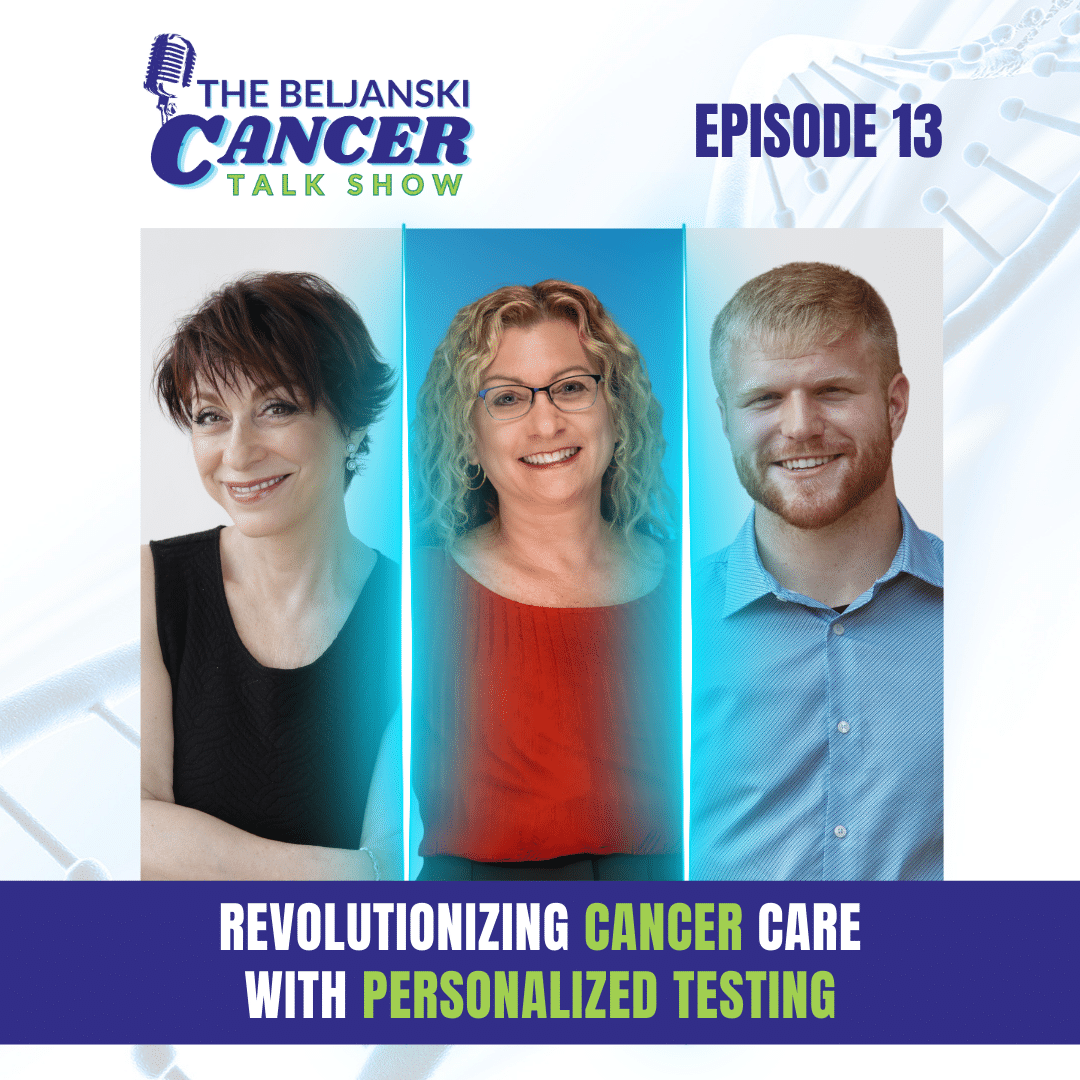
Episode 13 – Revolutionizing Cancer Care With Personalized Testing with Dr. Lauren Cohen, DC
Dr. Lauren Cohen discusses how RGCC's personalized cancer testing tailors treatment to individual genetics. [...]
Stream Now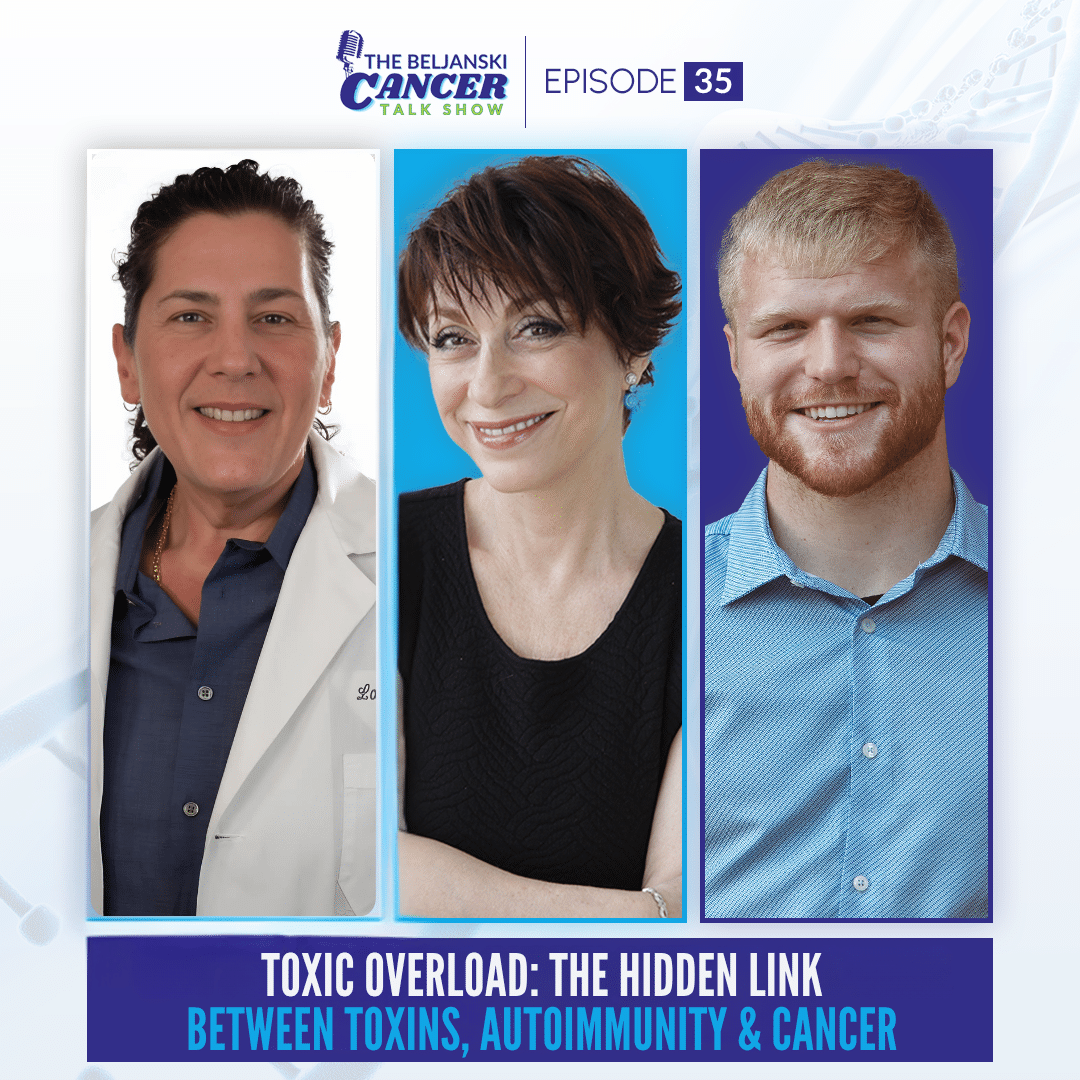
Episode 35: Toxic Overload: The Hidden Link Between Toxins, Autoimmunity & Cancer with Dr. Loretta T. Friedman, RN, MS, DC, CCN, CNS, DACBN, DCBCN
Dr. Friedman joins the show to share some crucial health tips, specifically regarding the lymphatic [...]
Stream Now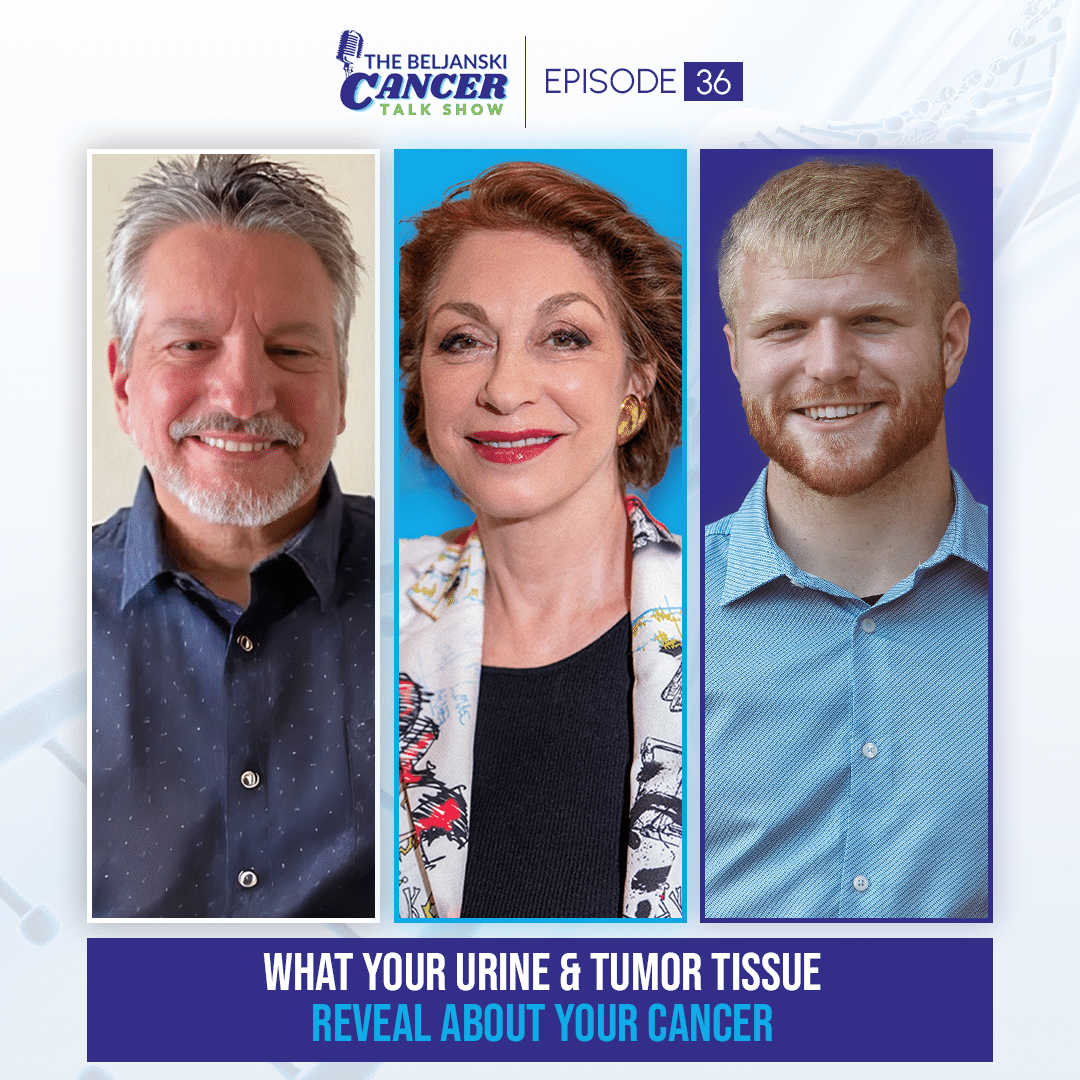
Episode 36: What Your Urine & Tumor Tissue Reveal About Your Cancer featuring Dr. John A. Catanzaro N.M.D., Ph.D
Dr. John Catanzaro reveals how personalized peptide therapy is reshaping the future of cancer care—one patient at a [...]
Stream Now
Episode 45: Histamine Intolerance and Gut Health: Unlocking the Root Causes of Chronic Inflammation with Dr. Meg Mill
Dr. Meg Mill reveals how hidden histamine intolerance and gut imbalances can quietly drive chronic [...]
Stream Now
Award-Winning Book On Naturally Fighting Cancer
“For me personally, I think that Winning the War on Cancer by Sylvie Beljanski is one of those books that people should read. I have for a long time believed more in natural remedies than pharmaceutical cures, so I was involuntarily drawn to read the book.
It still preys on my mind on how the government can take up war against something that can save a lot of lives. I mean I know that a sort of thing like a more natural cure would likely actively threaten the pharmaceutical industry, but isn’t the industry on the side of saving people with something that has very little, or indeed no, toxicity at all? It’s so eye-opening and harrowing and I can’t yet state how I feel about everything that I learned.
I would recommend the book to anyone because many people these days are constantly being kept in the dark about natural remedies. What I love most about the book is that, though the book’s main point is cancer and its treatment, it also touches on areas that are vital to leading a healthy life. It points out the importance of detoxifying our body, especially since we live in a world where toxins are constantly released into the air by our technological marvels.”
4 out of 4 stars – Review by Nmesoma – OnlineBookClub.Org