Episode 68: What Doctors May Miss When Treating Cancer | Dr. Jim Chialtas
This episode is also available on:








In this episode of The Beljanski Cancer Talk Show, Sylvie Beljanski speaks with Dr. Jim Chialtas, a functional medicine practitioner and acupuncturist, about taking a whole-person approach to health and supporting the body alongside conventional cancer care.
Dr. Chialtas explains how functional medicine looks beyond a diagnosis to identify underlying metabolic, nutritional, inflammatory, and lifestyle factors that may be contributing to poor health. He discusses the importance of comprehensive lab testing, nutrition, exercise, gut health, environmental exposures, and individualized care — both for people looking to stay healthy and for those navigating a cancer diagnosis.
The conversation explores how reducing ultra-processed foods, improving metabolic health, increasing plant diversity and fiber, supporting nutritional status, and addressing environmental exposures may help create a healthier internal environment. Dr. Chialtas also discusses the importance of carefully considering supplements and other interventions during chemotherapy and radiation, emphasizing that timing and communication with a patient’s conventional medical team matter.
Beyond physical health, the episode explores the emotional and spiritual dimensions of healing, the importance of hope and supportive relationships, and Dr. Chialtas’s belief that patients should be treated as whole human beings rather than simply as their diagnosis.
🔑 Three Key Takeaways
- Functional medicine looks beyond the diagnosis
Dr. Chialtas explains that functional medicine focuses on the mechanisms and underlying factors associated with a condition rather than simply treating the diagnosis. He discusses looking for early metabolic, nutritional, thyroid, blood sugar, and inflammatory patterns through more comprehensive testing. - Nutrition, movement, and gut health are foundational
The conversation emphasizes returning to whole foods, reducing highly processed foods, staying physically active, and increasing the diversity of plant foods and fiber. Dr. Chialtas discusses the relationship between gut health, the microbiome, immune function, and overall health, while stressing that dietary approaches should be individualized. - Cancer care should address the whole person
Dr. Chialtas emphasizes that functional medicine can be used as supportive care alongside conventional oncology, with careful attention to timing and potential interactions. He also highlights emotional and spiritual well-being, relationships, hope, and quality of life as important parts of navigating cancer.
00:00 Introduction to Dr. Jim Chialtas and his approach
02:14 Journey into functional medicine and traditional Chinese medicine
03:50 Functional medicine’s perspective on cancer and mechanisms
08:27 Initial consultation and early detection strategies
12:52 Approach to diagnosed cancer and treatment support
17:15 Diet, lifestyle, and supplements for cancer support
21:40 Addressing environmental toxins and reducing body burden
30:58 Realistic expectations and patient empowerment
36:50 Advice for newly diagnosed cancer patients
37:21 The importance of love, energy, and emotional health
39:00 How to connect with Dr. Jim Chialtas and his practice
Jim Chialtas (00:00)
Embrace love in your body. Let love drive you because that’s gonna help you through whatever transitions you might have to go through, but it’ll also set the stage for anti-inflammatory conditions that will allow all systems to function better. That can be done in a lot of different ways. It means a lot of different things to a lot of different people. Could be prayer, could be organized religion that gets you there. It could be sitting under a redwood tree, making that part of your therapy, you know? It could be seeing your loved ones and just
Being with them. But I think that if we don’t embrace this notion of love, which is the universal energy, I think, out there, the path can be a lot more difficult. Yeah. True. And then all these wonderful things that we have to draw from just start working a lot better.
Sylvie Beljanski (00:43)
Welcome to the Beljanski Cancer Talk Show where integrative science and holistic healing come together. I am Sylvie Beljanski, and in each episode we explore nutrition, lifestyle, mental health, and research-backed approaches to support the whole person through cancer and chronic diseases. Hello and welcome to the Beljanski Cancer Talk Show. My guest today is Dr. Jim Chialtas.
Dr. Jim Chialtas started his practice because he saw too many patients falling through the cracks of the standard medical system. They had normal labs but debilitating symptoms, or they had chronic pain that medication was only masking, not fixing. He realized that to truly help people heal, he needed more than just one viewpoint.
That is why he practices a unique blend of functional medicine to identify the biochemical root causes and traditional Chinese medicine to restore the body’s energetic balance. His goal isn’t just to manage your disease. It is to help you rediscover what it feels like to be truly healthy. So that’s a beautiful, beautiful mission.
Jim Chialtas (02:05)
Thank you.
Sylvie Beljanski (02:06)
How did you become a functional medicine practitioner, and what is functional medicine about?
Jim Chialtas (02:14)
Absolutely. Thanks for having me. Yes, It’s been a winding path, of course, like many paths are. From a very young age, I wanted to be a doctor. You know, that’s all I knew growing up in San Diego, in the suburbs. I didn’t know what there was out there. So I did all of my studies to go to medical school and become a medical doctor. But after four years of college, I didn’t know if that was really the path. And so I ended up in, you know, like biotech and pharmaceuticals for a little while, just using my degree in molecular biology. And then acupuncture kind of landed in my lap. And I decided to take a left turn and go into acupuncture school, which is about a four-year program after college. So it’s it’s not a small deal. By the end of that program, I was kind of tired of studying acupuncture and Chinese medicine. And so the very first course I took for my continuing education was functional endocrinology.
Endocrinology being my least favorite topic in college, but that’s what I took. And I met my teacher, Dr. Datis Kharrazian. And I just knew at that moment I had to learn this approach. That was in 2003 that I started studying functional medicine. And I just started devoting all my time to that study. And here we are. After about five years, I started teaching it a little bit, and I’ve continued to do that.
Sylvie Beljanski (03:37)
So now you see a lot of cancer patients. What does functional medicine mean when it comes to cancer care? How does it complement the regular oncology treatments?
Jim Chialtas (03:50)
Sure. Good question. And I will have to preface that by saying I don’t approach the cancer conditions any differently than I would any other condition from a functional medicine standpoint. Okay, so we have what we’ll call a disease. Some MD diagnosed something. It could be cancer, an autoimmune disease, or something else. Functional medicine doesn’t focus so much on the diagnosis. It looks mostly at the mechanisms driving the diagnosis. What brought somebody there? All right. So in that sense, we take it as it comes, you know, and then the diagnosis helps with things like prognosis. What are we really looking at here? What can we expect? But if you don’t mind, I can kind of back up and just for the people that don’t know what functional medicine means, I can just describe it a little bit in general terms. It really is a school of thought.
My medical license is in acupuncture, which allows me to put little pins in people. But in California it allows me to do a lot more. And so I came from an acupuncture lineage, but I studied blood chemistry and Western medicine and that became my focus. But you might find chiropractors doing the same work. They’re not cracking necks necessarily and I’m not putting needles in necessarily for that patient, but we’re we’re addressing a complex system and we’re looking at lab ranges and you know and
Diet and lifestyle and all kinds of different things. So the primary difference is in the reference range. All right. You don’t need to be so far out of range that the medical doctors are saying, “Oh dear, you have severe anemia”. Okay. That would be much too far. That’s let’s letting our bodies slip into pathology before acknowledging the problem. And that is the definition of our our mainstream medical model for the most part. It’s it’s an illness-based model.
And to their credit, we need that. You know, if we get injured, if we have a tumor that needs removing, or you know, things like this, we are blessed to have them. But they’re forgetting that transition from perfect, awesome wellness person to pathology. And that’s where most of us are. So a functional range when we’re looking at a blood test is just tighter. It’s not as big most of the time. So we see things pop out of range a lot sooner. So I say, you know what? You have
Jim Chialtas (06:13)
An emerging anemia pattern, perhaps, or you have an emerging blood sugar issue or a thyroid issue. Or maybe you have all three and they’re all just under the surface and nobody noticed. But meanwhile, pathology is brewing. And then there’s cancer or whatever else you have, right?
Sylvie Beljanski (06:28)
Yeah.
Sylvie Beljanski (06:32)
But then it allows the patients to nip the nip the problem in the bed? What do you what is it in English?
Jim Chialtas (06:41)
That’s it. Ideally we work with patients who are well, who have no concerns. And then we help keep them that way. You know, that kind of dips into wellness medicine, longevity medicine, perhaps. Functional medicine generally takes a very natural approach. Herbs, nutrients, you know, diet and lifestyle. That’s changing a little bit with peptides, but yeah. So it is very much naturally minded with the goal of turning on function.
This is the other difference between pharmaceutical approaches and natural approaches. If you look at the categories of pharmaceutical drugs, you know, they’re anti, they’re anti-inflammatory, they’re reductase inhibitors, they’re reuptake inhibitors. All the function is negative. It’s easier to turn off a function in a cell than to turn it on. And so herbs, nutrients, diet, lifestyle, exercise, they tend to turn on function, which is where we like to work.
Sylvie Beljanski (07:39)
Yet many patients want to have some kind of symptom before they see the doctor. For example, let’s take a woman we’ll call Susie. She had a routine mammogram and they found something suspicious. She’s heard about you through a friend, so she decides to come and consult with you. Yeah. She doesn’t have a diagnosis for sure. They said, “It’s suspicious. You have to come back for another mammogram. Maybe we’ll do a biopsy or something like that.” Let’s take the very, very beginning. How could you help somebody like that?
Jim Chialtas (08:27)
Yeah. Well, it really would all start with an initial consultation, of course. I want to hear a lot about the history, past diagnoses, even potentially head injuries, because head injuries can impact how the immune system functions. You know, I wanna really get a good understanding of this case. And, you know, we spend at least an hour up front doing that. That’s on top of the very lengthy intake papers that we have to work with.
And then of course there’d be some labs we could look at, but typically I would start with a good, comprehensive lab panel that would be more indicative of a functional blood chemistry approach. And by that I mean not just reference range differences, but the number of labs ordered. Because your typical annual physical might come with a couple things, you know, blood sugar, cholesterol, a chem panel, and maybe a TSH for thyroid if you’re lucky, and then that’s kind of it.
But we want to expand on all those things. Because if we’re starting to pick up on really subtle blood sugar issues, let’s say, you know, we’re seeing insulin surges, you know, maybe mild insulin resistance, not diabetes, just mild. And we know that cancers love sugar and inflammatory, you know, things. So my job with this patient is to start finding and optimizing it, turning down all these little triggers as much as possible.
Really give the body what it needs to thrive and the immune system what it needs to be very, very active and proactive against any potential cancer cells that are growing.
Sylvie Beljanski (10:03)
And so you would sup help this person after after all those tests, you would, for example, help that person with some metabolic recommendations, lifestyles, maybe some help, some supplements. Is that
Jim Chialtas (10:18)
Yes. Absolutely. Starting with the diet and lifestyle. You know, always. The supplements are powerful. They really are. They get kind of brushed aside by the by the conventional system a lot, which is sad. Maybe you already know, having a cool formula yourself, but no, they’re powerful and they can work wonders if you allow them to.
Right. But if you’re just swallowing what you think is the best pill on the market, but you’re sitting around all day on your couch and you’re not moving your body, or you’re eating McDonald’s hamburgers all day and french fries, like, yeah, the supplements aren’t gonna work. So we need to start with the basics. Get the body moving. You know, what does that do? It improves immune function, circulation, and lymph flow. All of these systems are very important for every condition, but definitely cancers.
We want to be able to deliver nutrients and immune cells properly. Mm-hmm. So yes. We need to start with that. And then we fix what we see on the labs. Because if anything, I mentioned blood sugar and anemia and thyroid a second ago. If any one of those are out, even a little bit, the body is stressed. It’s experiencing stress physiology. And these more ominous diseases like cancers love that. Right?
They thrive in that environment.
Sylvie Beljanski (11:43)
So coming to visit you could give this patient a chance to turn a false positive into an opportunity to be in better health than ever.
Jim Chialtas (12:00)
Absolutely. And in fact, I had another person on my own personal podcast and we kind of got into some of the philosophy of healing and that kind of thing. She’s like a health coach. And we both agreed that sometimes people get these scary diagnoses, whether they’re actual or not. Yeah. But here we go. We’re faced with something very, very dire perhaps, very scary. And then we seek the right help and it’s it’s an immediate course correction in our lives.
So sometimes those really scary diagnoses can be a blessing. Exactly. Because they plant the seeds and make you do something different.
Sylvie Beljanski (12:36)
If you do something about it, you know, instead of just waiting for the second shoe to drop. So let’s now suppose the patient really has a diagnosis of cancer. What is your approach and how can you help that patient?
Jim Chialtas (12:52)
Yeah, I would still stick with the same things because we have to optimize, right? We have to make sure that the body is functioning well. I would have to have a really frank conversation with the patient and sometimes if appropriate, the oncologist or the MDs that are managing the case. Because some are very open to what we might call alternative support, and some aren’t. And there’s a lot of I don’t know, I would just call it dogma that’s not necessarily true, like the idea that if you take something like antioxidants, you are nullifying the effect of the chemotherapy, let’s let’s say, for example. But I’ve I’ve never really seen that demonstrated in the labs, but it is it is what people hear. So I would have to have that conversation as to how much we get involved at what point. You know, if they’re like in the middle of their chemo and radiation, let’s say, and they’ve got a few more months until that’s over, perhaps it’s the best clinical move for everybody just to hold off for a moment.
Right. When to apply the support is a very important concept.
Sylvie Beljanski (13:53)
Yeah. Nutritional status, micronutrient deficiencies, and gut health can be addressed at any time. There’s absolutely a need for that.
Jim Chialtas (14:09)
I was thinking more about specific nutraceutical interventions. I have had a good look at your formula that your company has and it’s it’s it’s wonderful. It’s wonderfully created. Your father did good work there. I see no problems with that at any point in the in the course. Having said that, some MDs might. This might be their opinion, right? But no, you’re right. Optimizing nutrition and diet, and getting their bodies moving and also, yeah, we didn’t even talk about specialty labs. That could always be a part of things.
If we wanted to run a micronutrient profile and look at what vitamins and minerals and glutathione they have, you know, those types of things, that can be done. And then it’s just vitamins, you know, just vitamins, right? In quotes. So there’s always room for that. Other examples could be like toxic profiles. You know, is this person loaded with glyphosate or loaded with plastics? And as secondary to that, are their immune systems responding to that?
You know, if you’re a person, cancer or not, and you love your your Starbucks coffee or something like it, and you drink out of that plastic lid every day, and you are melting plastic into your tissues. Yeah. Right. That’s one concept. But if your immune system is now reacting to that plastic in an immune inflammatory way, you’re in big, big trouble. So active tumor or not, if that’s going on, then we adapt, we change the lifestyle.
You bring a stainless steel cup from home or you do whatever, right? And you say no thank you to the plastic lids and you say no thank you to the paper cup that’s lined in plastic.
Sylvie Beljanski (15:47)
When you are facing cancer, the choices can feel overwhelming. Conflicting advice, endless options, and very little clarity. At Maison Beljanski, everything begins with science. For decades, molecular biologist Dr. Mirko Beljanski studied how specific plant extracts interact with cancer cells. Work that continues today through independent research and real-world use.
Maison Beljanski offers carefully formulated supplements inspired by that research, along with targeted support for immune health, cellular resilience, digestion, detoxification, and overall wellness. You will also find educational books, organic teas, personalized health coaching, and wellness programs designed to support the whole person, not just a diagnosis. This is not about quick fixes.
Informed choices, thoughtful formulations, and supporting the body alongside conventional care. Explore the products, the research and the resources at maisonbeljanski.com because when science leads, wellness follows. Yeah, absolutely. This is valuable information for everybody, and if you are getting to Starbucks every morning, it means you’re not
Jim Chialtas (17:06)
Little tweaks.
Sylvie Beljanski (17:15)
bedridden and you are you are still functioning. But also a nutritional approach can can help. I mean this is patients who are actively undergoing heavy treatment and they have nausea and they have and very often I mean the oncologist is saying doing whatever you want the sugar is not going to make any difference. It yeah.
They can actually feel much better with some dietary changes, and their chances of improving can increase with a nutritional approach. I think that’s a really important part of functional medicine at any stage when you see the patient.
Jim Chialtas (18:13)
I agree. And part of the job of the relationship between the doctor and patient is to figure out what dietary interventions are most appropriate. You know, first step is just lose all the garbage, you know, lose all the highly processed foods and ultra-processed foods. That has to go. Bringing you back to more of a whole-food diet at the very least is essential. Right? It’s gonna help your chemo work better. It’s gonna help everything work better, right? To do that. But I know that there are a lot of people out there that do like a ketosis-type diet for cancers. Mm-hmm. Active cancers. Because it’s generally thought that tumor cells like glucose, sugar. And so if we starve them of that fuel and then we poison them with chemo or radiation or something like that, then we have a better chance. I’ve seen that. I’ve seen that help. I will also say it’s not for everybody. My sister, who passed away seven years ago of ovarian cancer, tried it, but at that point the chemo had destroyed so many of her taste buds, you know, that she couldn’t tolerate the food that was required. There were only a few foods that she really was able to eat. And in those cases, I think having calories is important, you know, to be able to fight. So that didn’t work for her, but I’ve seen it work for others. So what’s the right diet? I don’t know, but we work with that. We see what works.
Sylvie Beljanski (19:40)
Yeah. Yeah, it’s it’s and I think that’s really plus that you can offer is this a personalized relationship with a doctor and something that they don’t have very often at the hospital where it is one protocol fits all or all kind of and we are not all the same.
Jim Chialtas (20:03)
We are not. But I will say this again. Things like tumor cells, they thrive on what are called inflammatory cytokines. All right, you might know what that means. Listeners might not. So a cytokine is just a messenger. It’s a little little fragment of protein that usually an immune cell releases into the bloodstream and it goes to its buddies and it tells them to do stuff. You know, so it’s a message being sent.
We have anti-inflammatory cytokines, but mostly when we say that word, we’re talking about the inflammatory type. So all of these little metabolic imbalances, including blood sugar issues and anemia, are going to activate inflammatory cytokines. Same thing for food sensitivity reactions, inflamed guts, you know, that kind of thing. Poor gut barrier, so like a leaky gut. These are all things that can be looked at and tested for and healed from, which could help determine what diet to follow as well.
Now, sensitivity to gluten, which is found in wheat, barley, and rye, is one of the more common food sensitivities. And the literature is pretty clear. If somebody’s positive for a gluten sensitivity, even if they don’t have a whole lot of symptoms going on, all-cause mortality goes up. All-cause. That includes getting in car crashes, you know, accidents, but it definitely includes cancers, specifically of the gut, but
But everywhere else, because by routinely exposing yourself to a food that you’re reacting to, you’re flooding your body with inflammatory cytokines. And then it’s just like food for them.
Sylvie Beljanski (21:40)
And beyond ditching what is fast food, plastic food and foods that you know will cause an inflammatory reaction, what do you routinely recommend for detoxification?
Jim Chialtas (21:58)
Detoxification in the dietary sense?
Sylvie Beljanski (22:00)
Yeah. Yeah.
Jim Chialtas (22:03)
That’s a great question. I feel like and this is good for so many things, I feel like what I see a lot is higher intake of fiber from a variety of plant foods because the fiber can physically bind things and drag them out of our bodies. But more than that, it feeds the gut microbiome. And if you’re a person that doesn’t like vegetables very much and you eat like some salad every once in a while, so some lettuce.
And then maybe you also like green beans, so you have green beans like once a week. Okay. You’re not getting a diversity of fiber or even quantity. And so your your gut microbiome, those those those bacteria and beneficial yeasts and things that live in our intestines, they become shrunken down in number and in diversity. It’s like a monoculture. I like to think of it like this too. If you’ve ever driven through Iowa or Wisconsin, what do you see? You see corn and you see soybeans. That’s it. For as far as the eye can see, that’s all you get. And what does it take to make that work? It takes petrochemicals, you know, pesticides, fertilizer. Yeah, you have to add all this junk just to make it work. That’s not diverse. So the same thing for our gut. You know, when was the last time you ate kohlrabi, for example? It’s a weird little plant, looks like an alien. No one knows what it is, but it’s delicious.
Or radishes or radish tops. And who eats the green top on the strawberry, right? These are all things that we can do to help diversify our gut. And by doing that, we improve our immune function across the board. We get what we call postbiotics. Healthy Healthy gut bacteria thrive and make beneficial things. We call them postbiotics, like short-chain fatty acids.
What we don’t get from our diet, we get from our our little bugs down there. And that tells our immune system at large how to function better. Right? Because what’s cancer? We all have cancer right now. I have cancer cells in my body, but my immune system is handling it. Right. So far. Right. Until I give it a scenario, I give it a terrain where it can no longer handle it.
Sylvie Beljanski (24:16)
When cancer enters your life, the questions don’t stop at treatment. You start asking why, what else, and what more can I do to support my body? At the Beljanski Foundation, we believe cancer care deserves deeper answers. Answers rooted in science, not in shortcuts.
For decades, groundbreaking molecular research by Dr. Mirko Beljanski explored how specific natural compounds selectively target cancer cells while sparing healthy ones. That work continues today through independent research, education, and global collaboration. At Beljanski.org, you will find evidence-based resources, expert-led conferences, books, and conversations that explore integrative approaches to cancer and chronic disease alongside conventional care. Whether you are a patient, a caregiver, or a practitioner, this is the place to learn, to question and to think more expansively about healing. Visit Beljanski.org to explore the research, attend upcoming events and connect with the Beljanski community. Because informed choices
Begin with credible science. Speaking of terrain, we spoke at length about what you eat, but there are also environmental exposures like chemicals, heavy metals, and endocrine disruptors. So I assume that as a functional medicine practitioner, you screen your patients for all all those things and offer steps to reduce the body burden.
Jim Chialtas (26:07)
Yes. Yes. And you know, lab testing is really great. I like it because it’s nice to see the data. And I think that sometimes that really helps the patient, you know, especially if they’re about to make a big change in their life, then they can pull out the report and go, “Oh my,” and then, you know, they get motivated. But sometimes cost is an issue. I mean, these specialty labs are, you know, they’re nothing terrible, but I would say in the $300 to $400 range on average, on top of everything else they might be doing.
So sometimes it makes the most sense just to apply the therapy. Because we can assume that we all could use a little detox. We live in a toxic world. You know, plastics are everywhere, and even organic vegetables have overspray and pesticides are on them. You get that kind of thing. So sometimes you just do that. And there’s there are gentle ways of doing that and there are really aggressive ways of doing that. But ideally you’re giving the body compounds that the liver needs to attach to chemicals and make them water-soluble so you can pee them out, poop them out, sweat them out, right? We have to give them a way out. And to do that we have to change them chemically. Step two is to support healthy bile flow.
Sylvie Beljanski (27:18)
How do you how do you do that?
Jim Chialtas (27:22)
Well, these would be very specially formulated supplements or nutraceuticals. And a nutraceutical is kind of just a nerdy way of saying supplement, but really more suggesting that the dosages and the contents are at high, high levels. That’s just below a therapeutic level that a doctor would have to give you. So it’s usually in the hands of people like myself who are trained in that. Okay. So you would just be supporting all the different liver pathways.
You know, adding things like sulfur-based compounds because sulfation is a detox pathway that it requires. Glutathione conjugation, acetylation, methylation. You know, these are there’s let’s just say vitamin B twelve. You need a methylated version to support the methyl pathway. And now I’m getting biochemistry on you, but that’s the idea. Raw materials that give the liver what it needs to do the work. And then herbs that help the liver cells do their thing. And herbs that help the liver create thin bile in copious amounts because without that you can’t get it out of the liver into the stool to poop out, right? So you’d be surprised how common bile sludge and gallstones are. If that’s the case, or if someone has no gallbladder, they’re not detoxifying well. So we need to actually work on that and get them going. And then the final step would be to catch it.
So taking something temporarily, like a charcoal-based binder or various clays that can take what just got put into the stool and keep it there so it no longer gets reabsorbed. Mm-hmm. Yeah. That leads to another question. Is the person constipated? A lot of chronically ill patients are. Maybe they’re on opiates for their cancer pain and they’re not going to the restroom correctly. And they end up with a higher toxic burden because they’re reabsorbing toxins back in.
So that becomes part of the conversation. How do we get them moving their bowels better?
Sylvie Beljanski (29:20)
Mm-hmm.
Jim Chialtas (29:21)
Yeah, that’s sort of a detox concept. That could be done for, I don’t know, seventy-five bucks or it can be done for seven hundred dollars, depending on how extensive you really want to get.
Sylvie Beljanski (29:34)
And how do you make sure that there is no risk of interaction with conventional cancer therapies?
Jim Chialtas (29:40)
How do you make sure? That’s a good question. Sometimes you can’t, but you know, The things I work with don’t tend to react, anyway. It would be more nutrient-based. They’re getting into the peptide world, which is kind of an an emerging medical intervention, there are peptides that can promote tumor growth because they promote tissue growth. You know, they want you to rebuild tissues.
So even that’s kind of being studied and disputed right now. But that is a place where I would steer clear. If there’s a known cancer, I would steer clear of most peptides, just to rule that out because you could be promoting something that the medical system’s trying to not, you know, to not have happen. I would say that. But other than that, we understand that there’s generally very little reactivity with respect to cancer. It doesn’t always translate in the other direction. And you know, they
They might not be comfortable with it.
Sylvie Beljanski (30:40)
And for patients who are interested in learning more about a functional approach to cancer, what should they expect? I mean, what are the realistic expectations and the potential pitfalls?
Jim Chialtas (30:58)
Cancer’s a big deal. I mean, we can’t overlook the seriousness of the condition once it’s fully set in. You know, I’ve got multiple tumors somewhere. That’s that’s a big deal. And I think that like any condition, any chronic condition, we have to set realistic expectations. You know, that could just mean I want to improve my quality of life while I have my life. It could mean I want to get rid of this sucker completely. You know, we need to take that as it comes, case by case. So as far as expectations go, it varies. What else was part of your question that I missed? I’m missing something.
Sylvie Beljanski (31:35)
Well, I mean what are the realistic expectations I think is a big deal for the patients and what would you would then what would you recommend for the next step for those pa those patients who are maybe feel that they are not getting everything they can do for themselves to support themselves at the at the hospital but or in the conventional setting.
But are a little bit intimidated, don’t know where to start, what question to ask. It’s a big step to decide to add something to your treatment, especially when you have an oncologist who says, “Don’t take anything. Don’t do anything,” because he doesn’t want anything that would interfere with the data of his clinical trial.
Jim Chialtas (32:24)
Yeah, I understand. It’s a it’s a tough position to be in as a patient, especially a scared patient. I would just have to encourage people to remember that their medical path is their own and that we doctors, no matter who we are, are here to support that and to serve. Right? Not to dominate or rule. That’s my opinion. I am no lord. I’m just a person who knows some stuff and loves to share that and to walk the path with you. So I feel like keeping that in mind goes a long way to the positive psychology of navigating their particular case. Right. Because there is a spiritual component to this as well. And I think that’s another piece that we need to really embrace and set expectations around. You know, I expect of myself that I’m going to remain hopeful and open and let the negative come when it comes, process it, and move on. You know, finding practitioners that roll with you in that respect is vital.
Yeah, I feel like that’s a major concept that kinda gets brushed aside in the conventional model a lot. It’s like you’re scheduled for chemo on this date and this date and this date, you know? And then off you go.
Sylvie Beljanski (33:33)
Right. And that’s not enough to heal. I mean, it’s enough to destroy cancer cells, but we are much more than cells. We are persons and we need doctors that look at us as persons.
Jim Chialtas (33:46)
Absolutely. And you know, the acupuncturist in me, we’ve spoken mostly about functional medicine today, but the acupuncturist in me understands that there’s no difference between the physical, mental, emotional, or spiritual. It’s all one system. It’s all one energetic system. Like it or not, we are energetic beings. If you want to boil that down to electricity and the nerves, fine, but I feel like there’s more than that. And so yeah, we have to get right with our spirit and our emotions.
I’ve heard it said that tumors are a manifestation of stagnant emotion. I understand what they’re saying. I don’t know if it’s that simple, but I think that’s a component because if you have this very dark outlook, all right, stress hormones are up, inflammatory cytokine loads are up. If you haven’t dealt with the death of your father or you know or that terrible marriage that you might be in, or that horrible job that you really need to quit, right, now’s the time. This is the universe giving that to you. Right.
Get right with yourself because you know what? You may or may not make it. And I hate to sound dark here, but that is the realistic you know, concept. And if you don’t, if you pass sooner than you’d like to, then let’s let’s make it part of our path to be good with that, to be right with that. This is not a topic about psychedelics, but it there’s there’s wonderful research on psychedelic medicines and psychedelic interventions for people with end-stage disease, especially cancer, who may or may not pass away. But really helping somebody dig in and become right with themselves. It’s so beautiful, you know. It’s it’s outside the box, but it’s not for long. The FDA is coming around to it. Absolutely. It’s not in my license to do that, but I but I can talk to people about it and see what they think if they’re open to it. Interestingly, my sister, bless her, was not. She said, “No, thank you.” You know, it wasn’t for her and she just wanted to do it her own way. But
Sylvie Beljanski (35:19)
She’s so important.
Jim Chialtas (35:43)
But there are options like that out there, and it’s not so fringe anymore. And I think that’s important to kind of embrace as well.
Sylvie Beljanski (35:51)
Yeah. Yeah. But it is really important to be surrounded by the right people and make the proper choices because it can become something else very quickly. That’s right.
Jim Chialtas (36:03)
And you know what? When you really firmly set that intention for yourself and you’re open to that, those doctors show up. They come to you. Like, you know, it will come to you. You know somebody that hears what you’re saying and they’re like, you know what? I know a guy or a gal, right? And then there you go. So the work starts internally, of course. Put the fear aside as best we can and have situational awareness, just like any condition.
And be open.
Sylvie Beljanski (36:36)
Okay. Yeah. So if you had one piece of advice to give to somebody who was just diagnosed with cancer, just recently diagnosed, what would that be? Just one piece of advice.
Jim Chialtas (36:50)
Mm.
To get a little woo-woo, I’m gonna go with what I just said a second ago. Embrace love in your body. Let love drive you because that’s gonna help you through whatever transitions you might have to go through, but it’ll also set the stage for anti-inflammatory conditions that will allow all systems to function better. That can be done in a lot of different ways. You know, it means a lot of different things to a lot of different people.
Could be prayer, could be a, you know, organized religion that gets you there. It could be sitting under a redwood tree, making that part of your therapy, you know? It could be seeing your loved ones and just being with them. But I think that if we don’t embrace this notion of love, which is the universal energy, I think, out there, the path can be a lot more difficult.
Yeah. Sure. And then all these wonderful things that we have to draw from just start working a lot better.
Sylvie Beljanski (37:51)
Wonderful, wonderful advice. Yes, absolutely. So people who are I mean kind of enchanted by your your approach, how can they find you and get in touch with you?
Jim Chialtas (38:04)
Absolutely. So my business name is A Functional Approach, because that’s what I try to offer, a functional approach. So afunctionalapproach.net is my website. And then I have my own podcast as well. That’s just a good place to hear more of what I have to say. I talk a lot about functional medicine, some acupuncture, some philosophy in life. And sometimes I just do creative writing. I just decide that’s a that’s also a functional approach is to express artistically. So I have fun with it, have loaded interviews like when I had with you.
Which was which was lots of fun. So that would be A Functional Approach with Dr. Jim Chialtas. It’s on Spotify, Apple, you know, a few others. Those would probably be the best ways. I have a bit of an allergy to social media, so I’m harder to find on those. I would say those two things would be great.
Sylvie Beljanski (38:52)
And for people who want to see you in person and consult you, you are in the San Diego area, right?
Jim Chialtas (39:00)
Yeah, I’m practicing in San Diego, California. I do telemedicine as well, so I’m always available for consultations elsewhere.
Sylvie Beljanski (39:09)
Very good, very good. Thank you so much, Doctor, and I hope you will continue to do this work for a long time because I think that indeed we are much more than cells and we need more doctors that look at us as human complicated machines that need to be approached in many layers.
Jim Chialtas (39:34)
Yes.
Sylvie Beljanski (39:36)
And we need to be taken care of with lots of love. I feel that’s what you are giving to your patients.
Jim Chialtas (39:42)
Try. Thank you. Yeah, I plan on it. I really enjoy this work and I love people so that works well together. Yeah.
Sylvie Beljanski (39:51)
Thank you, Doctor.
Jim Chialtas (39:53)
All right. Thank you so much. Bye-bye, everybody.
Sylvie Beljanski (39:55)
Thank you for listening to the Beljanski Cancer Talk Show. If this conversation supported or inspired you, please follow the podcast, share it with someone who may benefit, and leave a review to help others discover these integrative perspectives. For more resources and to see what we offer, please visit beljanski.org.
Dr. Jim Chialtas is a functional medicine practitioner and acupuncturist based in San Diego, California. His path into functional medicine began after studying molecular biology and working in biotechnology and pharmaceuticals before pursuing acupuncture and traditional Chinese medicine. In 2003, he began studying functional medicine, with a particular focus on functional endocrinology, blood chemistry, nutrition, and the underlying mechanisms contributing to disease.
Dr. Chialtas takes a whole-person approach that combines functional medicine with principles from traditional Chinese medicine. His work focuses on identifying patterns in areas such as metabolism, nutrition, inflammation, gut health, lifestyle, and environmental exposures. He also works with patients through telemedicine.
He is the host of his own podcast, where he discusses functional medicine, acupuncture, health, philosophy, and other topics related to what he describes as a functional approach to life.
Connect with Dr. Jim Chialtas

Website


YouTube

Related Episodes

Episode 52: Life After Breast Cancer: Nutrition, Mindset, and Building a Healing Environment
In this episode of the Beljanski Cancer Talk Show, holistic breast health expert Carol Lourie shares how women can support healing and reduce the [...]
Stream Now
Episode 67: She Couldn’t Make a Fist—Then She Healed Her Rheumatoid Arthritis | Jane Hogan
Jane Hogan shares how she reversed rheumatoid arthritis using breathwork, nervous system regulation, and mindset — and how she now helps others [...]
Stream Now
Episode 34: Why 73% of Breast Cancer Patients Use These 7 Essential Healing Techniques with De’Ann Richter
Discover how the 7 Essentials System® blends natural and conventional medicine to help women take control of their breast cancer healing [...]
Stream Now
Episode 53: Life with Cancer: Nutrition, Fermented Soy, and Supporting Recovery
Discover how nitrogen-fermented soy (Haelan 951) supports cancer recovery. Jim Ladwig, colon cancer survivor, explains its benefits for gut health, [...]
Stream Now
Keep yourself updated!
Sign up below if you want to hear more about the weekly updates of The Beljanski Cancer Talk Show!
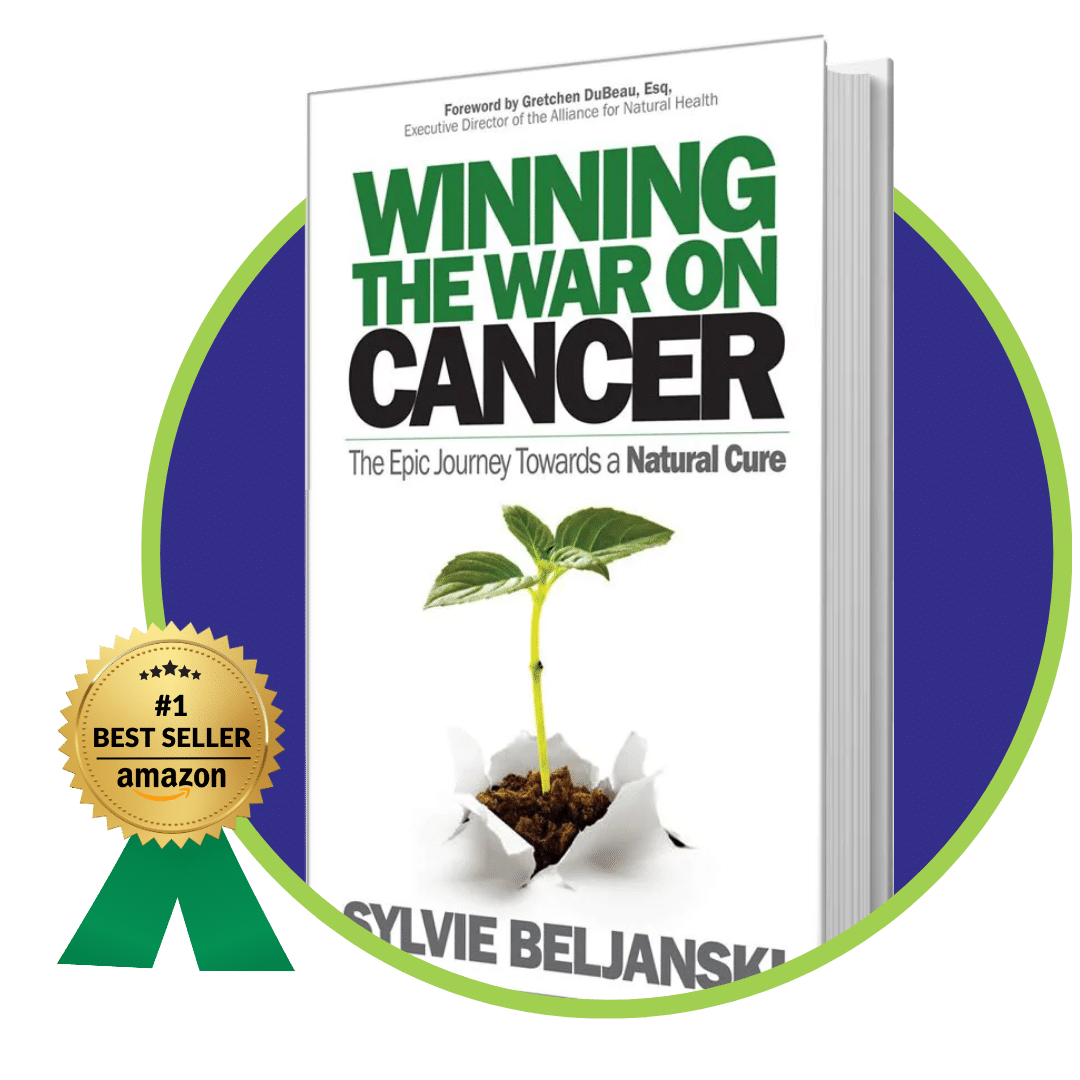
Award-Winning Book On Naturally Fighting Cancer
“For me personally, I think that Winning the War on Cancer by Sylvie Beljanski is one of those books that people should read. I have for a long time believed more in natural remedies than pharmaceutical cures, so I was involuntarily drawn to read the book.
It still preys on my mind on how the government can take up war against something that can save a lot of lives. I mean I know that a sort of thing like a more natural cure would likely actively threaten the pharmaceutical industry, but isn’t the industry on the side of saving people with something that has very little, or indeed no, toxicity at all? It’s so eye-opening and harrowing and I can’t yet state how I feel about everything that I learned.
I would recommend the book to anyone because many people these days are constantly being kept in the dark about natural remedies. What I love most about the book is that, though the book’s main point is cancer and its treatment, it also touches on areas that are vital to leading a healthy life. It points out the importance of detoxifying our body, especially since we live in a world where toxins are constantly released into the air by our technological marvels.”
4 out of 4 stars – Review by Nmesoma – OnlineBookClub.Org