
Episode 67: She Couldn’t Make a Fist—Then She Healed Her Rheumatoid Arthritis | Jane Hogan
This episode is also available on:








In this episode of The Beljanski Cancer Talk Show, Sylvie Beljanski speaks with Jane Hogan, a wellness engineer and functional medicine certified health coach, about how she reversed crippling rheumatoid arthritis using nervous system regulation, breathwork, and mindset — without medication.
Jane shares how the sudden loss of her mother triggered a stress response that manifested as debilitating joint pain, how a simple dietary shift led her down a path of holistic healing, and how she now teaches others to calm their nervous systems and release chronic pain using her “DESIGN” blueprint. The conversation covers the deep connection between stress, emotions, and physical pain, the power of breathwork to activate the body’s relaxation response, and how people-pleasing and perfectionism can be signs of a nervous system stuck in protection mode.
🔑 Three Key Takeaways
- Stress is often the root cause of chronic illness
Jane connects her rheumatoid arthritis diagnosis to a year of unprocessed grief and stress after her mother’s sudden death. She explains how chronic stress locks the nervous system into “fight or flight,” disrupting digestion and immune function, and contributing to autoimmune disease, cancer, and other chronic conditions. - The breath is a powerful, accessible healing tool
Belly breathing activates the parasympathetic “rest and digest” response — the state in which the body actually heals. Jane shares how she builds breathwork into her daily routine, from her morning practice to mid-run, as a way to consistently shift her nervous system out of stress. - Healing means building new pathways, not forcing perfection
Using the metaphor of a well-worn path through tall grass, Jane explains that healing isn’t about eliminating pain through sheer willpower — it’s about gently and repeatedly building new mental and physical patterns, including giving yourself permission to enjoy life again before you feel “fully healed.”
⏳ 00:00 Introduction to the power of calm in healing
⏳ 02:39 Jane Hogan’s personal journey with rheumatoid arthritis
⏳ 08:23 The connection between stress, emotions, and physical pain
⏳ 12:01 How to calm the nervous system through breath and mindset
⏳ 18:46 Rewiring neural pathways and building new habits
⏳ 28:04 The Wellness by Design blueprint: desire, explore, surrender
⏳ 29:02 Creating a vision of health and using music and visualization
⏳ 31:05 Implementing the blueprint and resources for healing
⏳ 33:34 The importance of self-awareness and internal responsibility
⏳ 38:39 Final thoughts: shifting into a state of health and happiness
Jane Hogan (00:00)
In that desire step, I have two habits. The first habit is create calm, and I just get people to start practicing the breath. The second habit I call amplify your vision. It’s about creating a vision of your healed and healthy self. What would you like to be doing? What’s the emotion? What does it feel like in your body?
Find a song that goes with it, because songs are very powerful evokers of emotion. And practice that vision, because we create everything twice. It’s first created in the mind, then it’s created physically. So we have to give our brain a target. It’s like putting a destination into a GPS. So there’s the breath work, then shifting to this vision, perhaps playing the song, feeling the feelings. That’s the first step, desire. It’s not hard, and it feels good.
Sylvie Beljanski (00:59)
Welcome to the Beljanski Cancer Talk Show, where integrative science and holistic healing come together. I am Sylvie Beljanski, and in each episode we explore nutrition, lifestyle, mental health and research-backed approaches to support the whole person through cancer and chronic diseases.
Hello and welcome to the Beljanski Cancer Talk Show. It is my pleasure today to welcome Jane Hogan, who is going to talk to us about the power of calm. Jane is a wellness engineer. She blends science and spirituality to help people release chronic pain using the mind, body and breath so they can become empowered creators of their own health. Her personal experience of reversing crippling rheumatoid arthritis using natural solutions inspired her to leave a 30-year engineering career and become a functional medicine certified health coach, certified yoga teacher and wellness educator. Combining ancient wisdom with leading-edge science, Jane’s Wellness by Design blueprint has helped hundreds of people release chronic pain naturally.
She is the host of the Wellness by Design podcast, and her empowering message has been featured on numerous podcasts and seminars. Welcome, Jane, to the Beljanski Cancer Talk Show.
Jane Hogan (02:39)
Thank you so much, Sylvie. I’m so happy to be here.
Sylvie Beljanski (02:43)
I’m delighted to have you, but sorry to learn that you have been suffering from crippling rheumatoid arthritis. Can you tell us a little more about your personal journey? What happened to you, and what did you learn while dealing with it?
Jane Hogan (03:03)
It came on really suddenly for me, Sylvie. I was going along in my normal life, working as an engineer at the time, but I had gone through a very stressful year. My mother had died suddenly in 2015. She was my best friend, so I was in deep grief, and shocked, because she was in good health.
I was also the executor of her estate, so I had all of those responsibilities. She lived a seven-hour drive away from me. I have two older siblings and one younger sibling, so everyone knows this can be a really stressful time. It was a very stressful year. Toward the end of the year, I was finally dealing with the house and the contents. My mother had been in the house for fifty years, and my father had already passed. They were travelers and collectors, so it was full of stuff, and I had a lot to deal with.
I was just coming to the end of that, doing the final dividing of the contents and getting the house on the market, when the pain started, and it was severe. I can’t remember if it was my right or left shoulder, but it was in one shoulder one day, so bad my arm had to go in a sling. The next day it was the other shoulder.
It started rotating through the joints in my body, and I had no idea what was going on. I thought it probably had something to do with the stress, because it had been such a stressful year. But very quickly, within three months, I went from being strong and healthy to barely able to walk. I couldn’t make a fist. No grip strength in my hands, jaw pain, knee pain, hands, elbows, feet, everywhere. My knees were swollen.
I thought I just needed a vacation, because I’d finally sold the house and everything would be fine. But I didn’t get better, and it took me down a path. We didn’t know what it was. I was very lucky to have a family doctor who told me that sometimes foods can cause joint pain. I thought that was really crazy at the time. I had never heard this, and that was back in 2016. But I cut out gluten and dairy, because she said they were the biggest triggers, and within about five days I noticed a reduction in pain.
I think that changed everything. It empowered me, and it took me down a whole pathway of healing holistically. It led me to functional medicine. There, I was more interested in the power of the mind than any other topic. I realized that for me, food was helpful, but it wasn’t the only thing. So I learned about the nervous system, the power of the mind, and how many things are available to us to change our physical body through the mind and the nervous system. That’s the 30,000-foot view.
Sylvie Beljanski (06:21)
How long ago was that?
Jane Hogan (06:25)
The pain started in 2016. I spent a couple of years on this path, trying to figure it all out and getting better along the way. I ended up being diagnosed with rheumatoid arthritis. The rheumatologist told me about the medications, but I was having some results with what I was doing, so he was supportive of me carrying on without medications, if that was my choice. And it was my choice, because the side effects were very frightening to me, and it didn’t make sense to me to take a medication for something I knew stress had turned on. So I just kept doing what I was doing.
It probably took me about two years to really get it under control. I didn’t know what I was doing at first. Because I was starting with food, I was creating a lot of stress around food in my life. And I’m a work in progress too. I know that stress can still impact my body, so I have to keep working at it. But basically, I live pain free now. I’m running. I just ran a 25-kilometer trail run a couple of weeks ago, and I’m living my life again.
I ended up leaving my engineering career because all I wanted to do was talk about and share what I had learned, because most people aren’t hearing it. We’re taught that pain is something to cover up or cut out or hide, that it’s a problem, instead of seeing it as our body giving us a message. It’s really information, to help us create the environment where the body can do what it does, which is return to homeostasis.
Sylvie Beljanski (08:11)
So how would you describe the connection between stress, emotions and physical pain? In your view, how does it all work together?
Jane Hogan (08:23)
It’s so interesting. Because I’m an engineer, I’m more of a systems thinker, and I was looking at the big 30,000-foot view: what’s going on here? I had stress, and it turned on pain. What was going on with that? So I looked at what happens when we’re stressed. It shifts the nervous system into the stress response, and in that stress response, all of the other systems stop working.
Our brain and nervous system think we’re in mortal danger, so they direct all resources toward protecting us. Heart rate goes up. We don’t sleep, because we have to be on alert. All our energy goes to that, and the other systems start to not work so well. So there can be digestive problems, and that actually happened to me.
I learned pretty early on that I had small intestinal bacterial overgrowth, which can happen if your digestion isn’t working well, and digestion doesn’t work well under stress because it isn’t essential to surviving an immediate danger. That has all kinds of downstream effects, because eighty percent of our immune system sits on the other side of our digestive tract. So it gets triggered, and that has other downstream effects, one of which is autoimmune disease. Another could be cancer. Another could be diabetes, all kinds of things.
So many of the things we think of as an inevitable part of aging, or bad luck, or bad genes, actually have the nervous system at the root. The nervous system got stuck in the fight-or-flight response, and that has had these downstream effects. So the root cause is the nervous system.
I’ve also studied pain a lot, and there’s a whole lot going on with the way the brain works with pain. Emotional pain and physical pain follow very similar pathways in the brain in terms of triggers, so emotional pain can trigger what feels like a physical pain response. That doesn’t mean the pain someone is experiencing isn’t real. If anyone is experiencing pain, it’s all real pain. But there’s a lot going on in the brain in terms of learned pathways that just keep being repeated, over and over.
Then, naturally, we have fear about the pain, because that’s what we’ve learned. For me, barely able to walk, I started thinking: What’s going to happen in my future? Am I going to be able to stay in this house? I’m not going to be able to do anything. And of course that keeps the nervous system stuck in a stress state. You can perpetuate that pain-fear cycle, and it keeps going, because then the pain gets worse. So there are a lot of other interesting neurological things going on specifically with pain as well.
Sylvie Beljanski (11:40)
Yes, for sure. There is the emotional pain and the physical pain, and it all gets compounded into a kind of big ball that creates even more anxiety. Beyond foods like gluten and dairy, what can we do to calm the nervous system?
Jane Hogan (12:01)
Even though I started with food, and I know a lot of people still think, “I just have to figure out which foods to avoid and then I’ll be fine,” people can get really granular with so many things, and I think it misses the point. The first thing we need to do is be able to regulate our nervous system. And the easiest way, I found, is the breath.
That’s one way. Sometimes I think about it as top-down approaches and bottom-up approaches. A top-down approach, in terms of thinking, might be shifting to: What am I grateful for right now? That’s a simple way to get out of fear. If you’re thinking about what you’re grateful for and what’s going well in your life, it’s hard to also be in a fear state.
The breath is a very body-centered way to start. Start by breathing into the belly. When we breathe into the belly, we activate the lower lobes of the lungs, and that activates the parasympathetic nervous system, the relaxation response. So we can actually change our breath and create that response. There are so many other things, but those are really good starting points.
Sylvie Beljanski (13:28)
Sometimes we decide we’re going to create a routine and take time for meditation and journaling and all those things. But after a few weeks, we feel stuck, like it’s not working. We try to heal, but we feel it doesn’t work. With this approach, sometimes we can’t just decide we are going to heal and make it happen.
Jane Hogan (14:07)
I’m never surprised at the power of the mind. I see this a lot, where people are working really hard at trying to heal. They’re focusing on: I must journal, I must do my breath work, I’ve got to do this. Darn, I still have pain, or whatever the symptom is. It’s not working. I don’t think this is working. And of course, all of those thoughts don’t shift us into the rest-and-digest response. They keep us in the fear response, the stress response of the nervous system.
So I won’t say it’s easy. It’s simple, but not necessarily easy. We have to start with awareness. What are you thinking about most of the time? Can you start to make little shifts? It might be: I still have pain, but I’ve noticed some small changes in the right direction.
Even if someone hasn’t noticed changes, the power of affirmations, used the right way, can be so supportive. “I am open to the idea that I can do something about what’s going on physically in my body.” That could be a starting point for someone who’s asking, will this even work? Just being open to the idea. Or, “I am making gentle shifts each day.” Simple little things like this change your thoughts. Because if your thoughts are focused on “I haven’t figured it out yet, I’ve got to work harder, what am I missing, this isn’t working,” all of those thoughts keep us in the stress response.
And it’s okay. I’m not saying we never want to experience negative feelings. We do. We want to allow our feelings to be expressed. We just don’t want to sit in unsupportive feelings all day long, because if we do, we’re not going to shift. We have to shift our nervous system over to the relaxation response, and we can do it a little at a time. Any little change will help. Just keep taking the baby steps, day after day after day.
And sometimes, Sylvie, the answer is to stop focusing so much on your health. Do something you really love to do. I’m thinking of a woman in my program who also had rheumatoid arthritis. I have people with a lot of different types of pain, but she had been really focused on what she could do to fix herself. I understand, because I was doing that too. I was trying to figure it out.
After a while I found out that she did watercolor painting. So I said, “Just do some watercolor painting. It doesn’t have to be perfect. You’re just doing it to enjoy the process.” And she started doing that. It’s in these little steps of forgetting about working so hard to figure it out, and getting back to living life and doing what brings you joy, what’s fun for you again. That’s an example of a baby step. Giving yourself permission: I don’t have to be perfect. I don’t have to be back to perfect health in order to live my life again. I can start living my life and enjoying the moments now. And that keeps changing and shifting things.
Coming back to the brain, I sometimes think about neural pathways like paths through a field of tall grass. If we’ve always taken the path of pain and fear, pain and fear, what’s wrong, I’ve got to figure this out, then that path is really well beaten down, and it’s going to be the easiest one to take. If we want to take a different path, things are shifting, pain isn’t something to fear, I’m okay right now, I have a roof over my head, I’m safe right now, then we can start to build new pathways in the brain. Eventually the grass on the old path starts to grow back, and it gets easier and easier to take the new one. But building a new path takes some effort. It’s not going to come easily. We have to really be aware and start making the shifts to take that new path.
Sylvie Beljanski (20:05)
Would you say that focusing on external things, like food or a painful relationship, is unconsciously a way of not letting go of the pain and the stress? A way of holding on, rather than looking at what is internal?
Jane Hogan (20:36)
I think when we focus totally on the external, especially if it’s not within our control, that doesn’t feel very safe. So it helps to shift to: this is my responsibility. I’m the one in control, and I’m the one who decides what to put my attention on. It’s not that food isn’t important. It is important. It’s more about what your thoughts are about it.
I got to the point where I had orthorexia, where I was afraid of eating anything but healthy food, and it was really stressful for me. So it actually wasn’t that helpful. Now I teach people to begin by simply enjoying their food: being mindful about what you’re eating, being grateful for it, slowing down so you’re helping your body digest, noticing the taste, the flavors and the smells, and appreciating the textures. That’s what I get people to focus on as a first step, rather than “I’ve got to cut out gluten,” because that is hard for a lot of people.
I remember telling one man early on about how I was cutting out gluten. He had some pain in his fingers, and he said, “I’m not cutting out gluten. You may as well drag me off to die. I’m never going to do it.” So it’s just not going to work for everybody. And the power of the mind is amazing too. If we believe certain foods are going to be harmful to us, they probably will be. There’s so much going on. We’re not even touching on the quantum perspective, that we are energy. Energy is a frequency, and thoughts and emotions are frequencies, so all of the thoughts we have are frequencies affecting our own frequency. We’re just such wonderful beings, I think.
Sylvie Beljanski (22:51)
You were speaking about the breath. Can you tell us a little more about what you practice?
Jane Hogan (23:00)
For a long time I didn’t know that I was breathing mostly in my chest, quick, shallow breathing. A lot of people in pain also hold their breath. It’s common to be a breath holder if you’re in pain. That’s what happens when we shift into the stress response of the nervous system. The breathing tends to be up here, and it tends to be quicker, because we’re ready to run.
What we know is that if we can lengthen the breath, breathe lower into the belly, not hold our breath, and breathe in and out through the nose, all of these things can help shift the nervous system into the relaxation response. And that’s where all healing happens. Healing cannot happen in a stress response state. Healing happens in a relaxation response state.
So the breath is a great way to get there. Luckily, we can control our breath consciously. It’s a habit, too. We have a habit of breathing, and we want to shift into a habit of deeper, longer breaths. Longer exhales are also really good, because it’s the exhale that shifts us into the relaxation response. So we can practice that, teaching our body a new way to breathe.
There are times when I still have to come back to it. Even right now, I can tell I’m breathing very much in my chest, because I tend to talk quickly. But if we make time to practice slower, conscious breathing, we can start to shift into that state more often.
Sylvie Beljanski (24:54)
How long did it take you to really master that, from the time you decided this was the way you would go?
Jane Hogan (25:06)
It wasn’t the only thing, but it certainly was a starting point for me, once I realized the power of it and the power of the nervous system. I’m a work in progress, Sylvie. I still have to work at it, but I do practice. I have a morning routine that includes a mindfulness breath work practice. I take a rest in the middle of the day, not asleep, but a rest where I shift back again. I practice before I go to sleep, as part of my wind-down bedtime routine.
I even practice while I’m running, believe it or not. I’m a trail runner, so it’s a slower pace. While I’m running, I start with the exhale, pulling my belly back toward my spine so that when I inhale, I can fill up my belly again. I practice that while I’m running because I notice that when I run, I don’t fill up my belly when I inhale. So anytime I can think about it, I try to practice it.
Sylvie Beljanski (26:21)
And there comes a point where you’ve made some improvement, and you have to go beyond focusing on those improvements, start getting your life back, and stop thinking about the pain or what you have to do every day to avoid it, right?
Jane Hogan (28:04)
Yes. I was trying to come up with a model for how to teach this, a path for people to follow. So I put everything I teach into what I call the DESIGN blueprint, because I’m an engineer and I love engineering terms. DESIGN is an acronym for desire, explore, surrender, integrate, generate, navigate. Each step has a couple of habits that move people along a path. It’s not an exact science, but it’s a path to follow, so it doesn’t feel so overwhelming.
The first step is desire. In the desire step, I have two habits. The first habit is create calm, and I get people to start practicing the breath. The second habit I call amplify your vision. It’s about creating a vision of your healed and healthy self. What would you like to be doing? What’s the emotion? What does it feel like in your body? Find a song that goes with it, because songs are very powerful evokers of emotion. And practice that vision, because we create everything twice. It’s first created in the mind, then it’s created physically.
So we have to give our brain a target. It’s like putting a destination into a GPS. So there’s the breath work, then shifting to the vision, perhaps playing the song, feeling the feelings. That’s the first step, desire. It’s not hard, and it feels good. It feels good to slow down the breath. It feels good to feel the feelings of doing something you love, even if you’re just imagining it. They say the brain can’t tell the difference between something we imagine and actually doing it. So this is a wonderful starting point. It’s like plugging the coordinates into the GPS.
Then we move on from there to the other steps. The last ones are about doing joyful things. What do you do for play and creativity? What do you want to learn more about? This is really all about expressing your soul, because we came here to be an expression. What do we want to learn about? What do we want to participate in? It takes us right back to participating in life again. And it’s circular, because once you’ve gone through the blueprint, perhaps you have a new desire, a new goal, and you go through the model again to bring that new desire to life. I just love this little model. It works really well for people, and they really enjoy it.
Sylvie Beljanski (31:05)
So what would you recommend to people who would like to learn more about this blueprint and really implement it in their lives? They’ll need some support. It’s going to be difficult to do alone.
Jane Hogan (31:22)
My membership program is called Living Pain Free, and this model is at its core. But if someone wants to learn about it first, I lay it out in my book, Pain Free on Purpose: Use Your Mind to Heal Your Body and Get Your Life Back. I lay out the blueprint and the habits in the book so people can follow it on their own. And I have a free chapter if anyone wants to get the first chapter.
Sylvie Beljanski (31:50)
Absolutely. We will have a link in the show notes. People can get the free chapter, sign up for your newsletter, and continue this very important work.
Jane Hogan (32:09)
I send out an email every Friday called the Friday Thrive, where I give people little shifts they can make to bring their nervous system back to regulation. A lot of people tell me it’s the only email they open. They look forward to it every week because it’s just little things they can do. If people want to work with me a bit more, they can join the membership, which is a lovely community. I do coaching every week to support people through the curriculum.
But they don’t have to do that. It’s all in my book, and I share things on my YouTube channel and in my Friday Thrive every week. So there are lots of ways people can learn how to do this. And the beautiful thing is that everyone can do this. It’s within your power. You don’t have to go outside yourself for someone else to do it. This is your work to do, and it’s very empowering.
I believe that when our body starts to show signs of disharmony, it’s because the full version of who we are, our soul, wants to come through, and it’s getting blocked by a nervous system that’s stopping it. So we can retrain our brain and nervous system to allow all of that loving essence of who we are to come fully through.
Sylvie Beljanski (33:34)
I see that as a very unique opportunity to get into a safe space and do work that can make a difference in everybody’s life. Even if we have already mastered some focus and are able to function well, there are always areas in our lives that tend to trigger us. And you had that. Your life was on track right before your mom passed. You were an engineer with a thriving career, and then life happens, and you realize you still have a lot to learn, to achieve and to discover within yourself.
Jane Hogan (34:22)
What I really realized was that my mother dying, and the stress of that year, was more like the straw that broke the camel’s back. I’d been carrying stress my whole life, like a lot of people, and a lot of women, I would say. We learn to be people pleasers, perfectionists, independent. We have trouble saying no. We’re always helping other people and putting them first.
All of those are actually not so much personality as a behavior of protection. When we were very little and different things happened, or we interpreted them a certain way, or we learned things from our parents and other people in our lives, we couldn’t fight or flee. So we learned to fawn. That’s the other word being used. We learned how to adapt our behavior to keep us safe.
So my whole life, humming along with me, was this underlying stress in my nervous system, where I didn’t feel safe unless I was perfect. Of course, no one can be perfect, so how could I ever feel fully safe? I see this so often. When I ask people about those traits we think of as personality, and I talk about it in my book as well, “How many of these do you have?”, they say, “All of them,” or “Most of them.” It’s a sign that our nervous system was already in protection mode from a very young age, with a background stress humming along our entire lives. And then, as life goes on and stressful things happen, our body says, “No more.”
Sylvie Beljanski (36:14)
Last question: how do you recognize when you are responding from protection rather than from your authentic self, when you’re not fawning, as you say?
Jane Hogan (36:26)
It’s hard when you’re not used to paying attention to it. I would say tune into your body. What do you feel in your body? Are you clenching anywhere? Are you tightening up? Do you feel a sense of a drop, of not feeling good, or any feelings that aren’t on the loving side of the spectrum? Those come from limiting beliefs, and limiting beliefs will always lead to the stress response of the nervous system.
So tune into your body. It may take a while if you’re not used to it. I didn’t know I was tightening and clenching a lot in my belly. Just start to tune in and notice. I did it just now, I think, because I shrugged my shoulders there.
I did tai chi for many years, long before all of this, and I remember my tai chi instructor saying, “Jane, relax your shoulders,” because my shoulders were like this all the time. And I’d think, they are relaxed. That was normal for me. So pay attention if people say things like that to you, or if you notice tightness. I had that as well. Long before these pain symptoms showed up, I had tendinitis. I’d have to go for massages and see the chiropractor.
All of these are signs that our body is tensing. And if our body is tensing and clenching, why is it doing that? Because it’s getting ready for protection. And why is it getting ready for protection? Because the nervous system has shifted into the stress response.
Sylvie Beljanski (38:07)
That’s fascinating. Thank you so much, Jane. I think that was really empowering for a lot of people. We all need to recognize exactly where we are on this journey, from stress to a happy place where we are not in a fight-or-flight response, and where we can focus on the happy feelings that are going to make our bodies happy.
Jane Hogan (38:39)
Yes. If we can shift there more often, we’re putting ourselves in a place where the body can return to homeostasis and start to do the repair it needs to do. Sylvie, thank you so much for having me as a guest. It’s been an honor.
Sylvie Beljanski (38:54)
Thank you so much for joining us on the Beljanski Cancer Talk Show. It was a pleasure. Everybody, please look at the show notes to learn more about Jane’s book and the free chapter, and subscribe to her newsletter. Thank you, and see you for the next episode.
Thank you for listening to the Beljanski Cancer Talk Show. If this conversation supported or inspired you, please follow the podcast, share it with someone who may benefit, and leave a review to help others discover these integrative perspectives. For more resources, please visit beljanski.org.
Jane Hogan is a wellness engineer who blends science and spirituality to help people release chronic pain using the mind, body, and breath. Her personal experience reversing crippling rheumatoid arthritis using natural solutions inspired her to leave a 30-year engineering career and become a functional medicine certified health coach, certified yoga teacher, and wellness educator. Combining ancient wisdom with leading-edge science, Jane’s Wellness by Design blueprint has helped hundreds of people release chronic pain naturally. She is the host of the Wellness by Design podcast, and her empowering message has been featured on numerous podcasts and summits. She is the author of Pain Free on Purpose: Use Your Mind to Heal Your Body and Get Your Life Back.
Connect with Jane Hogan

Website



Related Episodes
Episode 65: She Skipped Surgery for Breast Cancer. This Is Why | Dr. Toni Galardi
Dr. Toni Galardi shares her breast cancer journey and her "disease to please" theory, exploring how boundaries, toxic relationships, and [...]
Stream Now
Episode 66: 3 Years of Chemo, Zero Antibiotics: One Mom’s Fight to Save Her Son | Season Johnson
Season Johnson shares how she supported her toddler through leukemia with functional medicine and nutrition — and how that journey led her to found [...]
Stream Now
Episode 19 – Inflammation: The Root Cause of Multiple Diseases with Sylvie Beljanski
Sylvie Beljanski dives deep into the dangers of chronic inflammation, uncovering how natural plant extracts can play a key role in reducing [...]
Stream Now
Episode 64: Why Fear Fuels Cancer — And How to Rewire Your Subconscious to Heal | Avinoam Lerner
Discover Avinoam Lerner's Mindful Remission approach to cancer, exploring psychoneuroimmunology, the subconscious mind, hypnotherapy, and [...]
Stream Now
Keep yourself updated!
Sign up below if you want to hear more about the weekly updates of The Beljanski Cancer Talk Show!
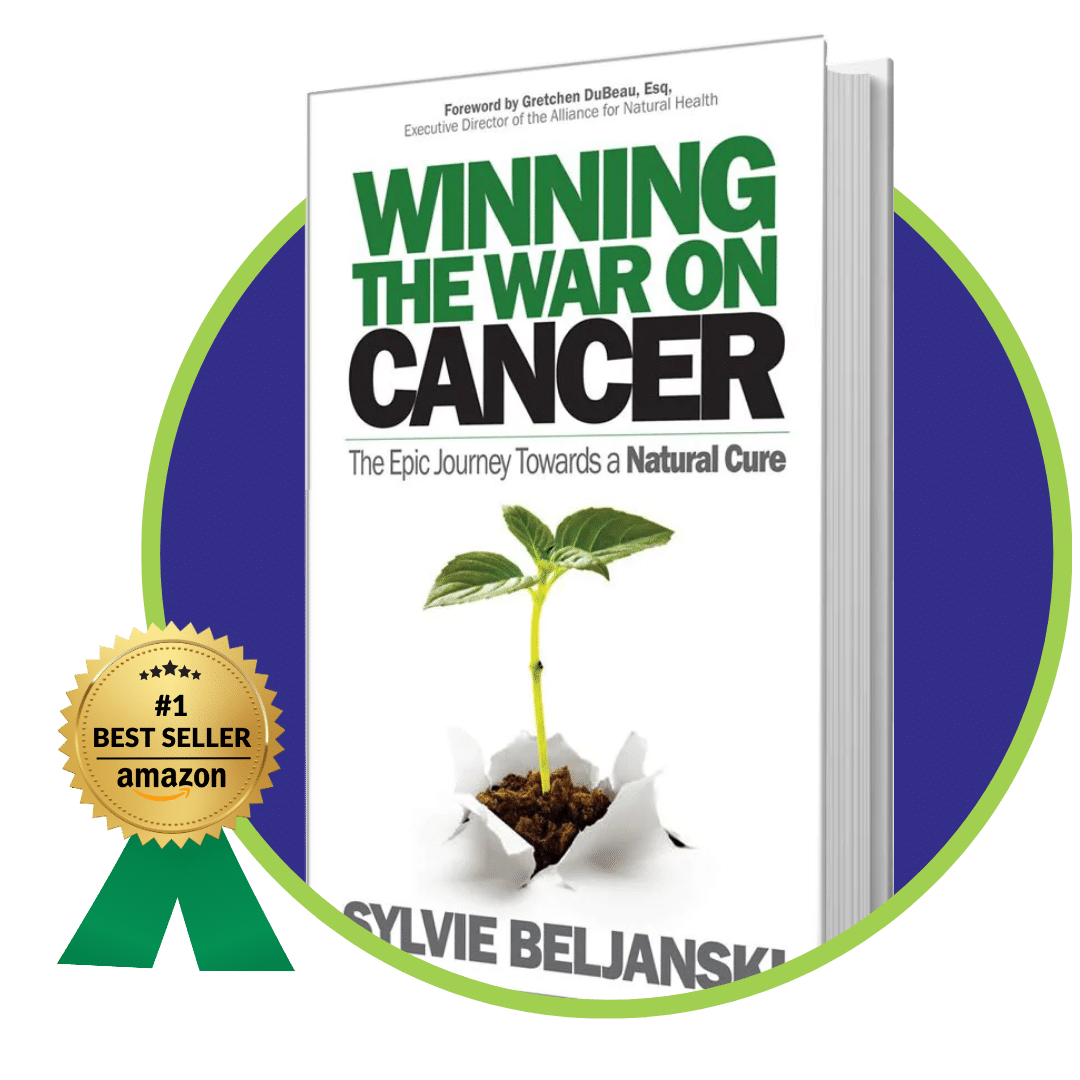
Award-Winning Book On Naturally Fighting Cancer
“For me personally, I think that Winning the War on Cancer by Sylvie Beljanski is one of those books that people should read. I have for a long time believed more in natural remedies than pharmaceutical cures, so I was involuntarily drawn to read the book.
It still preys on my mind on how the government can take up war against something that can save a lot of lives. I mean I know that a sort of thing like a more natural cure would likely actively threaten the pharmaceutical industry, but isn’t the industry on the side of saving people with something that has very little, or indeed no, toxicity at all? It’s so eye-opening and harrowing and I can’t yet state how I feel about everything that I learned.
I would recommend the book to anyone because many people these days are constantly being kept in the dark about natural remedies. What I love most about the book is that, though the book’s main point is cancer and its treatment, it also touches on areas that are vital to leading a healthy life. It points out the importance of detoxifying our body, especially since we live in a world where toxins are constantly released into the air by our technological marvels.”
4 out of 4 stars – Review by Nmesoma – OnlineBookClub.Org