Episode 66: 3 Years of Chemo, Zero Antibiotics: One Mom's Fight to Save Her Son | Season Johnson
This episode is also available on:








In this episode of The Beljanski Cancer Talk Show, Sylvie Beljanski speaks with Season Johnson, a functional nutritional therapy practitioner and integrative health practitioner, about the three-plus years she spent navigating her toddler son’s leukemia diagnosis.
Season shares how she and her husband (“mommy beast mode”) built a support team of functional-medicine mentors alongside her son’s oncology team, opted him out of the standard Children’s Oncology Group trial to gain more flexibility in his care, and brought in daily home-cooked, nutrient-dense meals — even as top pediatric oncologists dismissed nutrition as irrelevant to his outcome.
The conversation covers hospital advocacy strategies, the risks of prophylactic antibiotics in pediatric oncology, how to talk to a care team about supplements and detox therapies, and how her son’s cancer journey led her to found Thrive Through Cancer, Thrive Beyond Cancer, and the nonprofit Kick Cancer Movement.
🔑 Three Key Takeaways
- Advocacy can coexist with conventional treatment
Season didn’t reject conventional oncology — she layered functional-medicine support (supplements, detox therapies, targeted nutrition) alongside chemotherapy, while learning how to advocate within the system, including opting her son out of the standard Children’s Oncology Group trial to gain more flexibility with his care team. - Nutrition and community carried the family through
Rather than relying on hospital food, Season’s family and friends organized a daily rotation of home-cooked, nutrient-dense meals delivered to the hospital — a practice she now teaches other families through a free “Hospital Essentials” guide. - A cancer diagnosis became a calling
Watching her son go through treatment — and watching other children suffering in nearby hospital rooms — Season was moved to found Thrive Through Cancer and Thrive Beyond Cancer, along with the nonprofit Kick Cancer Movement, to make integrative cancer support accessible to other families.
⏳ 00:00 Introduction to Season Johnson and her story
⏳ 02:12 Season’s background and how her son’s diagnosis changed her path
⏳ 04:23 Questioning conventional cancer treatments and advocating for nutrition
⏳ 08:34 Practical tips for bringing healthy food to hospitals
⏳ 12:24 Doctors’ reactions and the importance of advocacy
⏳ 15:35 The impact of treatment and the importance of a supportive team
⏳ 19:55 How to communicate with medical teams about supplements
⏳ 23:30 Looking back: what Season would tell her past self
⏳ 25:19 Support programs and future dreams for holistic cancer care
⏳ 30:55 What every patient should know on day one of diagnosis
⏳ 32:37 Living in hope and taking control of the cancer journey
⏳ 34:16 Resources and where to find support and information
Season Johnson (00:00.12)
I would like to know if you would take a different approach with his care or if you would just follow the same standard approach. And he he kind of looked at me questioning, like, this approach is proven. It’s fine. Why would you, why would you want something different? And I said, Well, can we just start with nutrition? I don’t appreciate the advice and the food they’re serving the kids. So what would you recommend? He literally started laughing.
And said, don’t fall for that. Nutrition has nothing to do with how he’s gonna beat this cancer. My husband was sitting next to me, and I’m small and not very confrontational. And I think he could feel my blood start to boil, and he grabbed my hand as if I was gonna reach across the the desk and punch this guy.
Sylvie Beljanski (00:47.15)
Welcome to the Beljanski Cancer Talk Show where integrative science and holistic healing come together. I am Sylvie Beljanski, and in each episode we explore nutrition, lifestyle, mental health, and research-backed approaches to support the whole person through cancer and chronic diseases. Hello and welcome back to the Beljanski Cancer Talk Show. Today my guest is Season Johnson. Season Johnson
is not just an expert in integrative cancer support. She lived it. When her two-year-old son was diagnosed with cancer, she spent the next three and a half years navigating daily chemotherapy, countless surgeries, and the impossible weight of fighting for her child’s life, all while refusing to lose hope. That experience did not break her. It built
her mission. Season Johnson is a functional nutritional therapy practitioner, integrative health practitioner and current student at the Metabolic Terrain Institute. She is the founder of the Strive Through Cancer and Strive Beyond Cancer programs and the owner of Biodynamic Wellness, a functional medicine practice in Solana Beach, California.
Alongside her husband, she co-founded the Kick Cancer Movement, a nonprofit bringing real food, detox, natural medicine, and community to children with cancer and the families who love them. Her work has been recognized with the Weston A. Price Activist Award, the Children’s Health Advocate Award, and the doTERRA Elevation Award.
She was a health and wellness expert at the 2019 Oscars and she has worked alongside professional athletes. But her heart has never left the family sitting in hospital waiting rooms just like she once did. Season, welcome.
Season Johnson (03:01.016)
Thank you so much. I’m so excited to be here.
Sylvie Beljanski (03:04.212)
I’m delighted to have you here and you you I mean it’s really emotional listening to you because I mean you come from the both the professional and the almost patient, let’s say, but experience. And I think it means a lot and it transforms the visions that many professionals have when they have to go through the real thing.
I I wanted to ask you as I was reading your your bio, when this drama happened with with your son, where were you in your professional journey? Were you already a health professional or is it that event that led you to to start the study and become a health professional?
Season Johnson (03:56.948)
Yeah, that’s an interesting question because it was very humbling. I was already a functional nutritional therapy practitioner and I had a private practice. And I decided actually to go back to school to become a functional nutritional therapy practitioner when Kicker, my son, was breastfeeding. So I went back to school when he was born and opened my practice shortly after he was born.
I was working part-time. And what’s interesting, Sylvie, is I would not touch cancer with a 10-foot pole. It felt very scary and intimidating. And at this point in my life, I didn’t know anybody with cancer. And I just so I helped families, I helped with detox and weight loss and hormone balance and, you know, just different general functional approach to those different health conditions. And so when Kicker got diagnosed, it was I mean
It was so humbling because here I was, this practitioner that people came to to get healthy and my own baby gets this cancer diagnosis. And I I I certainly questioned everything I’d learned, right? It was just a very uneasy event for sure.
Sylvie Beljanski (05:12.626)
You keep saying the word humbling but at the same time you did this thing that very few moms are able to do is to to to question what the doctor is saying and to really impose yourself to be part of the team of the medical team who is going to take care of of the of the child. How did you
do that? How did you come from this humbling feeling you are just mentioning to, I mean, establishing your turf and and making sure that you are doing more than just following orders?
Season Johnson (05:54.562)
Yeah. My my husband called it mommy beast mode. He said it was like a a switch went off one morning and just activated. And you know, I think we all have a choice when we’re faced with something like this. We can choose to be a victim and just kind of sit back and let the circumstance happen to us. Or we can choose to let this be an opportunity to grow. And when it came to my child, I mean, I wasn’t willing to just sit back and
I think this is where God’s story — just the timing of of my story and going back to school when Kicker was born is really powerful because with that background and that knowledge and that understanding of basic biology and nutrition, I knew that there was more we could do than just pump his body full of poison. And I was fortunate to have two incredible mentors, Dr. Jorge Moreno.
and Kim Schuette. Kim Schuette is actually whose practice that I’m sitting in now and I purchased her practice. We unfortunately lost her in 2018 to glioblastoma. But prior to her getting diagnosed, she taught me so much of what I know. And her and Dr. Moreno came alongside us from the nonconventional approach and just locked arms and said, This is what we’re gonna do to support his body and keep it up while he’s going through the cytotoxic therapies.
And so I had a team behind me. It wasn’t just me, but it did wake something up in me that I, in those halls, I’m walking these halls with my baby who’s never had a vaccine, never had a toxin in his body, never had an antibiotic to this point. A very healthy, he went from breast milk to bone broth. We joke. Like he was such a healthy little boy. And now I’m pushing him through these halls, hooked up to chemotherapy 24/7, and passing these rooms
of bald children that are vomiting, that are miserable. And I just remember thinking, like, there’s got to be something else. This isn’t fair. And so I think seeing these other kids and walking this journey like just gave me this desire. I have to help these other families. Like, how do we help them? And and Kicker did very well through treatment. The doctors would just call us lucky.
Season Johnson (08:17.858)
But we were in the corner of his hospital room opening capsules of supplements and mixing them in applesauce and giving it to him by the spoon and doing castor oil packs and red light and detox foot baths. Like we were doing all of this intentionally alongside the therapies.
Sylvie Beljanski (08:35.2)
And how did the the doctors at the hospital react? I mean, generally, sometimes some doctors are very open and sometimes they just don’t want to hear of anything else that would interfere with the official treatment, especially when they are going through a clinical trial. Actually they are looking for data and they don’t want anything to interfere with their data.
Season Johnson (09:04.526)
That’s actually, I love that you mentioned that about the trial. So one of the things that I educate my families on now, when they’re not in a unique clinical trial for a more rare type of cancer, when they’re just diagnosed within the realm of a childhood cancer diagnosis, they’re immediately put into what’s called the Children’s Oncology Group, the COG. That is technically a trial. And what I learned six months into our diagnosis.
is if I opted him out of that, it gave me more freedom in conversation with the oncology team. And I’ll answer the first part of your question in a moment of how they responded. But I teach my families opt out of the trial for the child, the general Children’s Oncology Group, because that’s where you have a little bit more leverage of giving supplements and potentially getting approval from your team. But
As far as how they responded, so this is really devastating. I remember I had a connection, a former employer of mine, who happened to know the head oncologist of one of the most prestigious children’s hospitals in California. And at the time, we were being treated at Loma Linda Children’s Hospital. And I just thought, you know what? I think we should get a second and third and fourth opinion, right? Like I wanted to see what other oncologists had to say.
And at the time I didn’t realize that they’re just following the COG. There’s nothing deterring them off that protocol. Well, I was naive and hopeful. And so we got this meeting, which was a big deal. And we went to this hospital that was a couple-hour drive, sat down in this doctor’s office with walls covered with pictures of celebrities and all of this stuff. And he’s the top pediatric oncologist. And I said to him, my son,
you know, here’s his case. He’s very healthy, despite the fact that he has leukemia cells in his body and he has no comorbidities. I would like to know if you would take a different approach with his care or if you would just follow the same standard approach. And he he kind of looked at me questioning like, This approach is proven. It’s fine. Why would you why would you want something different? And I said, Well, can we just start with nutrition? I don’t appreciate the advice and the food they’re serving
Season Johnson (11:27.81)
the kids. So what would you recommend? He literally started laughing and said, don’t fall for that. Nutrition has nothing to do with how he’s gonna beat this cancer. My husband was sitting next to me, and I’m small and not very confrontational. And I think he could feel my blood start to boil, and he grabbed my hand as if I was gonna reach across the desk and punch this guy. I was, I mean, I was just
irate. Like I couldn’t believe this is this is what the top pediatric oncologist is laughing at me for questioning nutrition. And it was in that moment, though, honestly, Sylvie, that I just realized like, okay, so I need to now be the advocate for all these families because nobody’s gonna tell them that nutrition matters in this journey. And we were literally watching it keep my son thriving despite the medication.
Sylvie Beljanski (12:24.576)
Yeah. And so how did it — I mean, were you bringing food to the hospital? What was how did that happen really in in real life? What what kind of tricks did you have to go through to to bring I mean healthy food to your kid or take away the bad snacks that they are serving in in hospitals?
Season Johnson (12:51.414)
Yeah. Well, and most, you know, most pediatric hospitals have a McDonald’s in the hospital. So what we did practically, and I actually have, and I’ll send it to you and you can include this as a free handout. I have a really cool guide that I built that’s called Hospital Essentials. And it it gives families kind of the list of things to bring into the hospital to allow their meals to be more nutritious. It gives them a list of some of the healthier foods that they could order from a grocery store to be delivered to the room.
So I’ll I’ll send that to you. But what we did, and this is where community is everything, it takes a village, right? When you’re in a healing journey. And we were fortunate that the hospital we were staying at was close to my sister’s house. Her husband was actually in medical school at Loma Linda at the time. And I’m happy to report that he is now a functional medicine doctor and is all on board with holistic cancer therapies because of our journey.
But we lived close to her in in the hospital. Her house was close to us. So every single day between my sister, my husband, my brother-in-law, they would take turns preparing meals and rotate, bringing them over to the hospital. And then when they couldn’t, we had other friends that were in the area that would they knew exactly how we were feeding him. We actually had a friend that was a well-known cookbook author back in at this time. He brought my son
liver pâté, avocado mousse, and organic plantain chips because he knew his hemoglobin had been struggling and he thought, well, this is gonna help his hemoglobin levels. And so my son, who’s barely three years old, is sitting in his hospital bed. I have a picture of it, with organic plantain chips with sea salt, dipping it in liver pâté and avocado mousse and eating it. And the doctors just thought we were crazy, but
this is — we literally just had a constant rotation of people bringing meals to the hospital.
Sylvie Beljanski (14:49.038)
So obviously your son I mean got better and better. Did that attract some attention from the medical team? Or did they stop thinking you were crazy or did they start to learn something?
Season Johnson (15:06.498)
You know, unfortunately they didn’t. And I don’t blame them in the sense of, you know, just these I mean, they’re like they have no time outside of just patient visit, patient visit, patient visit. I just, you know, I blame the system, not necessarily the individual. But no, they there was never a question. Like I said, the only thing that we were told is, he’s just one of the lucky ones. To the point that he was so lucky that his
absolute neutrophil count, which is the count they measure, right? To kind of see if the chemo’s — if the body’s responding to the therapies. They want your immune system to absolutely be obliterated through conventional cancer treatment. Well, his immune system continued to stay in a healthy range and actually was the same levels of immune system that a healthy child that wasn’t going through cancer would have.
And he maintained this level for the most part through the duration of treatment. So what did they do? They increased his chemotherapy dosage because they just felt like it wasn’t working. Yeah. And so we got to the point where he was on probably one of the highest doses of chemotherapy that any child had been given. And so no, we weren’t questioned and they weren’t curious. We were actually kind of punished for lack of a better word.
with the doses of chemo that they continued to hand him.
Sylvie Beljanski (16:35.702)
That echoes, you know, stories that I heard from people taking the Beljanski supplements also and their immune system is not destroyed or they go through radiotherapy without burn. What doctors are doing is just increasing the dose to see how far they can go until until they see the the burn that they are expecting to see. and and and it it’s it’s absolutely horrible.
horrible but I am not surprised in hearing those stories and and I know a lot of doctors a lot of patients who just would not tell their the their doctor what they are doing on the side because they just want to stay the lucky ones without creating any any animosity or any any jealousy or any curiosity from the doctor. Yeah.
When you are facing cancer, the choices can feel overwhelming. Conflicting advice, endless options, and very little clarity. At Maison Beljanski, everything begins with science. For decades, molecular biologist Dr. Mirko Beljanski studied how specific plant extracts interact with cancer cells. Work that continues today through independent research and real-world use.
Maison Beljanski offers carefully formulated supplements inspired by that research, along with targeted support for immune health, cellular resilience, digestion, detoxification, and overall wellness. You will also find educational books, organic teas, personalized health coaching, and wellness programs designed to support the whole person, not just a diagnosis. This is not about quick fixes.
Informed choices, thoughtful formulations, and supporting the body alongside conventional care. Explore the products, the research and the resources at maisonbeljanski.com because when science leads, wellness follows.
Sylvie Beljanski (18:51.552)
It is so so sad to see that they would increase the dosage toxic dosage just because again.
Season Johnson (19:02.102)
And you know, one of the things that and this is something I do teach my families when I’m working with them, I teach them about advocacy, how to advocate for their child, how to have conversation with the doctor, ways to ask questions. And actually at your conference, when I had the privilege of speaking, I shared one of the the things that I tell my families to say to their oncology team when they’re bringing up a supplement or bringing up
I do encourage them. I say, I want you to share with your team everything that we’re doing here on the side. I mean, I would like you to. However, be prepared that 98 percent of it they’re gonna tell you no to. So when you bring it up, I tell them, I say, don’t ask them, can we do this? Instead, you show them the supplement or the detox therapy or whatever it is, and you say, Tell me why I shouldn’t do this. Exactly. And generally that’s where they’re like — they don’t know why.
Sylvie Beljanski (19:55.416)
Well yeah, they say well it’s not proven to work until that’s what why we I mean it’s it’s so important to the work I believe we are doing at the Beljanski Foundation, doing all this research to back all the plant extracts that we are using and then people can, you know, download those publications and ask specifically, so show me the science, Doctor.
Tell me why I should not use those plant extracts. Because they tend to dismiss everything as long as there is no science. And when there is science, they just don’t know what to say. They don’t have they are not prepared. They don’t know anything, they don’t read the science. And what they are taught at medical school.
Season Johnson (20:49.942)
Yeah, it’s it’s a shame. It really is. One of the one of the most archaic practices of pediatric oncology today that I pray is gone in the next five years, is they put every pediatric cancer patient on a prophylactic antibiotic for the duration of their treatment. And this is where, and that was something we didn’t do, and we also didn’t disclose because I knew they wouldn’t approve it.
We just chose to not do that. We were working closely with a functional team, right? Who was guiding us and advising us. We weren’t just blindly — but I believe that’s why his immune system did so well. And so when you talk about the research that I mean, we know what antibiotics do to the immune system, to the mitochondria.
Sylvie Beljanski (21:39.426)
And so it destroys the microbiome. How can you do well? Absolutely.
Season Johnson (21:44.866)
Yeah. So it’s yes, we’re I’m hopeful but but very unfortunately just a little bit pessimistic around advancements in pediatric oncology. I think it it just fires me up because it reminds me that I have so much more work to do and so many more families to support that don’t get access to this in their clinic visit.
Sylvie Beljanski (22:10.894)
So before we we we speak of what you are doing now. As of today, I mean and everybody who’s listening to your story will be delighted to learn that Kicker is 15 now and he’s doing a lot of sports, he’s doing jujitsu, he’s surfing. So look looking back, what would you like to
to to tell yourself, I mean, if you were were able to look at yourself during this the at the time of the diagnosis and at the time where you you made those so difficult decisions to to interfere in a way with the medical treatment of of your son.
Season Johnson (23:01.39)
That’s good. It was. It was very I was playing interference and it was very disruptive. You know, I think I would I would tell myself, like, first of all, this is going to be redeemed. This whole experience, this will be redeemed. Second of all, just I wish I had in the moments of making those decisions that we did, like to not give him the antibiotics,
or when he spiked a little tiny fever to not immediately take him to the ER for a dose of IV antibiotics and knowing that that little fever was a reaction to the toxic, you know, the cytotoxic therapy. His immune system was working, it was responding. And in those moments, it was terrifying. And I would question myself, like you said, but I think I would just I would remind myself that this is exactly his body was created intelligently.
And when we can bring in the raw materials like we did to work alongside in support of the cytotoxic therapies, he will thrive. And he did. And today, yeah, he’s a healthy 15-year-old. And I remember one of my best friends came to visit us in the hospital when he was first diagnosed. And it was one of the best things somebody ever said to me. She said, Season, stop asking why. You need to stop asking why.
And you need to start saying, I can’t wait to see what God does with this. And it was a really powerful mindset shift because I wanted to ask why. I mean, my kid was so healthy. Like I said, he went into this cancer diagnosis virtually, you know, untouched by conventional medicine and just a very healthy child. And so I was asking why. And it kind of you slip into that victim mentality rather than
pulling out of that and going, Wait, I can’t wait to see what you’re gonna do with this. And here we are, we went from having one child with cancer to thousands around the world. And just I mean, these loving on these kids is the greatest honor. So it’s been pretty cool.
Sylvie Beljanski (25:12.174)
So tell me more about what you are doing with those programs Strive Through Cancer and Strive Beyond Cancer programs.
Season Johnson (25:19.874)
Yeah, so it’s I actually created something that I wish I had when we were going through this. I created group programs, one for active treatment families under 18 and one for remission families. And we meet a few times a week on Zoom. They have access to a whole library of resources and protocols and recipes and meal plans and video lessons. And they get to jump on Zoom with me and my other practitioner who’s a pediatric oncology nurse and functional practitioner.
And we get to support them, we get to answer their questions, give them suggestions and to watch these families sit in this virtual room and look at each other and feel seen and heard and not alone is so powerful. So that community is huge. And then we also we’ve we started our nonprofit Kick Cancer when Kicker was about six months into treatment, when we realized like we have to get this information out.
And Sylvie, I have a really big dream and I’m I don’t know if it’s gonna happen, but Dr. Tony and Marcy Jimenez from Hope4Cancer. I’ve spent a lot of time at Hope4Cancer and my vision is to open here in San Diego a — like, I wanna call it a refuge or a retreat, but basically a space where we can offer red light, ozone, hyperbaric, all complementary therapies and not charge families to use it. And they get to come in
and just have a safe place that doesn’t feel clinical and doesn’t feel like a hospital, but is a place for them to come and be in between treatments to recover, after treatment to recover. And so our our nonprofit currently has a lot of different initiatives, but that’s the one that I just have my mind set on and I’m we’re slowly taking the steps of fundraising and and all of that. But it’s a it’s a big dream.
Sylvie Beljanski (27:12.102)
Yes, that sounds fantastic. When cancer enters your life, the questions don’t stop at treatment. You start asking why, what else, and what more can I do to support my body? At the Beljanski Foundation we believe cancer care deserves deeper answers. Answers rooted in science, not in shortcuts.
For decades, groundbreaking molecular research by Dr. Mirko Beljanski explored how specific natural compounds selectively target cancer cells while sparing healthy ones. That work continues today through independent research, education, and global collaboration. At Beljanski.org, you will find evidence-based resources, expert-led conferences, books,
and conversations that explore integrative approaches to cancer and chronic disease alongside conventional care. Whether you are a patient, a caregiver or practitioner, this is the place to learn, to question and to think more expansively about healing. Visit Beljanski.org to explore the research, attend upcoming events and connect with the Beljanski community. Because informed choices
begin with credible science. I really I really hope you will be able to to attract the number of people you need to attract to make make that happen. So you have your practice now. Can you tell tell me more deep information about your practice and where people can find find you?
Season Johnson (28:53.804)
Yeah, so Biodynamic Wellness, it’s a 20-year-old private functional practice. However, we just took it over in 2025 and it was my mentor’s practice. So the woman who taught me a lot of what I know. Now our practice is we support families walking through cancer or in remission. And so this is where we work with clients one-to-one. So we have the group programs.
And then we have the option of working with us at our practice with one of our practitioners who are all trained in pediatric cancer care. And we see adults as well from a complementary perspective, meaning if an adult wants to get support with us, they have to be working with a signing provider, whether it’s a Dr. Tony at Hope4Cancer or a, you know, their oncologist. And we support them from the nutrition perspective and some detox therapies, but we really specialize in kids.
And so we work, like I said, one-to-one, in person, virtual. A lot of our clients are virtual. And you can learn more going to our website. We have biodynamicwellness.com. That’ll show all the different offerings that we have to support families. And then my website has so many free resources. I always direct people there: seasonjohnson.com. It’s where my podcast is. So many blog articles. I mean, a wealth
of information. I I actually, it was such a blessing. I heard from a family not too long ago. They sent me a message on Instagram and they said, you know, our son, you don’t know us, but our son is now in remission. We never bought one of your programs. We never worked with you, but we went off all of your podcast episodes, all the free resources on your website. And our son thrived through treatment and he’s doing so well.
And it was just so reassuring to see like all that there’s so much information out there that we have to support families that’s even free.
Sylvie Beljanski (30:50.178)
What is the one thing you wish every patient knew on day one of the diagnosis?
Season Johnson (30:55.892)
Hmm. There’s so that’s there’s so many answers to that question. I think that the word hope is really powerful. It’s the most powerful molecule.
And I wish that they just had this like constant vision that is right in front, like six feet in front of their their ability to see, that was like this dangling molecule of hope, and that they wouldn’t lose sight of that. Because the minute they lose sight of that, I think that’s where we get consumed with what’s next and what just happened. And so
One way that we did that through treatment, and I encourage people to do is live 15 minutes at a time. Because if you’re living in that present moment, you’re living 15 minutes at a time, you can’t get overwhelmed with anxiety. You’re not anticipating what’s to come and you’re not looking back on what just happened. You’re being so present in the moment. And so I would say living 15 minutes at a time allows you to see that dangling molecule of hope and keeps you focused on that.
Sylvie Beljanski (32:04.78)
Yeah.
A lot of people when they hear I mean you have cancer or your child has has cancer, I mean they become instantly flooded with a lot of emotions and fear and and it’s really difficult at that moment to to to to think through and actually to to set focus, stay focused and to to keep listening to what the doctor is saying and I believe you know saying
you have time to to get second and the third opinion is really the way the way to go to to give yourself the permission to to have time. It’s not it’s not something I mean generally the the cancer in children goes faster. Their young cells divide faster than in people who are older, adults and older people. But yet you have the time to
to get some other opinion and and to visit a functional doctor. I think that’s very, very
Season Johnson (33:16.236)
Yeah, that’s a really good point. It is very rare that even in pediatrics a cancer diagnosis is an emergency situation. There are certainly those times. But what you said is so important that when you receive a diagnosis, you take a breath, you take a moment, and then you make a plan of okay, who do I want to contact? I say this in an encouraging way. A cancer diagnosis is like your Super Bowl. You are going to recruit the best
teammates to walk with you. And if you walk into that oncology office that you just got the diagnosis with and you feel unsettled in your spirit and you feel overwhelmed with just not a good energy, find a different oncologist because that’s the person you’re working with for a long time. And you need to feel a spirit, a sense of peace in your spirit. And so yeah, this is your Super Bowl. Take the, take time to pull your teammates in and handpick the team members that you want on your team.
Sylvie Beljanski (34:16.416)
Yeah, it’s really, really important. So speaking of resources and information, can you repeat where people can find you and get the first, I mean, guide of what to do first in your view? Yeah.
Season Johnson (34:33.902)
Okay, so actually if you go to seasonjohnson.com, right on my homepage, there is a start here guide. It is totally free and it is so incredibly helpful. So go there, grab that guide. Biodynamicwellness.com is where you’ll find all of our services and our group programs, our one-to-one options. And then make sure if you have a child with cancer or in remission, go to kickcancermovement.org and request
one of our kits. We send a kit out to every child that is a healing kit. It has detox supplies, some organic snacks, some supplements, a little superhero cape. And it’s a way to bless families and help them step into this healing journey. So make sure to grab that. And then I’m on Instagram, Season Johnson. Kick Cancer is on Instagram. So is Biodynamic Wellness. And I’m — I respond to messages. So reach out to me. I would love to encourage you.
Sylvie Beljanski (35:28.878)
Thank you. Thank you, Doctor Johnson. That was really, really valuable and I think it’s going to be appreciated by a lot of families all across America.
Season Johnson (35:39.97)
Thank you so much for having me.
Sylvie Beljanski (35:42.382)
Thank you for listening to the Beljanski Cancer Talk Show. If this conversation supported or inspired you, please follow the podcast, share it with someone who may benefit, and leave a review to help others discover these integrative perspectives. For more resources and to see what we offer, please visit beljanski.org.
Season Johnson is a functional nutritional therapy practitioner, integrative health practitioner, and current student at the Metabolic Terrain Institute. She is the founder of the Thrive Through Cancer and Thrive Beyond Cancer programs and the owner of Biodynamic Wellness, a functional medicine practice in Solana Beach, California. Alongside her husband, she co-founded the Kick Cancer Movement, a nonprofit bringing real food, detox, natural medicine, and community to children with cancer and the families who love them. Her work has been recognized with the Western Air Price Activist Award, the Children’s Health Advocate Award, and the doTERRA Elevation Award. She was a health and wellness expert at the 2019 Oscars and has worked alongside professional athletes — but her heart has never left the family sitting in hospital waiting rooms, just like she once did.
Connect with Season Johnson

Website


Related Episodes
Episode 12 – Envision The Future Of Natural Health In Cancer Care with Dr. Rob Verkerk, BSc, MSc, DIC, PhD, FACN
In this episode, Sylvie and Victor talk with Dr. Rob Verkerk about his fight for natural health freedoms and the importance of public trust in [...]
Stream Now
Episode 46: Outsmarting Cancer: Dr. Jimenez on the 7 Key Principles and the 11 Integrative Hallmarks of Cancer
Cancer isn’t one problem with one solution, it’s a system that needs to be understood as a [...]
Stream Now
Episode 22 – Find The Cause, Then Find The Cure with Zach And Savannah Labie
Zach’s journey from stage 3 colorectal cancer to recovery proves that true healing isn’t about following the crowd—it’s about embracing [...]
Stream Now
Episode 43: From Cancer Patient to Cancer Coach featuring Elaine Gibson
Elaine Gibson transformed a Stage IV cancer diagnosis into a healing blueprint—learn how she built a body where cancer cannot [...]
Stream Now
Keep yourself updated!
Sign up below if you want to hear more about the weekly updates of The Beljanski Cancer Talk Show!
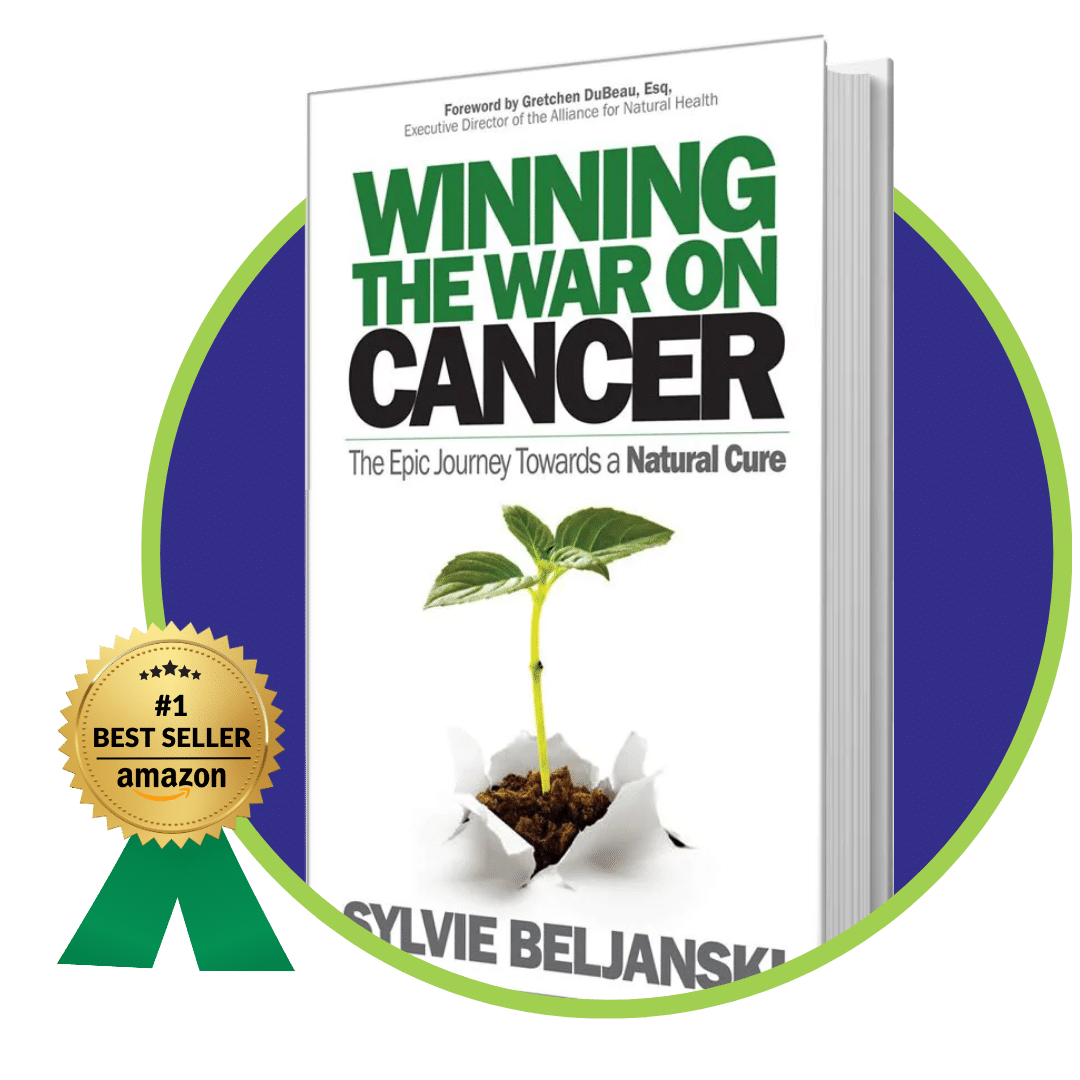
Award-Winning Book On Naturally Fighting Cancer
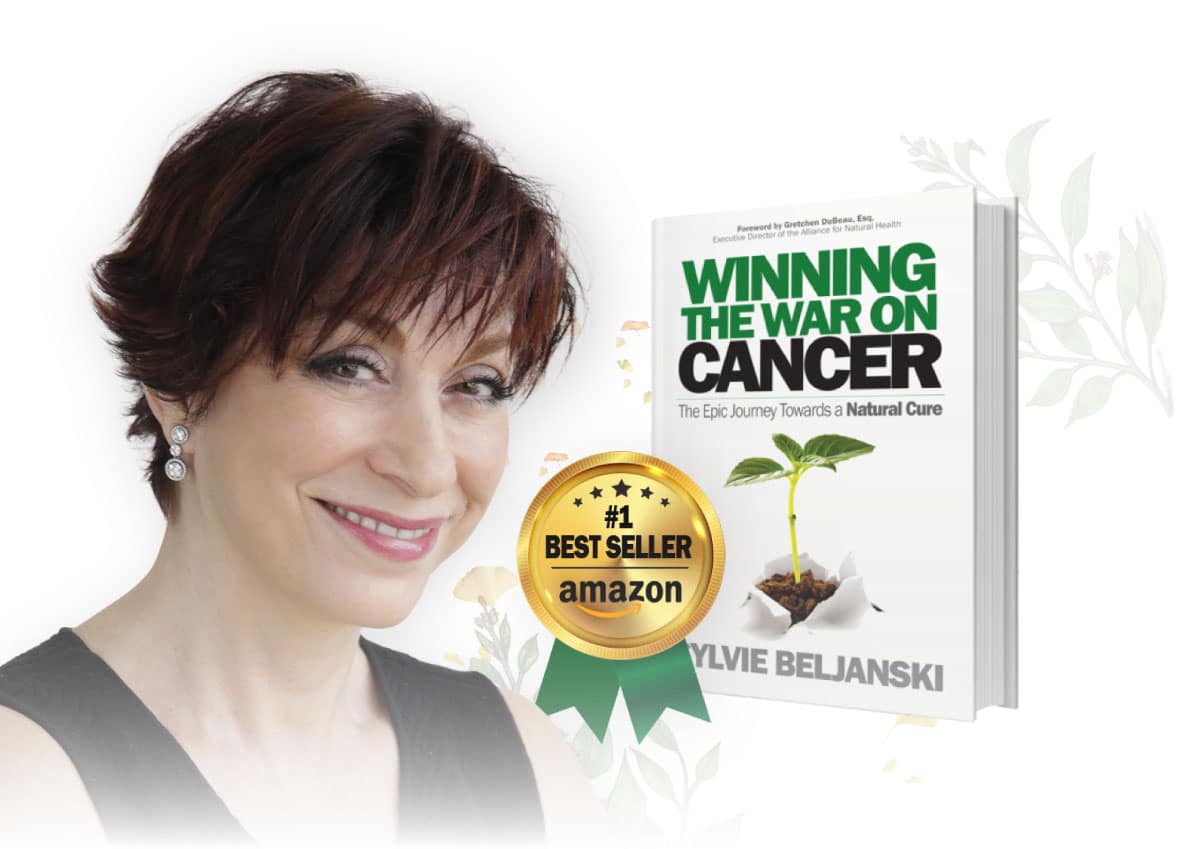
“For me personally, I think that Winning the War on Cancer by Sylvie Beljanski is one of those books that people should read. I have for a long time believed more in natural remedies than pharmaceutical cures, so I was involuntarily drawn to read the book.
It still preys on my mind on how the government can take up war against something that can save a lot of lives. I mean I know that a sort of thing like a more natural cure would likely actively threaten the pharmaceutical industry, but isn’t the industry on the side of saving people with something that has very little, or indeed no, toxicity at all? It’s so eye-opening and harrowing and I can’t yet state how I feel about everything that I learned.
I would recommend the book to anyone because many people these days are constantly being kept in the dark about natural remedies. What I love most about the book is that, though the book’s main point is cancer and its treatment, it also touches on areas that are vital to leading a healthy life. It points out the importance of detoxifying our body, especially since we live in a world where toxins are constantly released into the air by our technological marvels.”
4 out of 4 stars – Review by Nmesoma – OnlineBookClub.Org