
Episode 64: Why Fear Fuels Cancer — And How to Rewire Your Subconscious to Heal | Avinoam Lerner
This episode is also available on:








In this episode of The Beljanski Cancer Talk Show, Sylvie Beljanski speaks with Avinoam Lerner, a cancer and trauma recovery specialist, clinical hypnotherapist, and TEDx speaker, about his mind-body approach to cancer healing.
Drawing on more than 25 years of experience and the science of psychoneuroimmunology, Lerner shares how his Mindful Remission methodology helps patients reprogram subconscious patterns that drive stress and immune suppression, addressing not just the body, but the inner terrain in which healing happens.
The conversation explores why the mind is not merely a supporting player in healing but the very stage upon which healing happens. Lerner explains how the subconscious mind governs immune function, why chronic stress can suppress the body’s ability to fight disease, and how clinical hypnotherapy can be used to access and shift deep-seated patterns rooted in trauma, fear, and old conditioning.
Sylvie and Avinoam also discuss how fear shows up after a cancer diagnosis, the difference between his in-person intensive and online programs, and how this work is designed to complement—not replace—conventional medical treatment by addressing the person living with the illness, not just the tumor.
🔑 Three Key Takeaways
- The mind is the stage upon which healing happens. Lerner explains that psychoneuroimmunology—the study of communication between the mind, brain, and nervous and immune systems—shows that chronic stress triggers inflammation and immune suppression, rendering the body more vulnerable to disease. Addressing the mental and emotional 50% of a person, not just the physical body, can meaningfully improve odds for healing and recovery.
- The subconscious mind holds the patterns that drive immune function Through his Mindful Remission methodology, Lerner uses clinical hypnotherapy to bypass the rational, conscious mind and access the subconscious—where trauma, old conditioning, and limiting beliefs (such as feeling “not good enough”) are stored. By changing the meaning of past events, patients can free up energy the body needs for healing and repair.
- This work complements, not replaces, conventional medical treatment Lerner is clear that Mindful Remission is designed to work alongside medical care, addressing something oncology is not trained to treat: the person living inside the physical body. His program is offered as a three-day in-person intensive or an eight-week online coaching program, and can be started at any stage of diagnosis or treatment.
⏳ 00:00 Introduction to the Mind-Body Connection
⏳ 00:30 Understanding the Subconscious and Conscious Mind
⏳ 00:58 How Environment and Trauma Affect Immune Function
⏳ 01:19 Guest Introduction: Avinoam Lerner’s Background
⏳ 02:15 The Science of Psychoneuroimmunology
⏳ 03:33 Applying Psychoneuroimmunology Beyond Cancer
⏳ 04:51 The Power of the Mind in Healing
⏳ 06:35 The Central Role of the Mind in Healing
⏳ 08:50 Introducing the Mindful Remission Protocol
⏳ 10:17 How Mindful Remission Engages the Subconscious
⏳ 12:13 Tools and Techniques: Hypnotherapy and Inner Work
⏳ 13:55 Changing the Meaning of Past Experiences
⏳ 15:42 Addressing Fear in Cancer Patients
⏳ 18:42 The Impact of Mindset on Physical Health
⏳ 20:29 Early Intervention and Self-Education
⏳ 23:46 Personalized and Group Approaches to Healing
⏳ 25:46 The Importance of Upgrading Our Inner Operating System
⏳ 26:30 Duration and Structure of the Healing Program
⏳ 28:14 Transformational Outcomes of the Protocol
⏳ 29:08 How to Connect with Avinoam Lerner
⏳ 30:45 The Role of Medical and Complementary Treatments
⏳ 31:55 About the Upcoming Book: The Mindful Remission
⏳ 33:22 Closing Remarks and Resources
Avinoam Lerner (00:00.364)
So we we start with the notion that the mind has these two different agencies for the sake of our conversation, conscious and subconscious, and they have different jobs to perform. And the subconscious mind is really the part that we want to focus on because that’s the emotional mind. That’s the part of the mind that governs many of our bodily functions. Right now we’re breathing, digesting, eliminating, growing hair and nails and all of that, breathing, heart beating. We don’t consciously do any of that.
All of that happens subconsciously. So if we understand that the subconscious mind influenced the functioning of our immune system and we want, we understand that a proper immune function is crucial for the body’s ability to maintain balance and health, then we want to see what what has changed. Because if a person was born healthy, it means everything worked fine. And then if someday something changed, what has changed?
And for the most part, and I think you talked about it in one of your videos before, there’s an accumulation, a compounding effect. It can be environmental components from my perspective, it’s psychological components, mental components, trauma, life events. And over time we know that they start kind of impacting the way that our immune system functions.
Sylvie Beljanski (01:19.822)
Welcome to the Beljanski Cancer Talk Show where integrative science and holistic healing come together. I am Sylvie Beljanski, and in each episode we explore nutrition, lifestyle, mental health, and research-backed approaches to support the whole person through cancer and chronic diseases. Hello everybody, and welcome back to the Belgiansky Cancer Talk Show. My guest today is Avinoam Lerner.
Ravino Am Lerner is a cancer and trauma recovery specialist, clinical hypnotherapist, and TEDx speaker with over 25 years of experience working with people facing cancer and trauma. Drawing on the psychoneuroimmunology, his mindful remission approach helps cancer patients reprogram the subconscious patterns driving stress and immune suppression.
Adi addressing not just the body, but the inner terrain in which healing happens. His forthcoming book Mindful Remission, the Mental Health of Healing, will be published in may twenty twenty six. Avi Noam, welcome to the show.
Avinoam Lerner (02:34.754)
Thank you very much. I I will remark that the book is called Mindful Remission, but it’s Mindful Remission, The Mental Science of Healing Cancer.
Sylvie Beljanski (02:43.49)
Very good, very good. Thank you. So psycho neuroimmunology. I assume growing up you did not as a little boy say think I want to become a psychoneuroimmunologist. Probably you did not even know about the world. So how did you get there?
Avinoam Lerner (03:04.334)
Well, I I wouldn’t say that I’m a psychoneuroimmunologist. I am a practitioner whose work, the premise of my work, is grounded in psychoneuroimmunology, which is essentially a field of science that has been with us since the nineteen seventies. And it’s the holy grail of I would say mind body medicine in general. And essentially what it is, it’s the study of the communication between the mind, which is the non-physical part of who we are.
The brain, which is a three-pound gray organ in our skull, and the nervous and immune system of our body. Medicine has been fascinated with this notion, how does the non-physical part of us actually affect changes in the organic tissue? And for many years they didn’t have the answer, but psychoneuroimmunology came about. We learned that the immune system is responsive, it can be conditioned. So I just taken it a little further and developed a methodology so that we can actually do that.
and help patients navigate treatment with a lot less fear and a lot more agency so that they can genuinely optimize their results, optimize their outcome, improve their experience during treatment.
Sylvie Beljanski (04:16.024)
I assume this goes beyond cancer patients. Of course it can help cancer patients, but I mean the understanding the the trauma as the origin is kind of universal approach to healing, right?
Avinoam Lerner (04:27.576)
Correct. Correct. So I have worked with cancer patients almost you know, the majority of my clients are cancer patients, just because I would say it’s the need is greater in in that community. But yes, this is this applies to any kind of ailment that the body is inflicted with that medicine cannot necessarily find an organic component or a
a very clear physical or physiological answer for why things the way they are, when the reality is that we’re fifty percent physical and fifty percent non-physical. If you cut the body open, there’s no little person in there. So what is this self? And I mean that’s a much bigger conversation. But I would say that generally speaking, if we are fifty percent physical and fifty percent non physical,
And we take the fifth 50% that is non-physical and divide it to mental and psychological, then you know, even if we just address the twenty-five percent of either the psychological or the mental, wouldn’t we want twenty-five more percent odds for healing and recovery? Of course we would, anyone would. And that’s why it’s really important to do this kind of work.
Sylvie Beljanski (05:46.584)
Yeah, I’ve always seen people who who heal really recover from cancer as those who have a positive mind and try to understand why they became sick in the first in the first place, because conventional medicine never addresses that. They only look at the tumor and try to destroy a tumor by every means they have and but they don’t look at the at the person and
They even dismiss kind of dismiss the damage they are doing to the to the person while destroying the tumour. So at what what was the moment when when you realized that the mind was not just a supporting player of the healing but was really central to to this to this phenomenon of healing?
Avinoam Lerner (06:35.406)
Sure. Well, again, I’ve been doing this for twenty five years and you get to see some patterns over time. And I’ve seen people who have done everything right medically, right? They did what the doctor told them to do. They showed up to appointments and scans and they still struggled a great deal. And and then there were those who thrived, those who actually got better outcomes on every marker. And it was quite I was very curious because it wasn’t necessarily about a person’s strength or
size or genetics or it was the internal environment in which they were healing in that made the difference. And we know that through the Human Genome Project, we know that, you know, at first we thought that there’s a gene per A condition, then we realized, well, it’s a combination of them. And then we realized that some of them are turned on and then some of them turned off. And so we had to ask the question, what turns certain genes on and off? And then we and the answer is complex, but amongst
The contributors are the mental and emotional environment that the person is operating in. If we’re exposed to stress in a chronic level, we will consistently trigger the stress response, as you well know, and that will lead to inflammation, to suppressed immune function, and that renders the body vulnerable to carcinogens and other disease agents. But if we learn, which would never really and that’s kind of mind blowing, right? We were never really taught how to live.
We were taught how to survive. And that’s a whole different approach to life. But when we learn how to engage with this part of ourselves we call the mind, mainly the part we call the subconscious mind, because that’s the emotional part and the part that regulates most of our bodily functions, including immune function, then we can get results. I would say the mind is not just a player in this constellation, it’s actually the stage upon which healing happens.
Sylvie Beljanski (08:34.818)
So you you have developed this this specific protocol called the mindful remission. Can you walk us on what what does that actually look like for a patient coming to your practice?
Avinoam Lerner (08:50.53)
Well, so we we start with the notion that the mind has these two different agencies for the sake of our conversation, conscious and subconscious, and they have different jobs to perform. And the subconscious mind is really the part that we want to focus on because that’s the emotional mind. That’s the part of the mind that governs many of our bodily functions. Right now we’re breathing, digesting, eliminating, growing hair and nails and all of that, breathing, heart beating. We don’t
Consciously do any of that. All of that happens subconsciously. So if we understand that the subconscious mind influenced the functioning of our immune system, and we want, we understand that a proper immune function is crucial for the body’s ability to maintain balance and health, then we want to see what what has changed. Because if a person was born healthy, it means everything worked fine. And then if someday something changed, what has changed?
And for the most part, and I think you talked about it in one of your videos before, there’s an accumulation, a compounding effect. It can be environmental components from my perspective, it’s psychological components, mental components, trauma, life events. And over time we know that they start kind of impacting the way that our immune system functions. So mindful remission in a nutshell is a practical, goal-oriented, result-driven methodology.
to engage the subconscious mind so we can address the patterns that we know through this research called psychoneuroimmunology, are suppressing our immune function so we can allow the immune system to perk up and do what it’s designed to do, which is to eliminate any abnormalities in the blood.
Sylvie Beljanski (10:34.636)
And so so tell me more practically, how does it work? I mean you are you are speaking to with a patient, you let the sp patient speak like a kind of a psychoanalysis. Tell me more.
Avinoam Lerner (10:48.298)
Sure. So the therapeutic vehicle, if you will, is the subconscious mind. We want to access that part. And to do that we need tools that are a bit different from traditional therapy. In talk therapy, we sit and talk about our problem, which is useful. But essentially we are talking to the conscious mind, which is rational and logical. For example, it’s the educated mind, the part of your mind that is listening to me right now. And that
Part is important, but it it’s like a guard that’s standing in front of a vault in a bank to check your credentials, your password, if you will. So in Mindful Emission, we use a tool called hypnotherapy or clinical hypnotherapy and a specific protocol to essentially bypass that guard so that we can get into the vault and effect change to certain patterns that the mind perceives as
harmful, limiting in some ways. So oftentimes trauma, oftentimes things we have learned a way we have been conditioned. And when we change the nature of these patterns, for example, you learned that you’re not worthy enough or good enough or smart enough or something enough. If we can change that, diffuse that pattern from negative to even just neutral, it will
no longer kind of pulse within us, no longer reclaim some of this energy that we need for healing and repair. That energy will be freed for the body to use for healing and repair. So essentially when a person comes into the office, well, we can do this either in the office, that’s a more intensive program. I’m happy to talk about that a little later. Those are three day intensive programs. Then there’s the online aspect of it, which is an eight week long program.
But essentially we use hypnotherapy as the therapeutic vehicle to access the subconscious mind. And unlike in talk therapy, where tell me what you think about it, we’re trying to analyze you or fix you, here we don’t do any of that. Here we let your mind bring forth what it believes is at the root of this. And because of the nature of the hypnosis work that we do, there is a a level of immersion that happens. A person moves for
Avinoam Lerner (13:09.674)
inward and and the inner story unfold in such a way that you’re fully immersed in it. So in talk therapy you’re both the participant, but you’re also the observant because you think about what you say, you feel. Here you’re fully immersed in your own story. And that level of immersion creates a bridge between the past and the present, which is what allows us to change things that happened back then and there.
as if they’re right here and right now. Ultimately we’re changing the meaning of what we believe has happened. And when we change the meaning, which is the root cause, we change the effect. So you change the source, you change the effect.
Sylvie Beljanski (13:55.822)
When you are facing cancer, the choices can feel overwhelming. Conflicting advices, endless options, and very little clarity. At Maison Beljanski, everything begins with science. For decades, molecular biologist Dr. Mirko Beljanski studied how specific plant extracts interact with cancer cells. Work that continues today through independent research and real-world use.
Maison Beljanski offers carefully formulated supplements inspired by that research, along with targeted support for immune health, cellular resilience, digestion, detoxification, and overall wellness. You will also find educational books, organic teas, personalized health coaching, and wellness programs designed to support the whole person, not just a diagnosis. This is not about quick fixes.
It’s about informed choices, thoughtful formulations, and supporting the body alongside conventional care. Explore the products, the research and the resources at maisonbeljanski.com because when science leads, wellness follows.
Absolutely. When it comes to to to cancer patients, I mean there is a very often a lot of fear and it’s the first thing that s they feel when they receive the diagnosis and it’s sometimes a very overwhelming fear. How do you work with with that fear and transform that i in a way that may help support the healing process?
Avinoam Lerner (15:42.296)
Sure. So fear is a very big component. I mean, it’s just the most natural response that I would say we can we can have when we hear those three words you have cancer, right? I mean, fear is certainly there. And fear is there because we perceive what we just heard, the news that nobody wants to hear. We we perceive it as a threat. And it’s a threat because we have prior knowledge, prior information. We heard about it, we read about it, maybe someone in our family has gone through this. And so we immediately
Connect the dots and we’re in the in the grip of fear and the stress response. So oftentimes what we have to do is so there’s two reasons why, mainly two reasons why someone steps into fear. One is all about perception, the other is all about belief. The perception is that what we’re stepping into is going to be difficult, dangerous, painful, overwhelming, all of those things. That’s the perception of what we’re going through or what we’re stepping into.
But the second component, the belief component, is really where the heart of it is, because we don’t believe essentially when you feel fear, it’s because you don’t believe you have the inner resources to cope. We do things in life that are very challenging and very demanding. All of we would we all have been doing these things and we faced all kinds of things, but we tend to give cancer, illness such as cancer, this extra weight. If we have the flu or even when COVID went through, we dealt with it.
We didn’t think that we didn’t give it the same amount of weight as we do with cancer. So the point is we have to change either our perception of why we perceive this as a threat or cultivate better inner resources, right? So that we can meet this moment with grace, with ease, with certainty and
Sylvie Beljanski (17:30.442)
And there is nothing probably more powerful than finding that you have those inner resources and that you don’t need to be in fear.
Avinoam Lerner (17:41.422)
Well, if you knew with absolute certainty if you knew with absolute certainty that you will get through this, would you have the same response? No. So this is what we have to work around. Our mind is pulling so-called evidence from somewhere. Where does this evidence come from? Obviously, we have come a long way through medicine. Medicine can buy us time, it can give us
an advantage. It it can even take care of the physical aspect altogether. And we may step into remission, which hopefully is what we’re looking for. But that doesn’t mean that the fear went away, right? Because the mind is still the nervous system is still dysregulated. The mind is not fully settled into the notion that the storm has passed. So regardless of what goes on physically, we have to understand what each of our minds is doing.
so that we can address the root of it and change that. When we change the meaning, that happens by itself.
Sylvie Beljanski (18:42.232)
Absolutely, we are absolut one, I mean mind and body and we have to take care of both. So for for a patient, I mean, who is going with at the hospital, who is I mean, as regular appointments at the hospital is maybe going under chemotherapy, how do they do they incorporate your practice and the work they are doing with you? Is they’re doing that at the same time. How how does it work for
Avinoam Lerner (19:10.456)
Sure. So most people engage this kind of work once they have received the diagnosis. you know, ideally this kind of approach addressing the seed patterns at the subconscious mind, ideally it’s something what we do that we will do in advance as a preventative approach, but most of us will will only do this kind of work when we have to. And so yes, when people are either just started treatment, just received their diagnosis, it doesn’t matter what stage, because
And people say, Well, I’m in an ad in an advanced stage, how can this what can this do for me? Yeah. And I like to tell them that these the the subconscious patterns don’t care what stage you are. Yeah. And resolve the resolving them, addressing them at the root, will always bring about relief and improvement.
Sylvie Beljanski (19:59.178)
Yeah. But and it’s really so very I mean, unfortunately, people start looking at other means beyond what the hospital is saying, only when they are very advanced stage, when actually they should start really their research before the diagnosis or at the latest on the on day one of the diagnosis and try to understand what they
kind of support and healing process they ca they can get and and and start educating educating themselves as much as they can as early as possible, not when the the official medicine is almost rejecting you because they have you have finished everything the insurance would would pay for. I mean this is not the the way to go.
Still, I mean there is hope and still I mean other modalities can give give you some some relief, but the better you start to educate yourself and take advantage of of what there is around you. And as you just said, I mean learning how to live when you are still healthy and doing well, what better way to to to look at life? I mean that’s that’s kind of way to to to
make the most of what LAN has to offer to you rather than poisoning yours with having a negative narrative in in your head that you are not able to to solve by yourself. So I think that what you you are doing is great and I love the idea of this approach. Is it a work that people are doing one one on one by you? Do you organize retreats or
Samicov Group Six Tell Tell me more. When cancer enters your life, the questions don’t stop at treatment. You start asking why, what else, and what more can I do to support my body? At the Beljanski Foundation, we believe cancer care deserves deeper answers. Answers rooted in science, not in shortcuts. For decades, groundbreaking molecular research by Dr. Mirko Beljanski.
Sylvie Beljanski (22:23.85)
Explored how specific natural compounds selectively target cancer cells while sparing healthy ones. That work continues today through independent research, education, and global collaboration. At beljanski.org, you will find evidence-based resources, expert-led conferences, books, and conversations that explore integrative approaches to cancer and chronic disease.
Alongside conventional care. Whether you are a patient, a caregiver or practitioner, this is the place to learn, to question and to think more expansively about healing. Visit Beljanski.org to explore the research, attend upcoming events, and connect with the Belgianski community. Because informed choices begin with credible.
Avinoam Lerner (23:17.42)
So I’m a one-on-one person. I think this this kind of work is very intimate. And so, you know, there’s nothing wrong with retreats and then obviously there’s tremendous value to group work and such. and I actually am inspired to do that in a retreat format, because there are things that we can absolutely do as a group. But I have not I find so much meaning and value in connection with people and
holding them in this, you know, very tender place. It’s just very, very intimate and personal and rewarding and transforming. I mean it’s it’s life altering. I’d like to to to say that our mind is like our operating system. We all carry now phones in our pockets and every now and then we get this prompt, you know, update security update is required. And we j we don’t give it too much thought. We just press the button. And the reason there’s an update needed is because there’s more information, more
Stuff to consider that the operating system need compute for. But we’ve never really given ourselves this kind of upgrade or update of our operating system. Not really. I mean, some of it natural happens naturally when we grow up, but I’d like to say that, you know, today, twenty twenty six, most of us operating system, mentally and emotionally, is still Windows ninety three. And that’s present us with a significant challenge. Think about it.
relationships. We like to think that we’re having relationships as adults, but we’re really inner childs, in an adult body, emotionally at least, trying to figure it out. Because no one taught us how to do maybe relationships, how to go after what we want, how to be our full self, how to feel good about ourselves. These things that we’ve never really learned from the ground up. So the question is when? We’re so busy living life. Most of us will never
give ourselves this upgrade until life itself says that it’s time and then we’re so stubborn that we will just push everything aside, we’ll ignore, we’ll plow and and and continue to work through and and push and we’ll suppress. But we know that that which we resist persists. So eventually life finds a way
Avinoam Lerner (25:37.174)
Illness is a very powerful it shuts us down, it forces to look inside and to make these upgrades that we so desperately need.
Sylvie Beljanski (25:46.198)
For the average person, how long does I mean for how long do they have to work with you? How many sessions, how many months is the average person work with you? Yeah.
Avinoam Lerner (26:00.536)
So there’s two ways to work. The in-person work is a three-day intensive. That’s all it takes. It’s fifteen hours. But the way that these fifteen hours are kind of segmented is that the first day is half of that time. So the first day I get to work with one person for seven and a half hours straight. And we go very deep down the rabbit hole. And the reason this is necessary is because of how the mind works. The mind doesn’t want to change. Even if the mind is holding on to stuff that isn’t
perhaps the most healthy for us, the mind prefers comfort over confrontation. So we have to kind of make use of the opportunity. Once we find how to access the mind, we make sure that we utilize this amount of time to go as far as we can. So that’s day one. Seven and a half hours straight.
The second and third days are half days, so a four hours day and three and a half hours days. And that’s that gets us to about fifteen hours. the change or the transformation, I want to make sure that people understand it’s it this is not some psychological practice. You feel it in the body, your nervous system feels regulated. Finally, your body can finally exhale. You feel settled.
you feel lighter, you feel that you have a new lease on life, a deeper connection with yourself, because you no longer have to manage these inner conflicts that you have tended to your entire life. And most people find all of a sudden that they’ve spent decades in guilt, decades in shame, decades in fear, decades making themselves smalls.
minimizing their pain, feeling disconnected. And so when when they finally when something click back into place for them and they feel, maybe for the first time in a very long time, who they are. It’s like, well I’m I’m gonna get emotional, but it’s
Sylvie Beljanski (28:14.04)
This is so much powerful than years and years of therapy that people sometimes are going through with very little results actually. And who would not love to take three days off just for having such a transformational experience? That’s that’s amazing. So for people who want to to reach out to you and sign up for for this kind of transformational experience, how do they do that?
Avinoam Lerner (28:43.948)
They just need to Google my name, Avino Am Leono. But there’s two of them in the United States, only two of us. One is me, and the other happened to be a very big shot Hollywood producer that produced all the Rambo movies. I’m not that. And I do often get calls with people pitching writing, and I’m saying, I’m sorry, you got the wrong one. But if people just Google my name, Avino Am Leono.
I’ve written
Sylvie Beljanski (29:09.368)
Tell us a little bit more about and yeah, re for those people who want to have a three day with you, where are you located in the US?
Avinoam Lerner (29:18.444)
I’m in Boston, Massachusetts. Yeah. So the in person is one option. And then there’s the online, which is an eight week long program, which is more like a coaching program, but but we are able to do some hypnosis over Zoom. It is I originally created these two as one unit. So the in person is like surgery and the online is like rehab. But I don’t want to decide for people what they need to do. I want them to
step into their agency and if they want to do one and not the other, that’s perfectly fine. The Mindful Rission Program is a very big toolbox with tools and practices that have proven over the twenty five years of doing this work as effective as promoting change in real time. You talked about therapy and I’d like to say about therapy that if you’re driving a car, conventional therapy is like white wiping the windshield clean, right? You you you want to see the road better.
And that’s important. But if you have an issue with your engine, if your engine is licking, you really need to pull the car to the side. You need to lift the hood and look under the hood into the engine block, find the faulty part and replace it. And that’s what this kind of work does. So we can do it in person, we can do it online. But it’s really just I want to make sure that people understand there’s real therapeutic work to be done here. This is not some magic formula or
And also I want to make sure that people understand this is not here to replace medical treatment, but essentially to do the one thing that medical treatment cannot, and that is address not the physical body, but the person living in this physical body. Doctors are trained in treating the tumor or the physical aspect of cancer, but they have no training. It’s not their scope of practice.
Most oncologists if you ask them, they don’t know what this is.
Sylvie Beljanski (31:18.478)
Exactly. And that’s why thank you so much for coming to speak to us about it. So tell us a little bit more about your book and what people should expect when buying your book.
Avinoam Lerner (31:30.104)
Sure, thank you. So the first book that I’ve written, it’s called The New Cancer Paradigm, Mobilizing the Mind to Heal the Body. That came out in that was published in twenty twelve, so fourteen years ago. I’m not a writer. I didn’t want to write another book. But this book, which is called The Mindful Remission, The Mental Science of Healing Cancer, woke me up in the middle of the night.
And forced me to write it. I literally d fought the idea, but it’s an incredible resource for anyone facing illness such as cancer. It’s a massive toolbox. It’s essentially a workbook and a framework, if you will, all at the same place. So this is coming up in next month in May, May 20, 2026. And it’s very exciting because it’s
If someone doesn’t want to do the work with me personally, if they want to try to do work on their own, until now they didn’t know how to do that. There are many, many books that tell you what you need to do, but no books that shows you how. The Mind for Admission book is really that kind of a book. It’s a workbook, so you can each and every one of us can benefit and get amazing results and transformation.
in their healing and recovery.
Sylvie Beljanski (32:53.976)
Thank you for giving us this kind wonderful tool. Thank you. Ladies and gentlemen, this was Abinoam Lerner and it has been a privilege to listen to you and we’re very grateful for your knowledge and your willingness to to share and to help us become better people, to make a better world around us. Because that’s in the end, that’s what it is about.
Avinoam Lerner (32:57.774)
Thank you so much.
Avinoam Lerner (33:22.274)
Yes. Yes. Thank you so much, Sylvie I appreciate it.
Sylvie Beljanski (33:25.612)
Thank you so much. Thank you for listening to the Beljanski Cancer Talk Show. If this conversation supported or inspired you, please follow the podcast, share it with someone who may benefit, and leave a review to help others discover these integrative perspectives. For more resources and to see what we offer, please visit belgianski.org.
Avinoam Lerner is a cancer and trauma recovery specialist, clinical hypnotherapist, and TEDx speaker with over 25 years of experience working with people facing cancer and trauma. Grounded in psychoneuroimmunology, his Mindful Remission methodology helps cancer patients reprogram the subconscious patterns driving stress and immune suppression, addressing not just the body, but the inner terrain in which healing happens. He is the author of The New Cancer Paradigm: Mobilizing the Mind to Heal the Body (2012), and his forthcoming book, Mindful Remission: The Mental Science of Healing Cancer, will be published in May 2026. Avinoam is based in Boston, Massachusetts.
Connect with Avinoam Lerner

Website



YouTube
Related Episodes
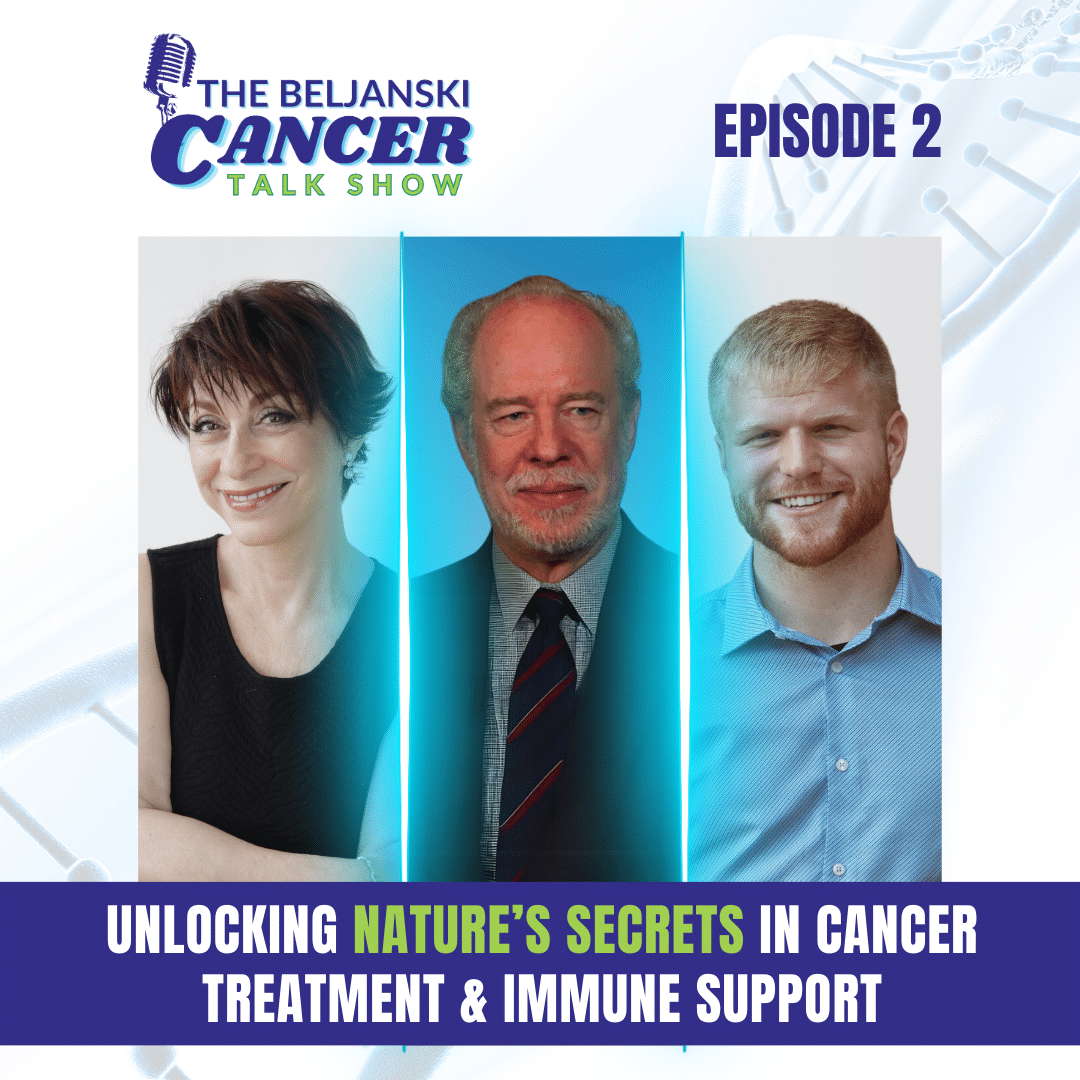
Episode 2 – Unlocking Nature’s Secrets in Cancer Treatment & Immune Support with Dr. John Hall, PhD
In this insightful episode, Sylvie and Victor, alongside Dr. John Hall, delve into groundbreaking cancer research, showcasing nature's prowess [...]
Stream Now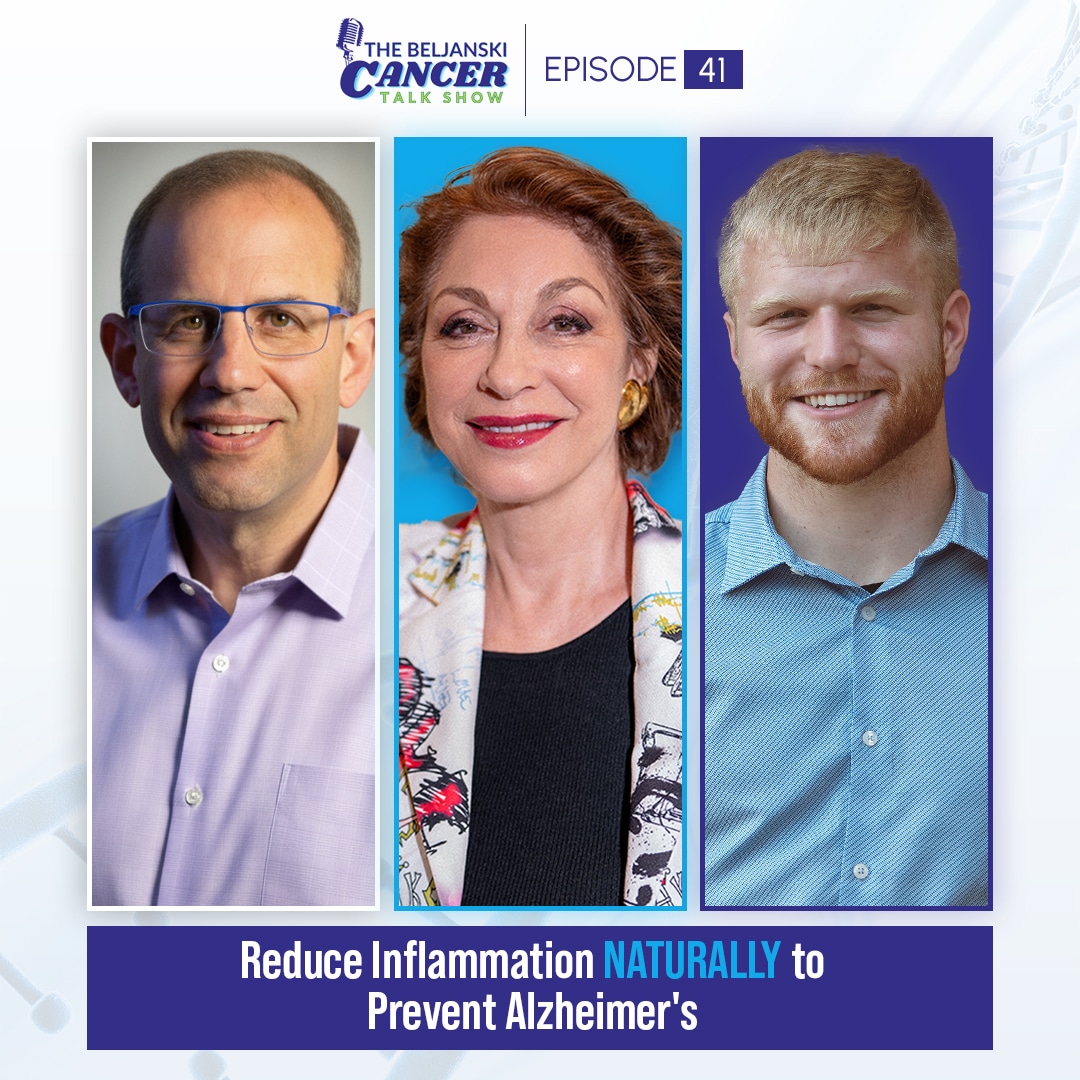
Episode 41 – Reduce Inflammation NATURALLY to Prevent Alzheimer’s with Dr. Joshua Helman, MD
Dr. Joshua Helman reveals proven strategies to lower Alzheimer's risk and detox for optimal brain [...]
Stream Now
Episode 35: Toxic Overload: The Hidden Link Between Toxins, Autoimmunity & Cancer with Dr. Loretta T. Friedman, RN, MS, DC, CCN, CNS, DACBN, DCBCN
Dr. Friedman joins the show to share some crucial health tips, specifically regarding the lymphatic [...]
Stream Now
Episode 12 – Envision The Future Of Natural Health In Cancer Care with Dr. Rob Verkerk, BSc, MSc, DIC, PhD, FACN
In this episode, Sylvie and Victor talk with Dr. Rob Verkerk about his fight for natural health freedoms and the importance of public trust in [...]
Stream Now
Keep yourself updated!
Sign up below if you want to hear more about the weekly updates of The Beljanski Cancer Talk Show!

Award-Winning Book On Naturally Fighting Cancer
“For me personally, I think that Winning the War on Cancer by Sylvie Beljanski is one of those books that people should read. I have for a long time believed more in natural remedies than pharmaceutical cures, so I was involuntarily drawn to read the book.
It still preys on my mind on how the government can take up war against something that can save a lot of lives. I mean I know that a sort of thing like a more natural cure would likely actively threaten the pharmaceutical industry, but isn’t the industry on the side of saving people with something that has very little, or indeed no, toxicity at all? It’s so eye-opening and harrowing and I can’t yet state how I feel about everything that I learned.
I would recommend the book to anyone because many people these days are constantly being kept in the dark about natural remedies. What I love most about the book is that, though the book’s main point is cancer and its treatment, it also touches on areas that are vital to leading a healthy life. It points out the importance of detoxifying our body, especially since we live in a world where toxins are constantly released into the air by our technological marvels.”
4 out of 4 stars – Review by Nmesoma – OnlineBookClub.Org