Episode 53: Life with Cancer: Nutrition, Fermented Soy, and Supporting Recovery
This episode is also available on:







Facing cancer introduces countless questions about nutrition, lifestyle, and integrative care. In this episode of the Beljanski Cancer Talk Show, Jim Ladwig shares his personal journey with colon cancer and how nitrogen-fermented soy (Healan 951) played a transformative role in restoring digestion, hormone balance, immune function, and healthy weight.
Jim explains the science behind Healan 951, a multi-stage nitrogen-fermented soy product developed to support patients with cachexia (wasting syndrome). He details how fermented soy differs from raw soy, its hormone-balancing and anti-inflammatory effects, and the evidence-based studies supporting its use.
From gut health to cellular nutrition, this episode explores how integrative approaches, alongside conventional care, can help cancer patients optimize their recovery and overall wellness.
🔑 Three Key Takeaways
- Understand the role of nutrition and gut health in cancer recovery.
Jim explains how nitrogen-fermented soy helps restore digestion, nutrient assimilation, and healthy weight in patients experiencing wasting syndrome. - Learn how fermented soy supports immune and hormonal balance.
Multi-stage nitrogen fermentation enhances bioavailable compounds in soy, offering anti-inflammatory, immune-modulating, and hormone-balancing effects without the risks of raw or conventionally processed soy. - Explore integrative strategies to enhance conventional cancer care.
Healan 951 works synergistically with other supplements and protocols, helping the body assimilate nutrition more efficiently and supporting overall recovery.
⏳ 00:00 Introduction to Fermented Soy and Its Benefits
⏳ 02:02 What is Cachexia and Why It Matters in Cancer
⏳ 04:02 Jim Ladwick’s Personal Cancer Journey
⏳ 07:30 How Fermented Soy Supports Recovery and Gut Health
⏳ 09:38 Introduction to Helan 951 and Its Development
⏳ 11:44 The Unique Fermentation Process and Its Benefits
⏳ 13:03 Soy and Hormone Balancing: Myths and Facts
⏳ 16:43 Research and Studies on Nitrogen Fermented Soy
⏳ 21:42 History and Development of Helan 951
⏳ 24:52 The Broader Impact of Nitrogen Fermented Soy
⏳ 27:52 The Future of Integrative Cancer Support and Education
Jim Ladwig (00:00.13)
When we start with soy as a substrate, especially our species of soy, not only are you getting the benefits of our particular fermentation, but you’re also getting those benefits. really unlock a lot of the hormone balancing, the anti-inflammatory, and the immune modulating benefits that come with soy in general that just aren’t available kind of in that raw form. We really want it in that fermented form. And what we do that takes it to just
the moon, takes it to a whole new level, is we actually have a patent on a specific type of fermentation. It’s a nitrogen fermentation. It’s a multi-stage fermentation. That’s where the real magic happens.
Sylvie Beljanski (00:43.692)
Welcome to the Belgianski Cancer Talk Show where integrative science and holistic healing come together. I am Sylvie Belgianski and in each episode we explore nutrition, lifestyle, mental health and research-backed approaches to support the whole person through cancer and chronic diseases. Hello and welcome to the Belgianski Cancer Talk Show. Today I have the pleasure to welcome Jim Ladwick. Jim?
has been battling his own cancer issue and he was introduced to, he’s going to tell us more about that. And he saw by himself amazing results. So he developed a passion for natural ways to heal the body. He’s a certified health coach and he’s fully embracing the healing products mission of helping individuals and families experience the joy that comes with restored health.
So he chose to call this episode, Cachexia, how nitrogen fermentation is changing cancer nutrition. Jim, welcome to the Belgiansky Cancer Talk Show, but I would like to tell you first that the title that you have chosen needs some explanation. What is cachexia?
Jim Ladwig (02:02.722)
Yeah, so interestingly enough, our original journey, well, first of all, thank you so much for having me. I skipped right over it. Thank you. I was excited to, I know we’ve chatted at conferences over the years and seen each other, but it’s really good to have a conversation with you. yeah, so cachexia is the wasting syndrome that happens typically in late stage cancer and often could be triggered by the cancer itself, the body’s inability to start.
or to continue processing proteins and nutrients. And we’ve all seen it, usually in these late stage cancer situations, people just lose tons of weight and they don’t want to eat even what they do eat. They don’t assimilate it. And so back in the mid eighties, that was the real driving force or driving factor into why we created the Helin 951 was to help
you know, not only with the treatment side effects and things, but help really put healthy weight, healthy muscle mass back on and help people to start recovering the gut and assimilating nutrition because many, many times, and there’s a lot of stats out there and it’s kind of ever changing, but a very significant portion of late stage cancer, it’s not the cancer that ends up causing the end of life, it’s that…
It’s that wasting syndrome. just there’s no more, there’s nothing left. aren’t eating. There’s no nutrition. So that for us has always just been a kind of a core element of why we created the product and then also ongoing of what we’ve seen as just such an incredible benefit.
Sylvie Beljanski (03:43.124)
So going back to you and your own cancer story, at what kind of cancer did you have? What stage of cancer when you started to use healing products, how did you discover them? And then what happened? What did you, what was the experience?
Jim Ladwig (04:02.09)
Yeah, it was pretty wild for me. wasn’t super familiar with really anything cancer as most of us find ourselves. We get thrown into this journey that none of us asked for. my background is in marketing. I’ve worked with software companies and local businesses. And so my background is so far from, you know, health and wellness. Growing up, I will say my mom
Sylvie Beljanski (04:12.459)
And,
Jim Ladwig (04:25.806)
She’s a yoga instructor and a very, you know, healthy fitness. Like she was very health driven. So I wasn’t unfamiliar with a lot of the concepts, but it certainly wasn’t on my radar because my, you know, my, my job has always been building sales and marketing teams. so I was.
Sylvie Beljanski (04:43.864)
You were pretty young, because… Yeah!
Jim Ladwig (04:46.67)
yeah, I was my early 30s. had my second kid was one years old. I was pretty green and it was very unexpected because it was colon cancer. And if anybody’s ever followed Chris Wark, it’s wild how similar our situations aligned. And I learned about him, you know, after the fact actually when I was going through my, you know, my battle, was, you know, I was actually kind of
you know, intrigued because his situation was so similar to mine. was colon cancer, similar stage, similar area, similar development. so for me, was obviously, you know, rushed, they rushed you through everything. You know, you finally get the diagnosis. I went through seven different doctors just to get a diagnosis. Then they finally found what the other scans had missed. And so it was just a whole fiasco. I’m sure we’ve all got stories like that, but the
The real thing for me is once I did have a diagnosis, I was like, okay, now I can kind of dig my head into it I love to research. That’s just data and research has always just been a fascination of mine. And so for me, I dove right in and thankfully, a friend of mine, I reached out to him and his dad was the founder, Joe Tedesco of Heal in 951. And so I was introduced to the product in a period of life where I absolutely needed it.
So I got on it right away and the way my journey progressed was essentially I had surgery. It was blocking my digestion. And so I had developed H. pylori and a couple of other issues. And that’s where the majority of my symptoms came from. so once the digestion was cleared, we got into these, we had the surgery, the surgery went well, and we started talking about all these follow-ups, the chemotherapy, all the stuff that they wanted to do. And I was like, okay, let’s pump the brakes.
and slow down and I felt because I was young and I just, I still didn’t have any idea of this world. This all happened in a matter of weeks. And so, you know, I’m laying there, I’m recovering and I decided, hey, I’m gonna try some natural stuff. I’m gonna try, know, diet, lifestyle change, all that. And I had gotten introduced to Heal in 951. I started it just before my surgery.
Jim Ladwig (07:04.238)
And so I went hard at it and I really, for the next, you know, six months was just really, really tight on, I stayed on my, my night 51. I, you know, I had other supplements that I would cycle in, but healing had always just been kind of my quarterback. was the, you know, the foundation that I had built off of and you know, fast forward, you know, I’m going in for my, monthly, then 90 days, then six months, then annual. And.
Eventually, my doctors were just like, you’re doing so good. don’t really need, let’s just push this out. So they were super thrilled. They were like, ha, this is whatever you’re doing, keep doing it. You you always hear those things. And my digestion started just working. So I was just reacting to all these foods and then I was starting to be able to eat again. I was starting to put healthy weight back on. I had lost, you know, probably 40 pounds, 45 pounds. And so
For me, I just saw such a transformative effect in my immune system, in my hormones, in my blood work, and my energy levels that I just, I knew there was something there. I knew there was something to this product. And so I stayed on it. I stayed with it. And then, you know, years later, I ended up getting a call from that same friend and he said, hey, I need you to come work for the company. I’m like, okay. And, you know, that was kind of my journey into, you know, into healing.
Sylvie Beljanski (08:21.634)
When you are facing cancer, you are suddenly facing a myriad of questions. Questions about nutrition, lifestyle, mental and emotional support, and how integrative approaches can work alongside conventional care.
The Belgiansky Integrative Cancer Conference brings the conversation together in one place. From June 26 to 28, join leading oncologists, integrative physicians, researchers, and survivors in San Diego, California for three days of science-informed all-person cancer care.
These live events expose evidence-based integrative strategies, emerging research and practical tools you can apply immediately while connecting with the community that understands the journey. Whether you are attending persona virtually, this conference is designed to educate, empower and support informed decision making. Learn more and reserve your spot at integrativecancerconference.com.
because better outcomes begin with better conversion. So for how long have you been with Helen now?
Jim Ladwig (09:38.414)
About seven years. Yeah, I’ve here about seven years.
Sylvie Beljanski (09:41.376)
Okay. And I assume you know everything now at this stage about inside and out about the product, the product itself. What is fermented soy?
Jim Ladwig (09:53.6)
Yeah, yeah. It’s a weird one. And, you know, it took me some education on the front end because I had, I had really bought into a lot of the misconceptions around soy. And some of them, I’ll be perfectly clear and honest on soy itself. It has some problems, especially with what’s grown here in the United States. We don’t use United States grown soy, just so people know. We use a truly heirloom organic species of soy.
and we grow it at elevation. And there’s a lot of reasons we do that for soil density, soil nutrient quality, how we fertilize, the timing of how we pick it. So it’s very, very specific soy that we use, but there’s a lot of misconceptions around how soy works with estrogen and inflammation and the immune system. And so I had to just do a deep dive on how incredible soy as a substrate for
fermentation is. You if you think about, you know, like sauerkraut, you have, you start with cabbage. Cabbage in and of itself is, it’s fine. But when you ferment it and you go through that process, it becomes just a superfood of probiotics and just amazing beneficial bacteria for your gut and your health. It becomes something totally different. And when we start with soy as a substrate, especially our species of soy, not only are you getting
the benefits of our particular fermentation, but you’re also getting those benefits. really unlock a lot of the hormone balancing, the anti-inflammatory, and the immune-modulating benefits that come with soy in general that just aren’t available kind of in that raw form. We really want it in that fermented form. And what we do that takes it to just the moon, it takes it to a whole new level,
is we actually have a patent on a specific type of fermentation. It’s a nitrogen fermentation. It’s a multi-stage fermentation. That’s where the real magic happens. And so we end up, if you’ve seen it, we end up with this. It’s a liquid, it’s a brown liquid. Does not taste good, just as a warning. We don’t flavor it. It’s nothing fancy. But we end up with this nitrogenated, so nitrogen binds to all these
Jim Ladwig (12:12.15)
really beneficial compounds, the amino acids and the peptides and the fermentation metabolites that happen during that process. And now we have something that’s able to just deliver incredible cellular nutrition. And the benefits, I mean, we’ve just had so many, you know, various studies on what we’ve seen the product do. It’s pretty incredible. The benefits are just next level when it comes to, you know, really, you know, providing the best nutrition, the best
compounds and delivering it right to the cells that need it.
Sylvie Beljanski (12:45.454)
You mentioned in passing the hormonal balancing, but a lot, especially women, are concerned with breast cancer, are afraid of soy. What makes, I mean, the soy sometimes a good thing and sometimes a bad thing?
Jim Ladwig (13:03.438)
Yeah, so the problem isn’t soy. And this has been something that I had to do a lot of research on. I have a shelf of books that are anti-soy. And that’s where actually I started this mission was, okay, why not soy? And you’ve seen a lot of research over the years, probably in the early 90s and some in the early 2000s, late 90s, where soy became demonized. And they’re specifically looking at one isoflavone.
which is genistin and it looks like the natural estrogen produced by the body. It’s not. It’s a very, very weak estrogen. And just because it looks like it doesn’t mean it functions like it. It functions actually very different and it’s what they call CIRM. Now, the problem we run into with a lot of soy is you’re not just getting genistin in that package. You’re getting a lot of pesticides which are very, very
strong Xenoestrogens. We don’t want that. You’re getting a lot of other byproducts and chemicals that are used to either produce isolates or soybean oils. All that stuff I am firmly not a big fan of. So I stay far away. But when you come to just the pure element that people were concerned about, there are so many studies from about 2015 on that show that
Genistin is a CIRM molecule. It’s a selective estrogen receptor molecule or modulator. And so what it ends up doing is it binds, you have your alpha and your beta receptor, and it ends up preferentially binding to the same receptors that can cause the cancer to feed, that can cause the high estrogen, and it binds to it, but it’s super, super, super weak. So it ends up telling your body and it helps it to balance.
And so what we see, and I would say primarily 80 % of the people who have taken Healan historically have had breast cancer, estrogen driven, or in men it’s prostate cancer. And what we see is we don’t see this massive spike in estrogen. We don’t. And honestly, any of the more recent studies you find on even fermented soy, you don’t see massive spikes in estrogen. You don’t see men’s testosterone dropping. What you do see is
Jim Ladwig (15:28.91)
PSA lowering, testosterone balancing, and natural hormones like estrogen and women balancing. And it does this by more of a signaling than a dump of phytoestrogen into the body causing this massive overload of estrogen. So it doesn’t function the way that historically, you know, probably 20 years ago, we believe that it was like, oh, soy is going to promote estrogen, you have an estrogen driven cancer, I need to stay away. Well,
What ended up being true is exactly the opposite is soy has a protective effect and helps to balance estrogen. Now, I’m not an advocate for all soy because again, you don’t know what else you’re getting with it. And in a raw form, like just an edamame or an unfermented state, it’s not really going to have that much of effect either way. The real benefit that you get in a kind of therapeutic way is fermented. even
things like natto, where you have that natto kinese enzyme, you see a more of a functional food versus just a food that has a good protein and amino acid content. Fermented is just world superior.
Sylvie Beljanski (16:43.788)
you are facing cancer, the choices can feel overwhelming, conflicting advices, endless options, and very little clarity. At Maison Belchanski, everything begins with science. For decades, molecular biologist Dr. Mirko Belchanski studied how specific plant extracts interact with cancer cells, work that continues today through independent research and real-world use.
Maison Beljanski offers carefully formulated supplements inspired by that research, along with targeted support for immune health, cellular resilience, digestion, detoxification, and overall wellness. You will also find educational books, organic teas, personalized health coaching, and wellness programs designed to support the whole person, not just the diagnosis. This is not about quick fixes.
It’s about informed choices, thoughtful formulations, and supporting the body alongside conventional care. Explore the products, the research, and the resources at maisonbelchanski.com. Because when science leads, wellness follows. So you would say that the benefits of the product are mostly, I mean, the microbiome, of course, because it’s a fermented food.
You mentioned hormone balancing, you mentioned anti-inflammatory. What else can we expect? What are the benefits you can expect when taking the product?
Jim Ladwig (18:23.094)
Yeah. So a few of the compounds in there are in soy natively. Genistin in particular, we mentioned, you know, hormone balancing, anti-inflammatory, and it’s immune modulating. Those are the three big areas that Genistin has been studied, which is that main soy isoflavone. And there’s, can search PubMed and find a lot of information on that. We believe that with our fermentation, we, you know, have probably the most bioavailable, readily usable form of that.
But beyond that, there are a lot of other compounds natively in soy, because we’re not taking isolates. We’re not isolating specific things. So there’s amino acids, peptides, enzymes, protease inhibitors, phytosterols. So you still see some of the native benefits that you’d see with soy, like the cholesterol benefits, the heart benefits, things like that. That’s not something, an area that we’ve specifically studied, but it is in there. those are all, it’s very, it’s…
We’re leaving it all together so we get that kind entourage effect. I think the most notable notable things though are you know anti-inflammatory immune modulating and that hormone balancing which those three pathways alone are Responsible for just so much, you know in the body, but there’s a lot of other noted things Like you said the gut microbiome we’ve seen increased the fit of bacteria in nitrogen fermented soy studies. We’ve seen
Reduced bacterial load, reduced viral load, better sleep. mean, just obviously all of those pathways are just so connected that when you start to, you know, we’re not just focusing on one specific thing, we’re having this kind of entourage effect. get a myriad of benefits.
Sylvie Beljanski (20:07.886)
You mentioned studies. Where can people find any of those studies and where are they conducted?
Jim Ladwig (20:15.01)
Yeah. So a lot of the studies you could find at like NFS, it’s nitrogen fermented soy, NFSresearch.com. There’s a compilation very specific to nitrogen fermented soy, but they’re on PubMed. There’s, you know, there’s just a lot of stuff that you can find on like Science Direct. think some of has the, we had a PTSD study was on there, pilot study on that. Dr. Kerry Goedde had a case study on ALS stabilization that’s on PubMed. So, I mean, there’s, there’s a.
Number of different ones out there. There’s some specific ones like RGCC had done on specific cancer cell lines. They actually called us afterwards and we, had a, so it’s thick. It’s like a thicker, you know, it’s not like water. It’s a little bit thicker. And so they had a hard time with the viscosity on their machines. You know, so they were like, I’m sorry, the study’s limited, but the product is amazing. know, but yeah, I mean, so they’re kind of all over the place, but you could look up.
Either Healan 951 or FSWW08, same product. And you’ll find a lot of nitrogen fermented soy studies.
Sylvie Beljanski (21:20.174)
We have heard of Helene for decades, actually. the product has an history also of its own beyond your own history and you meeting the product for your benefit. How was that developed and what is the story behind Helene? I mean, you don’t stumble one morning on fermented soy.
Jim Ladwig (21:42.242)
Yeah. Yeah. It was a long process. So the, initial development was, it was started with a team in China and obviously soy being a staple food over there. It’s a complete protein. They may have access to a lot of, know, especially back then a lot of organic soy. And so what it was, was an initial onset to help with that late stage cachexia and to help with the wasting syndrome. How do we get the gut to start assimilating nutrition again?
And what they, they tried a number of different, you know, fruits, vegetables as a substrate for their development of this nitrogen rich fermentation. And, you know, through a lot of trial and error and experiment, they came up with the specific species of soy that we still use and grow today and its ability to, you know, go through this, this nitrogenation or this nitrogen fermentation process.
That was really right around 1985, 86. then up until about 91, 1991 is when we really landed on the 951 formula, because it used to be 851 and several iterations. And then now there’s the 951 formula.
Sylvie Beljanski (22:58.958)
Sounds like what? 951 what?
Jim Ladwig (23:01.998)
So 951, so 851 used to have a significance in the, essentially part of the name of a specific bacterial strain that they had started with. And then they started iterating and then it became to the 951 and that just became the name. So everybody just calls it Healan at this point, but the 951.
I mean, it has some significance in the fact that it was an iteration of the formula itself.
Sylvie Beljanski (23:33.698)
Okay.
Jim Ladwig (23:34.574)
Yeah. And so basically the initial studies that we did were hospital studies in China. We had like a 320 hospital patients study on treatment combinations with chemotherapy and radiation. And they just saw better outcomes, less side effects, treatment outcomes. And so then that kind of developed into how is this helping with the immune system and
survival rates, even in, you know, things started getting noticed in mental health. So it branched off into a PTSD study. So there’s a lot of different things, obviously we’ve been around a number of years so that, you know, things have just kind of gone in different ways from ALS stabilization to Deshane’s muscular dystrophy to all kinds of different things. And one of the main reasons it’s kind of seen such a broad journey is
When you think of Helan, it’s really kind of the quarterback of the team. I have a friend of mine that uses that term. in helping the body to start assimilating again. any nutrition that’s coming in either along with it or as you’ve started taking it is getting assimilated and used better. I’ve even, I’ve had clinics tell me that they’re able to reduce things like vitamin C IVs and other supplementation because Helan is just
causing the body to assimilate nutrition much more efficiently by repairing the gut, by providing the right nutrition to the gut, and then the body starts activating systems in the immune system that help it to process, to help it to assimilate and deliver nutrition to the cells. So it really is kind of a foundational element that we’ve seen to kind of nutrition on the next level, if you will.
Because we still, mean, still you get a lot of people combining various other protocols, especially yours, and combining those and seeing that, okay, not only is the healing beneficial, but stacking these things together, there’s a synergy. They’re working together to provide delivery like you couldn’t before.
Sylvie Beljanski (25:41.166)
Absolutely. mean, if you reinforce the strength of the body, the ability of the body to fight back and to have the proper nutrition it needs to sustain itself, that is the beginning of life. mean, that is not happening, nothing else can happen. And you are mentioning, you know, synergy with the Belschansky products. In France, several years ago, like 20, 30 years ago,
There was a product that was also about helping people with cancer, not wasting away and providing, it was a little can at the time in France, but providing everything they needed to support their nutrition. And of course, pharmaceutical companies together with the French government, they made that disappear. It was a total waste of opportunity for cancer people.
I hope that people understand how lucky they are to be here in the States and to have access to a product who is doing that because it’s not a given. mean, pharmaceutical companies don’t always want you to get, I mean, cancer patients to get better, even though you could think that, you know, a patient who stays alive can be a consumer, but they don’t see always that like this is a thing that’s a…
Those kinds of consumers are not big clients of their products and they don’t want the success story to take a life of its own and being told. So I think what you are doing is really, really important. I appreciate the fact that you are open with also, I mean, not looking at, even though this soy product as a just…
enough to destroy all cancer cells and that it’s a base to bring the patient to a level of sustainability where he can achieve better recovery with other things.
Jim Ladwig (27:52.034)
Yeah. And I think people, as they kind of dive deeper into this journey, I mean, I’m sure people who are watching this are at all levels of understanding, but cancer is not dumb. It’s not, you know, it finds a way to adapt. so cycling in things and, and, know, having various methods of, of how we’re attacking, it’s very important.
There’s no silver bullet. It’s just, it doesn’t, I’ve never seen it. You know, it’s just not. And so everybody’s body is different. Everybody is at a different level of how they will assimilate nutrition and how there’s certain supplements and protocols out there that are going to work amazing for some people and other people. You know, you’re going to have to tweak it. You’re going to have to adjust. And so I think having a multifaceted approach is so important. I always be.
learning and educating ourselves on what these compounds are doing in our body so that we can adapt. It’s very important.
Sylvie Beljanski (28:50.744)
When cancer enters your life, the questions don’t stop at treatment. You start asking, why? What else? And what more can I do to support my body? At the Beljansky Foundation, we believe cancer care deserves deeper answers, answers rooted in science, not in shortcuts.
For decades, groundbreaking molecular research by Dr. Mirko Belzhansky explored how specific natural compounds selectively target cancer cells while spearing healthy ones. That work continues today through independent research, education, and global collaboration.
At belgianski.org, you will find evidence-based resources, expert-led conferences, books, and conversations that explore integrative approaches to cancer and chronic disease alongside conventional care. Whether you are a patient, a caregiver, or practitioner, this is the place to learn, to question, and to think more expansively about healing.
Visit belgianski.org to explore the research, attend upcoming events, and connect with the Belgianski community. Because informed choices begin with credible science. Absolutely. And it’s part of the opportunity of, I mean, the curiosity that you need to have to heal yourself to look at all the options, try different things, see what works for you.
You just cannot expect the doctor who is giving you 15 to 20 minutes of his time to write a laundry list on his notepad. It’s not going to happen. And you need to do the work by itself. And that’s why also it is so important that companies like yours, I mean, make the effort to come to podcast, speak about the products, also come to conferences, give lectures, explain what you are doing to.
Sylvie Beljanski (30:55.246)
to a number of people. How people can learn about you, about Helen, where can they get the product?
Jim Ladwig (31:03.726)
Yeah. So you can purchase it right on the website. It’s H-A-E-L-A-N-9-5-1.com. Obviously for a number of reasons, there’s not a ton of information on there about their product and what it might do for your body. But there are other websites out there. Like I mentioned, the one is NFS stands for nitrogen fermented soy. So it’s NFSresearch.com. There’s also a fermentedsoyresearch.com. There’s a couple out there.
There’s other, you can search nitrogen fermented soy and you might find some other resources out there.
and reviews on other people’s websites that maybe we’re not allowed to publish. there’s a lot of research out there on nitrogen fermented soy specifically. just, and we have seen ours is just the most superior. We’re kind of the OGs in the space. And so, you know, when you’re looking for that kind of level of nutrition, definitely check out Healin951.com. And our phone number’s right on there. Call us. Usually somebody picks up the phone. If not, leave us a message. We’re happy to walk people through it because it’s weird.
different product. Like I said, there’s a little bit of an education that needs to happen with it and how to take it and all that kind of stuff. But I’ll tell you, for me personally and what I’ve seen over the last seven years, it’s pretty crazy stuff. I mean, it’s pretty powerful.
Sylvie Beljanski (32:23.372)
Yeah. And you are also going to come to San Diego to the Belgian Integrative Cancer Conference.
Jim Ladwig (32:30.252)
I’m excited. Yeah, I’m so excited. We’re going to be booking our event or whatever booth space. So we’ll be there. If you’re at the conference, come chat with us. We’d love to chat.
Sylvie Beljanski (32:40.738)
Very good. I’m sure that you will have a lot of visits at the booth. will be three full days of exhibition and we are building the schedule in order to make sure that the exhibitors will have prime time and attention.
Jim Ladwig (32:58.69)
Well, every time we’ve been in the past to the conference has always been just an awesome time, great networking, just such wonderful people. I mean, all the people there, it’s like you start building a family around all these people you see at the conference and you know, can see them again. It’s a lot of fun.
Sylvie Beljanski (33:15.918)
Indeed. And thank you. But that was the idea to create a community of like-minded people who want to help people and make a difference and make the world healthier.
Jim Ladwig (33:28.834)
I love it. Yeah, if you haven’t been before, this is my little plug for your conference. I mean, you’ll meet so many good people. So many good people.
Sylvie Beljanski (33:37.954)
Yeah, and people who have cancer are recovering from cancer, have recovered from cancer and also health professionals. There is a very good mix actually. And that’s what I like with this conference. Jim, is there anything else you would like to add for the audience? We covered everything.
Jim Ladwig (33:54.392)
Yeah, that’s great.
Jim Ladwig (34:02.318)
Yeah, I’m just so appreciative of you having me on here and sharing your platform to educate people about the product. Obviously it’s a passion project of mine because it’s very near and dear to me. So I encourage people to go check it out and learn a little bit more and give us a call if you have any questions.
Sylvie Beljanski (34:21.432)
Very good. Thank you very much, Jim. And we look forward to seeing you in San Diego. Thanks. Thank you. Thank you for listening to the BelgienSci Cancer Talk Show. If this conversation supported or inspired you, please follow the podcast, share it with someone who may benefit, and leave a review to help others discover these integrative perspectives. For more resources and to see what we offer, please visit BelgienSci.org.
Jim Ladwig (34:26.712)
selfie.
Jim Ladwig is a certified health coach and cancer survivor who discovered the transformative effects of nitrogen-fermented soy (Healan 951) during his recovery from colon cancer. He has dedicated his career to educating patients and healthcare professionals about integrative nutrition and holistic strategies to support the body through cancer and chronic disease.
Connect with Jim Ladwig

Website



Youtube
Related Episodes
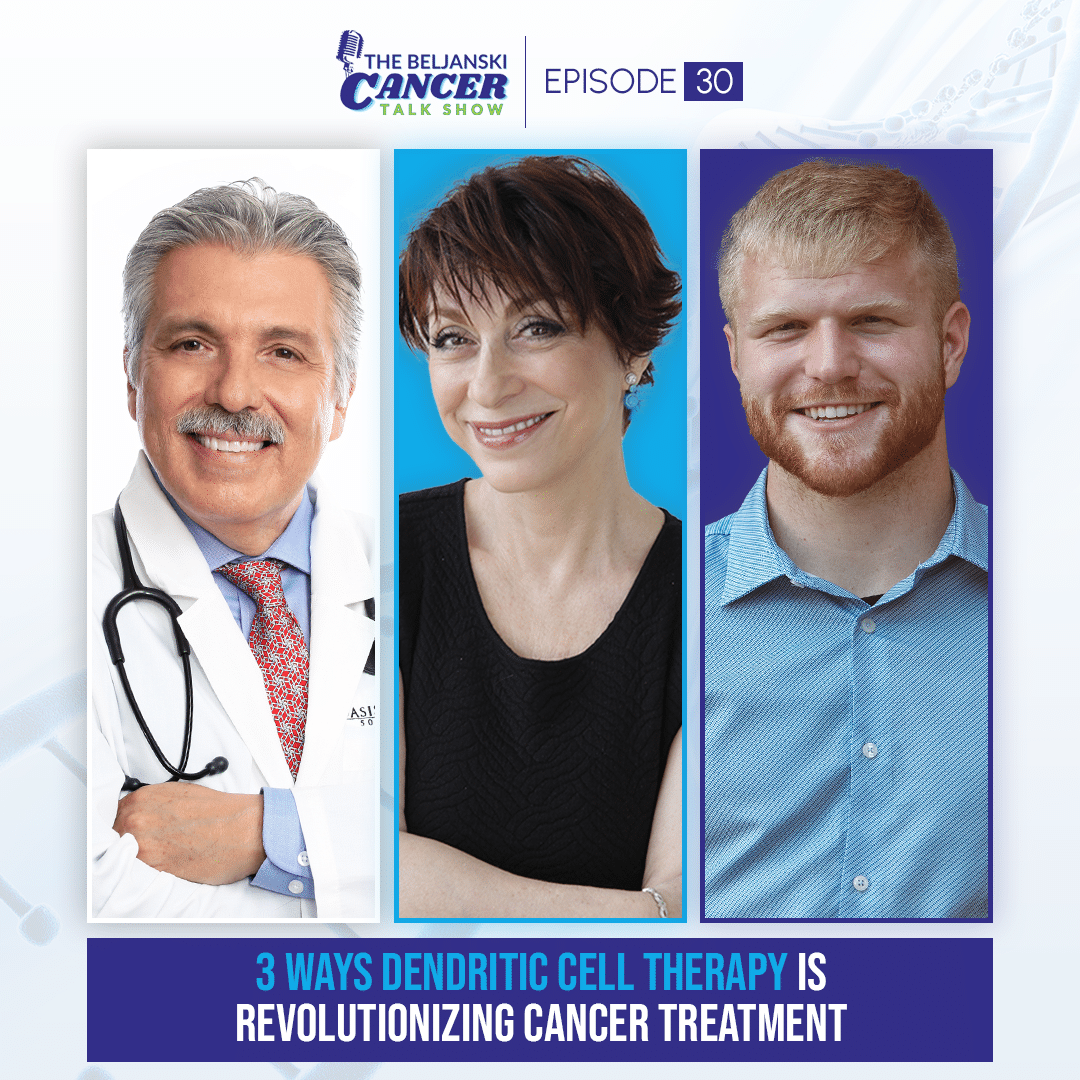
Episode 30 – 3 Ways Dendritic Cell Therapy is Revolutionizing Cancer Treatment with Dr. Francisco Contreras, MD
Dr. Francisco Contreras reveals a powerful approach to cancer care that mainstream medicine often [...]
Stream Now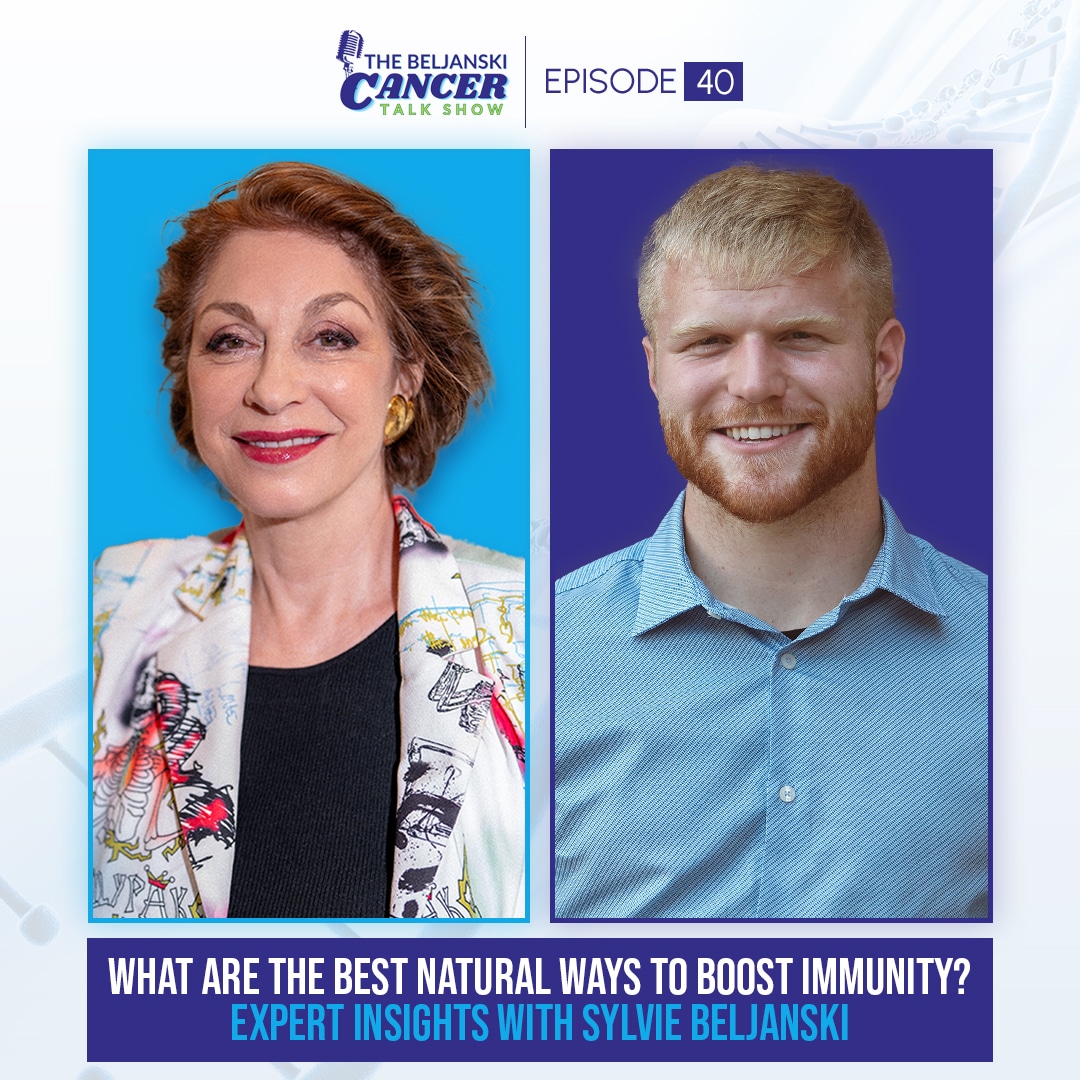
Episode 40: What Are the Best Natural Ways to Boost Immunity? Expert Insights with Sylvie Beljanski
Is your immune system defending you—or turning against you? Discover the simple science-backed shifts to protect your health [...]
Stream Now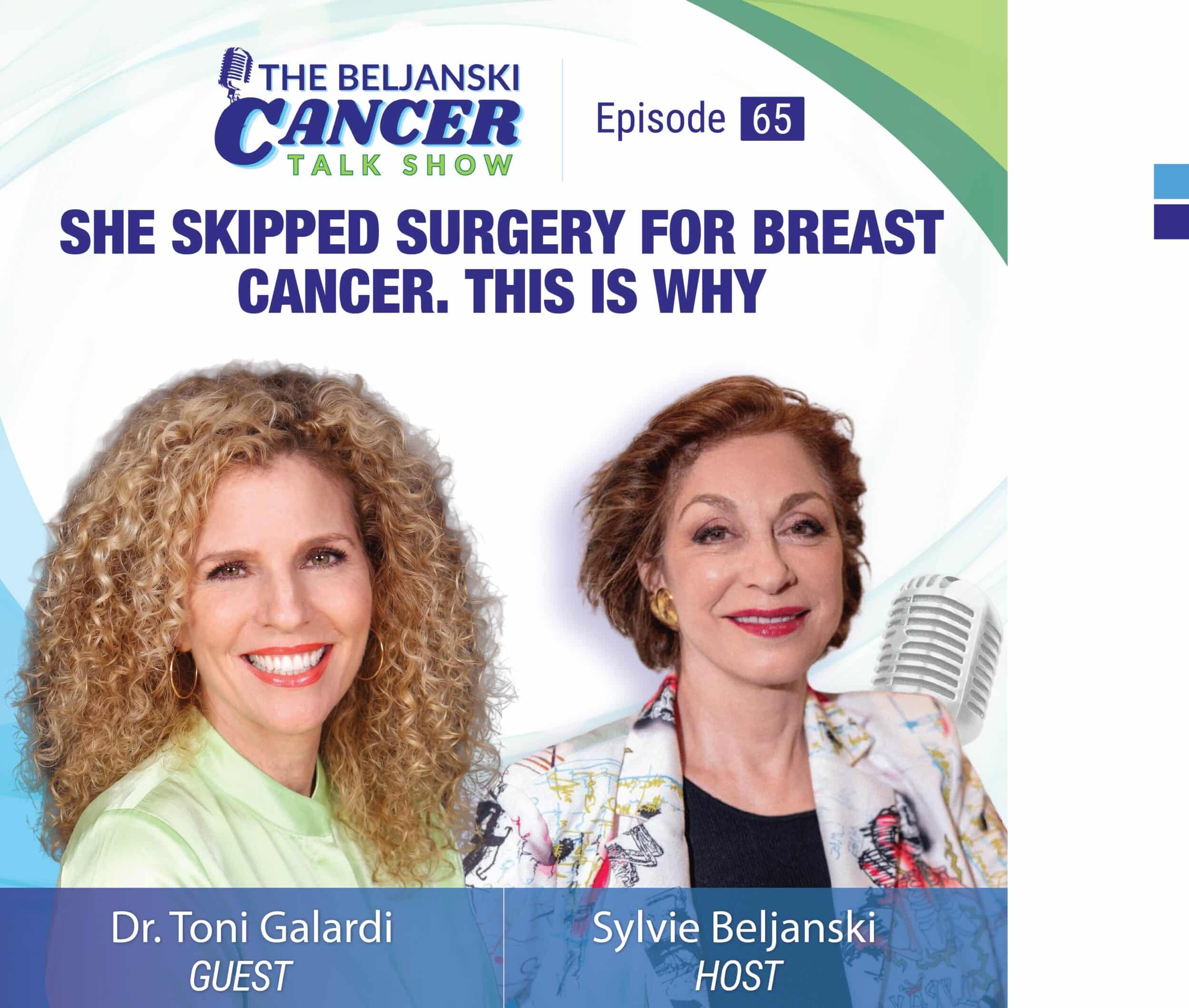
Episode 65: She Skipped Surgery for Breast Cancer. This Is Why | Dr. Toni Galardi
Dr. Toni Galardi shares her breast cancer journey and her "disease to please" theory, exploring how boundaries, toxic relationships, and [...]
Stream Now
Episode 35: Toxic Overload: The Hidden Link Between Toxins, Autoimmunity & Cancer with Dr. Loretta T. Friedman, RN, MS, DC, CCN, CNS, DACBN, DCBCN
Dr. Friedman joins the show to share some crucial health tips, specifically regarding the lymphatic [...]
Stream Now
Keep yourself updated!
Sign up below if you want to hear more about the weekly updates of The Beljanski Cancer Talk Show!
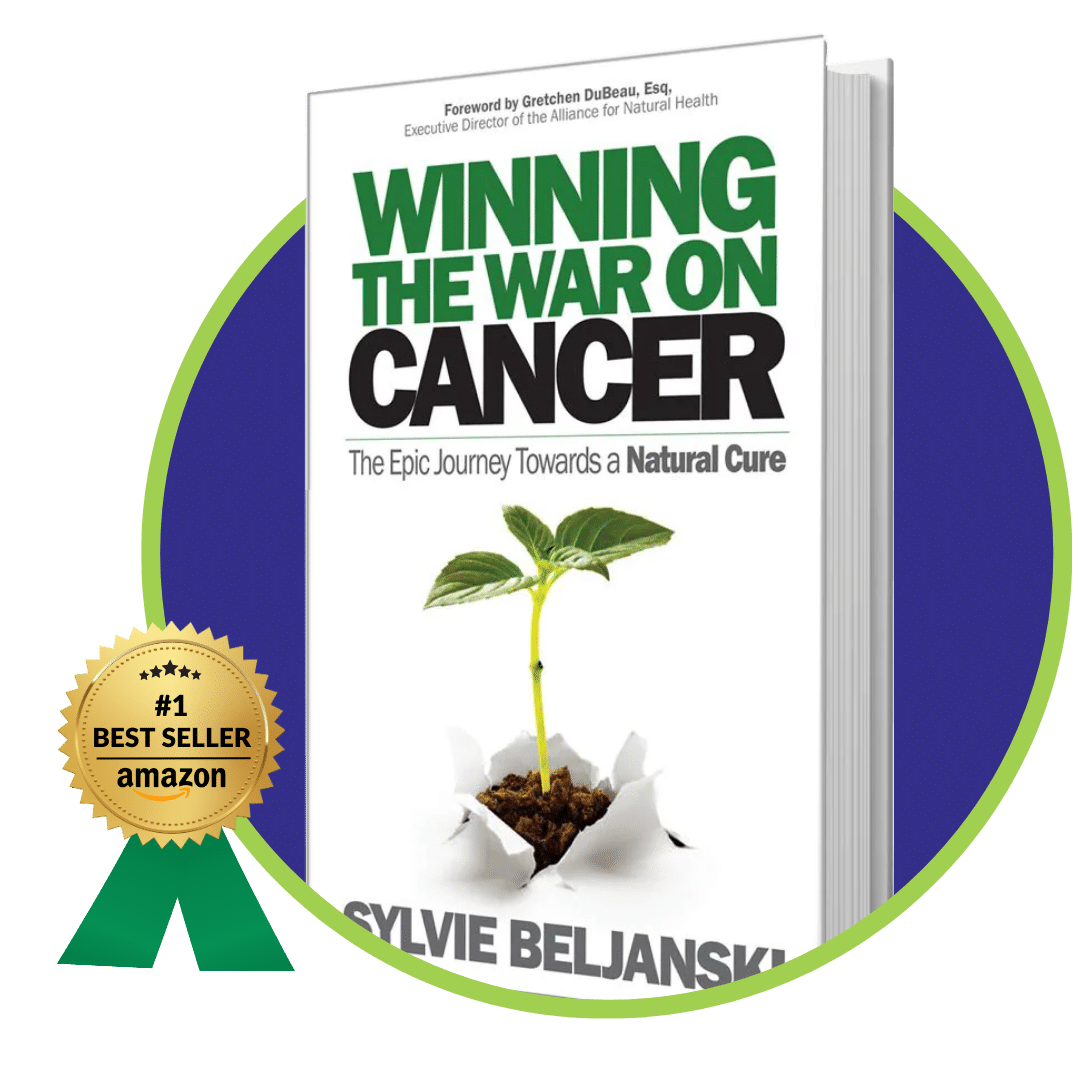
Award-Winning Book On Naturally Fighting Cancer
“For me personally, I think that Winning the War on Cancer by Sylvie Beljanski is one of those books that people should read. I have for a long time believed more in natural remedies than pharmaceutical cures, so I was involuntarily drawn to read the book.
It still preys on my mind on how the government can take up war against something that can save a lot of lives. I mean I know that a sort of thing like a more natural cure would likely actively threaten the pharmaceutical industry, but isn’t the industry on the side of saving people with something that has very little, or indeed no, toxicity at all? It’s so eye-opening and harrowing and I can’t yet state how I feel about everything that I learned.
I would recommend the book to anyone because many people these days are constantly being kept in the dark about natural remedies. What I love most about the book is that, though the book’s main point is cancer and its treatment, it also touches on areas that are vital to leading a healthy life. It points out the importance of detoxifying our body, especially since we live in a world where toxins are constantly released into the air by our technological marvels.”
4 out of 4 stars – Review by Nmesoma – OnlineBookClub.Org