
Episode 48: The Cells That Outsmart Cancer Treatment featuring Dr. John Hall
This episode is also available on:








Cancer doesn’t come back by accident. In this episode of the Beljanski Cancer Talk Show, Dr. John Hall explains how cancer stem cells drive drug resistance, metastasis, and recurrence, and how specific plant extracts have shown activity against both bulk tumors and these treatment-resistant cells.
🔑 Three Key Takeaways
- Discover why cancer recurrence, metastasis, and drug resistance are closely linked, and how a small subpopulation of cancer stem cells drives all three.
- Understand how certain plant extracts were shown in laboratory and animal studies to induce apoptosis in cancer cells while sparing healthy cells.
- Learn why targeting cancer stem cells may be key to preventing tumors from regrowing after chemotherapy or radiation.
⏳ 00:00 Understanding Cancer: Recurrence, Metastasis, and Drug Resistance
⏳ 02:55 The Beljanski Foundation: A Legacy of Research
⏳ 06:01 Plant Extracts: Mechanisms of Action Against Cancer
⏳ 08:49 The Role of Cancer Stem Cells in Treatment Challenges
⏳ 11:59 Efficacy of Plant Extracts: A Broad Spectrum Approach
⏳ 15:09 Future Directions: Research and Development at the Foundation
⏳ 17:49 Integrative Approaches: Combining Traditional and Natural Therapies
⏳ 21:01 Sustainability and Synthetic Alternatives in Cancer Treatment
⏳ 23:47 The Future of Cancer Research: Conferences and Community Engagement
Dr. John Hall (00:00.494)
problems of cancer recurrence and metastasis go together with another problem called drug resistance. And all three of these parameters are associated with cancer stem cells. So this is a subcategory. It’s a subpopulation of cells in the bulk population of the tumor that have special properties. Mainly, they are drug resistant.
They survive whatever treatment is given, whether it’s chemotherapy or radiotherapy.
Sylvie Beljanski (00:31.00)
Welcome to the Belzhansky Cancer Talk Show where integrative science and holistic healing come together. I am Sylvie Belzhansky and in each episode we explore nutrition, lifestyle, mental health and research-backed approaches to support the whole person through cancer and chronic diseases. Hello and welcome to the Belzhansky Cancer Talk Show. Today I have the pleasure to be with Dr. John Hall.
Dr. John Hall is the Director of Research of the Belgiansky Foundation. is a graduate fellow of Princeton University in biochemistry and he completed his PhD at New York University. Dr. Hall has been also an assistant professor at Rockefeller University in cell biology. He has presented many scientific papers and many scientific lectures all over the states and also in Europe.
and he is the author of several successful patent applications in the domain of cancer and cancer treatment. Dr. Hall, welcome to the Belzhansky Cancer Talk Show.
Dr. John Hall (01:40.29)
Well, thank you for having me, Sylvie.
Dr. Hall, you have been the director of research of the Beljansky Foundation for a long time. Can you refresh our memories and tell us a little bit about how it started?
Okay, as you well know, and we’re hoping to spread the word, that we have been engaged as a foundation devoted to scientific research to exploring the discoveries that your late father Mirko Baljewski made. He was a scientist at the Pasteur Institute who discovered some remarkable plant extracts. And much of the work of the foundation has been to confirm his observations about these extracts and to extend them.
And what I think is most impressive, two things. These extracts are effective at inhibiting the growth of cancer cells, but they do this without causing harm. They do not induce negative side effects. They don’t damage the animals or the humans who are ingesting them. And this is a wonderful development in the history of cancer research because
These extracts actually fulfill the long-held dream of cancer treatment, which is to have efficacy, that is to be effective, but also to be non-toxic and to not induce negative side effects. So in the pharma world, it’s called efficacy and safety. And Belgeski’s plant extracts have these two critical features combined. I can expand a little bit by just saying that we’ve also discovered, starting out many years ago,
Dr. John Hall (03:24.334)
At Columbia University Medical Center, so we’ve always collaborated with high-end academic or CRO type of research labs, we started out with prostate cancer. And this was of interest for a number of reasons. And the work there with Alan Katz’s lab, with Debbie Bemis’s PhD there, we found that both pauperera, one of the plant extracts, and revolfeo vomitoria, the other, inhibit the growth of
prostate cancer cells and they do this both in the test tube in tissue cultures with cells and in vivo in animals, so the strict tumors the vines of the tumor shrink and They can control the growth of that cancer in these animals by inhibiting cell proliferation We went on after some period of time to
further explorations, many further explorations with prostate cancer and prostate inflammation. But to stay on the thread here, we also moved on to other cancers. We knew we had what’s called broad spectrum. That means that these extracts are both effective against many different types of cancer. In fact, everyone we’ve tested, all the cancers we’ve tested have been inhibited in their growth by the extract.
What other cancer did you test?
We tested at the cellular level brain, breast, prostate, as I just said. We’ve also tested pancreatic ovarian and there are others I can’t even think of at the moment. But we don’t have one where we don’t fight the cancer. So it’s a very broad spectrum. It’s effective. And again, as I said, it’s without inducing problems, negative side effects or toxicity.
Sylvie Beljanski (05:14.65)
So what kind of testing, when you say we have tested those plant extracts and different kinds of cancer, can you tell us a little bit more what kind of tests and how confident people should feel about those testing?
Yeah, that’s a good question. What we’ve conducted are rigorous scientific tests, laboratory tests, which start at the cell-based level with cancer cells. And we can compare the activity in vitro, it’s called. That’s the expression for cell-based studies. We can compare that activity against the cancer cells with activity on normal cells. And we see a difference. We’ve historically seen that difference. So the extracts are active.
in inducing a process called apoptosis in the cancer cells.
is the death of the cancerous cell.
Exactly right. It’s called programmed cell death. And these extracts are very good at inducing that process, which I should say is a major goal of cancer therapies to induce apoptosis, because the cell, in effect, commits suicide. So if you can trigger that process, your work is done as an anti-cancer agent. You’ve induced the cell to die through its own internal program of demise. So this is a great goal.
Dr. John Hall (06:39.862)
And that comes from our studies on mechanism of action, which also started at Columbia University. That’s where we learned about apoptosis is the fundamental activity that occurs when cells are exposed to these extracts. And why should anyone believe the data? Because it’s the best you get. We used laboratories and technologies for assessing inhibition of proliferation of cancer cells according to the best tools available.
And so you can’t do any better than we’ve done. And that’s part of my responsibility as director of research is to make sure that the results were reliable and are reproducible. And so they can be believed by people who hear about these studies. It’s important to add then that we’ve also went on, both even starting at Columbia University Medical Center, with animal studies. So in this case, animals, and we’ve used mice, which is a great model for human cancers, and they are given a cancer.
the initial prostrate, and they’re treated with the extracts then. And treatment involves the animals are given orally some of the extract, and that’s how they take it. The extract, active components in the extract are absorbed in the intestines, distributed throughout the animal’s body in the blood, they reach the site of the cancer, and they kill cancer cells by this process called apoptosis.
You mentioned briefly the name of the two plants. Can you give them again to us and tell us more, a little bit where they come from, how you can find them?
Yes, indeed. The first Pau Pereira refers to the name of a tree that grows almost exclusively, not exclusively, but almost, in the Amazon rainforest. And it’s a fabulous tree. We’ve grown very affectionate. And it’s probably because the bark can be taken off the tree. It regrows, so it’s sustainable harvesting. It doesn’t destroy the tree. But this bark contains active anti-cancer.
Dr. John Hall (08:49.154)
compounds that are present in an extract that Mirko Beljezgi isolated and perfected. This extract is compatible with human beings. That’s the one with animals. People could take it without this negative side effect, but it remains active against their cancers. In the animals we studied, we see they were predictive for what is later seen in humans. The animals, the tumors shrink, as I’ve said.
The animals do not suffer side effects. They’re not debilitated. They don’t lose their hair. They don’t lose their intestinal lining. They don’t have neurological effects. They don’t have their immune system collapse. So I’m comparing that, and I’ve jumped to this point, compared to widespread commonly used anticancer agents and drugs. We have a big advantage in this lack of toxicity. It’s a profound.
advantage while keeping efficacy as I said at the outset.
Many listeners are concerned with cancer metastasis and recurrence. How this approach also helps and completes what is regularly offered as cancer treatments.
Well, the problems of cancer recurrence and metastasis go together with another problem called drug resistance. And all three of these parameters are associated with cancer stem cells. So this is a subcategory. It’s a subpopulation of cells in the bulk population of the tumor that have special properties, namely,
Dr. John Hall (10:29.464)
They are drug resistant. They survive whatever treatment is given, whether it’s chemotherapy or radiotherapy. They have the capacity for self-renewal, which means they continue to divide. They’re drug resistant, so they’re not affected by the drugs. Hey, they can keep dividing no matter what the circumstances. And they can also differentiate into subpopulations of cancer cells. They also enable metastasis and down the line over time, even with remission from a drug, a chemo drug.
the cancers often come back and this recurrence is the job of, the awful job of these cancer stem cells. So we have, and this jumps from where we started with prostate cancer at Columbia to where we’ve been for some period now with a focus in the foundations research on cancer stem cells because they’re the culprits for the spread of cancer and for the recurrence of cancer.
And what we found there, just briefly to summarize, is efficacy against these kinds of cancer cells. And these cancer stem cells, which I regard as insidious, this is in our current model and understanding, and it’s getting stronger, not weaker, cancer stem cells really are the issue for cancer metastasis and cancer recurrence. And our extracts, the pauperera I just mentioned in Rivolfe of Armatoria,
are effective against cancer stem cells. And that means that we have efficacy not just for the bulk tumor population. So I’m really saying tumors are composed of more than one group of cells. It’s not all identical cells, and that’s the tumor. Some are cancer stem cells, and there are several types of bulk tumor cells, but they’re not necessarily cancer stem cells. And those cells are often killed by treatments like chemo and radiation. So the tumors shrink in this model.
And in fact, this is a clinical effect, the tumor shrink, but they don’t disappear. And over time, they can regrow. They regroup. And that’s the effect of the cancer stem cells, which aren’t killed by the treatment. There’s a small population. It survives. And later on, sometimes after remission, people get the tumor shrink. They go to the doctor, and they find out, my cancer is going away. I’m feeling better. The side effects of the cancer.
Dr. John Hall (12:58.122)
are subdued and they can return to a life. Problem is, sometimes down the road, sometimes months, sometimes years, sometimes many years, the cancer comes back. And this is the dreadful aspect of cancer. Ultimately, if it could be just treated and you get rid of it, that’s great. People suffer so much because they anticipate recurrence and it often happens. The rate of recurrence depends on the cancer, course, but it’s a dreadful thing to live with.
and that’s part of a cancer diagnosis, is the fear that it’s going to come back even after it’s effective.
So to summarize, you have told us about two natural plant extracts which are killing cancer cells without affecting healthy cells, have a broad spectrum of activity against different kinds of cancer, and are also helping to avoid metastasis and cancer recurrence. Did I get that right?
Yes, that’s a good summary right then and there.
OK, so that sounds like a lot of exciting good news. What is the most exciting in your view?
Dr. John Hall (14:11.202)
Well, I do want to bring up the subject of mechanism of action. I mentioned this initially, we discovered that the extracts, both of them, induce apoptosis. I think that Rivolfe extract, I can describe that when that comes from the bark, the root bark of a shrub that grows not just, I don’t think it grows in the Amazon, I think we’ve isolated it from West Africa, but it grows more broadly. But that root bark has a…
active component in it, a molecule that is related to the active molecule in palpurera, which I just mentioned. And these two worked well together and they are structurally related, which makes sense because they’re both inducing apoptosis. And we see cell cycle arrest, particularly in the case of the Rivolvia, but these extracts have these extraordinary properties, keeping the safety as I said, but I want to allude to mechanism of action.
Apoptosis is the primary one, which I said connects us to the cancer research community and the clinical experience of oncologists. Inducing apoptosis is a great methodology, is a great effect of a cancer drug. But there’s more to learn about mechanism of action. And I think I want to emphasize apoptosis because that connects us to the community and it makes people say, as you said earlier, why do we have confidence? confidence can be had in these…
extracts and the research we’ve conducted precisely because they connect us to a broadly desirable cancer drug activity inducing suicide in the cancer cells. But there’s more to this. There’s the mechanism of action against cancer stem cell. And this is, it combines apoptosis with another family of anti-cancer activities, specifically into cancer stem cells. So stem cells have their own biological…
biochemical pathways, genetic pathways, and we are starting to see that we can interfere with those pathways in our action against the cancer stem cells I already talked about. And we have a lot more work to do there, and I think that’s a very exciting frontier for us.
Sylvie Beljanski (16:23.978)
So what is coming up? What is in the future for the Beljansky Foundation and your next round of research? When cancer enters your life, the questions don’t stop at treatment. You start asking why, what else, and what more can I do to support my body? At the Beljansky Foundation, we believe cancer care deserves deeper answers, answers rooted in science, not in shortcuts.
For decades, groundbreaking molecular research by Dr. Mirko Beljanski explored how specific natural compounds selectively target cancer cells while sparing healthy ones. That work continues today through independent research, education, and global collaboration. At beljanski.org, you will find evidence-based resources, expert-led conferences, books,
and conversations that explore integrative approaches to cancer and chronic disease alongside conventional care. Whether you are a patient, a caregiver or practitioner, this is the place to learn, to question and to think more expansively about healing. Visit belgianski.org to explore the research, attend upcoming events and connect with the Belgianski community. Because informed choices
begin with credible.
Well, let me go back a little bit and fill in a little bit of our past progress. After prostate, we worked on pancreatic cancer and ovarian cancer. We chose those because they are so difficult to treat. They’re really a diagnosis of these cancers is a very serious event. They diagnose late, they don’t respond well to treatment, partly because they’re diagnosed late.
Dr. John Hall (18:18.478)
They often kill patients sooner rather than later. So we wanted to deal with difficult to treat cancers, which we’ve done. And I want to say we started our research on cancer stem cells. We both showed activity against pancreatic cancer cells, the tumors in the animal models. And we’ve also worked in those two cancers, pancreatic and ovarian, against pancreatic cancer stem cells.
and ovarian cancer stem cells. So we have already a track record of going after this stem cell issue. And we have now broadened that, not just from difficult to treat and not so common cancers, to the really major cancers that affect men and women, prostate and breast. And we started with breast. And we are just finishing up studies on breast cancer stem cells, which have been very successful.
using a combination of plant extracts, including two I want to mention. One includes, and we always like to keep both the Pao and the Rivolfe extracts in the combination, in the mix. One also includes the Ginkgo, golden leaf Ginkgo extract, and both Jansky identified it. And we’ve learned a lot more about that one. I can comment on that if you like. But that free extract combination
has in our breast cancer stem cell studies shown effectiveness against the breast cancer stem cells. This is the subject of an upcoming publication. The research is just concluding. It’s been a long project, but we’re just about there. And that publication will be written up hopefully by the end of this month, if not shortly thereafter. So that’s very exciting. And we then are going, we already started research on prostate cancer stem cells.
And that’s initiated, it’s going well, and it’s going to take, of course, some time to finish that up. But we really feel we’ve addressed these different types of cancer stem cells and continue to show that the plant extracts, palpareira and revolfeo vomitoria, show efficacy that are effective against the cancer stem cells. And the frontier, next frontier, as I said a moment ago, is to analyze how that works.
Dr. John Hall (20:41.174)
It’s one thing to induce apoptosis, great, but how are you inhibiting specifically the cancer stem cell population? So I think that’s the next frontier I’m very excited about. And as I’ve said, we’re going to be looking into that following the initial experiments on prostate cancer stem cells.
Yeah, and you will be speaking also about this research at the upcoming conference of the Belszczynski Foundation, believe San Diego in June, right? June 26th.
Absolutely, and I should say the job of the foundation is not just research. I think that’s plenty enough, but it’s also to spread the word about these extracts and about Mirko Bojanowski’s research, his discoveries. Because these are very important anti-cancer products. They’re natural products, but they combine, as I started out by saying, efficacy and safety. They’ve achieved this fundamental goal of
any anticancer agent. want to have it work and you want it to not cause harm to healthy cells and tissues. And so I think it’s the mission of the foundation is not just to research but also spreading the word. And our conferences for this purpose have been great. This will be the third one. It’s a pleasure to be involved with it. I think they’re very useful in this process of getting the word out of educating people, popularizing the utility of these extracts.
And there’s one coming up in June, as you said, in San Diego. And yes, I will be there. I’m planning to make a presentation on the stem cell.
Sylvie Beljanski (22:20.446)
When you are facing cancer, you are suddenly facing a myriad of questions. Questions about nutrition, lifestyle, mental and emotional support, and how integrative approaches can work alongside conventional care.
The Belgiansky Integrative Cancer Conference brings the conversation together in one place. From June 26 to 28, join leading oncologists, integrative physicians, researchers, and survivors in San Diego, California for three days of science-informed whole-person cancer care.
These live events expose evidence-based integrative strategies, emerging research and practical tools you can apply immediately while connecting with the communities that understand the journey. Whether you are a ten-year person or virtually, this conference is designed to educate, empower and support informed decision-making. Learn more and reserve your spot at integrativecancerconference.com.
because better outcomes begin with better conversations. You mentioned a number of publications already about the activity of those plant extracts and different kinds of cancer. Where can we find those publications?
Well, please consult our website. It’s the Beljansky Foundation. You can go to www.beljansky.org. And Beljansky is spelled B-E-L-J-A-N-S-K-I.org means it’s an organization. It’s a nonprofit entity that is devoted to the research. And I just said to spreading the word about these very successful anti-cancer plant extracts.
Sylvie Beljanski (24:16.536)
What do you think this research, I mean, what kind of impact do you think it will have on the long term and the way we look at cancer? Because cancer is still associated to those dreadful toxic treatments for most people. And I’m sure a lot of people are wondering, is it something I can, do on the side instead of my treatment? What my options are?
Well, that’s a very interesting question because one of the things we’ve learned in the course of our research is these both extracts combine very well with traditional therapies. And so I’m alluded to the fact that the future of drug treatment is combinations. I refer to Pao, Rivolvia, and Goldenly Ginkgo. It’s these so-called cocktails. You bring together the activities of
somewhat different activities, still anti-cancer and still safe, but you bring them together and you get the multiplicity, you get that effect amplified. And I think we’ve also learned that we can work together, meaning our extract can be effective together with traditional chemo. And that includes basically everyone we’ve tested. We have a unique mechanism of action. We don’t interfere with the normal processes in cells. And so
combined even with a somewhat more toxic drug, we see, and these are in our publications from pancreatic and ovarian cancer, and there’s some data we have in prostate, we combine extremely well with traditional therapy. So one, to answer your point, one avenue of exploration is combinations with mainstream therapies. And I think that is something we want to educate, we want more word out there.
among doctors, naturopaths, healthcare professionals who can start to see the potential of these plant extracts, not only on their own or in our own combinations I’ve described, but together with mainstream treatments. And let me finish by saying that that combination is important because these anti-cancer drugs, even the mainstream chemo ones, do kill cancer cells and shrink tumors. The problem is the side effect. Well, big point we get.
Dr. John Hall (26:39.362)
by combining a toxic drug with a non-toxic plant extract is that you can lower the dose of the chemo drug. This is called the dose reduction effect. So you get just as good an effect with a much lower dose of that drug and thereby reduce toxicity that way. It’s another way to bring to the table big advantage in cancer treatment by also working together with mainstream chemotherapies and radiotherapy.
When you are facing cancer, the choices can feel overwhelming, conflicting advices, endless options, and very little clarity. At Maison Belchanski, everything begins with science. For decades, molecular biologist Dr. Mirko Belchanski studied how specific plant extracts interact with cancer cells, work that continues today through independent research and real-world use.
Maison Beljanski offers carefully formulated supplements inspired by that research, along with targeted support for immune health, cellular resilience, digestion, detoxification, and overall wellness. You will also find educational books, organic teas, personalized health coaching, and wellness programs designed to support the whole person, not just the diagnosis. This is not about quick fixes.
It’s about informed choices, thoughtful formulations, and supporting the body alongside conventional care. Explore the products, the research, and the resources at maisonbelchanski.com. Because when science leads, wellness follows.
Sylvie Beljanski (28:25.619)
Do you have already some example of studies done with a reduction of chemo?
Yes, we have with both pancreatic and ovarian, the platin drugs with ovarian and gemcitabine with the pancreatic. The results are quite impressive and these combinations, are actually what’s, let’s just call them additive, but Synergene does come to bear here, meaning they’re especially effective to get. And we have data, this is published data, and I want here to acknowledge our work not just with Columbia.
the University Medical Center, but also with Kansas University Medical Center. Dr. Kate Chen’s lab there, we’ve done a lot of work with here over the years. And there quite a few publications. As I said, they’re on our website. But you can see there, you’ll find examples of these drug combinations. Real drugs, chemo drugs, together with the extract. I think, as I’ve been saying, there’s a real future.
And speaking of future, so you are working currently on the prostate cancer stem cells, is that right? That’s right. Any other plan for the future?
Let me just say, finishing this job about mechanism of action for anti-cancer stem cell is a big thing to do. That’s a great value. I’m also already thinking up the other futures experiments we can be doing. But we have our hands full right now with the process of finishing up the breast cancer stem cell project. We just started the prostate cancer stem cell project. And there’s going to be mechanism of action to dissect how
Dr. John Hall (30:02.498)
The extracts affect the cancer stem cells and slow down and defeat their advance in growth. So there’s plenty there.
I know also that sustainability is a concern and getting those plant extracts from the wild is not something that that easy. The trees do not need to be cut down, they only can be shaved to get the bark of the tree. However, it is my understanding that you have been working for a while already on a synthetic version.
of the Pao Pera? Can you tell us a little bit more and why the world should be excited about that?
Okay, you’re quite right. We’ve branched out into real biotech here by generating a closely related molecule to the active compound in the natural plant extract, pyoprera. And that anti-cancer molecule was identified as far back as your fathers were. And we have constructed an alternate structure, closely related but different.
And in our test, we found that it is even less toxic than the naturally occurring molecule, which doesn’t often happen when you synthesize a molecule. But we have the anti-cancer activity inherent. It’s the same molecule, the same structure, but it’s simplified and just enough to make a difference in terms of the toxic effects. So we’ve taken an already relatively non-toxic.
Dr. John Hall (31:45.522)
and gone to an even lower level of toxicity in the synthetic compound. And that’s the focus of our new entity, Murchine Pharma, which is making this drug. We did a patent on it. I wrote a patent on it. Sidney and I did that together. And we got the patent in the US and in every place else we applied. So that was successful in intellectual property. And we’re now in the process of raising the money needed to pursue drug development.
which includes clinical trials in humans. And we’re very eagerly anticipating success in that route. We recently brought in a prominent CEO to run the company. And I’m the chief scientific officer. Sylvia’s chairman of the board, or chairperson of the board, I should say. it’s a going enterprise right now. We’re very excited by that. And it does overcome, as you just said, Sylvie,
You can see here the capacity to make as much of the molecule as is needed. It’s as synthetic, you can go into a lab and crack out the molecule. You don’t have to rely on harvesting bark, which however is sustainable, is still in limited quantities, fundamentally limited. This is something that can be made synthetically as much as we need.
That sounds very exciting. you are at the beginning of this venture. So people who are excited and want to get on board of this project, who should they contact? How can they do that? Getting home?
I would love them to reach out to me as a starter and I can make all the necessary connections to make anyone who’s interested and particularly interested in making an investment. I’m happy to turn you over to the right people, our financial guy and our CEO who can make all that happen. And I’m also available, of course, to answer any technical or scientific questions that anyone has this new enterprise.
Sylvie Beljanski (33:47.97)
Sounds extremely interesting and like a great project to start the new year.
Yes, yes, I certainly think so.
Is there anything you would like to add or to inform the world about your new projects and the whereabouts of the Belzhansky Foundation?
I I’m just, I want to just say at the risk of repeating myself a bit, how pleased I am with our conferences. This is basically a yearly conference, the Bojansky Cancer Conference, and the original one was in Jacksonville, Florida a couple years ago, and we then had one in Austin, Texas. As we said, there’s one upcoming later this year in June in San Diego, and I think this satisfied a real need because
The science is great and there’s more and more of it. We’re keeping up on that, but we need to communicate and get the word out, as I’ve said, but make sure that people know about the wonderful advantages these plant extracts, these natural products can bring in the cancer area.
Sylvie Beljanski (35:01.694)
Thank you, Dr. Hall. I think that was very original discussion and interesting.
thank you so much for having me on. Take care.
Thank you.
Thank you for listening to the BelgienSci Cancer Talk Show. If this conversation supported or inspired you, please follow the podcast, share it with someone who may benefit, and leave a review to help us discover these integrative perspectives. For more resources and to see what we offer, please visit Beljanski.org.
Dr. John Hall is the Director of Research at the Beljanski Foundation, where he leads scientific studies building on the work of molecular biologist Dr. Mirko Beljanski. He is a graduate fellow of Princeton University, earned his PhD in biochemistry from New York University, and served as an assistant professor at Rockefeller University in cell biology.
Dr. Hall has authored multiple scientific publications and patent applications in the field of cancer research. His work focuses on understanding how specific plant extracts interact with cancer cells, cancer stem cells, and treatment resistance, with an emphasis on efficacy, safety, and integrative approaches to cancer care.
Connect with John Hall



Related Episodes
Episode 17 – Breaking Down Breast Cancer: From Diagnosis to Innovations and Support with Sylvie Beljanski
Tune in to this week's episode as Sylvie Beljanski reveals essential strategies for combating breast cancer through natural remedies and targeted [...]
Stream Now
Episode 53: Life with Cancer: Nutrition, Fermented Soy, and Supporting Recovery
Discover how nitrogen-fermented soy (Haelan 951) supports cancer recovery. Jim Ladwig, colon cancer survivor, explains its benefits for gut health, [...]
Stream Now
Episode 7 – Animals Prove Integrative Medicine Works with Dr. Marlene Siegel, DVM
In this episode, Dr. Siegel offers practical advice for pet owners on enhancing their pets' health through diet, reducing environmental toxins, and [...]
Stream Now
Episode 28 – Healing Cancer from Within: A Comprehensive Approach to Treatment with Dr. Thomas Lodi, MD, MD(H)
Dr. Thomas Lodi shares his groundbreaking approaches to alternative cancer treatment and his unique perspective with this disease. [...]
Stream Now
Keep yourself updated!
Sign up below if you want to hear more about the weekly updates of The Beljanski Cancer Talk Show!
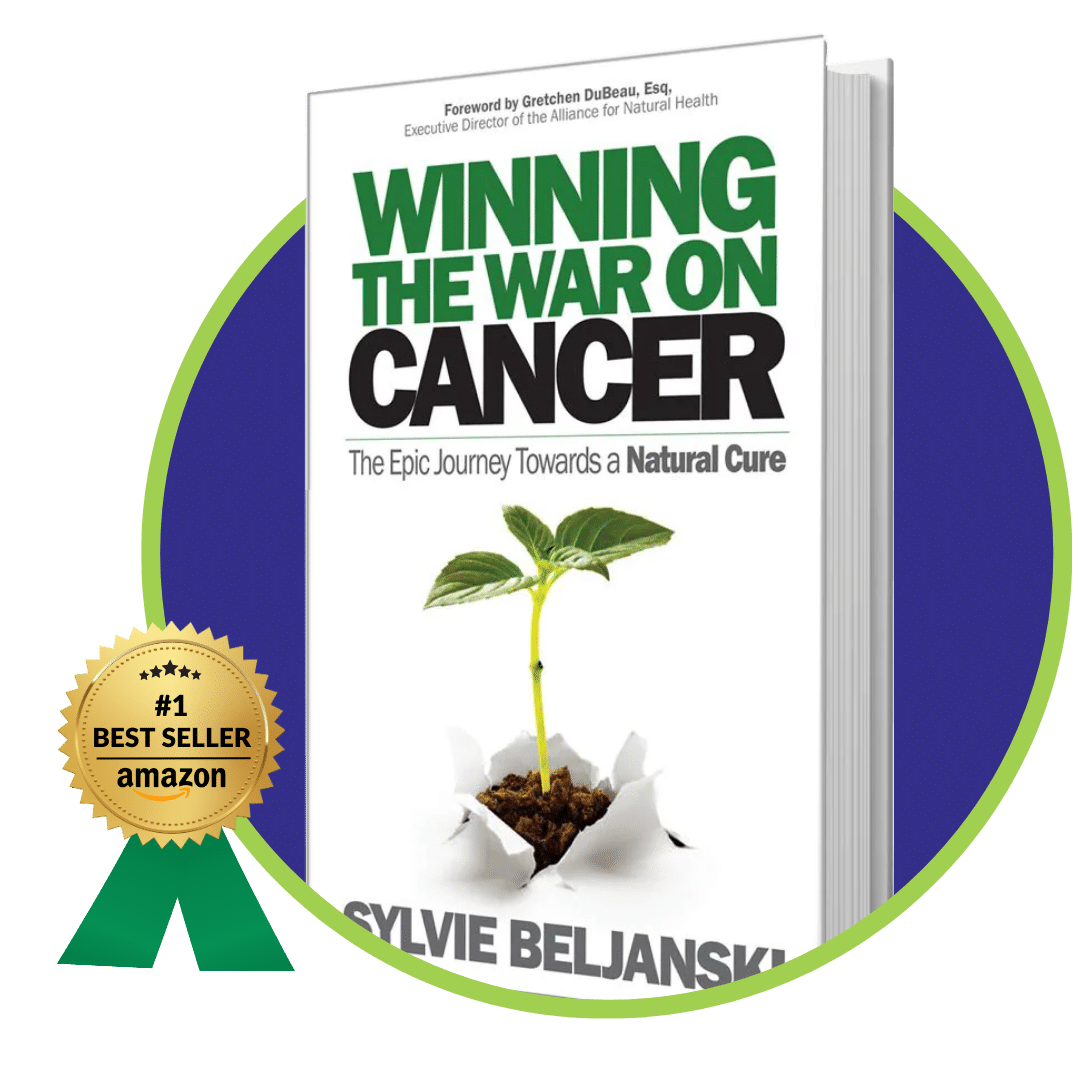
Award-Winning Book On Naturally Fighting Cancer
“For me personally, I think that Winning the War on Cancer by Sylvie Beljanski is one of those books that people should read. I have for a long time believed more in natural remedies than pharmaceutical cures, so I was involuntarily drawn to read the book.
It still preys on my mind on how the government can take up war against something that can save a lot of lives. I mean I know that a sort of thing like a more natural cure would likely actively threaten the pharmaceutical industry, but isn’t the industry on the side of saving people with something that has very little, or indeed no, toxicity at all? It’s so eye-opening and harrowing and I can’t yet state how I feel about everything that I learned.
I would recommend the book to anyone because many people these days are constantly being kept in the dark about natural remedies. What I love most about the book is that, though the book’s main point is cancer and its treatment, it also touches on areas that are vital to leading a healthy life. It points out the importance of detoxifying our body, especially since we live in a world where toxins are constantly released into the air by our technological marvels.”
4 out of 4 stars – Review by Nmesoma – OnlineBookClub.Org