Episode 61: Beyond Supplements: The Science of Flavonoids and Whole-Body Health
This episode is also available on:







In this episode of The Beljanski Cancer Talk Show, Sylvie Beljanski speaks with Brian Dickerson, a healthcare attorney turned natural-health entrepreneur and founder of Flavent Relief.
Brian shares how his experience representing companies in the healthcare, pharmaceutical, food, and nutraceutical industries led him to focus on plant-based wellness solutions. After seeing the limitations and side effects associated with many conventional approaches, he began exploring the potential of flavonoids—natural plant compounds found in colorful fruits, vegetables, herbs, and botanicals.
The conversation explores the role flavonoids may play in supporting cellular health, inflammation balance, antioxidant activity, immune function, brain health, and overall wellness. Brian explains why he believes diet quality, soil health, plant cultivation, and bioavailability matter when considering nutritional supplements.
Sylvie and Brian also discuss the importance of consuming a wide variety of colorful fruits and vegetables, the potential value of supplementation when diet falls short, and how natural products may be used as part of a broader wellness approach alongside conventional medical care.
Brian also shares how his work with horses, dogs, and people influenced the development of Flavent Relief products, including formulations designed to support immune health, brain health, and inflammation management.
🔑 Three Key Takeaways
- Flavonoids are protective plant compounds found in colorful foods
Brian explains that flavonoids are naturally occurring compounds found in fruits, vegetables, herbs, teas, and other plants. He highlights colorful foods such as berries, pomegranate, green tea, chamomile, parsley, rosemary, and oregano as examples of flavonoid-rich plants. - Diet quality and supplementation can both support wellness
The conversation emphasizes the importance of eating a diverse range of whole foods, especially colorful fruits and vegetables. Brian and Sylvie discuss how modern diets, processed foods, and declining soil quality may make it more difficult for some people to obtain sufficient plant nutrients through food alone. - Natural health products should complement informed healthcare decisions
Brian discusses plant-based formulations designed to support immune health, brain health, and inflammation balance. The episode emphasizes that supplements should be viewed as part of a broader wellness strategy that includes nutrition, lifestyle, professional guidance, and conventional medical care when appropriate.
⏳ 00:00 Introduction to Integrative Health and Flavonoids
⏳ 02:32 The Journey from Law to Health Advocacy
⏳ 04:08 Understanding Flavonoids and Their Benefits
⏳ 07:50 The Role of Flavonoids in Immune Support
⏳ 10:22 The Importance of Soil Quality and Supplementation
⏳ 11:09 Measuring the Need for Flavonoid Supplementation
⏳ 13:33 Cultivation and Extraction of Flavonoids
⏳ 14:34 Benefits of Flavonoids for Inflammation and Pain Relief
⏳ 16:05 Tailoring Flavonoid Products for Specific Ailments
⏳ 18:17 Expected Results and Timeframes for Flavonoid Use
⏳ 22:49 Flavonoids and Cancer Support
⏳ 25:52 Natural Detoxification and Health Benefits
⏳ 27:29 Accessing Flavonoid Products and Discounts
⏳ 29:24 The Synergy of Natural Health Approaches
⏳ 31:21 Conclusion and Upcoming Events
Brian Dickerson (00:02.777)
We’re recording as well, Yeah, hang on. We’re not yet. Hold on, doc. One second. Hold on.
Sylvie Beljanski (00:03.086)
We’re recording this one doc. Hold on doc, one second, hold on.
Sylvie Beljanski (00:10.316)
Yeah, you are good.
Sylvie Beljanski (00:35.406)
Are you ready? He’s putting the card in the record.
Brian Dickerson (00:37.327)
He’s putting the card in to record.
Brian Dickerson (01:05.551)
You’re good? We’re good, Doc.
Sylvie Beljanski (01:05.902)
We’re We’re good, Doc. Okay.
Sylvie Beljanski (01:14.136)
Hello and welcome to this new episode of the Belgiansky Cancer Talk Show. Today I am joined by Brian Dickerson and I got the privilege to know him because his company, Flavent Relief, joined us last year at the Belgiansky Cancer Conference, which was hosted in Austin, Texas. So we are very much looking to see his company this year in San Diego. And in the meantime,
I have the pleasure to have this discussion with him. So Brian Dickerson is a health care lawyer with over 30 years in practice. He used his knowledge as a health care lawyer who presented company within the food and pharmaceutical industry to establish a natural health products manufacturing company with brands focusing on the use of flavonoids.
His companies cultivate the plants, which are known to develop beneficial levels of flavonoids. And then these flavonoids are extracted from the plants and utilized in dietary supplements and health care products to provide bioavailability, benefiting brain cells, overall wellness, and longevity support. He used this experience responding to traumatic brain injuries, especially from college football.
to focus on health and wellness and specifically brain health. These companies manufacture and distribute products not only in the human wellness space, but also for dogs and horses in the hopes of avoiding the side effects which are caused by pharmaceutical industry. So Brian, welcome to the Belgiansky Cancer Talk Show. And I am very intrigued
with your biography. First, how come a lawyer turned into a health advocate and health professional? I’m very intrigued because that’s also what happened to me. So what is your story? Well, thank you. Thank you for having me on the show. The start was I represented pharmacies, health care practitioners, pharmaceutical companies, food companies.
Brian Dickerson (03:29.527)
Well, thank you and thank you for having me on the show. The start was I represented pharmacies, healthcare practitioners, pharmaceutical companies, food companies, and saw a lot of what comes about from those companies. And the dollar being the prime aspect of those companies and not the beneficial health. And 2014, I had two of my clients, least the client contacts,
Sylvie Beljanski (03:40.782)
and saw a lot of what comes about from those companies and the dollar being the prime aspect of those companies and not the beneficial health. And 2014, I had two of my clients, least the client contacts, step out and start doing their own business. And it was in the nutraceutical space and it was in the natural space and really saw the benefits of the natural space.
Brian Dickerson (03:57.495)
step out and start doing their own business and it was in the nutraceutical space and it was in the natural space and really saw the benefits of the natural space and saw how the adversity we have to overcome in the natural space because we don’t have the FDA approving the natural products and the pharmaceutical products get to make the claims and so it was a
Sylvie Beljanski (04:07.946)
and saw how the adversity we had to overcome in the natural space because we don’t have the FDA approving the natural products and the pharmaceutical products to make the claims. And so it was a challenge, number one, but I also saw it was more beneficial to humans and the dogs and the horses. And as you mentioned in the intro, we rescue horses and…
Brian Dickerson (04:22.383)
challenge number one, but I also saw it was more beneficial to humans and the dogs and the horses. And as you mentioned in the intro, we rescue horses and see plenty of horses that have used the banyan and butyre whole life, which is the inset for horses and their livers are done by the time they’re 17 or 18. And I want to figure out a way to make them better. And it was a natural plants and then it progressed to dogs and then it progressed to the humans.
Sylvie Beljanski (04:34.048)
see plenty of horses that have used the bantamine and butyre whole life, which is the inset for horses. And their livers are done by the time they’re 17 or 18. And I want to figure out a way to make them better. And it was a natural plants. And then it progressed to dogs. And then it progressed to the humans. So in those plants, are, you’re I mean, your bio says you are specifically
focusing on the flavonoids. Can you explain to audience what are flavonoids? So flavonoids are what protects the plants and they’re going to be very vibrant colors. So the pomegranate, you get the purples, the reds. Chamomile, you get another purple that’s protecting the flower. But all of those colors are derivative of the flavonoids. And then when you look at green, you look at the bright green.
Brian Dickerson (05:07.193)
So flavonoids are what protects the plants and they’re gonna be very vibrant colors. So the pomegranate, you get the purples, the reds, chamomile, you get another purple that’s protecting the flower. But all of those colors are derivative of the flavonoids. And then when you look at green, you look at the bright green, ginkgo, parsley, rosemary, oregano.
Sylvie Beljanski (05:30.03)
Ginkgo, parsley, rosemary, oregano. So the flavonoids are protecting those plants from ultraviolet rays, anything in the atmosphere that’s gonna make a better cellular growth. And so what the flavonoids do for humans is the same thing. That’s why we always proceed fruits and vegetables. And that’s why when you look at the blue zone areas from the Mediterranean to Japan,
Brian Dickerson (05:34.831)
So the flavonoids are protecting those plants from ultraviolet rays, anything in the atmosphere that’s going to make a better cellular growth. And so what the flavonoids do for humans is the same thing. That’s why we always supposed to eat fruits and vegetables. And that’s why when you look at the blue zone areas from the Mediterranean to Japan, they eat the vegetables, they eat the greens, they get the reds, the purples. Here in America, our diet, as you know, from
Sylvie Beljanski (05:57.155)
they eat the vegetables, they eat the greens, they get the reds, the purples. Here in America, our diets, as you know, from the last 30 years have changed just to processed foods, and you’re not getting those fruits and vegetables, so you’re not getting the flavonoids. So the same thing that the flavonoids do for the plants, as far as.
Brian Dickerson (06:04.409)
The last 30 years have changed us to process foods and you’re not getting those fruits and vegetables so you’re not getting the flavonoids. So the same thing that the flavonoids do for the plants as far as protecting the cells, they do the same thing for us as humans.
Sylvie Beljanski (06:19.822)
So, I mean, you hear that all the time nowadays, mean, eat the rainbow, that’s the, I mean, the common things that people are now advertising, eat the rainbow, eat all those colors. But how do they actually benefit? By which mechanism of action do they actually benefit?
the body and help boost the immune system. So when you look at, let’s say quercetin, for example, which is common in the majority of plants, and I keep bringing up Ginkgo because of your family’s history with using Ginkgo and green tea. The quercetin actually has like a barrier around the cell, so it protects any outside interference. So if it’s going to be viral, if it’s going to be bacterial, that quercetin is protecting the cell.
Brian Dickerson (06:52.271)
So when you look at, let’s say quercetin, for example, which is common in the majority of plants, and I keep bringing up ginkgo because of your family’s history with using ginkgo and green tea, the quercetin actually has like a barrier around the cell, so it protects any outside interference. So if it’s gonna be viral, if it’s gonna be bacterial, that quercetin is protecting the cell.
Sylvie Beljanski (07:18.51)
If there’s something in the body that the body is trying to protect, that quercetin is going to be around the cell and help counterbalance the negative aspects in the body. The quercetin has been found to be anti-parasitic with plants and in animals. And we know it as humans as well, but that quercetin with the parasite, going back to a 2023 study, shows that it paralyzes the parasites.
Brian Dickerson (07:18.793)
if there’s something in the body that the body is trying to protect, that quercetin is going to be around the cell and help counterbalance the negative aspects in the body. The quercetin has been found to be anti-parasitic with plants and in animals. And we know it as humans as well, but that quercetin with the parasite, going back to a 2023 study, shows that it paralyzes the parasites.
And so you’ve got that benefit. When you look at luteolin and epigenin, you’re looking at flavonoids that help, basically I say eat sugar. So they help reduce insulin levels. And so when you look at people that are becoming sick that need to have a stronger immune system, just those three flavonoids along are helping the body have a stronger cell growth, stronger cells themselves, and be able to fight off any outside interference.
Sylvie Beljanski (07:48.663)
And so you’ve got that benefit. When you look at luteolin and epigenin, you’re looking at flavonoids that help, basically I say eat sugar. So they help reduce insulin levels. And so when you look at people that are becoming sick that need to have a stronger immune system, just those three flavonoids along are helping the body have a stronger cell growth, stronger cells themselves, and be able to fight off any outside interference.
When it comes to plants, mean, people hear different things. I sometimes they are always beneficial, but we hear sometimes about antioxidant benefits. Sometimes we speak about the alkaloids, which have shown to have anti-cancer properties. Sometimes we hear about sterols. You are speaking of flavonoids. What is the difference of with all?
between all those words and how people can sort out what really they mean and what they should focus on. Well, the alkaloids and the flavonoids work together a lot as far as antioxidants. Blueberries, for example, you’re looking at the flavonoids and the antioxidants in blueberries that help people with immune. Edelberries, same thing. But what are we looking at? We’re looking at that dark purple, dark blue color.
Brian Dickerson (08:59.129)
Well, the alkaloids and the flavonoids work together a lot as far as antioxidants. Blueberries, for example, you’re looking at the flavonoids and the antioxidants in blueberries that help people with immune. Edelberry, same thing. But what are we looking at? We’re looking at that dark purple, dark blue color. And that’s where it has a lot of flavonoids and with the alkaloids.
Sylvie Beljanski (09:17.826)
And that’s where it has a lot of flavonoids. And with the alkaloids, you’re going to see that benefit of protecting the cells and protecting the outside influence, whether it’s virus, whether it’s bacteria, whatever it may be. So what I see most problematic we have here in the States is you’re not eating the blueberries that were the natural non-GMO blueberries. You’re not eating the dill that is non-heirloom dill.
Brian Dickerson (09:22.081)
you’re gonna see that benefit of protecting the cells and protecting the outside influence, whether it’s a virus, whether it’s bacteria, whatever it may be. So what I see most problematic we have here in the States is you’re not eating the blueberries that were the natural non-GMO blueberries. You’re not eating the dill that is non-heirloom dill.
So if you’re not eating good plants and vegetables, not just stuff you get at the grocery store, but plants and vegetables that have not been GMO’d, you’re not going to have a lot of flavonoids in it and you’re not going to have all the alkaloids in it. But if you are able to get the organic product, then you’re getting those flavonoids. But again, you’re going to be eating a lot of greens, a lot of reds, a lot of purples. And if you don’t have the time in your diet,
Sylvie Beljanski (09:47.523)
So if you’re not eating good plants and vegetables, not just stuff you get at the grocery store, but plants and vegetables that have not been GMO’d, you’re not gonna have a lot of flavonoids in it and you’re not gonna have all the alkaline there. But if you are able to get the organic product, then you’re getting those flavonoids. But again, you’re gonna be eating a lot of greens, a lot of reds, a lot of purples. And if you don’t have the time in your diet,
Brian Dickerson (10:16.683)
you need to somehow supplement that so it’s in your body and helping your body.
Sylvie Beljanski (10:17.079)
you need to somehow supplement that so it’s in your body and helping your body. Yeah, and the soil is no longer of today is no longer what what the soil was and the quality of the soil was several years ago. mean, several decades ago. I mean, it has been a slow but definitive erosion of the quality of the soil and what the soil is able to provide to to the plants. So
there is a need indeed for supplementation. How do you measure the need for that supplementation? I mean, it’s not like you can go to the doctor, have a simple test and they say, you are deficient in vitamin D. How does it work to know you need to take flavonoids? Well, the way I look at it is from immunity to our brain health to
the extra strength. If I know I’m going to be on the road and I’m not eating my fruits and vegetables and my food that I control, I know that it’s not going to be the sustainable benefit of whether the flavonoids, the apoloids, or the nutrition. So it’s very good when you’re traveling to have this. If you’re having a busy life at home and you can’t get the good fruits and vegetables and a good diet, you’re supplementing yourself. As far as how much,
There’s guidelines on flavonoids, but you gotta remember, we’re talking micrograms. I mean, the ability of a flavonoid is in the microgram. So you’re not needing 10, 15, 20 milligrams of each flavonoid. When you get them together, they work better. And that’s what the key is with our process. We’re planting heirloom plants, so they’ve not been GMO’d.
or excuse me, heirloom seeds. And then they come out to be heirloom plants. As far as the soil comment you made before, it’s all straight cow manure. So it’s really good soil. The seeds are able to cultivate well, and then we harvest the plants at appropriate times. And it’s all controlled indoor. Temperature, lighting, and then we extract the flavonoids from the plants.
Sylvie Beljanski (12:45.391)
And when we’re extracting them, we’re extracting them together. So you’re going to have quercetin, apigen, and luteolin all connected, bounded together like it’s met in nature. Whereas when you see a lot of vitamins out there, they’re just selling the quercetin, the beta-sisterol, the apigen separately. And it’s also a pill. So it’s sort of capsule.
So it’s going down your digestive tract and your stomach acids, doing a little bit destruction of that before your body gets absorbed. What we’ve done is we pulled the extracts, we mix it with MCT oil, because MCT oil has the best evidence as far as keeping the flavonoids vibrant and alive. And the other benefit of MCT oil, on a tincture, you drop it in your tongue, it’s going to cross the blood-brain barrier in about five to 10 minutes.
So where is this, first two questions. Where are you cultivating your plants? Where is it coming from? And where is also this MCT oil coming from? So the plants, the seeds are heirloom seeds that we’ve acquired throughout the world. We have some of our dill that has came from Greece. Some of the dill that’s come from Italy. A lot of the parsley has came from Italy.
We have parsley from Japan. have dill from Japan. We have… No, I was asking where are you growing those plants? Oh, growing. Well, where we’re growing them is in Florida. Florida. So it is domestic. It’s done here in the States. Correct. It’s all domestic as far as the plants, as far as where they’re being grown. They’re in our shipping containers that we have controlled environments.
Very nice. And this MCT oil you were mentioning able to cross the blood-brain barrier. Can you tell me more about that? Yeah, the MCT oil is not oil. It is actually the heart of the palm. And so we’re getting the best heart of the palm oil, and that’s the MCT oil. That’s what has the best absorption rate in the human cell. And that is coming from Indonesia.
Sylvie Beljanski (15:00.333)
because that has the best source of palm oil for MCT. So what are the benefits of those flavonoids and those pills that people are taking, I believe, on a regular basis to see results? Everything takes consistency. So the benefits that we’re seeing is everything from inflammation control.
And what I mean by that is everybody hears anti-inflammatory, anti-inflammatory. Some part of inflammation is good for your body because it’s letting you know where there may be a problem, but you also want to control inflammation. And with the flavonoids from the canoflavins, the canoflobin, the neregenin, you’re looking at flavonoids that can control the actual inflammation. So you’re having the proper level of inflammation.
Since those flavonoids are connected to the quercetin, the apigenin, the rutin, those flavonoids are giving you the antioxidant benefits. The apigenin and rutin come from chamomile. So it’s also giving you a nice calming effect, making you relax, helping you enjoy your life instead of always being stressed out. And so putting all these flavonoids together, they also have the evidence and research of being anti-parasitic.
and helping with insulin control. And so for an immunity system, whether it’s be a body that’s got a autoimmune disorder or something like that, it’s going to help in all facets of the body’s needs.
Okay, so you are, for people, mean, who have different kind of ailment, are you offering different kind of flavonoids? How do you sort the offer and how do you understand?
Sylvie Beljanski (17:11.823)
We should take what? It’s a good question. So we’ve designed the different products for ailments, but more purposely to help the body organs that are dealing with those ailments. So the immune system, the immunity product is designed to have the flavonoids that are higher antioxidant with anti-inflammatory processes, but it’s going to be definitely hit that antioxidant aspect.
When you look at our brain health, that’s going to be helping more circulatory and then using the Nerigenin, which has been shown in multiple studies to help with brain health. Then you look at our extra strength and the extra strength has more just higher anti-inflammatory process, pain relief through the pain receptors, and then secondarily, it’s an antioxidant.
And if you ask how are we determining what dosage, it’s a supplement. So it’s supposed to supplement your current diet. So you’re gonna know better than we are what your issues are, if you’re eating properly, if you’re not.
But what we’ve done in the past is with like Dr. Carfeld at the Carfeld Cancer Institute in Idaho, he’s been working with us for two years and he has his protocol as far as what he recommends to his patients. And we have other doctors that have their own protocol. We work with Front Row MD.
and their clinicians review our products and actually recommend what they believe is the best on our website. And we work with doctors to get that right tweak that it may be, because everybody has a different issue with their body. Everybody has a different nutritional value and diet. And this helps with that as far as determining what is the best. Very good. So people need to take generally the product for
Sylvie Beljanski (19:09.401)
for how long to feel better, to feel the difference, to feel there are less inflammation. I assume, I mean, considering the fact that it is plants, it doesn’t happen overnight. I mean, the results are more sustainable and have less side effects than with pharmaceutical products, but it also takes longer for the body to kick in to recognize the effect.
So the benefits of having the flavonoids that have that COX-2 receptor aspect is you can feel it very quick. I can tell you from having CT from college football and having migraines all the time, getting a migraine, could take either the brain health or the extra strength and in five to 10 minutes the migraine’s gone. And I’m talking my migraines are normally
Take three or four, cetera. It was drinking two cokes and I had the peripheral flashes and from there then I couldn’t be anywhere where there’s light for about three to four hours and then I’d have this massive skull cap is what I call it just felt like your head’s in pain and I’d be done for the whole day. So if in the situation where you’re starting to get that migraine when I take it there’s relief within 10 minutes.
That’s amazing. 10 minutes, that’s amazing for something natural. Yeah, we’ve got multiple testimonials from people with migraines that that’s what they’re doing. A gentleman named Billy Atwood in Weatherford, Texas, he’s got his personal testimonial suffered from migraines too, and he uses the product and gets great results. But the thing is, even for other pain and immunity issues,
because that has that receptor, COX-2 receptor, crosses the blood brain barrier in five to 10 minutes, people will see results very quickly. And where we started this off with was the horses. And the horses don’t have a placebo effect. They either feel good or they don’t feel good. And we could tell by using the product and the horses, seeing them being able to react and respond, how well it worked and how quickly it worked.
Sylvie Beljanski (21:31.969)
And in 2021, November, we had Dr. Gennaro Borillo, he conducted a clinical study using 65 patients, pain levels, acute, chronic from eight to 10. And they went on the extra strength back there. And I would say that’s like our alpha version, 300 ccs, so less than one milligram. And we had people…
reporting back that their pain levels went down to a four to five and then after using it for two to three weeks, it was to one to two. And that was a peer review article that came back that we ended up having 96 % of those patients saying that they didn’t have any pain like they did before. They felt the relief. But the funniest thing was during the study, when it ended, had, I think 10 or 15 patients said that they really didn’t feel anything.
And then 10 days later, they called the doctor and they’re like, how do we get the product? Because they’re like, we didn’t realize how it just eviscerated our pain and we were feeling good. And we’re talking acute pain. So we’re talking stuff that people get affected by and it helps.
That’s amazing. And when it comes to serious things, I mean, like cancer or cancer running in the family, how does this flavonoids approach can help those people? Well, what I’ll tell you, because we know how the FDA responds with cancer, is we’re helping the body and we’re helping the body system fight anything that’s interfering.
And when it comes to sugar, we’ve got the data, the research showing how it reduces the sugar insulin. If you actually were to do this like in an in vitro on a slide, you will see the flavonoids around sugar, corn fructose, it just eats it away, dissolves it. If you see the studies on the parasites, it really just paralyzes the parasite. So it drops from the host.
Sylvie Beljanski (23:45.879)
and it just floats there and then the binder which is the MCT oil again will help remove it. And we’ve got videos and pictures again tested on horses first where we’ve got seven to 13 inch worms coming out of the fecal matter from the horse after we’ve given them the flavonoids. And I know this isn’t humans.
No, but absolutely. And you assume that all the worms are not going to like the flavonoids wherever they are located. I mean, it doesn’t matter whether in the intestine of a horse or a human, if they don’t like the flavonoids and go out. It’s awesome way to detoxify the body without any side effect and complication. And it’s an easy way to do it. at the end of
of it, I mean, this detoxification process, I assume you feel better instead of feeling exhausted and having a need to slowly reenter into a normal diet. It does. And one aspect, again, applied to the horse is how it applies to humans is the horse is called a colic and that’s when the stomach twists. So we know a lot of people that have
bad stomachs, bad issues, whether it be an inflammation, a bowel type aspect. With a horse, it can kill a horse. And a horse in Colic is one of the biggest scares that anybody that owns a horse has. And we have our horse product, the Equiflavin, same flavonoids as the immunity.
that we now have an insurance company that will back us. So if you give your horse two doses of five cc’s a week, and if that horse goes into collet and you give it 10 cc’s of the product, so 10 milliliters, and that horse needs surgery, we have a warranty that’ll pay $10,000 towards that surgery. It’s amazing. That’s how confident we are that if you use the product twice a week on your horse.
Sylvie Beljanski (26:00.525)
thousand pound animal with a very sensitive stomach, you’re not going to have that issue. And so that same benefit applies to the human stomach. Absolutely. That’s why, mean, the FDA requires that we do conduct studies on animals before testing on humans because similar results can be expected. Correct. Absolutely. So how
people can get their hands on those flavonoids and how to reach out to you. Well, our website is flaventrelief.com. Can you spell it? do you spell it? F-L-A-V-E-N-T-R-E-L-I-E-F.com. Okay. And before the end of the podcast, we’ll broaden out the backdrop and there’s a QR code there.
that people can use that QR code to be able to get to the website. But, and out of your family and everything you guys have done for cancer and push in natural health, we’ll have a code as well. And anybody using that code.
Jansky code, you’re going to get 35 % off your order just so we can get everybody getting that natural product and that benefit. Thank you. Thank you very much. I’m sure that the audience will highly appreciate that. And I do believe that, I mean, those natural products having no side effects are also able to work very well in synergy with everything that we are doing with the Beljansky products.
Everything I hear from you about sustaining naturally the body and helping the body to fight inflammation, cancer cells, and so on is really similar to the approach that we are doing also with natural products. mean, we are working with natural products which we cannot grow, unfortunately, here in the US.
Sylvie Beljanski (28:06.243)
or the plant extracts we are working with are coming from the Amazon or from Africa. there is, I mean, all those plants are working in the same intelligent way to support the body, to provide you with what nature is intended to provide you. And that doesn’t have the toxicity associated.
with medicine, and that’s why it’s not medicine. is nature and the benefits of nature. Yeah, it’s true nature itself. Yeah, exactly. Which was there long before pharmaceuticals. Pharmaceuticals appeared at the 19th century. mean, the chemicals for centuries and centuries, was just all medicine was natural and based on plants, mostly.
I always have the conversations with people who are like, well, there’s no way a plant can do that. You need to have pharmaceuticals. You need to have that involvement. And I will say at one point in time, representing the healthcare companies, pharmaceutical companies, food companies, had that perception as well. But once you see the side effects and the surmounting effect of those side effects, and then you see how the natural plants work,
And then kind of for me, you go back and see how your grandfather’s ate and how your grandfather’s talked about their father’s eating. And my grandfather’s both lived to their 90s, so didn’t do too bad. Yeah, absolutely. And now you see that there are more and more cancers. People are getting sick younger and younger. And you have to, I mean, what
they are doing which is not sustaining their health and why do they get sick in the first place? Well you look at that a lot of them are just eating the processed food that’s being thrown on commercials and social media pop on there it’s all about the processed food and unfortunately they probably haven’t been educated on what they should be. Absolutely. And it’s not available.
Sylvie Beljanski (30:21.569)
Well, you make it available through, I mean, it’s really complementing the food to provide the body what the body needs. And I love this approach. And I think everybody should learn about quality supplements to supplement your food and provide your body what it needs to sustain itself and stay healthy. And one of the things that we have common with Bojansky is
before we even knew about your great organization, when we look at us using the Ginkgo plant, growing the Ginkgo plant, extracting the green tea that the same use that we get the benefit of the epicatchens and the research on the epicatchens and how they can help rebuild cells in the body. There’s that great synergy she’s showing. You’ve been doing it for years and we’re finding the research of these plants so we can get the specific plants to help further that. Very good. Excellent.
Well, we look forward to seeing Flavent at the Belzhansky Conference in San Diego this June. It’s going to be a treat and I am sure that the audience will highly appreciate seeing you and seeing your products over there. Well, we can’t wait to be there. I hope everybody can go there. I guess they’re up to you to be there. Thank you. Thank you very much.
Thank you.
Brian Dickerson is a healthcare attorney and natural-health entrepreneur with more than 30 years of experience in the healthcare, food, pharmaceutical, and nutraceutical industries. He is the founder of Flavent Relief, a natural health products company focused on flavonoid-rich plant extracts and formulations designed to support immune health, brain health, inflammation balance, and overall wellness for people and animals.
Connect with Brian Dickerson

Website

Related Episodes
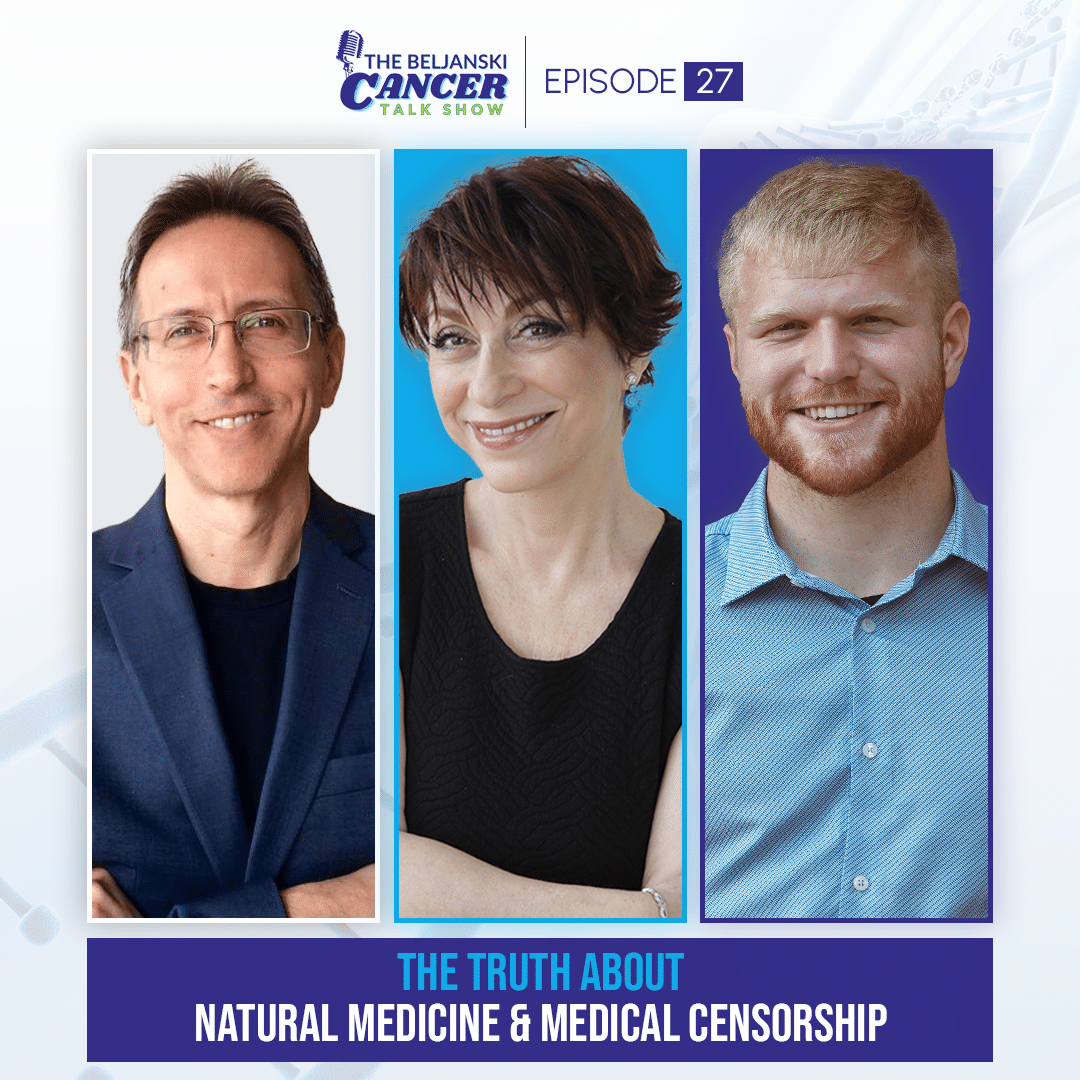
Episode 27 – The Truth About Natural Medicine & Medical Censorship with Robert Scott Bell, DA Hom.
In this episode, Robert, a groundbreaker in homeopathy, discusses about the powerful natural remedies and his personal journey to be a voice of [...]
Stream Now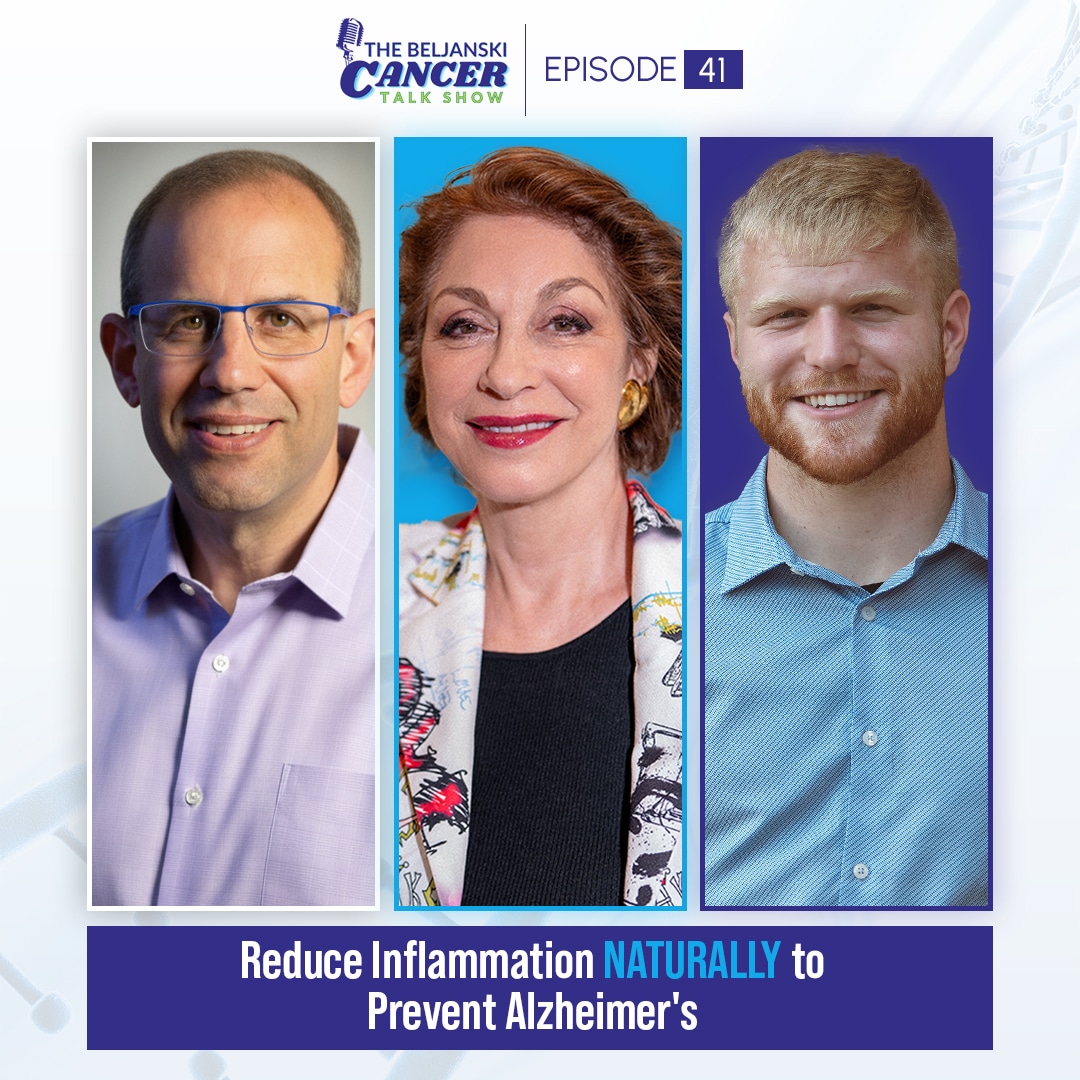
Episode 41 – Reduce Inflammation NATURALLY to Prevent Alzheimer’s with Dr. Joshua Helman, MD
Dr. Joshua Helman reveals proven strategies to lower Alzheimer's risk and detox for optimal brain [...]
Stream Now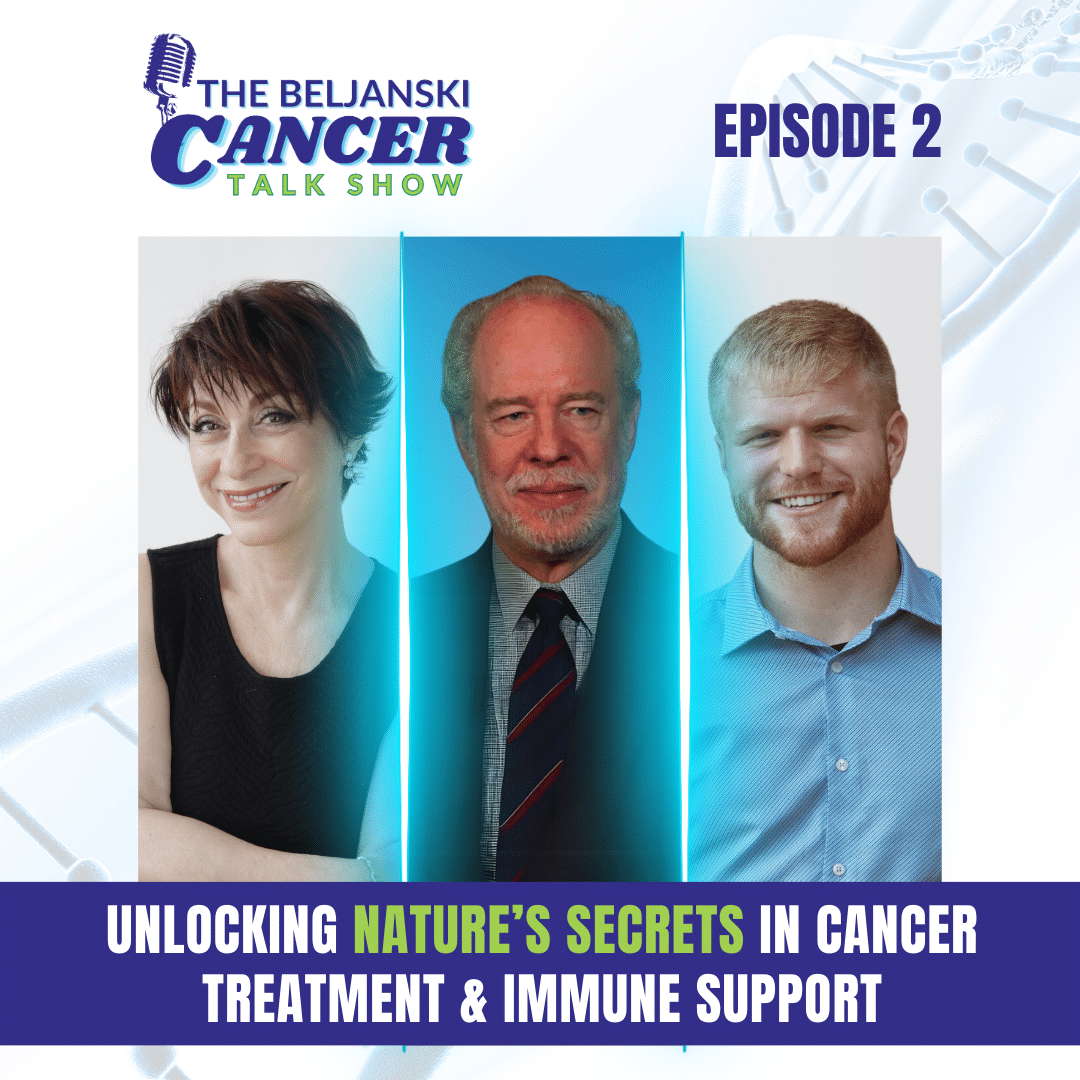
Episode 2 – Unlocking Nature’s Secrets in Cancer Treatment & Immune Support with Dr. John Hall, PhD
In this insightful episode, Sylvie and Victor, alongside Dr. John Hall, delve into groundbreaking cancer research, showcasing nature's prowess [...]
Stream Now
Episode 19 – Inflammation: The Root Cause of Multiple Diseases with Sylvie Beljanski
Sylvie Beljanski dives deep into the dangers of chronic inflammation, uncovering how natural plant extracts can play a key role in reducing [...]
Stream Now
Keep yourself updated!
Sign up below if you want to hear more about the weekly updates of The Beljanski Cancer Talk Show!
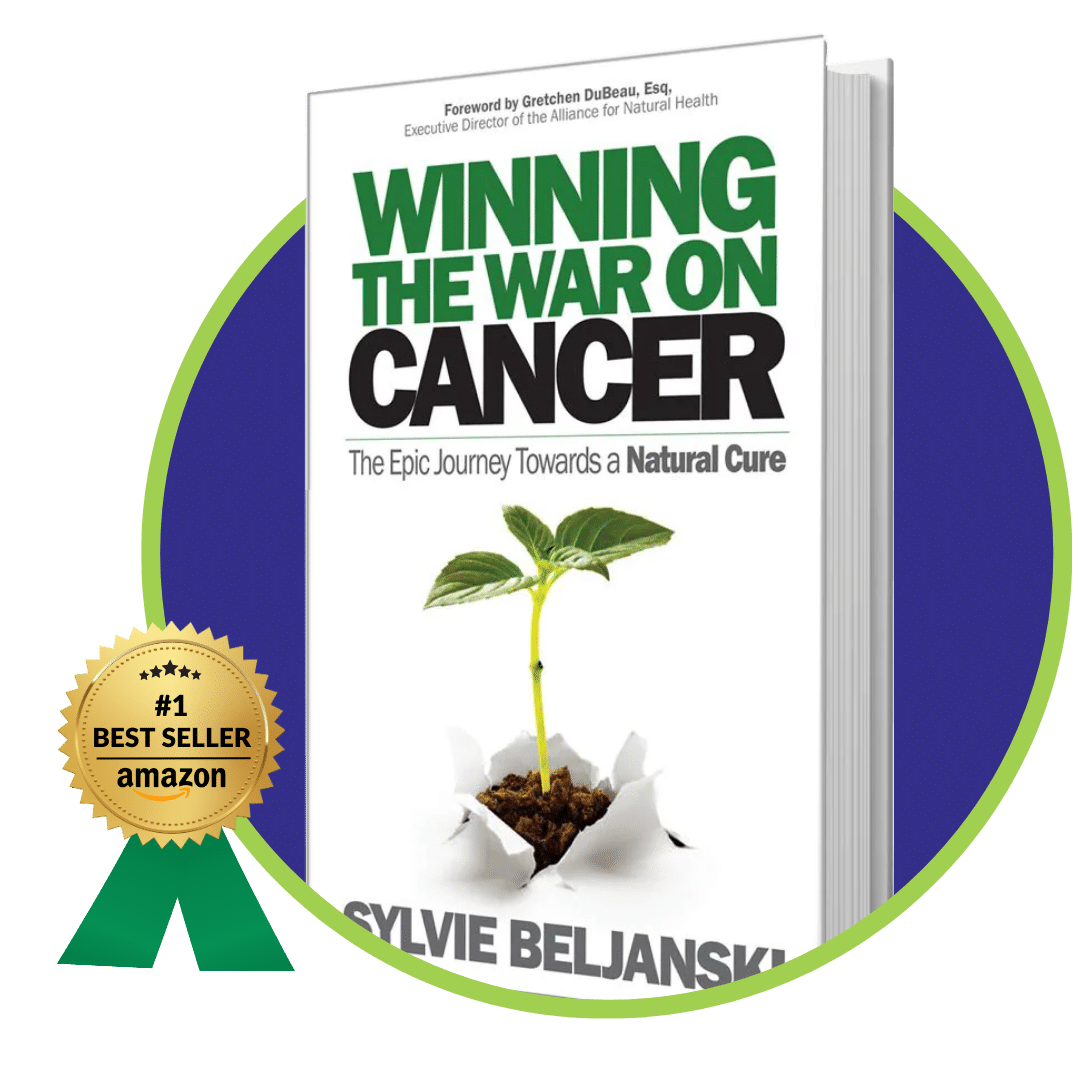
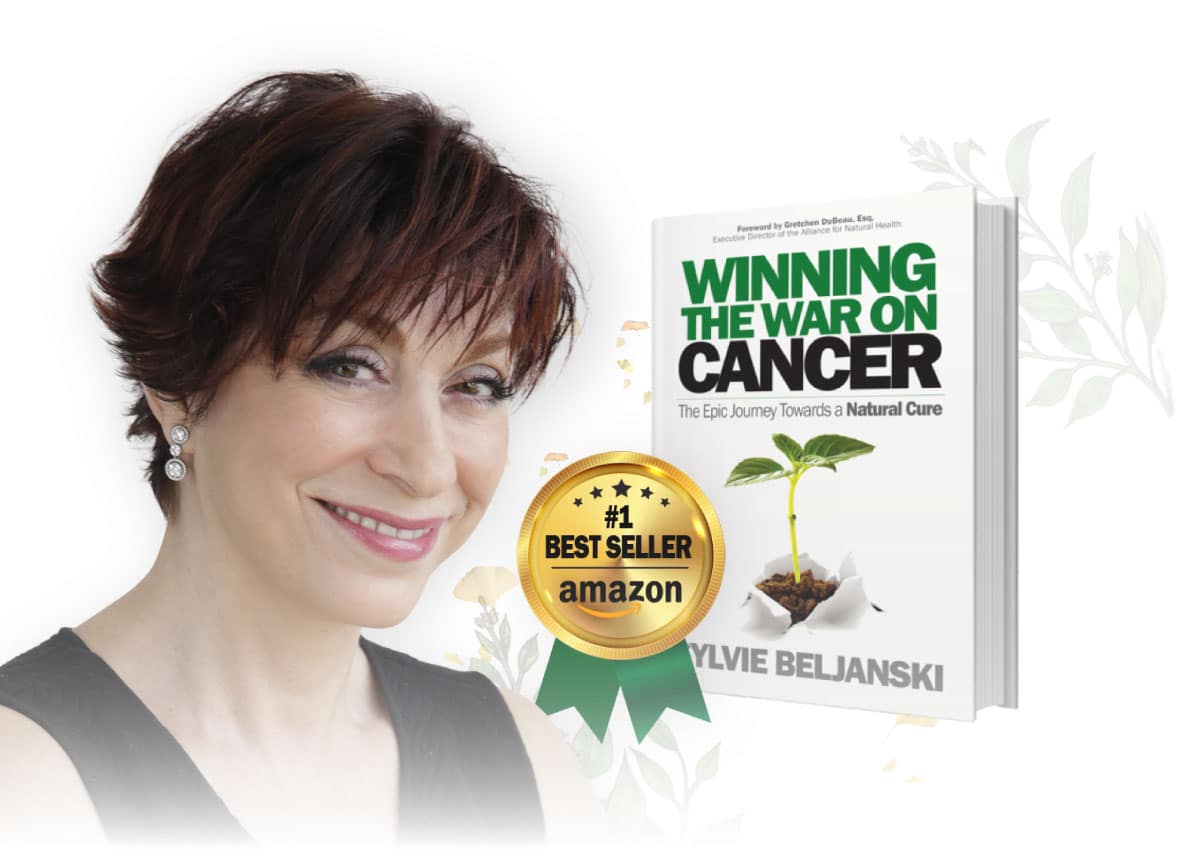
Award-Winning Book On Naturally Fighting Cancer
“For me personally, I think that Winning the War on Cancer by Sylvie Beljanski is one of those books that people should read. I have for a long time believed more in natural remedies than pharmaceutical cures, so I was involuntarily drawn to read the book.
It still preys on my mind on how the government can take up war against something that can save a lot of lives. I mean I know that a sort of thing like a more natural cure would likely actively threaten the pharmaceutical industry, but isn’t the industry on the side of saving people with something that has very little, or indeed no, toxicity at all? It’s so eye-opening and harrowing and I can’t yet state how I feel about everything that I learned.
I would recommend the book to anyone because many people these days are constantly being kept in the dark about natural remedies. What I love most about the book is that, though the book’s main point is cancer and its treatment, it also touches on areas that are vital to leading a healthy life. It points out the importance of detoxifying our body, especially since we live in a world where toxins are constantly released into the air by our technological marvels.”
4 out of 4 stars – Review by Nmesoma – OnlineBookClub.Org