
Episode 60: Why Cancer Is Rising in Pets—and What You Can Do About It
This episode is also available on:








Cancer rates in pets are rising, leaving many pet owners searching for answers beyond conventional veterinary care.
In this episode of The Beljanski Cancer Talk Show, Sylvie Beljanski speaks with holistic veterinarian Dr. Marlene Siegel about the growing prevalence of cancer and chronic disease in dogs and cats, and the integrative approaches she uses to support animal health.
Dr. Siegel shares her journey into integrative veterinary medicine, which began after a life-changing accident involving her daughter and a beloved horse. Frustrated by the limitations of conventional veterinary options, she embarked on a decades-long exploration of functional medicine, nutrition, detoxification, and holistic therapies for animals.
The conversation explores why cancer and other degenerative diseases appear to be increasing in pets, the role of environmental toxins, nutrient deficiencies, mitochondrial health, and how modern lifestyles may be affecting animal wellbeing. Dr. Siegel also discusses the powerful connection between pets and their owners, explaining why emotional stress, environmental exposures, and household habits may influence pet health outcomes.
🔑 Three Key Takeaways
- Pet health is influenced by nutrition, environment, and lifestyle
Dr. Siegel believes that nutrient deficiencies, environmental toxin exposure, and mitochondrial dysfunction are major contributors to the rise of chronic disease and cancer in pets. - The wellbeing of pets and owners may be closely connected
The conversation explores how stress, emotional health, and household environments can affect both animals and their human companions, highlighting the importance of creating supportive living conditions. - Education and informed decision-making are essential after a diagnosis
Dr. Siegel encourages pet owners to learn about nutrition, environmental exposures, available treatment options, and integrative approaches so they can make informed healthcare decisions for their animals.
⏳ 00:00 The Rising Cancer Rates in Pets
⏳ 09:16 Understanding Turbo Cancer in Pets
⏳ 13:24 The Impact of Nutritional Deficiencies and Toxins
⏳ 21:30 The Role of Food Quality in Pet Health
⏳ 25:25 The Evolution of Medical Beliefs
⏳ 30:11 Understanding Animal Nutrition and Health
⏳ 35:11 Creating a Species-Appropriate Diet
⏳ 39:29 Overcoming Fear and Embracing Education
⏳ 45:28 The Power of Community and Gratitude
Sylvie Beljanski (00:01.758)
Hello and welcome to the Belgiansky Cancer Talk Show. And today we are going to have a different discussion because we are not going to speak about humans. We are going to speak about pets. And in order to do that, I’m joined by Dr. Marlene Siegel. Dr. Marlene Siegel has been in private practice for over 40 years.
with the last 25 years being a pioneer in the field of integrative medicine for pets. She is a respected author, international lecturer, researcher for integrative venetary technologies and a clinical practitioner. She has a special expertise in ozone therapy, photodynamic therapy and detoxification. Her venetary hospital…
has the widest array of alternative therapies in the world. Dr. Siegel’s focus on bioregulatory medicine, identifying the root cause of disease and establishing safe and effective solutions. She has developed her own whole food and essential supplements company and is preparing to launch Espos Family Wellness Centers.
which are detox centers for pets and their human parents. Did I pronounce that properly?
Dr. MARLENE SIEGEL (01:25.858)
you did, Spas Family Wellness. So it’s like a spa, but with a paw.
Sylvie Beljanski (01:28.552)
Sposed family.
Sylvie Beljanski (01:32.928)
How cute, how cute. So even though we are going to speak about pets, am, I mean, you are not going to escape my traditional first question, which is how did you get to become a holistic vet? What happened? Did you, I imagine you were loving animals already as a little girl, but what led you to become a holistic vet?
Dr. MARLENE SIEGEL (02:00.334)
You know, I think I incarnated, well, I incarnated to be a vet. So the…
Becoming an integrated veterinarian occurred about 15 years into my practice career when my youngest daughter and our show horse were in a riding accident and the horse saved my daughter’s life. So the horse had reared in the air and no one had taught my daughter who was 10 that if your horse roosts the air, you just jump as far as you can to one side or the other, but you move away so the horse doesn’t fall over and land on you.
And no one told her to do that, so she was literally hanging from the reins, trying not to fall off. And so she was the fulcrum pulling the horse over backwards. And this horse had the presence to feel where my daughter was slipping to. My daughter was slipping to the horse’s left, and the horse squatted on her left hind leg while she’s rearing in the air, while she’s being pulled over backwards. And you could see her kind of push as hard as she could on her left hind leg, pushing herself to the right.
and they went over and they were both on the ground and I was already jumping over the railing running to my daughter. As I was on my way there, the horse got up, caught her breath and she gave a good shake, but my daughter was still on the ground not moving. So when I got there, I called her name and honestly, Sylvie, I didn’t know if she was gonna be alive or not. And she opened her eyes and the only thing she really hurt was her pride, thank God.
But back home, we had several more incidences where something was happening to the horse. And I had equine veterinarians come out and look at her and they said, Dr. Siegel, we don’t know exactly what is wrong with Lily, but we will tell you that she is not safe to ride. She’ll never be shown again. You can put her out to a pasture or you can put her down. And it was those words that there’s nothing more that can be done that triggered something inside of me, almost like it was the spark that I needed.
Dr. MARLENE SIEGEL (03:58.1)
needed to go on my, I’m getting chills as I’m saying it right now. So, so that set me on a journey because I was going to find a solution. I was going to fix that horse and nothing was going to stop me. So it started me on that quest of looking at what were my choices and there was nothing in the veterinary world. We’re talking a long time ago, integrative or I think it was called functional medicine on the human side was just becoming a thing. And so I’m consuming every
Sylvie Beljanski (04:01.396)
Yeah.
Dr. MARLENE SIEGEL (04:28.063)
webinar, every lecture, I don’t even know how it came up on my radar, but I’m consuming all of this information and then I would call the person who was giving the lecture and I would ask more details about how they used it on people because I wanted to use it on animals and every one of them had the same answer, I don’t know how to treat an animal and I have to say I’m not asking you to treat the animal, I’m asking you to teach me what you do on people and I will extrapolate it on the animal.
And then I’ve, and I continue to do that. Even today, I’m always acquiring new ideas and new technologies. And I think the part that I really want to bring forth, now that I gave you my story, is that the world I started practicing medicine in is not the world that we’re in right now. We’re not seeing the same diseases. We’re not seeing the same rate of diseases. We are seeing the highest level of degenerative diseases.
cancer, arthritis, autoimmune diseases that we have ever seen in our industry, with cancer rates in dogs being 1 out of 1.65 and cats 1 out of 3. And that’s probably under reported on the cat division because now when an animal comes into my office and they’re not feeling right, I rule out cancer as my first rule out, even under the age of two years of age, because we’re seeing cancers that used to be, in fact I looked up a statistic
that I gave recently. And in the 1980s, less than 1 % of dogs that went to the veterinarian were going for, because they had a diagnosis of cancer, and they were all over 10 years of age.
cats were 0.5 % of cats that presented to a veterinarian had cancer. And it was usually squamous cell carcinoma or mammary carcinoma. Well, now it’s all breeds, all ages, even under the age of two. And there’s no exclusion to the number of cases that we’re seeing. It’s it’s rising and rising and rising. So, you know, I like to use the analogy of a toolkit. If you are going to be doing a surgery,
Dr. MARLENE SIEGEL (06:38.288)
then you have to have the right instruments in that surgery pack to be able to accomplish that surgery. And we are now faced with diseases that we have never been faced with at this level before. So what we were taught in medical school, how to name it, blame it, and then come up with a pharmaceutical or radiology or surgery or chemo or whatever, that’s not working anymore at all.
Sylvie Beljanski (07:02.816)
Mm-hmm.
Dr. MARLENE SIEGEL (07:03.4)
So we cannot meet the needs of today with the toolkit of yesterday. So it’s really important that pet owners start to recognize this. It’s not your veterinarian’s fault. They’re not bad people. They’re not trying to make your animal sick. They want to do the right thing. But because they were trained in a particular model of standard allopathic or Western medicine, they don’t know that there’s other things out there. And until we can get the message out through
your programs, your summits, your podcasts, your live events. That’s where we start to educate people so that they realize that there are other things that we can do. It’s just not…
It’s not known by everybody and it’s not widely available because it takes a small portion of the population to, I don’t like to use the term wake up, but to be the lead, to take the lead and start creating different outcomes. And we have to do that Sylvie. We cannot continue with what we’re doing because we are going to fail miserably.
Sylvie Beljanski (08:14.728)
Yeah, and when we speak of humans now and new things that we see in humans, we start speaking also of turbo cancer. And for humans, are mostly speaking of very fast, very aggressive cancers that mostly appear after COVID vaccinations that was not well received. pets were not.
vaccinated for COVID. So what do you refer to when you speak of turbo cancer in pets and where is it coming from?
Dr. MARLENE SIEGEL (08:55.662)
I love the question because I’m gonna be speaking about this at your conference. And I went on AI and I put in, what is turbo cancer? Honest to goodness, it came back and said, there is no such thing. It is a conspiracy theorists associated with the COVID vaccine and there is no such thing recognized by real doctors. my gosh. It’s like.
who programmed this thing, right? And so then that’s when I went back into the archives and I found the statistics in the 1980s. And then I went through, and I’m gonna do this at your conference. I went back and I looked at all of my cases starting around 2015 is when we started to see an increase in the number of cancer cases that we saw. So.
Sylvie Beljanski (09:21.213)
you
Dr. MARLENE SIEGEL (09:42.25)
I take from 2015 through present. And you can see that in the beginning, yes, we started to see more cancers, but these animals either were easy to cure.
or they were living with their diseases another two or three years, which was already putting them at an older lifespan where something was going to kill them anyway, right? Because we’re not talking about all of us living forever. This is not the conversation. We’re all leaving this planet. Whether you’re a plant or you’re a person or you’re an animal, we’re all leaving at some point. The question is, have we lived our life expectancy out with health and vibrance and, you know, really done it well?
And that answer is no for most people. So as I went back and I started looking at the progression, it becomes very clear that not only are we seeing changes in the aggressiveness of the cancers, but we’re also seeing that these cancers are mutating around the therapies that we’re doing. So if your toolkit is pretty limited and you only have a few things to treat cancer,
that cancer is gonna mutate around whatever you’re doing very rapidly. And we actually do gene mutations. We test for that when we test our tumors. And so we know what their mutations are. And then we can, well, I’ll show you a case where the tumor actually was gone. We cured the dog of the tumor, but the owner, for reasons we can’t talk about, wasn’t able to continue the therapies. And so the tumor, four months later, grew back. And it grew back with a vengeance. So we re-biased.
and was a different mutation. So clearly we know now that these are not passive experiences. These are organisms that are smart. They’re trying to survive. And really what’s happening is the terrain in which they’re trying to survive in is not hospitable. Think about a planet that the environment is so bad that almost nothing can survive or a garden.
Sylvie Beljanski (11:23.552)
in here.
Dr. MARLENE SIEGEL (11:49.773)
You wanna grow a garden and the soil is awful and the only thing that grows are weeds. Well, the weeds are not the enemy. The weeds are just telling you that your environment, your soil is so bad that you can’t grow things that need a richer soil. So once those weeds establish a foothold and over time they die in more weeds and they die and then more weeds. And over time they’re building up the biomass in the soil. So they’re actually making soil with the recycling of their own mass.
Sylvie Beljanski (11:49.95)
Okay.
Sylvie Beljanski (12:19.669)
So
Dr. MARLENE SIEGEL (12:19.706)
And eventually you’re gonna get better soil and you’re gonna be able to grow other things.
Sylvie Beljanski (12:24.843)
So in your view, what is the most different between the pets, the terrain of the pets of today and those of a few generations ago?
Dr. MARLENE SIEGEL (12:35.296)
Super easy. Everybody is going to now be a doctor.
deficiency of essential nutrients because we’ve been doing very non-sustainable farming practices and we know our food is nutrient depleted, period. And these aren’t nutrients that are just nice to have. These are the nutrients, the co-factors that actually run our metabolic pathways. So they’re very important to have in place. we’re nutrient deficient and I test for these Sylvie, I can see these animals are ridiculously low on their nutrient profiles. And then the other side of that is toxicity.
And just since World War II, we have over 100,000 toxins that have been developed, these are synthetic ones, that have been developed and dumped on our food, on our water supply, in our animals and on us. And now it’s raining down. We got glyphosate that’s in all rainwater now.
Sylvie Beljanski (13:27.167)
Yeah, yeah.
Dr. MARLENE SIEGEL (13:27.306)
So this egregious level of toxicity that overwhelms our organs of elimination, so we can’t keep up with it, combined with the deficiencies leads to mitochondrial dysfunction. And the mitochondria are the little powerhouses that not only make energy that run our body, if you don’t have energy, you’re not going to be here, but they also are the communication network with the microbiome. So they’re communicating with all the other
organisms in and on us and telling the body what to do. What gene do we want to express based on the information that they’re getting? And they get that information from the neurotransmitters that we create based on how we perceive our experience. So if you are a person that is always fearful or angry, the glasses have empty, you’re triggered by everything, you’re just always creating these low frequency
emotions, anger, frustration, bitterness, blame, shame, la la la. You know, when you are constantly creating those feelings, you’re creating neurotransmitters from those emotions that are then going to your microbiome and the mitochondria communicating danger, danger, this is not a safe planet. And then you start a cascade of bad things to happen.
Sylvie Beljanski (14:53.633)
you
Dr. MARLENE SIEGEL (14:53.718)
when you see the world as a safe environment, that it’s blissful, it’s supporting you, everything is happening for your highest and best good, which I do believe it is, then you produce a whole different set of neurotransmitters that communicate an entirely different language. And your body responds to that. Why this is important to the pet,
is because the pet entrains to the frequencies that we’re giving off. So we are their pack leader. And if we’re signaling them based on our emotions and our behavior, that there is danger right around the corner. There’s a saber-tooth tiger. There’s somebody that’s gonna hunt you down, shoot you with an arrow, whatever.
So they’re on high alert. They’re in high sympathetic tone because they’re going, my leader of the pack says there’s danger somewhere, so I’m going to be on high alert. And we think that they’re sleeping because they are laying there, but inside they’re producing lots of cortisol. And the minute a noise happens, they jump up and they’re right awake.
So they are definitely in training to us. And I think sometimes they do it on purpose. who raise your hand out there in cyber world, you have a pet, a cat or a dog. And when you’re really upset and who comes over to you and jumps on your lap or puts their head under your hand and you start to pet them and you start to feel better. So they not only are sinking with us, but they’re also saying here, here’s my big shoulder, my furry shoulder.
take some of that heavy load off of you and I’m going to help you feel better because this is a very dense third dimension. So we need the plants and we need the animals to help make it a lighter experience so we can function. So that was a lot of woo-woo out there and but it’s important to understand because we are affecting our animals when we keep them in high sympathetic tone
Dr. MARLENE SIEGEL (16:52.248)
They can’t heal. They can only heal when they go into a parasympathetic state. That’s your autonomic nervous system. And what a cool design that we have this beautiful internal system that we don’t necessarily regulate, but…
It can either turn on really fast, high sympathetic tone, so you can run and fight if there’s danger. And when the danger is gone, it has a rest, repair, regenerate and detoxify side so that you can fix if you happen to survive whatever the danger was. It’s a beautiful model. We just don’t leave the high sympathetic side because we stay in the sad day, the standard American day, which is lack of sleep and a lot of EMF exposure and
with the kids or the bosses or the clients and the traffic and the government and the coronavirus and all this stuff that’s bombarding us, right? So people are actually stressed out.
Sylvie Beljanski (17:45.217)
Yes, when you think of pets, you can imagine their lives and their psyche is simpler. They don’t worry about the government, they don’t worry so much about the future beyond the next meal. They don’t have feelings of shame and things like that.
Dr. MARLENE SIEGEL (18:06.958)
Live in the moment, for sure.
Sylvie Beljanski (18:12.129)
It’s much simpler. So you imagine also much less negativity also. I understand that they can capture the negativity from the owner, but it’s still kind of indirect thing. And yet you are telling us that there is more and more cancer, more and more turbo cancer. So it looks like it’s an increasing negative environment, even though
Dr. MARLENE SIEGEL (18:22.552)
Yes, they’re a tragedy to us, yes.
Sylvie Beljanski (18:42.983)
I believe that I’ve always been, mean, humans have always been, always have had problems and fear and complicated feelings and feeling of shame. we live, tend to forget it, but we are blessed with the time we live, actually. My grandma, I mean, in France, went to two…
Dr. MARLENE SIEGEL (19:06.819)
Yes.
Sylvie Beljanski (19:11.905)
through two world wars. mean, she lost her brother at Verdun in 1917, and then she lost her son in 1945 in Paris. So, I mean, those were real drama compared to what we tend to live, and our little feelings of shame and complicated things. I mean, it is small.
And yet there is more cancer today than there was at the time.
Dr. MARLENE SIEGEL (19:44.535)
Yes, because we’re also adding in not just the emotional component, but the deficiencies and the toxicities leading to mitochondrial dysfunction.
So that’s, it’s the perfect storm. It’s not one thing that we can point at. It’s the combination of all of them creating what I call the perfect storm. And now you set the body up where it doesn’t have the resilience. doesn’t have the ability to repair. And then you’re going to start seeing the malformations. You’re going to start to see the, the genetic weaknesses. And then you see the mutations and it’s at an accelerated rate because we’ve never had.
this kind of accelerated toxin level. Look at just the EMF that we’re exposed to. Our ancestors didn’t have Wi-Fi, they didn’t have cell phones, they didn’t have cell towers. Now, we not only have it, we have 5G moving into the next category pretty soon and it’s everywhere. Like you cannot turn it off. So it’s important that in the process of how do we
Sylvie Beljanski (20:30.453)
Yeah. Absolutely.
Dr. MARLENE SIEGEL (20:48.64)
try to become more resilient is we have to mitigate all these things. We mitigate the deficiencies by taking the right supplements. So we test, we don’t guess, and we find out what we’re deficient in and we make sure we take those. And then we look at the toxic levels. Now I test for mycotoxins, microplastics. I test for heavy metals, glyphosate. I do bioenergetics scanning. I’m sure I do more, but that’s a lot. And as we’re looking at all of these toxins, then we’re able to go
in and be very targeted, not only to be able to treat it, but then we can retest and make sure that our treatments are being effective. And then we start seeing the outcomes, the animals that are getting better. So even though we are seeing turbo cancers, we are still able to treat them. It’s harder, very much harder than it used to be. can, there were certain cancers that I would just go, wow, that’s easy peasy, know, easy medication. It’s going to be gone.
But now, I can’t say that anymore. So now we have to go into some really heavy duty technologies and advanced medicines.
Sylvie Beljanski (21:54.401)
The feed for animals, I mean, a lot is being said about feed for animals, how awful it is. And at the same time, you see those ads where it’s clearly all about the food to make the animal look better, means better hair and everything. And six, is, I mean, expressed for animals, it’s forgotten for humans.
Dr. MARLENE SIEGEL (22:14.68)
Sylvie Beljanski (22:22.997)
that it is also the importance of the food. the quality of the food, all those manufacturers of pet food now are kind of putting ads everywhere saying we have the best food, this is not processed, this is going to be healthy for your pet. What do you have to say about those foods that are now aggressively marketed to?
Dr. MARLENE SIEGEL (22:50.998)
Yeah. So we have been sold on fast, cheap, and convenient for a lot of years, Sylvie. And we’ve been brainwashed into thinking that we can live a life with fast, cheap, and convenient, and it’s going to be OK. That you can take a can of food, and it can last for 25 years. No, no. This is not good. Number two is belief systems. Because we.
Sylvie Beljanski (22:52.075)
to backbunch.
Dr. MARLENE SIEGEL (23:17.898)
We develop our belief systems when we have a thought that we marry to an emotion. And we do that based on what we have learned from others. So when we’re little, we watch our parents and how they act around stress and money and food and family situations. And then we go to school and we see how our teachers teach us. And then we go to medical school and we are taught by an industry.
who has been taken over by a petroleum based model. You know, it’s the Rockefellers, the Carnegie’s who took over the medical system and removed so much of the non-traditional or the holistic or the integrative or the Eastern medicine, whatever you want to call it. And they made it go away. So now we have generations that never knew what that was yet it is coming back and we’re going, wow, acupuncture such a cool thing. Well, it’s only been around for 2000 years. So,
So when we go back to talking about food, are being brainwashed into believing, having belief systems about what is actually healthy to eat. Now is a time where we as humans have to bring back critical thinking skills. And I look at nature. So if I want to know what is a truly sustainable model,
to find a model in nature and I’m going to say, that’s how nature did it for us to be sustainable. So if we watch National Geographic or back in the day, Wild
Kingdom when I was growing up. And we look back at these documentaries, they follow carnivores and how carnivores live in the wild. And a carnivore is a meat eater. They kill something and they eat it in the state that they killed it in. They hunt at dawn, they hunt at dusk. And sometimes they don’t.
Sylvie Beljanski (25:03.264)
Mm-hmm.
Dr. MARLENE SIEGEL (25:17.482)
have a successful lunch, so they’re going to have a little 24-hour fast or so. And so that’s how they were designed to eat. We designed the pet food industry from the waste products of human processing.
So let that sink in for a minute. We didn’t bring out pet food to make it healthy. We were taking the waste product from all the processing of human food, which is bad in and of itself. And then all that waste product, we’re not going to just throw it away. We’re going to turn that into pet food. And the pet food industry got really caught back in the early 80s. Cats were starting to become domesticated. And so people were buying cat food and keeping
cats indoors. They were no longer hunting rabbits and squirrels and little mice. And all of a sudden we were seeing an epidemic amount of cardiomyopathy. It’s a heart disease that occurs in cats because they don’t have taurine. So cats are obligate eaters of taurine, which comes from muscle, actual meat muscle. It’s an amino acid.
Sylvie Beljanski (26:27.616)
Mm-hmm.
Dr. MARLENE SIEGEL (26:28.066)
but there was no meat in the cat food. So they were becoming taurine deficient and getting cardiomyopathy. And we’re talking epidemic level. So the veterinary industry goes, the pet food industry goes, what’s happening here? And they came back with the answer, cats have a higher…
requirement for taurine and so we’re going to add more taurine into the food. let’s call BS on that. There was no taurine in the diet because there was no meat in the diet, but they didn’t say it that way, right? So people just now believe that, taurine is the magic amino acid that you have to have and you have to have it as a supplement. But if you ate your species appropriate diet, you wouldn’t have to have that. And then dogs
Sylvie Beljanski (27:01.802)
Yeah.
Dr. MARLENE SIEGEL (27:16.268)
Dogs produce taurine naturally, don’t.
But all of a sudden we started seeing taurine deficiencies in dogs and a rise in cardiomyopathy. So something happened and no one’s ever really come out with the answer, why all of a sudden are these dogs not able to make taurine? It’s in their biological pathway to do so. So something was missing and then we’re having a problem. Now to answer your question, we’ve just covered why there’s so many belief systems. Because there’s gonna be a bunch of listeners out there that are gonna go, but I went to my vet and I told them I wanna feed a raw diet and they went, bad.
and they’re gonna die and it’s horrible for you. And it’s all a misbelief because they really don’t know what they’re talking about because they were trained in a model that said that’s bad. You have to eat food out of a bag or can and it has to be highly processed and it has to have a bunch of sugar in it. So all processed dog and cat food is 40 to 60 % carbohydrate, i.e. 40 to 60 % sugar.
a carnivore, dogs are scavenger carnivores. They were not designed to eat a lot of vegetables. They did pick after man’s waste products, because they started living at the end of our encampments, but they’re not really, they’re scavenger carnivores. They’re going to eat meat when it’s available and they’re going to scavenger what they can when it’s not. But cats are obligate carnivores and they have not changed. Biologically speaking, they’ve not evolved from that. So when we’re feeding these cats, this high carbohydrate
diet, we are killing them. Literally killing them because that’s not how they were biologically designed to function. Now you wouldn’t take a car that’s supposed to run on regular gas and put diesel in it
Dr. MARLENE SIEGEL (28:58.316)
You wouldn’t take a car that was supposed to run on premium and put air or sand in there. Like we get it. That’s not what the car was designed to use. And yet we don’t use our critical thinking skills and go, how are these animals eating in the wild before we intervene? And maybe we need to try to find a way to get back to that because we’re making them so sick because they’re not eating their biological diet. And that’s where it starts. And then you add in the toxicities and all the tap water.
with all the chemicals and fluoride and heavy metals and mycotoxins and microplastics and you just add all that in and it’s a perfect storm for disaster.
Sylvie Beljanski (29:37.441)
And when a pet is adopted in a better home where he doesn’t suddenly there is a much less bad feeling surrounding him and he’s given the proper food, do you see some natural remission possibly happening when the body is not properly supported?
Dr. MARLENE SIEGEL (30:04.014)
So as soon as we change these animals onto a species appropriate diet, which in my opinion is a raw diet, not loaded with a bunch of vegetable, I actually have my own raw food company. And when I started, there were only two other companies that were really in the market and they were not grass-fed, grass-finished and they were using synthetic vitamins in their processing. And my patients couldn’t afford that. This is back in 2015, I could see this rise in cancer and I knew my patients couldn’t afford any more toxin exposure.
healthy food and I went to these companies and I asked if they would produce one skew, one line that was actually healthy and they said no. So I said well darn it they’re not gonna go make my own and I couldn’t believe I said that but then I said okay I’m gonna do it and and the right people came in and the right opportunities and then I ended up so what I did this is interesting Sylvia you asked me the question about food is I
in studying the process, I realized that we have macronutrients and we have micronutrients. Your macronutrients are the meat, fat, bone, and organ meat. So when an animal hunted another animal, they were eating the macronutrients, which if that animal was out in the wild eating a healthy diet of their own, there would be a lot of micronutrients available when you ate that animal. But because we know that they’re not being grown in good, in
We have to supplement those micronutrients. So I separated the macronutrients from the micronutrients because the packaging laws in the US say if you’re going to sell a food is complete and balanced you have to add in these micronutrients which to be stable have to be synthetic or they turn rancid.
So none of that was going to work for me. So I thought, okay, how do we beat the system? We don’t call it complete balanced. So I sell the macronutrients, meat, fat, bone and organ meat balanced the way it’s supposed to be. All grass fed, all grass finished. Separate from the micros, the vitamins, minerals, fatty acids and amino acids that are essential for the body. These are the ones you have to eat the essential nutrients. And then I can dose based on body weight, based on metabolic need. And I know
Dr. MARLENE SIEGEL (32:21.54)
that the freshness of my product is going to be there. So that’s how I made mine. Evo Love, it’s love backwards and forwards. it’s E-V-O-L-O-V-E. So, you know, any way you look at it, it’s love.
Sylvie Beljanski (32:26.155)
So what is the name of your brand?
Sylvie Beljanski (32:39.841)
And how is it accessible?
Dr. MARLENE SIEGEL (32:43.118)
So we sell online. We have a manufacturer who ships. Now our food can either be raw, which will be frozen. So it’s shipped frozen.
And then it comes to you at your door and you defrost it as you need it and then feed it and you handle it just like any other raw meat. You wash your hands, you have good hygiene, you don’t sit on the counter for five hours, right? You have good quality. But our food is coming out of a USDA inspected facility. They test for salmonella, listeria and E. coli. So this meat is cleaner than the meat that we eat. Right? And so not all raw food is the
and it’s not about going to your local grocery store and buying a piece of chicken and throwing it down on the ground.
It’s not about that because that chicken very likely does have either E. coli or salmonella because it hasn’t been handled appropriately. They’re expecting you to cook it. So it’s a whole different process. And when we start with a species appropriate diet with the right essential nutrients, we heal the leaky gut. We help these animals be able to detoxify all these toxins from their six organs of elimination, kidney, colon, lungs, liver, skin, lymphatic and fascia.
Sylvie Beljanski (33:33.697)
Yeah.
Dr. MARLENE SIEGEL (33:58.633)
and then we support the mitochondria with the appropriate things that help the mitochondria to work better. And we clear trapped emotions. That’s the formula for health. And I have that actually in a free ebook. If anybody wants to, they go, you said that too fast. Well, holistichealingvets.com. It’s a free download and it applies to your pets. It applies to yourself. And then…
You have to come to the conference, Beljansky Conference, because she did not pay me to do this, because we have to not just get information, but we have to form community. And I’m realizing that getting information is one thing.
but having a support team around you, a community that understands, we believe in the same things, we can help each other. I’m getting chills, I’m covered in chills. Because that right there is the message we all need to hear, is we can’t do this alone. There’s strength in numbers, and the more of us that come together, and we use our buying power, our voice.
Sylvie Beljanski (34:56.545)
Yes, absolutely.
Dr. MARLENE SIEGEL (35:06.338)
We use our dollars to vote for the things that we want. We’re going to make the changes that this world needs and we better get on it because we have about 70 years left on this planet before we kill off everything.
Sylvie Beljanski (35:18.849)
Absolutely, and I really believe that this sense of community is most important, and most important also to make us feel good. Absolutely.
Dr. MARLENE SIEGEL (35:28.099)
Yup.
Absolutely. And I see so many people that are lonely and they’re lost and they’re confused and they don’t know where to turn and their family’s not supporting them. Their work family isn’t supporting them and they don’t know where to go. This is where you go to Sylvie’s community, to my community, to other communities that are coming together so that we can actually make a difference. There’s tremendous strength and power in our numbers.
each other. It’s like, I think the coolest thing after COVID was the ability to actually find our community, right? Because there were those who were in one camp, and they were very polarized in their camp. And then there’s the other camp.
Sylvie Beljanski (36:07.681)
Absolutely.
Sylvie Beljanski (36:15.178)
Yeah.
Dr. MARLENE SIEGEL (36:17.196)
Right? And it was so easy to be able to see those that think like we do. And I’m not saying that the others are wrong. I’m not saying I’m right. When we all go up into the big auditorium in non-physical form, we’re probably all going to have a big laugh and go, what kind of story did you have? But.
My story’s working for me on this planet in the dimension that I’m in. It’s working for me. And so I want to do as much good in the world as I can in the time that I’m here.
Sylvie Beljanski (36:49.727)
That’s a nice, yes, nice program. Speaking of program, what mistakes do owners commonly make after the diagnosis of the pet?
Dr. MARLENE SIEGEL (37:03.906)
Wow, no one’s ever asked me that question before. So what mistakes do they make once their animal is diagnosed with a bad disease like a cancer diagnosis? Well, I think the number one is fear, getting stuck in fear. That’s the first problem. And then not knowing where to turn and being buffaloed or coerced into doing things because of fear.
And if, and this happens in the human side as well, if we can take a step back, take a deep breath, it’s not gonna happen in the next five minutes. It’s not gonna happen in the next week or even in the next month, likely. And so we take a deep breath.
and then start to become educated. Because I think that’s the second biggest mistake is that they’re making decisions without informed consent. They don’t have enough information to actually understand what happened, why did it happen, and what can I do differently.
And I just gave a very simple model, deficiency of essential nutrients, an excessive amount of toxicity, and mitochondrial dysfunction. So the number one place I would start once I got educated would be, what tests do I need to run so that I know what those deficiencies and toxicities are? What diet do I need to go back to so it’s species appropriate?
What kind of water do I feed? What kind of cleaning supplies should I be using? What should be touching my skin? How can I mitigate the electromagnetic pollution that’s in my home and in my environment? And then how do I clean up my negative thinking? We all have stinkin’ thinkin’. It’s not that we don’t have it. It’s what are you going to do with it? Are you going to use it to help yourself to understand what it is that you’re trying to clear? Because it’s just a computer program coming up.
Dr. MARLENE SIEGEL (38:59.604)
It’d be like your GPS every time you missed your turn said, make a U-turn, make a U-turn. It’s just trying to communicate to you. So when we have these patterns of negative thinking, we need to recognize that it’s a pattern. We’ve done it over and over and over again. And we’re doing it because our subconscious mind is trying to tell us, hey, this is what you need to clean up. You need to clear it. You need to transmute it. You need to come up with a new thought pattern.
and you’re not getting it. So let me show it to you again. Oop, you missed the turn again. Let me show it to you again. So this is where we start.
Sylvie Beljanski (39:37.121)
So you start with the diagnosis of a pet and then you are treating the owner, the human, for his feelings and his behavior.
Dr. MARLENE SIEGEL (39:47.684)
Well, yes, because it’s the human that has to make the changes in behavior. So we do have to, we have to communicate with the owner. But isn’t it interesting, Sylvie, that
People will do things for their pets before they will do it for themselves. But in doing it for the pet, I’m getting chills again, in doing it for the pet, they’re actually making improvements for their health, their family’s health, for their neighbors and all the people that are watching them. And they’re improving Mother Earth too, because now they’re doing less toxic things to Mother Earth. So your original question was, what do they do wrong? They operate out of fear and they don’t have education. Those are your first two
because once you can take a deep breath and once you can operate with a clearer mind and you let your intuition come in, you let your, you know, we all have that intuition that would drive us in the right direction if we listened. But when we’re stuck with all this negative chatter and all this negative thinking, the stinking thinking, then you can’t clearly get the message. Your GPS is being blocked. There’s too much data going on. So we need to clear it out and then sit, ask
the answers, let the answers show up, let the solutions come to you, but then take good positive action by educating yourself and finding out what should my pet be eating and why. And I have an online course for people.
Sylvie Beljanski (41:11.777)
So yeah, so where do people can go to get this proper education?
Dr. MARLENE SIEGEL (41:17.59)
everything that I have and all the solutions is drmarleensiegel.com. Super easy, so it’s DR than my name. Just have to spell it right. And so when we become empowered and we take control of our thoughts and our actions,
then no matter what you’re facing, it becomes easier to maneuver. And then you find other people who are like-minded and they support you in that community we were just talking about. And really life becomes so delicious and so fun and so rewarding. Because what do we hear so much from a lot of people who get cancer diagnosis is that cancer was the best thing that ever happened to me. It brought me back into my body. It brought me back.
Sylvie Beljanski (42:05.174)
Yeah.
Dr. MARLENE SIEGEL (42:07.76)
back into now, which the animals would do if we would allow them to because they live in the moment. We have to pay attention and go, how can I live in the moment?
Sylvie Beljanski (42:14.433)
I’m surfer.
Dr. MARLENE SIEGEL (42:17.74)
Right? I am sitting here having this conversation with my dear, dear friend, Sylvie, that I love so much and I can’t wait to see you in Mexico in a couple of weeks. And it’s that love and joy and gratitude. And I’m really present here with you and people can feel that I can feel that. And we all have that opportunity to figure out how do I do that? How do I make that happen in my life? And it may not be the immediate family. Maybe they don’t get it.
You’re not gonna change anybody. You change yourself. You change your perspective and how you choose to think and behave and to act.
Sylvie Beljanski (42:58.017)
I love that. mean, it starts with a pet and then it goes to so much bigger therapy for the entire family.
Dr. MARLENE SIEGEL (43:08.268)
Let’s not forget Mother Earth in all of this, right? Because when we stop doing all the toxic, we stop buying the toxic products, we stop spraying the toxic things in the yard, we start letting Mother Earth live. Now, I live in a food forest, as you know, and I’m a bee mom, little honey bees. And so I’m super conscious of my environment. I talk to my plants, I give them thanks when I harvest, I give them thanks all the time.
and we have the symbiotic relationship that I give to them and then they give back to me and we nurture each other. It is the most amazing experience. If you guys out there are not growing anything, you need to grow something. You need to love on a plant or a tree. And then when you go, I think it’s interesting because almost all religions have some kind of a ceremony when you eat where you give gratitude. In Judaism, you give gratitude before and after. So I don’t know about a lot of other religions.
but like it’s all about gratitude and when you go into that state of gratitude it changes your entire chemistry. In fact, gratitude is the highest frequency of any of our emotions. It’s not love, it’s gratitude.
And the lowest is shame, just so we can see the polar opposite there. And so as we become more conscientious and we become grateful, this is a little exercise I do every day, is I just look around and I say, what am I grateful for? So right now I’m looking at my beautiful friend and I’m saying, I’m so grateful that I met Sylvie and that I’m a part of her organization. I’m a part of her tribe. Wow. Like I just really feel that love and gratitude for that. And we all need to find.
I don’t care what it is. You can be grateful for hearing the birds and the sunshine or the rain or the fact that you woke up in this world, right? That’s a blessing. Even if you didn’t feel good, it’s still a blessing because look at the alternatives, right? So.
Dr. MARLENE SIEGEL (45:10.232)
Feed a species appropriate diet, quit being sucked in by all the marketing, and let’s go back to using our brain. Let’s go back to thinking and looking at nature and going, wow, I’m not gonna ask AI. I’m gonna go look in nature for the answer. And then you follow that model, because that’s sustainable.
Sylvie Beljanski (45:32.107)
Beautiful, beautiful and so much more than whatever we could expect from a vet. I mean, this is a life lesson. Thank you so much. Thank you so much, Dr. Sigel. Thank you.
Dr. MARLENE SIEGEL (45:40.014)
Yes.
Dr. MARLENE SIEGEL (45:45.084)
you’re welcome. We’ll see everybody in San Diego this year, 2026. Either be there live and let’s get a hug or at least go online and participate. Bye, everybody.
Sylvie Beljanski (45:54.859)
Thank you. Bye.
Dr. Marlene Siegel is a holistic veterinarian, educator, author, international lecturer, and pioneer in integrative veterinary medicine. With more than 40 years of clinical experience, she specializes in bioregulatory medicine, nutrition, detoxification, ozone therapy, photodynamic therapy, and advanced integrative approaches to animal health. Dr. Siegel is the founder of several wellness initiatives focused on supporting both pets and their human families through comprehensive, root-cause-focused healthcare strategies.
Connect with Dr. Marlene Siegel


Related Episodes
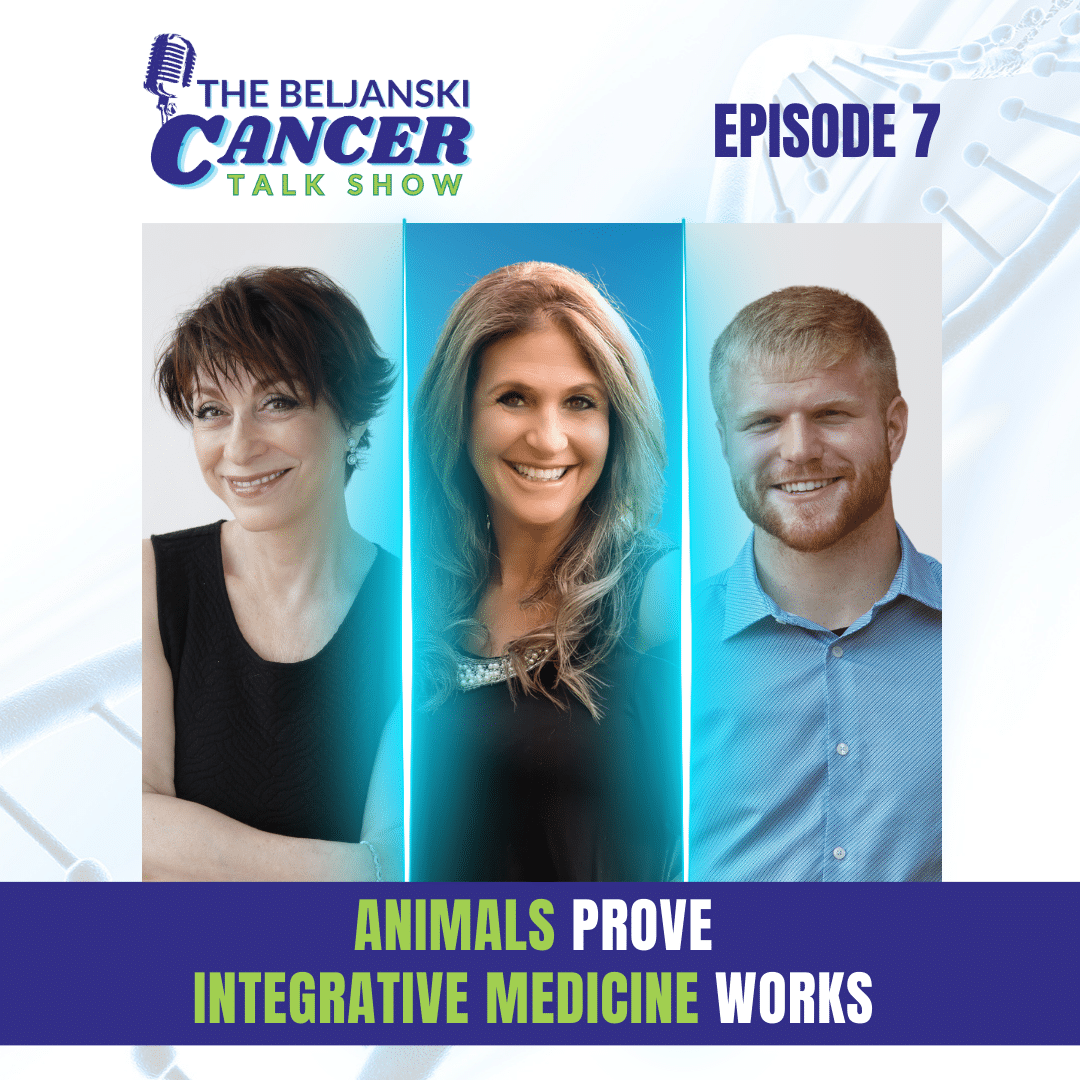
Episode 7 – Animals Prove Integrative Medicine Works with Dr. Marlene Siegel, DVM
In this episode, Dr. Siegel offers practical advice for pet owners on enhancing their pets' health through diet, reducing environmental toxins, and [...]
Stream Now
Keep yourself updated!
Sign up below if you want to hear more about the weekly updates of The Beljanski Cancer Talk Show!
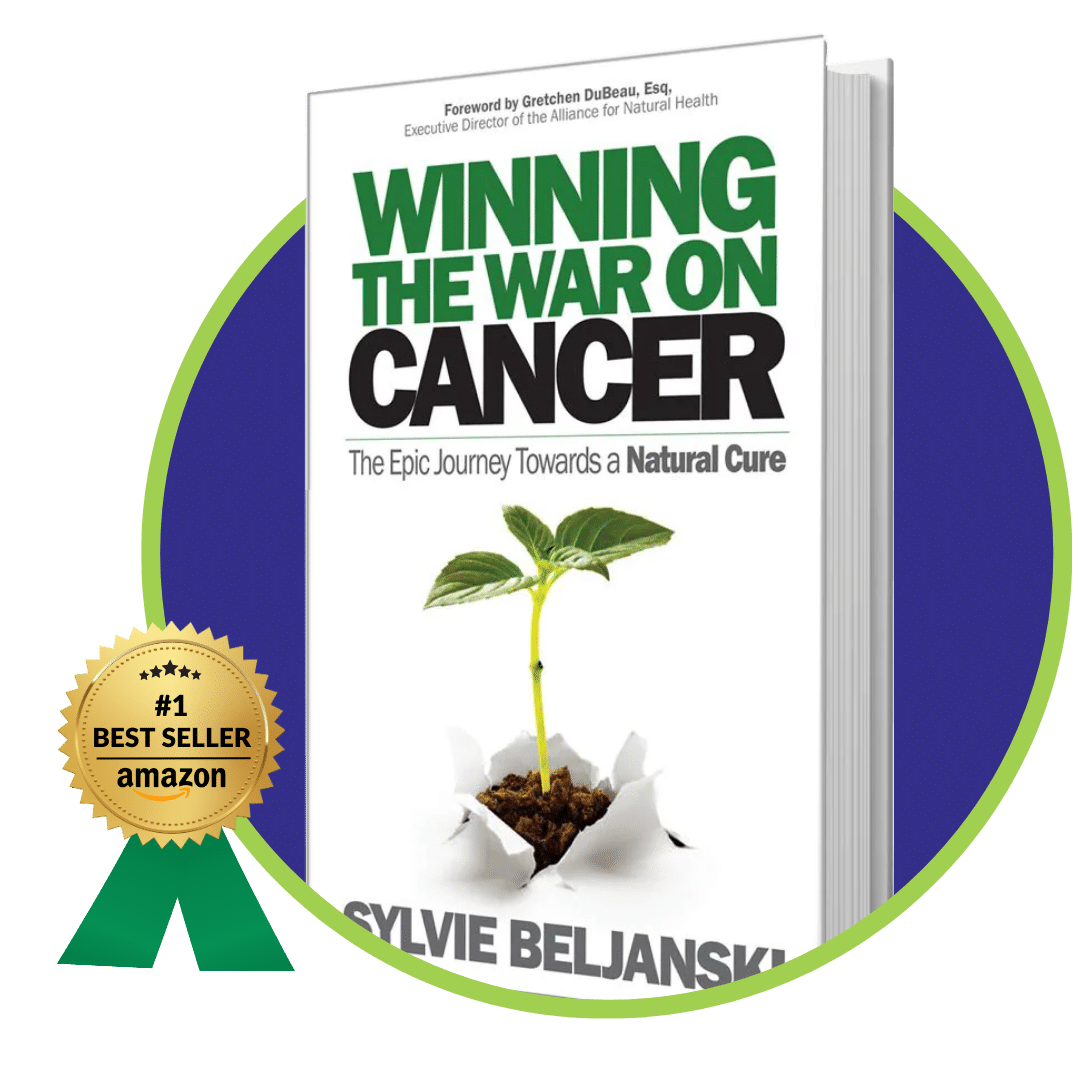
Award-Winning Book On Naturally Fighting Cancer
“For me personally, I think that Winning the War on Cancer by Sylvie Beljanski is one of those books that people should read. I have for a long time believed more in natural remedies than pharmaceutical cures, so I was involuntarily drawn to read the book.
It still preys on my mind on how the government can take up war against something that can save a lot of lives. I mean I know that a sort of thing like a more natural cure would likely actively threaten the pharmaceutical industry, but isn’t the industry on the side of saving people with something that has very little, or indeed no, toxicity at all? It’s so eye-opening and harrowing and I can’t yet state how I feel about everything that I learned.
I would recommend the book to anyone because many people these days are constantly being kept in the dark about natural remedies. What I love most about the book is that, though the book’s main point is cancer and its treatment, it also touches on areas that are vital to leading a healthy life. It points out the importance of detoxifying our body, especially since we live in a world where toxins are constantly released into the air by our technological marvels.”
4 out of 4 stars – Review by Nmesoma – OnlineBookClub.Org