
Episode 55: The Future of Breast Cancer Screening: Beyond Mammograms & Toward Prevention
This episode is also available on:








Breast cancer screening and prevention are evolving, and women deserve to know all their options. In this episode of the Beljanski Cancer Talk Show, Cara Fuhrman shares a new perspective on breast health that goes beyond traditional mammograms.
Dr. Fuhrman explains the limitations of mammography, including radiation exposure, reduced accuracy in dense breast tissue, and the risk of overdiagnosis and unnecessary biopsies. She introduces QT Imaging, a radiation-free 3D ultrasound technology that offers more detailed and comfortable breast screening while reducing overtreatment.
The conversation also highlights the critical role of prevention through nutrition and lifestyle. Dr. Fuhrman shares her “G-BOMBS” framework—greens, beans, onions, mushrooms, berries, and seeds—as powerful tools to support the immune system and block cancer growth.
With a focus on personalized care, longer consultations, and patient empowerment, this episode explores how combining advanced diagnostics with nutrition and integrative medicine can transform breast cancer prevention and care.
🔑 Three Key Takeaways
- Rethink traditional mammograms
Mammograms may expose patients to cumulative radiation, miss cancers in dense tissue, and lead to overdiagnosis and unnecessary biopsies. - Explore safer, advanced screening options
QT Imaging offers radiation-free, 3D breast imaging that improves detection and reduces unnecessary procedures through better tissue differentiation and monitoring. - Prioritize prevention through nutrition and lifestyle
A nutrient-rich diet (G-BOMBS) and healthy lifestyle can strengthen immunity, block tumor growth, and significantly reduce breast cancer risk.
⏳ 00:00 Revolutionizing Breast Cancer Screening
⏳ 09:53 The Limitations of Mammograms
⏳ 20:01 QT Imaging: A New Hope
⏳ 30:12 Nutrition as a Preventative Measure
⏳ 39:59 Empowering Patients in Their Health Journey
Dr. Cara Fuhrman (00:00.174)
What we want to do is reduce the amount of people that need to go to biopsy because the biopsies being benign are still leading to breast cancer treatment. with QD imaging, what we’re doing is we’re able to get this 3D picture so we can see the difference between, when you’re looking at sound waves, they calculate something called the speed of sound. And there’s a different sound for a solid…
a solid mass versus a cyst, and you can really reduce the amount of people that need to go to biopsy. And what you can do is look at the doubling time. So if you have a mass that you’re unsure, you know, we were saying like, it might be benign, a lot of those are being over-treated right now, but with QT imaging, instead of just going to biopsy and treatment, you can retest in four to six months.
and use an AI technology that tests the doubling time.
Sylvie Beljanski (01:01.582)
Welcome to the Beljanski Cancer Talk Show where integrative science and holistic healing come together. I am Sylvie Beljanski and in each episode we explore nutrition, lifestyle, mental health and research-backed approaches to support the whole person through cancer and chronic diseases. Kara Fehrman, welcome to the Beljanski Cancer Talk Show.
I’m delighted to have Dr. Fuhrman with us today. We are going to speak about a topic which is very dear to my heart. It’s about breast cancer and the new solutions offered to women. And I think every woman should pay attention to this very topic. And we are speaking about innovative things that you may not know.
So tune in. Dr. Kara Fuhrman is a licensed naturopathic doctor specializing in breast cancer treatment and prevention, women’s health, and longevity medicine. She is the co-founder of LongevityRx alongside her famous father, physician and nutritional expert, Dr. Joelle Fuhrman. She integrates lifestyle medicine, advanced diagnostics, and science-backed therapies, including a radiation-free
3D breast imaging technology, transforming how breast health is evaluated and monitored. Dr. Fuhrman, I am delighted to have you today with us and to speak about the future of breast screening and prevention. So the first question that, you know, everybody, every woman who has been through a number of mammogram is wondering is
torture, worth it, is mammogram saving lives? What do you have to say about this topic?
Dr. Cara Fuhrman (02:56.782)
Thank you for having me and I’m very excited to talk to you today about this. And that’s a great question. It’s really a belief system to get a mammogram because, you know, it’s so drummed in our societies by not only our peers and a lot of nonprofits, but also by our physicians. Our primary care physicians are saying every year, have you gotten your mammogram? Have you been screened this year? What did your mammogram say last year? And it’s really drummed into females.
brains that they need to get a mammogram to prevent breast cancer deaths, to catch it early and move forward knowing with what to do based on that. But the bottom line is that there are a lot of things people aren’t told and doctors aren’t telling them the whole story. They’re not educating on them what a mammogram means, what other options are out there. And mammogram does come with some things, you know, there’s radiation.
in mammography that can’t go on top, that can’t be not talked about because when you’re radiating the breast, it’s already radiation sensitive tissue and the radiation is going directly into the breast. And with radiation, the downfall is cumulative exposure. So how much radiation you’re being exposed to. And a lot of the times people with dense breasts,
meaning they have more granular tissue that produces milk when you’re breastfeeding. It’s very common. They’re more sensitive to radiation as well. So this focal radiation is also increasing your risk of breast cancer, which isn’t talked about enough and is very different than diffuse radiation all over the body from something like traveling on an airplane or using your cell phone or your computer. It can’t be looked at the same.
Sylvie Beljanski (04:49.622)
Yeah. And as you just said, mean, it’s cumulative. So those little low level of radiation are just adding up on a regular basis to the higher level because that comes with mammogram.
Dr. Cara Fuhrman (05:02.668)
Right. And it’s focused right on the breasts. So that’s also an important thing to notice. And the breast tissue itself is very radiation sensitive already. And then another thing that we’re talking a little bit about dense breasts with radiation. Another thing that people don’t talk about is dense breasts with mammograms. So dense breasts on mammogram shows up as white. So does a tumor. And so it’s really like the analogy I like to say is that it’s like looking for a polar bear in a blizzard.
It’s really, really hard to find out if anything’s going on with people with Denspress. So they’re usually called back to repeat mammograms and to go for further testing that then is accumulating that radiation even more. just your yearly screening.
Sylvie Beljanski (05:45.358)
Yeah, The stress that comes with you have to come back with something suspicious. in fact, it’s just, you know, poor technology that is applied in large quantities of women without anything, any effort to offer them something less invasive. because it is invasive, it’s a lot of radiole.
radiation it is in the invasive even though it looks like you come in you come out and nothing happened something did happen you look so young you look so so beautiful how did you get involved personally into this topic of mammogram
Dr. Cara Fuhrman (06:30.062)
So I am actually almost 32. I’m going to be 32 next month.
Sylvie Beljanski (06:35.672)
Yeah, for me, you are still a baby.
Dr. Cara Fuhrman (06:39.886)
But I’m really extremely lucky to have so many awesome mentors in my career, including my father, who’s a seven-time New York Times bestselling author. He’s done a lot in his career to help cancer patients. And in that journey, actually, he did a cancer summit where he interviewed a lot of people and learned a lot even more about cancer than he had known from his past. And we learned about the different alternatives to breast cancer imaging.
And I found just like a lot of interest in breast cancer specifically because I have a lot of friends from high school, a lot of parents, a lot of friends’ parents who have had breast cancer. There’s just so many people that I know in my personal life who have been affected by not only having breast cancer, but also being screened and saying things to me like, you know, should I go for my second, my third mammogram within the year because they’re telling me that they like couldn’t.
figure something out. And one of my best friends from high school recently overcame her breast cancer diagnosis and just so prevalent in our society that I felt like I could really connect with females. And also it’s something that we can really, really educate people on and prevent. So I’m really passionate about preventative medicine and it’s a great place for me in that regard. And you know, one thing with mammograms that I love is
that I love to talk about and when we’re talking about breast screenings and I feel like it’s important is that a lot of the times, lesions that are seen on mammogram, you cannot tell if the cancer is either aggressive or if it’s benign and never going to harm you. And there’s a metaphor that people use, doctors specifically use, which I think is really helpful to share with people. And that’s, but there’s, there’s three different types of cancers. So you can think of one as a bird.
which means it’s so aggressive that they’ve already spread before screening can find them. And then there’s rabbits, which are aggressive, but occasionally can be helped by early detection. And then there’s something we call turtles, you know, the animal that goes really, really slowly. There’s masses that are so slow growing, they would never cause harm. And a lot of…
Dr. Cara Fuhrman (09:01.632)
research studies have showed that mammography is really, really good at finding turtles, those slow growing cancers that will never cause harm. And when I learned that, I said, okay, there has to be a better way because we’re not catching cancers that are aggressive and going to cause harm. We’re catching cancers that will never cause harm. And the problem is, is that the treatment for treating these benign cancers causes harm.
So, the cancer is what’s causing the harm. It’s not making it so someone’s life is improved, it’s actually hurting their life by catching a cancer. And when I learned about that, I said, I need to dive into that and help people.
Sylvie Beljanski (09:46.094)
So next question, what are you doing to help people?
Dr. Cara Fuhrman (09:52.878)
So I’ve been really excited to open a medical center with my dad. We just opened this past December, so we’re about three months in and it’s been really exciting to have a new technology called QT imaging.
Sylvie Beljanski (10:08.418)
So congratulations on your new center to start with.
Dr. Cara Fuhrman (10:12.672)
thank you.
Sylvie Beljanski (10:15.0)
So what is QTI?
Dr. Cara Fuhrman (10:17.57)
So it actually is an ultrasound technology, but it’s different than targeted handheld ultrasound. it, because the difference is, is that it uses transmission where the image, the, like the image that you’re reading goes all the way through the breast. It’s not just reflected off, then it has transducers in it. So can get a really, really, really detailed image. The breast is placed in a warm water bath. So it’s very comfortable. The water’s same as your body temperature. So you’re laying face down with your breasts in the water.
And there’s 248 different ultrasound cameras that rotate 360 all the way around the breast and sound waves pass entirely through the tissue and are captured on the other side. So it generates, you know, over a billion data points to create a true 3D volumetric image of the breast. And what it can do there is I have to explain something.
that we didn’t yet get to is when you see something abnormal on mammograms or MRIs or targeted ultrasound, you’re then sent for a biopsy. your reading of the biopsy isn’t black and white. It’s really up to the interpretation of the pathologist. And if the pathologist says this is something that’s abnormal and I’m not sure if it’s benign and never going to cause harm or aggressive, they diagnose them all the same.
Sylvie Beljanski (11:28.696)
early.
Dr. Cara Fuhrman (11:47.512)
So what we want to do is reduce the amount of people that need to go to biopsy because the biopsies being benign are still leading to breast cancer treatment. yeah, with QD imaging, what we’re doing is we’re able to get this 3D picture so we can see the difference between, you when you’re looking at sound waves, they calculate something called the speed of sound. And there’s a different sound for, you know, a solid
a solid mass versus a cyst, and you can really reduce the amount of people that need to go to biopsy. And what you can do is look at the doubling time. So if you have a mass that you’re unsure, you know, we were saying like, it might be benign, a lot of those are being over-treated right now, but with QT imaging, instead of just going to biopsy and treatment, you can retest in four to six months.
and use an AI technology that tests the doubling time. So it looks at how fast that active biological tissue is doubling in size because an aggressive cancer will double in size within about 120 days and a benign mass won’t double in size. It’ll stay the same. So if we see something that, you know, it has all the features of cancer and we think it’s probably aggressive, you’ll send them to biopsy, right? But we’re to reduce that by about half.
the amount of people getting biopsies because on QT imaging, we can look at the different tissues and we can repeat the test in four to six months for something that we’re unsure about.
Sylvie Beljanski (13:22.958)
On average, can you give me a percentage of those people you are not sure about and end up having a biopsy later?
Dr. Cara Fuhrman (13:33.528)
that end up having a biopsy later. You know, I don’t know an exact percentage of those people, but I know that it’s most people that have to wait in four to six months. There is a low rate that you’re gonna have to go to biopsy later because typically if the cancer needs to go for biopsy right away, it’ll have a lot of features of a cancer. And those cases were not waiting as much.
Sylvie Beljanski (13:58.272)
Yeah. And then when you have a positive biopsy, I the conventional system is urging you to rush, is rushing you to take some actions right away, while this approach is also giving you time to reflect and look at your different options. So I really, really like that. Is this technology, which is pretty interesting, could it be applied to other organs and breasts?
When you are facing cancer, you are suddenly facing a myriad of questions. Questions about nutrition, lifestyle, mental and emotional support, and how integrative approaches can work alongside conventional care. The Beljanski Integrative Cancer Conference brings the conversation together in one place. From June 26 to 28,
Join leading oncologists, integrative physicians, researchers and survivors in San Diego, California for three days of science-informed, all-person cancer care. These live events expose evidence-based integrative strategies, emerging research and practical tools you can apply immediately while connecting with the communities that understand the journey. Whether you attend in persona virtually,
This conference is designed to educate, empower, and support informed decision making. Learn more and reserve your spot at integrativecancerconference.com because better outcomes begin with better conversations.
Dr. Cara Fuhrman (15:40.798)
I think they’re working on if it can be used for other parts of the body, but the one that we have specifically is just for the breast. you know, another thing along with having the QT scan and being able to treat like to scan just the breast is that there are we use actually at Longevity RX a lot of other different testing that can look at other cancers as well. So it’s really about finding every like bringing everything together. You know, there’s a tear test.
we can use that looks for different proteins that show up in breast cancer in the tears. There’s a blood test that tests for over 60 different types of cancers based on the blood. when you have a tumor, it excretes different proteins into the blood. And that’s what we’re looking for. But we can catch these markers before you can see masses with the human eye. So even though QT can only look at breast cancer because it’s one of the most popular, we do have…
other testing that can look for other cancers as well.
Sylvie Beljanski (16:41.012)
Interesting. And where again is your new center just open with your dad?
Dr. Cara Fuhrman (16:46.893)
It’s in San Diego, California.
Sylvie Beljanski (16:49.154)
Very good. Looking forward to it.
Dr. Cara Fuhrman (16:52.206)
Honey, this year, people want to come visit.
Sylvie Beljanski (16:56.334)
Yeah, absolutely. I mean, it’s going to be a few steps from where we are going to be in June. And we are going to have you speak in June at the Belgiansky Integrative Cancer Conference.
Dr. Cara Fuhrman (17:07.544)
I’m so honored and excited to speak at the conference and so lucky that it’s going to be in San Diego. It’s so cool that you guys are coming to my home terrain.
Sylvie Beljanski (17:16.205)
Absolutely. So how is nutrition? mean, your dad is well known for his approach to nutrition and how to avoid cancer and then fight cancer through nutrition. But how does nutrition and supplements fit into these equations that offer the new paradigm for technology and diagnosis? I believe it should not change much. mean, just…
I mean, you are happy if you don’t have cancer, if you are being told everything is good. Yet the education that you provide about nutrition is always helpful, right?
Dr. Cara Fuhrman (17:57.612)
Yeah, I think that’s a really good point is that we talk so much and there’s so much media about screening and, you know, diagnosing breast cancer, but nobody really talks about how to truly prevent breast cancer. And it really overshadows what we should be focusing on. And that’s nutritional excellence because nutritional excellence is how we prevent breast cancer.
And breast cancer is largely, largely based on environmental diet lifestyle and can be, you know, completely stopped based on what you eat, how you live your life. And we create a diet actually that fights cancer on a lot of different angles.
Sylvie Beljanski (18:50.582)
Can you us a little, a few details? mean, the general details, general lines, big lines of this approach. What is the philosophy behind it?
Dr. Cara Fuhrman (19:02.626)
Yeah, so the philosophy behind it is that when you have a cancer, it’s growing rapidly and the immune system isn’t recognizing these abnormal cells to get rid of them. So we want to slow that replication of the cancer DNA from replicating and being able to metastasize and grow as spread all over the body. And we want to also at the same time strengthen the immune system so that the immune system can recognize these cancer cells and help filter them out.
And we do that through nutritional excellence. We have six different foods called, my dad created an acronym called G-bombs. And those are the most powerful anti-cancer foods. They’re the greens, beans, onions, mushrooms, berries, and seeds. And what’s really, really cool about these G-bombs is they can actually stop and block a process called angiogenesis, which is the growth of new blood vessels.
And that growth of new blood vessels that’s going to tumors is how the tumor gets its nutrients and oxygen to continue growing and metastasizing. And it’s fed by things like foods that increase your glycemic index a lot, like, you know, white flowers and rice and animal protein and animal fats, but it’s actually blocked by the G-bombs. And we layer.
all of these different foods on top of each other to like block the cancer and stop its replication from a lot of different angles. And then we also layer that with a lot of different supplements. There’s studies that show these supplements can be so effective at not only reducing, like stopping cancer’s ability to grow, but also even helping people be more responsive to treatment if they are undergoing treatment.
and to prevent recurrence because if someone is undergoing treatment, recurrence is common and it’s because a lot of the treatments don’t get rid of everything. So diet and the supplements are really, really good at removing those remaining cells. And one of the supplements I use actually is a Beljanski product. Yeah, love the one with Rowulfia and Pau Pereira. So great. But we also couple that with some other supplements like
Dr. Cara Fuhrman (21:24.66)
EGCG and curcumin. And with that one, we do something called space dosing, where we’ll give someone the supplement every four to five hours. So it’s circulating the blood constantly to pretty much make it so that cancer can’t stand a chance.
Sylvie Beljanski (21:39.534)
You mentioned angiogenesis. We had a study last year at the Cancellation University Medical Center with the golden ginkgo, the ginkgo V. And my father’s study showed that it had some enzymes that are inhibiting skin fibrosis. But we had a new research program and we were able to see that there is also the enzymes blocking.
angiogenesis that is included in this golden ginkgo. So we are very excited about that. Yes. It’s part of the arsenal of supplements that make sense for everybody who has already cancer and wants to prevent or diminish the risk of recurrence. Yes, absolutely. When you are facing cancer, the choices can feel overwhelming.
conflicting advices, endless options, and very little clarity. At Maison Beljanski, everything begins with science. For decades, molecular biologist Dr. Mirko Beljanski studied how specific plant extracts interact with cancer cells, work that continues today through independent research and real-world use.
Maison Beljanski offers carefully formulated supplements inspired by that research, along with targeted support for immune health, cellular resilience, digestion, detoxification, and overall wellness. You will also find educational books, organic teas, personalized health coaching, and wellness programs designed to support the whole person, not just the diagnosis. This is not about quick fixes. It’s about
informed choices, thoughtful formulations, and supporting the body alongside conventional care. Explore the products, the research, and the resources at maisonbeljanski.com. Because when science leads, wellness follows.
Dr. Cara Fuhrman (23:44.598)
So powerful, like as you said, you’re doing this study with Inco, but what’s so powerful is that we could really layer all of these different things on top of each other. So we like to call that precision nutrition, where, you know, we’re not just giving only one thing, but we’re really attacking from so many different angles. yeah, there’s a study actually where it was a Puerto Rico study that showed people who had a, it was a Puerto Rican spice that.
um, contained a lot of garlic and onion. And people who had the garlic and onion more than once a day had a 67 % lower risk of breast cancer compared to those who never ate it. And that’s just one thing, just the allium family of garlic and onion. It’s not also looking at combining greens on top of that and mushrooms on top of that and supplements on top of that. So when we layer is really where we see that big effect.
Sylvie Beljanski (24:40.256)
And it is so easy to incorporate more onion, garlic, and greens that it should be done by everybody. We should promote this kind of nutritional advice as much as we can because it’s cheap and it works.
Dr. Cara Fuhrman (25:00.43)
Absolutely, and it tastes delicious. I actually, have a granulated garlic that comes in a container, kind of like when you crack pepper, you know, you have like the pepper shaker, and we actually got the granulated garlic from one of our retreat guests. They grew garlic on a farm and they said, have this amazing garlic, you have to try it. And we loved it so much, we started selling it, but I use it like a pepper shaker on all of my meals, just sprinkling a little bit of garlic. It’s so easy and it makes the food taste so yummy.
Sylvie Beljanski (25:28.966)
I would like to add that it is really, really important, even for those spices, to make sure that you source them from the right place, because a lot of spices that are available in big distribution are actually radiated in order to last longer. So buying them from a reputable source that is…
works with integrity is really, really important because otherwise you think you are adding something good for your diet and in fact you are just adding dead at best and radiated products at worst to your everyday diet.
Dr. Cara Fuhrman (26:10.946)
Definitely, it’s important to get things from reputable sources and always make sure you’re looking at like if it’s organic or not and checking on that as well.
Sylvie Beljanski (26:18.562)
Yeah. So how is your advice different from other places where you can get nutritional advice? What is specific at your center? Where’s the trip to San Diego?
Dr. Cara Fuhrman (26:34.252)
We actually have a full-time PhD researcher on our team that is always looking at the research and always telling us, you know, if there’s something new that we should know. We always stay up on it as well, my father and I, but we make sure that she’s in the loop. And if we have a patient that comes in and has questions about something that we’re not familiar with, we always make sure to do an extreme amount of research and we send it to her as well.
get even, you someone has more time than we have because doctors don’t have that much time when you’re with patients so much to be staying up on all the research consistently. We do our best, but having someone that works full time on our staff has been really, really helpful. And I do a lot of education with my patients and I’m always showing them the research and saying, this is why you’re doing this. This is the mechanism in the body of why this is going to help you because a lot of other places don’t do that.
And I’ve seen a lot of people come in with cancer, breast cancer, other cancers on a lot of different products that are trendy. They don’t have a lot of research to back them, but there’s just, for some reason, a lot of people started using them and it can actually be dangerous. A lot of these Chinese herbs that a lot of people are using are not from reputable sources and can be contaminated with a lot of other toxins. And then they’re on a lot of like
things that hurt their liver. And I think what we do that so differently is of course we’re looking at each individual case to make sure that we’re doing the thing that’s best for that person. But we’re not putting you on something that’s going to hurt you in the long run. And we don’t want to harm you by using liver toxic herbs that might help your cancer. We want to really do the research for what we’re giving you is going to not only help you your cancer, but also help your long-term lifespan and health span.
And we talked about this a little bit, how the treatments for breast cancer can increase your risk of cardiovascular disease, which is you’re much more likely to die of cardiovascular disease than you are to die of breast cancer. And we want to make sure with what we’re doing that we’re not adding harm. And our treatment also decreases the risk of cardiovascular disease. So overall, we’re really taking this person’s case and looking at every single angle of their health.
Dr. Cara Fuhrman (28:57.558)
and optimizing that with a lot of education. And I want my patients to feel really empowered. Like their health is in their own hands when they’re working with me. And that they can make decisions to increase their health span and so that they’re living the remainder of their life in great health.
Sylvie Beljanski (29:15.246)
Can you walk me through what happens when a patient is diagnosed and is contacting your center? By the way, what is the exact name of your center? then what happens? you have, I mean, ask for some tests? Do you conduct some tests at your place? Do you have people coming, going back home, coming back three months later? Tell me a little bit, what is a journey, a very journey of a patient?
Dr. Cara Fuhrman (29:45.792)
center is called Longevity RX. And the average journey does depend on the patient and how much care they need and how much help they need. And, you know, some people want a lot of help in the beginning to understand exactly what they’re doing and they need a lot of education. So maybe I’ll see them more frequently. But the first visit is always about an hour long, 60 to 75 minutes. It’s 60 minutes if I’m seeing someone virtually, which I feel really, really blessed to be able to talk to people and
coach them with their health on telehealth and doing that over zoom. And then it’s 75 minutes if someone comes in person, because I do some scans to see how many carotenoids they have in their skin, which is the antioxidants that they eat. So I give them a level on that. And then I also do an in-body test to look at their body fat percent, their visceral fat, and I get a lot of vitals. So that takes a little bit of extra time when I’m actually physically with a person. But after that, I look at their whole history.
They tell me everything they want me to know. I ask a lot of questions. I look at all of their supplements, all of their medications, and then I do a deep dive into education. And I ask them how, if they want to do this 100%, you know, I can give you that plan, or we can go step by step together and go a little bit slowly. And then I also talk to them about all the supplements and we review their list that they’re currently on. And then after that, if they want to see me again, which I like to see people in the beginning about every two to three weeks.
or make sure that we’re optimizing the plan. That would be a 30 minute follow up visit, either remote or in person. And we can also track their progress with the in-body scan and the antioxidant scanner that I’m using. And for some people, I also do bone scans. We have a non radiation bone imaging. That’s actually an alternative to Dexa.
And if someone’s on a treatment for breast cancer, we want to always be monitoring their bone health because a lot of the times they’re on estrogen blockers. And so we can do that as well. And then I do my advanced blood work and we have some other relaxing therapies to help reduce their stress as they’re going through scary diagnoses. And just overall, people need to relax a little bit more and feel again, like they’re empowered and they’re taking their health into their own hands.
Dr. Cara Fuhrman (32:05.272)
So I always give them those resources that they need.
Sylvie Beljanski (32:08.94)
besides breast cancer, what kind of cancer do you mostly happen to see?
Dr. Cara Fuhrman (32:15.95)
I do see a lot of prostate cancer as well, which is a twin disease with breast cancer. have a few patients right now with pancreatic cancer. I have a few with multiple myeloma. I see a lot of different cancers actually, but breast and prostate being the most common. And then I also do see people to… I have actually one patient with uterine cancer. I see people to help them with any heart disease. We help people a lot with…
getting off of blood pressure medications and reversing their high cholesterol, as well as diabetes, weight loss. We really see it all, but I do have a good amount of breast and prostate cancer patients.
Sylvie Beljanski (32:55.502)
And I’m sure that good nutrition is a cornerstone of whatever cancer you have. You will always benefit from eating in a nourishing way for your body and removing the junk. Absolutely. That makes you sick in the first place. Yeah.
Dr. Cara Fuhrman (33:13.92)
Absolutely. Yeah.
Sylvie Beljanski (33:16.768)
So for women who are concerned with breast cancer, what would be your advice? mean, a woman before any diagnosis, she sends a little lump in her shower one morning, what would you recommend? When cancer enters your life, the questions don’t stop at treatment. You start asking why, what else, and what more can I do to support my body?
At the Beljanski Foundation, believe cancer care deserves deeper answers, answers rooted in science, not in shortcuts. For decades, groundbreaking molecular research by Dr. Mirko Beljanski explored how specific natural compounds selectively target cancer cells while spearing healthy ones. That work continues today through independent research, education, and global collaboration.
At beljanski.org, you will find evidence-based resources, expert-led conferences, books, and conversations that explore integrative approaches to cancer and chronic disease alongside conventional care. Whether you are a patient, a caregiver, or practitioner, this is the place to learn, to question, and to think more expansively about healing. Visit beljanski.org
to explore the research, attend upcoming events, and connect with the Beljanski community. Because informed choices begin with credible science.
Dr. Cara Fuhrman (34:52.717)
Even before you feel a lump, recommend that everyone eat an anti-cancer plan, no matter if they have cancer or not, because we’re exposed to toxins in our environment and we want to reduce our risk of getting a cancer in the first place. So see me or see someone to do the research. We have a lot of resources online about how to eat to prevent disease. And that can really calm your nerves and you know,
make it so that you aren’t nervous of one day getting a disease. And then of course we have the new technology with QT imaging on being able to have a better, healthier screening technique that is good for dense breasts, is good for implants, and helps to reduce the amount of overdiagnosis and overtreatment that we’re having today. And so come in, talk to me about your diet and lifestyle, see where we can optimize that.
as well as being screened to see what’s going on and to take the necessary treatment if needed.
Sylvie Beljanski (35:55.79)
Yeah, absolutely. What do you have in a thing? lot of women when they are diagnosed, they feel the lump or they have the first diagnosis, they are extremely stressed. How do you, and they feel rushed to make decisions, especially with conventional medicine, how do you address this state of mind of urgency, of fear also?
I’m sure that you see a lot of patients with a lot of anxiety. How do you handle that?
Dr. Cara Fuhrman (36:27.97)
You know, I think that the best way, I do talk to them about ways to reduce their anxiety, breathing techniques, journaling, and even humming can help activate the vagus nerve to make your body more resilient to stress and just produce like an overwhelming calming sense over the body. But I also talk to them about, you know, having this education really does help to reduce anxiety and fear because
Looking at the research is very promising. And when you read a study that shows, you know, eating more beans really reduces your risk of breast cancer and helps even with treatment and people who have breast cancer, it is, it does reduce your anxiety levels because you’re seeing, okay, there’s something I can actually do that’s in my power. It’s not out of my control to help my case and my condition.
And that does reduce anxiety a good amount because a lot of fear and a lot of anxiety comes when we feel so out of control with our own bodies. being able to take some of that control back is what’s really empowering and what helps reduce that fear. And then we also use techniques to make sure they’re sleeping well and doing some meditation and really just accepting the fact that you can’t control what you can’t control and you can control what you can control.
Sylvie Beljanski (37:53.582)
I feel what you are offering is so important because it is really the missing piece that the conventional doctors have no time, no interest, and they don’t even have the proper background to address. And this is so sorely missed by so many patients who do not feel heard, listened properly. their analysis are not properly done. They are just rushed by a doctor who said, I can…
I mean, clear my schedule and we can, we are going to remove your breast next week. And people need more and more options and be looked upon as a whole. Their emotions, their bodies, their nutrition, everything matters when it comes to health. And the conventional doctors only see just the tumor, the symptom, and they are never addressing the root, they just don’t have the…
time for that or the background necessary.
Dr. Cara Fuhrman (38:54.478)
Yeah, and that’s one of the reasons that I see a patient for 60 to 75 minutes in their first visit because and and want to even see them again after that there’s no way to actually teach someone anything within a you know you’re seeing a doctor for 10 to 15 minutes they’re back to back in between patients they just have to say like I’m doing this by the book and I’m just gonna move on and keep going because they’re so busy and that’s why I really created this
atmosphere at LongevityRx where we can spend more time with our patients and it can, we have a lot of resources for people to look up on their own. So I always tell my patients, you know, you’re in a master’s program right now. You’re in school, you’re getting an education in nutrition that doctors don’t even get. There’s no nutritional education in med school. I don’t learn this in med school.
Sylvie Beljanski (39:44.172)
Yeah, it is scandalous, but it indeed, yeah, absolutely. mean, Hippocrates said that food is medicine, but they are completely ignoring food, which doesn’t make sense.
Dr. Cara Fuhrman (39:59.854)
And they don’t know which food is medicine. People are jaded by their taste buds, but they don’t realize too that your taste buds change based on what you eat. And having a lot of salt and sugar in the diet is very addictive and you will crave more of that. But when you reduce that, things like artichokes, just a plain artichoke with nothing on it becomes so incredibly delicious, by the way does have a lot of anti-cancer properties and is extremely beneficial to eat when you have cancer, as well as preventing it.
Sylvie Beljanski (40:30.258)
But big food is making a lot of money with packaged foods that can last for a very long time and is filled with salt and sugar to make this kind of food actually addictive. And then people only know that at some point and it leads to the number of cancers that we see today.
Dr. Cara, thank you so very much. Thank you so very much for all this information and education that you are providing. Is there anything else you want to add or leave our listeners with?
Dr. Cara Fuhrman (41:13.88)
I’m just so excited to be able to offer QT imaging coupled with nutritional excellence for people that are nervous about having a breast cancer diagnosis, that want to prevent breast cancer or currently have a breast cancer diagnosis. And I want everyone to just take away from this talk that your body is intelligent and that you deserve personalized, thoughtful care.
And you should never feel rushed or pressured into medical decisions and that it’s really your job to understand these medical decisions. Don’t rush into anything without be giving the opportunity to understand it.
Sylvie Beljanski (41:55.682)
Beautiful, yes. And I love that you give the space to the people to get empowered and make their own decision. Where exactly? Give us the exact address of your center in San Diego. How to reach you? What is your website? Everything.
Dr. Cara Fuhrman (42:11.604)
the exact
Dr. Cara Fuhrman (42:17.612)
website is dr, short for doctor, Longevity, L-O-N-G-E-V-I-T-Y-R-X dot com. And then you can find me on Instagram. I love to share everything that I’m eating with healthy tips about how to prevent cancers and other diseases. So my Instagram is at Dr. Cara Furman and that’s just D-R-C-A-R-A-F-U-H-R-M-A-N.
And then our business Instagram is at LongevityRx underscore. And we are in San Diego in Rancho Santa Fe specifically. And we’re only about 15 minutes from the beach, which is really cool. And yeah, that’s where you can find me. So you can go on the website and find our phone number or address and anything you would need there.
Sylvie Beljanski (43:06.348)
Yeah, I believe your dad also is organizing some retreats, for food, where you can eat some healthy food and learn, relearn how to eat properly and have the time to do so. Can you tell us a little bit more about those retreats?
Dr. Cara Fuhrman (43:27.168)
We did have a health and wellness retreat here in San Diego for about seven years, but we had recently closed down to open longevity RX and for some other reasons as well. But we do have a lot of patients come from out of town and say at local hotels, we’re currently working on getting some sort of deal with the hotel for people to come by because our chefs that worked at our Eat, Deliver, Treat do want to help people within the San Diego area and anyone that comes from out of town.
And then we are having a one week getaway where my dad and I will be lecturing on all things, nutritional excellence, all things just in increasing your health span, mental health, a bunch of things here in San Diego at one of the most beautiful resorts for a full week. And that is over Labor Day, around Labor Day in August. So I have to look up the exact dates for that one, but it’s at Paradise Point. And I am really excited to meet people and spend
you know, a full week with them in San Diego.
Sylvie Beljanski (44:26.702)
Sounds wonderful. And I’m sure that the details about the event will be available on your website, right?
Dr. Cara Fuhrman (44:33.344)
Yeah, and they’re on the Dr. Furman website as well, which is drfurman.com. The event is from August 30th to September 4th of 2026. So I’m really excited to hang out with everyone there as well.
Sylvie Beljanski (44:47.118)
Very good. And in the meantime, you will be able to meet Dr. Fuhrman at the Bejanski Integrative Cancer Conference in San Diego from June 26 to 29. So thank you so much, Dr. Kara, Dr. Fuhrman. do you? I mean, everybody is used to think of your dad when.
Dr. Cara Fuhrman (45:07.381)
Either one.
Dr. Cara Fuhrman (45:12.654)
I know, did have a friend tell me they couldn’t call me Dr. Furman because they just thought of a 70 year old man and I was like, okay, that’s fair. No problem.
Sylvie Beljanski (45:22.286)
But I am delighted to see that you are carrying your father’s legacy. It is a journey, I mean, to carry your father’s legacy. It’s not easy every day, but it looks like you are doing very well on this journey. So congratulations.
Dr. Cara Fuhrman (45:38.774)
That’s so sweet. Thank you so much, Sylvie. I’m so happy that I was able to talk with you today and I’m so looking forward to being a part of the Beljanski Cancer Conference here in June in San Diego.
Sylvie Beljanski (45:48.888)
Thank you so much, Kara. Thank you for listening to the Beljanski Cancer Talk Show. If this conversation supported or inspired you, please follow the podcast, share it with someone who may benefit, and leave a review to help us discover these integrative perspectives. For more resources and to see what we offer, please visit beljanski.org.
Cara Fuhrman is a licensed naturopathic doctor specializing in breast cancer prevention, women’s health, and longevity medicine. She is the co-founder of LongevityRx alongside her father, Dr. Joel Fuhrman. Dr. Fuhrman integrates advanced diagnostics, lifestyle medicine, and evidence-based nutrition to provide personalized, patient-centered care.
Connect with Cara Fuhrman

Website

Related Episodes
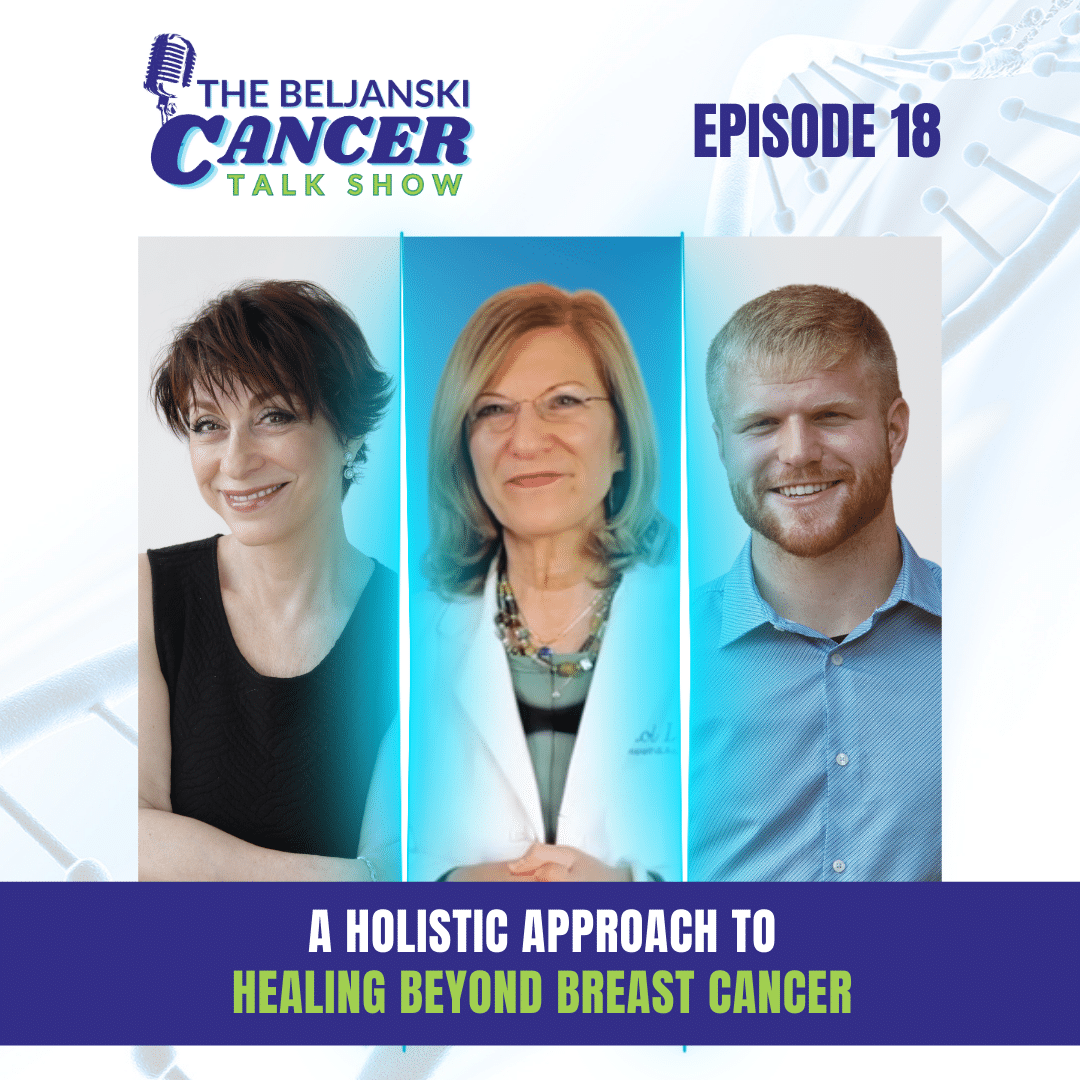
Episode 18 – A Holistic Approach to Healing Beyond Breast Cancer with Dr. Carol Lourie
Dr. Carol Lourie discusses the benefits of integrative cancer care, combining conventional treatments with holistic approaches, and the importance of [...]
Stream Now
Episode 36: What Your Urine & Tumor Tissue Reveal About Your Cancer featuring Dr. John A. Catanzaro N.M.D., Ph.D
Dr. John Catanzaro reveals how personalized peptide therapy is reshaping the future of cancer care—one patient at a [...]
Stream Now
Episode 32 – Are You Overlooking These Essential Cancer Prevention Tips? Dr. Richard Powers Explains
True healing begins when we treat the whole person—mind, body, and spirit—not just the [...]
Stream Now
Episode 30 – 3 Ways Dendritic Cell Therapy is Revolutionizing Cancer Treatment with Dr. Francisco Contreras, MD
Dr. Francisco Contreras reveals a powerful approach to cancer care that mainstream medicine often [...]
Stream Now
Keep yourself updated!
Sign up below if you want to hear more about the weekly updates of The Beljanski Cancer Talk Show!
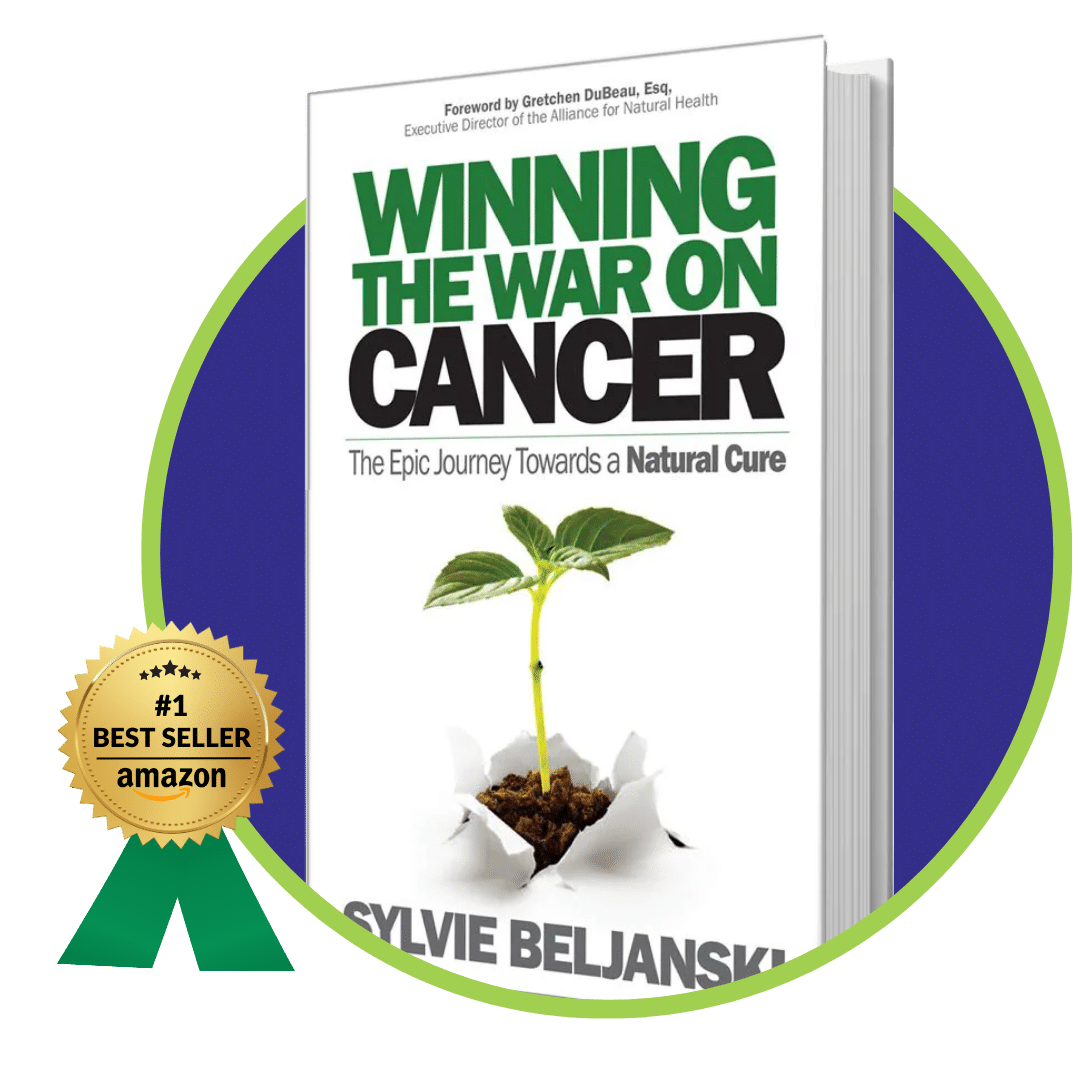
Award-Winning Book On Naturally Fighting Cancer
“For me personally, I think that Winning the War on Cancer by Sylvie Beljanski is one of those books that people should read. I have for a long time believed more in natural remedies than pharmaceutical cures, so I was involuntarily drawn to read the book.
It still preys on my mind on how the government can take up war against something that can save a lot of lives. I mean I know that a sort of thing like a more natural cure would likely actively threaten the pharmaceutical industry, but isn’t the industry on the side of saving people with something that has very little, or indeed no, toxicity at all? It’s so eye-opening and harrowing and I can’t yet state how I feel about everything that I learned.
I would recommend the book to anyone because many people these days are constantly being kept in the dark about natural remedies. What I love most about the book is that, though the book’s main point is cancer and its treatment, it also touches on areas that are vital to leading a healthy life. It points out the importance of detoxifying our body, especially since we live in a world where toxins are constantly released into the air by our technological marvels.”
4 out of 4 stars – Review by Nmesoma – OnlineBookClub.Org