
Episode 52: Life After Breast Cancer: Nutrition, Mindset, and Building a Healing Environment
This episode is also available on:








What happens after breast cancer treatment ends?
In this episode of the Beljanski Cancer Talk Show, holistic breast health expert Carol Lourie shares how women can support healing and reduce the risk of recurrence through integrative and lifestyle-based approaches.
Drawing from more than 35 years of experience, she explains why breast cancer recovery is not only about treating tumors, but about changing the internal environment of the body. From nutrition and blood sugar balance to gut health, emotional healing, and mindset, Carol discusses the many factors that influence long-term health after diagnosis.
She also addresses common misconceptions about diet after cancer, the importance of supporting the immune system, and how personalized protocols—including targeted supplements, stress management, and lifestyle changes—can help women rebuild their health and confidence after treatment.
🔑 Three Key Takeaways
- Understand why lifestyle and diet matter after a breast cancer diagnosis.
Carol explains how reducing sugar intake, improving nutrition, and adopting a Mediterranean-style diet can help create a body environment less favorable to cancer growth. - Learn how immune health, gut repair, and blood sugar balance influence recovery.
Targeting inflammation, supporting gut health, and managing glucose levels are key strategies for restoring overall health after treatment. - Discover the importance of emotional healing and mindset in long-term recovery.
Support groups, mindset shifts, and stress management can help women navigate the emotional challenges of breast cancer and build a stronger foundation for healing.
⏳ 00:00 Optimizing Immune Health and Nutrition
⏳ 06:06 Integrative Care Misconceptions
⏳ 12:09 Mindset and Emotional Support
⏳ 17:50 Dietary Changes and Lifestyle Adjustments
⏳ 24:03 Supplement Protocols and Gut Health
⏳ 30:05 Navigating Relationships and Intimacy
⏳ 36:11 Empowerment Through Education and Community
Dr. Carol Lourie (00:00.078)
There’s no one cause of breast cancer and there is no one strategy that you want to use to optimize your immune system. I recommend, and we just were speaking about this to my community, that women start their day with your PELDA Argo tea because that is one of the ways that you can optimize your immune system. I know it’s not directly connected to your, quote, TH1, TH2, your immune system.
but it does provide an environment that is inhospitable to cancer cells.
Welcome to the Beljansky Cancer Talk Show where integrative science and holistic healing come together. I am Sylvie Beljansky and in each episode we explore nutrition, lifestyle, mental health and research-backed approaches to support the whole person through cancer and chronic diseases. Karen Loury, my guest today, is a naturopath, acupuncturist, homeopath and a holistic breast health expert.
She’s here to help you navigate life after a diagnosis of breast cancer. With over 35 years of experience, she guides women all over the world to put the pieces of their life back together and come back stronger, better, healthier than ever. I love it. Whether you have newly diagnosed in treatment,
or have completed your treatment, Carol Lourie will show you how to develop the tools and the mindset you need to create deep healing and transformation in your life. With her help, and despite the adversity and the difficulties, the trauma and the pain, the next chapter can become a better life than you ever imagined. Carol, when I…
Sylvie Beljanski (01:47.406)
I felt like, do I need to have cancer to benefit of all that?
We all do, I think. I mean, that is the goal of all of our lives, whether we had cancer or have cancer or not. Our society doesn’t discuss this. Our society is acute problem solving, and it doesn’t address the empowerment that people have over their health and life, especially with changing lifestyle, changing how you eat, taking certain targeted supplements.
and divorcing yourself from the standard American diet and the standard American lifestyle, which is so unhealthy.
Speaking of a standard diet and since you are seeing women with breast cancer issues mostly, what would you say is the biggest misconception about integrative care for breast cancer?
Well, I love that question because it’s actually very alarming to me that when women are concerned about how to eat, how to live, lifestyle, what do they need to change after they’ve basically finished treatment and rung that bell, which is a mixed example of a metaphor. And they ask their oncologist, you know, what else can I do? I butcher? How should I change my diet, my lifestyle? And I just had a woman say to me yesterday, eat whatever you want.
Dr. Carol Lourie (03:14.014)
or eat everything in moderation. And that is medically and research wise, one of the worst things that a woman can be told, or a man, anyone who’s had cancer does not want to go back to the standard American diet. Because across the board, there’s a few things that are true for all types of cancer, and especially about nutrition. Cancer loves sugar, and that was…
discovered in 1918 by the German scientist Otto Warburg, and he won the Nobel Medicine Peace Prize for it in 1924, and it’s known as the Warburg effect. Now, this was lost for many years, but recently this attitude of cancer is a metabolic disease has had a resurgence. So if you’re eating fast food in the morning, if you’re eating sugary Pop-Tarts or cereal or even oatmeal,
Basically you’re putting sugar in your body and your cancer cells are going great. I have gas for my gas tank now.
Yes, sugar, cancer cells love sugar and they need a lot of energy in order to grow, multiply and create those big tumors. So it is really, really important to speak about diet and especially now we recently heard about this change in the pyramid food and it looks like finally the healthy fat are…
coming on top and start to be recommended again. What you have said for four years seems to be finally validated at the highest level. It was about time.
Dr. Carol Lourie (04:50.782)
No time, yes, absolutely.
So we are speaking of diet and it is impossible to separate diet and immune function. So how can a woman optimize immune function after breast cancer diagnosis?
Well, I think it’s really important to understand that immune function or hormones or recurrence are not just a separate thing, like sitting over there. Everything is connected. So your stress level, the toxins in your home from cleaning products and laundry detergent, what you put on your body, how you talk to yourself, how you eat, the supplements you take.
All of those contribute to optimizing your immune system. Now, there’s no one cause of breast cancer and there is no one strategy that you want to use to optimize your immune system. I recommend, and we just were speaking about this to my community, that women start their day with your Pell to Argo tea because that is one of the ways that you can optimize your immune system. I know it’s not directly connected to your
quote, TH1, TH2, your immune system. But it does provide an environment that is inhospitable to cancer cells. And you’re also not feeding your body coffee in the first thing in the morning, which then promotes sugar uptake. So there’s a lot that we can do as far as attitude and mindset and exercise and detoxifying your home to support your immune system.
Sylvie Beljanski (06:32.728)
go beyond that. mean, there are many things and thank you for mentioning the oncote. What are the natural strategies that you like to optimize this immune system and reduce the side effects of the treatments?
Okay, so let’s say a woman has finished treatment and now or she’s in the middle of treatment. are a little different categories. If you’re in the middle of receiving active chemotherapy or radiation, I have protocols for that, which we don’t want to interfere with the medical oncology treatments. If a woman has chosen to do that, there are certain supplements that you don’t want to give during radiation.
but there are certain supplements that have been proven in research that are safe to take during radiation. So it’s important to be working with a practitioner who can differentiate what is safe and what will actually support medical oncology treatments. Chemotherapy, you need a different protocol than radiation because they really do different things to your body as far as impacting your immune system. But both of them have in common
reducing the health of the gut, impacting the gut. And the gut is where a lot of the immune system originates. So it is safe for both chemo and radiation to take certain probiotics and to use whey in your healing smoothie, which is a proprietary product that I use. You want to stay away from certain antioxidants when you’re in during in the middle of chemo or radiation, especially.
for radiation vitamin E. There certain herbs such as andrographis and astrobonda that are very safe to take and have actually been proven to increase the benefit of medical oncology treatments. Now, what was the other half of the question I got sidetracked?
Sylvie Beljanski (08:31.092)
How do you work with the doctors? How does it when a woman is hesitating to tell her doctor that she wants more, she wants to see you, she wants to follow your advice, but she feels she’s going to be dismissed by her doctor. How do you work around that?
I always encourage women to be forthright with what they’re doing. It’s so the doctors are educated. I have a very extensive PubMed research list that I provide to the women to show to their doctors about the benefit of the products that I’m recommending. And I also make sure that the doctor and that encourage the woman to explain to the doctor that my goal is to keep the woman as healthy as possible.
throughout treatment and afterwards. And especially if somebody is on a chemotherapy schedule, let’s say every three weeks, you can stop taking certain supplements three days or four days before the infusion and then start them up two or three days afterwards. I think it’s important to be respectful of the medical oncology treatments. You don’t want to do anything to interfere with them. But you also want to be able to take…
care of the woman’s optimal health in between the scheduled infusions.
When you are facing cancer, the choices can feel overwhelming, conflicting advices, endless options, and very little clarity. At Maison Belchanski, everything begins with science. For decades, molecular biologist Dr. Mirko Belchanski studied how specific plant extracts interact with cancer cells, work that continues today through independent research and real-world use.
Sylvie Beljanski (10:24.034)
Maison Belchanski offers carefully formulated supplements inspired by that research, along with targeted support for immune health, cellular resilience, digestion, detoxification, and overall wellness. You will also find educational books, organic teas, personalized health coaching, and wellness programs designed to support the whole person, not just the diagnosis.
This is not about quick fixes. It’s about informed choices, thoughtful formulations, and supporting the body alongside conventional care. Explore the products, the research, and the resources at maisonbelchanski.com. Because when science leads, wellness follows.
be tricky because medical oncologists are very straight and narrow, a lot of them. But a lot of them have really come around when they’re presented with a very extensive list of PubMed-researched articles that are done on people, not just within a cell.
And tell me more about your protocol and beyond supplements. What kind of support can you offer?
I think the number one attitude that really needs to shift is what is cancer? because mindset, in my opinion, is critical. can be, you could be having a good day in which you feel empowered and I got this, and then nothing can have changed on the outside, but then a woman can feel like, OMG, what am I doing? I’m lost. I’m not feeling well. I can’t, I’m overwhelmed. I don’t know what to do.
Dr. Carol Lourie (12:09.6)
I think that in our society, the messaging around healing and wellness and how much a woman needs to be involved in every decision, it doesn’t exist. And we are unconsciously brainwashed through social media and television. And there are ads in which, I’ll give an example for antidepressants, a woman is sitting there and
The house is quote, a mess. Now what does that mean? There are dishes in the sink and the beds aren’t made and there’s a pile of laundry and she’s sitting there like this and the ad is about a woman being depressed. And then she’s given an anti-depressant pill and the next image is the house is spick and span and she’s serving the family a picnic lunch. There are so many inappropriate messages in that ad. First of all, what happened beforehand that the woman doesn’t feel well now?
Second of all, I had dishes in my sink and laundry when my child was young and I wasn’t depressed. Third of all, why is it only the woman’s responsibility to take care of that? And fourth, why is she serving the family a picnic lunch afterwards? Why isn’t everybody doing it together? So this kind of insidious brainwashing is unconsciously in our minds.
It takes 120 days, that’s been proven by neuro research, to change habits. We are unconsciously giving ourselves these messages of unwellness. So live group coaching is very important where women come together in a group and everybody gets to put down in the chat their negative thoughts. You get them out of your brain, out of your mind, and then you’re gently said, okay, now we need to…
go to track number two, because track number one is not the healthy track, and it’s not a good or a bad moment. We don’t want to judge like that. We want to use positive, affirmative words, because it takes a lot to keep your mindset positive when you don’t feel well every day.
Sylvie Beljanski (14:20.536)
When cancer enters your life, the questions don’t stop at treatment. You start asking, why? What else? And what more can I do to support my body? At the Beljansky Foundation, we believe cancer care deserves deeper answers, answers rooted in science, not in shortcuts.
For decades, groundbreaking molecular research by Dr. Mirko Belzhansky explored how specific natural compounds selectively target cancer cells while spearing healthy ones. That work continues today through independent research, education, and global collaboration.
At belgianski.org, you will find evidence-based resources, expert-led conferences, books, and conversations that explore integrative approaches to cancer and chronic disease alongside conventional care. Whether you are a patient, a caregiver, or practitioner, this is the place to learn, to question, and to think more expansively about healing.
Visit belgianski.org to explore the research, attend upcoming events, and connect with the Belgianski community. Because informed choices begin with credible science. So not only women are getting nutritional advice, but they are also becoming part of group coaching and support group.
to deal with their disease and the anxiety and everything that comes actually with the diagnosis, right?
Dr. Carol Lourie (16:03.594)
Yes, because the statistics of recurrence are not great. The messaging for after they’ve rung the bell and women are put on either tamoxifen or an aromatase inhibitor, unless they’re triple negative, in which that’s not appropriate. But let’s talk about women who have hormonally positive breast cancer. The rate of recurrence is up to 11, 12%. And that’s within two to five years. So those statistics are not great.
And there are tools that they can have that can work to reduce that risk of recurrence. And the goal is to change the environment in the body so it’s inhospitable to cancer regrowth. And we do that through foundational nutrition. This is a way of eating that becomes a lifestyle. It’s not like, I can’t eat this because I’m on a diet. If a woman is looking at food and going, I can’t, that’s going to lead to this.
state of frustration and feeling deprived. And I don’t think feeling deprived in life is what it’s about. We want to feel joyous. I eat the way I suggest women eat, and I don’t feel deprived. I went to Europe and I ate what I wanted. there are different ways that you adjust to your lifestyle in the moment. I ate croissants every day. They were delicious. And I didn’t feel guilty at all. So
I think that, but when I’m home, I don’t usually eat like that. It’s very easy to eat a modified Mediterranean diet. works in your lifestyle and basically other than going to a pizza joint, you can go to any restaurant and take charge of the menu and order something that is healthy for you.
Yeah, it is so important to look at the diagnosis not as a fatality, but as an opportunity to learn, to change, to grow and to get better. And I love the fact that you are offering the blueprint to women to get there.
Dr. Carol Lourie (18:09.804)
Well, it’s a foundational aspect of healthcare. And the beautiful thing is when a woman changes how she eats, there’s a ripple effect in the whole household. The spouse will lose weight. The children, if they’re still at home, will be healthier. And the budget that people are spending on food usually is pretty much the same because you’re no longer spending money on boxed cereal or
trackers, regular bread, they’re buying healthier versions and it does take a little bit more time in the kitchen, but that you get your systems down and both everybody in the household can cook. It doesn’t just have to be the woman.
Speaking of evidence-based natural strategies, what can you recommend to reduce side effects?
for evidence.
I think that that’s what my Empowered Against Currents whole program is about. mean, there are references on my slides, and it is a comprehensive program that looks at how to eat after a breast cancer diagnosis. What are the mindset tools that you need? What are the targeted supplements that will really work optimally to change the environment in your body?
Dr. Carol Lourie (19:32.672)
as opposed to the kitchen sink approach, which a lot of people come in, and I’m sure you’ve seen this, everybody is saying in groups or they see it on Amazon, you need this supplement, you need that supplement, but very few supplements as they are like yours are based on research. And that is a determining factor for what I recommend. So I have very specific supplements that I trust and recommend at different times because there’s no one protocol that lasts forever.
When you’ve just finished active treatment, you need a different type of a protocol than you do if treatment was over two to three years ago. And you can’t, when you, when you, when I work with somebody, either individually or in the group, you can’t give somebody 20 new things at one time and think that will work. I usually say, let’s start with these five supplements in addition to the healing smoothie.
and let’s do that for six to eight weeks. And then once you’ve adjusted to that, then we can add a few more supplements. Slow and steady is the way to keep women from being overwhelmed. You want to create an environment for success.
Is there something most important that you are considering when you putting together a supplement protocol?
Yes, the categories are gut repair. And we need to attend to that, whether they’ve had chemo or radiation or nothing. Some women just have maybe a lumpectomy or a mastectomy and don’t need any medical oncology treatment. So the health of the gut has always been impacted. It’s impossible for it not to be. As we grow up, people have been on antibiotics. The food is unhealthy, the air, the environment. So everyone, I think, needs gut help.
Dr. Carol Lourie (21:26.018)
The second is antioxidant status. If you’ve been through treatment, chemotherapy and radiation create an enormous amount of inflammation. Radiation specifically creates something known as oxidative stress in which there’s an imbalance between the reactive oxygen species, which are unstable molecules, and normal healthy cells. And what happens when you have too many of these unstable molecules is they tend to mutate more.
And you don’t want mutated cells because they can create more cancer cells. So we need to really pay attention to the antioxidant status. And we can look at how your body is doing through inflammatory markers, TH1 and TH2, insulin growth factor, your sugar management. And we can look at how you’re doing every three to six months. We get your oncologist or your primary care doctor to run very specific blood work for you.
And the third, and I just alluded to it, is sugar status. How is your body handling metabolically your glucose? And that is easily tested. We can get an external glucose monitor. You can look at certain blood parameters like your hemoglobin A1C, which is an average of two to three months of your blood sugar level, your leptin level, your C-peptide. So all of these work together for
antioxidant status, gut repair, and sugar management. And they work together to create long-term health and longevity. Now, once a woman is on a protocol, it can take three months before, and I get these emails, this is, I’ve been doing the healing smoothie and your protocol and like, I seem to have turned a corner around two and a half to three months. I feel like my energy is coming back.
It’s really easy for me to take my supplements. I have a system and I educate them on the system. And because you have to be organized, you can’t think you’re going to have all of your bottles out there and just take your supplements before the meal. That’s setting yourself up for failure. So I have a special system that I help women like really do from the very beginning. And then we…
Dr. Carol Lourie (23:39.018)
So you’re on a healthy protocol on that, and then maybe we’ll add bone health after a few months. There’s very specific supplements to take for bone health. It’s not going to Walmart and getting the same calcium a 20-year-old take. You’re a menopausal. You need a very specific form of calcium and other products to support bone health environment.
So for somebody who has just been diagnosed, the journey with you lasts for how long? are more or less at an average.
somebody who’s just been diagnosed. They’re about to go through probably three to six months of treatment. So in addition to the life group coaching, they would probably be working with me individually and we would have sessions maybe twice a month to make sure they’re doing the supplements properly. How are they feeling? Do they need any adjustments? How’s their emotional state?
How is it with their oncology team working with them? Everything is optimized and they feel very supported. And they come to live reproaching classes and they get to see how women are feeling after the act of treatment is over. And that’s very important because treatment is time limited, right? But being on tamoxifen or aromatase inhibitor after treatment is over.
and being told you’re going to be on that for five to 10 years and being in chronic pain, that’s a whole different story. And that needs to be addressed with different protocols and different assets.
Sylvie Beljanski (25:18.614)
At the beginning, people tend to go from one extreme to another. feel either they have no information and then they get plenty of information and they are completely overwhelmed because a lot of information contradicts themselves and they don’t know where to turn.
My doctor told me that, my coach told me that, my hairdresser told me that, my best friend told me that. And then there is also the family. My parents were going to take care of the children, are insisting for this, for that. What do you recommend for somebody who is overwhelmed by the amount of conflicting information?
I think that’s, first of all, there is absolutely overwhelming conflicting information and that creates stress inside women and anxiety. They’re already very fragile and our society really doesn’t, you know, there should be an ad on television like, you feeling vulnerable and fragile? Did somebody hurt your feelings? Is that why you’re feeling sad? That’s probably what happened before that woman in the anti-depressant ad. So I think that
It is. Everybody comes at you with, do this, do that. Aren’t you doing this? how come you’re not doing that? I think this is where it’s important to have one person that you trust that you’re following and working with. And you put blinders and you have like this, somebody is giving you recommendation advice. You have a button that you push and you go, thank you so much for your concern, but I’m working with an expert and I really believe in the guidance I’m receiving and I’m well taken care of. That’s it.
It becomes very simple. There has to be an energetic trust that the person you’re working with is both very educated and very caring and really knows what they’re doing. Because everybody is, and they don’t understand that it’s intrusive and inflammatory making when they’re giving you their advice. And most people don’t really know anything about cancer.
Sylvie Beljanski (27:25.986)
When you are facing cancer, you are suddenly facing a myriad of questions. Questions about nutrition, lifestyle, mental and emotional support, and how integrative approaches can work alongside conventional care.
The Belgiansky Integrative Cancer Conference brings the conversation together in one place. From June 26 to 28, join leading oncologists, integrative physicians, researchers, and survivors in San Diego, California for three days of science-informed whole-person cancer care.
These live events expose evidence-based integrative strategies, emerging research, and practical tools you can apply immediately while connecting with the communities that understand the journey. Whether you attend in persona virtually, this conference is designed to educate, empower, and support informed decision-making. Learn more and reserve your spot at integrativecancerconference.com.
because better outcomes begin with better conversations. Yeah, and they just know, trust this doctor, but they don’t know any details. And what is going to work for one person is not going to work necessarily for another one. 100%. Because again, the causes of cancer are multiple and the needs of the approach needs to be absolutely tailored to really…
make it from the other side. Yeah, absolutely.
Dr. Carol Lourie (29:08.268)
think the goal is to get through treatment as healthy as possible and then really develop strategies for long-term wellness and longevity. And initially after treatment, somebody’s been through active treatment. I have them on what I call my recovery protocol. It involves a lot of antioxidants, gut repair, immune support, and also emotional support because there’s always a level, and we haven’t talked about that yet, you can’t go through breast cancer
without having some kind of emotionally upsetting or traumatic experience. And your body is often changed and you look in the mirror, women look in the mirror and they go, don’t like that. And it takes 120 days to have a new habit. you can be looking, a woman can be looking in the mirror for three or four months and still every time that happens, a lot of women stop looking at themselves because it’s too upsetting. Women with breast cancer have a higher divorce rate.
because there can be spousal problems, there is sexual difficulties, intimacy difficulties. There is not a book, unfortunately, that they’re handed and say, here’s how to talk to your spouse. So in my life group coaching programs, I always talk about who’s having marital problems, raise your hand. And have you tried to talk to your spouse about this? No, I don’t know how to start. So we have conversations about…
How can you talk to your spouse about how you’re different now, what your needs are? Maybe you don’t want to be naked. There are many different kinds of ways of being intimate with your spouse. Most people are not 20 years old anymore. So when you get to be in your 40s, 50s, and 60s, intimacy is different at any rate.
It’s not easy even without cancer, so I couldn’t imagine with a mutilation and everything what it takes.
Dr. Carol Lourie (31:02.67)
The medication makes it very difficult. So that’s why it’s important. I recommend them going to a gynecological oncologist and talking with that doctor about maybe a low estrogen vaginal insert. So once or twice a week. And there are certain creams that they can use. And also they need to understand that you can’t go from your busy life to saying, OK, let’s be intimate. It doesn’t work like that anymore.
You have to get ready. You have to make sure you’re not going to be interrupted. You need to be able to speak to your spouse about your different needs now. And maybe you don’t want to be naked. Maybe you want to keep on your camisole or whatever. So there needs to be frank conversation. And our society doesn’t teach people how to do that.
Your support groups are really precious.
And it’s a close.
safe space for this kind of conversation that only women who have been through that can discuss.
Dr. Carol Lourie (32:10.36)
Yeah. Right. So, and they aren’t recorded. It’s not like, and I make sure every time this is not showing up on Facebook anywhere, it’s a closed group. It’s very safe and very private. And only women who are in the coaching program or working with me privately get to attend. And I have like handouts that I give about how to talk to your spouse, about intimacy, how to talk to your spouse.
My live group coaching program is not just the live group coaching, it’s also my empowered library, which has probably 50 different eBooks and articles in there about every aspect of breast cancer. There’s the healing smoothie recipe, there’s the bone health chapter, there’s a video, there’s an eBook for that. Testing how to, what, there’s a 50 page eBook on all the different testing.
Speaking of that, where women can find you and where can they follow up after hearing this episode?
So my website is my name, is carollory.com. That’s C-A-R-O-L-L-O-U-R-I-E dot com. And there’s a contact me form. I personally answer every email I get.
That’s nice. That’s a very nice touch. so on your website, you were saying that you have become a member. They have access to recipes and to a number of, we’re speaking of a library, right? Do you have a book already somewhere?
Dr. Carol Lourie (33:45.634)
To a wasp, I’m in the process of writing my book.
Okay?
hopefully this year.
Okay. Do we have a title? Do we know already what to look for?
It’s about the emotional and metabolic needs of breast cancer. It’s emotionally based.
Dr. Carol Lourie (34:05.548)
I’m excited. I mean, my library, the empowered library that’s connected to the course, is very extensive. I love that women watch it and get that material because it’s all evidence-based and referenced. And there’s so many different areas of breast cancer that women need to bring into their life to fully recover. You can’t do everything at once. It has to be slow and steady.
And of course, we are going to hear you at the Belgiansky Integrative Cancer Conference, which is going to take place in San Diego, it’s the year June 27 to 29. So that’s very exciting. Can you tell us a little bit about your experience? You were there last year already.
First of all, I think that this conference, your conference, is the number one conference people need to attend. The perspective on cancer and the level of the doctors and professionals that you bring together is so professional and extensive and comprehensive that it’s impossible to walk away from that.
Conference and not feel really optimized and positive about your diagnosis and how you can take charge. And I think it’s very important to realize that you are empowered and you can take your life back after a cancer diagnosis. It needs to happen slowly and it can take like six months to get everything together. But that time would go by anyway.
And in that six months, by the end of that six months, you have strategies and systems that you’re using that are just part of who you are now and make it very easy to live in a healthy way. Last year, I talked about the emotional component of breast cancer. And this year, I’m talking about hormones in breast cancer because there’s so much, you want to talk about misinformation and chaos and overwhelmed. Is it safe to take?
Dr. Carol Lourie (36:11.054)
Hormone replacement therapy after you’ve had a diagnosis of breast cancer? Some people think it is. What does the research say? How do you take care of your bones because you’re blocking your estrogen after breast cancer? And you know what? lot of people don’t even really understand what hormones are. They’re not just some thing that’s out there, not part of your body. Proteins in your body and how are they made and what do you need to have healthy foundation to make your hormones?
and how do you understand and what kind of testing do you need to see how are you metabolizing your hormones even if you’re on hormone blocking medication. There is the Dutch hormonal test that will tell you how you’re breaking down your hormones even if you have very little hormones in your body. So there’s a lot of misinformation. I’m very excited to provide women and men if they want to attend with this information.
Thank you so much, Carol. think everybody is going to look forward to your presentation in San Diego and indeed it’s going to clarify a lot of ideas that are out there, yes, and conflicting ideas without the intelligent information rooted in science. So thank you for everything you are doing.
Thank you so much for having me, Sylvia. I’m really honored to be a guest speaker there.
Thank you. Thank you for listening to the Belgianski Cancer Talk Show. If this conversation supported or inspired you, please follow the podcast, share it with someone who may benefit, and leave a review to help us discover these integrative perspectives. For more resources and to see what we offer, please visit Belgianski.org.
Carol Lourie is a naturopath, acupuncturist, homeopath, and holistic breast health expert with more than 35 years of experience helping women navigate breast cancer recovery and long-term wellness.
Through her integrative approach, she focuses on the metabolic, nutritional, emotional, and lifestyle factors that influence healing after a breast cancer diagnosis. Her work supports women during and after treatment by combining evidence-based supplements, dietary strategies, immune support, and mindset coaching.
Carol leads educational programs and group coaching communities that help women rebuild their health, reduce recurrence risk, and create sustainable habits for lifelong wellness.
Connect with Carol Lourie

Website



Youtube
Related Episodes
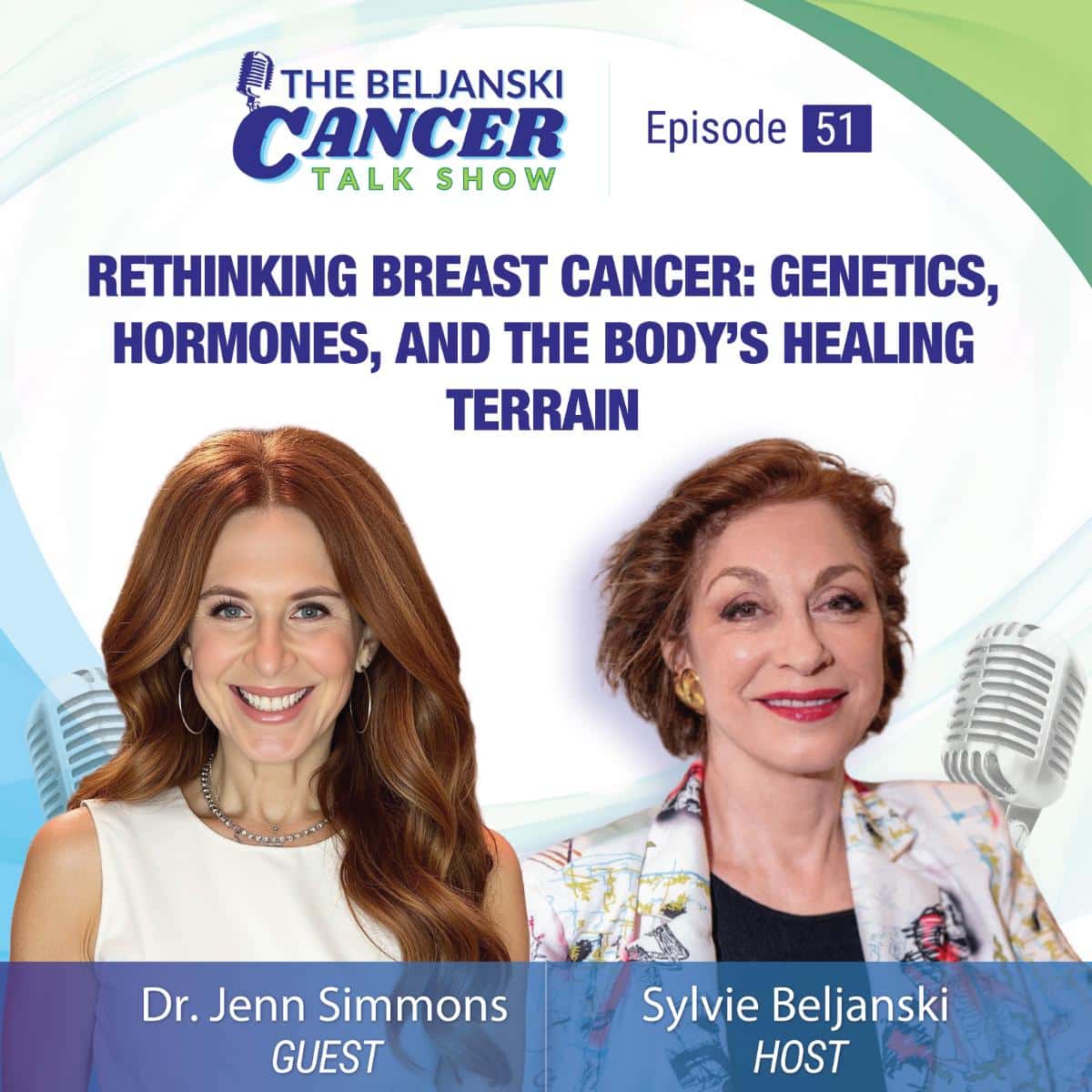
Episode 51: Rethinking Breast Cancer: Genetics, Hormones, and the Body’s Healing Terrain
In this episode of the Beljanski Cancer Talk Show, Dr. Jenn Simmons shares her powerful journey from conventional breast cancer surgeon to [...]
Stream Now
Episode 32 – Are You Overlooking These Essential Cancer Prevention Tips? Dr. Richard Powers Explains
True healing begins when we treat the whole person—mind, body, and spirit—not just the [...]
Stream Now
Episode 26 – Unlock Vibrant Health with the Power of Energy Medicine with Brian Clement, PhD, LN
Dr. Brian Clement, director of Hippocrates Wellness delves into the power of frequency medicine and offers insights on how to live a healthier life. [...]
Stream Now
Episode 15 – Holistic Approaches in Cancer Prevention and Recovery with Dr. Monisha Bhanote, MD, FCAP, ABOIM
In this episode of The Beljanski Cancer Talk Show, Dr. Monisha Bhanote explores the connection between gut health, oxidative stress, and disease [...]
Stream Now
Keep yourself updated!
Sign up below if you want to hear more about the weekly updates of The Beljanski Cancer Talk Show!
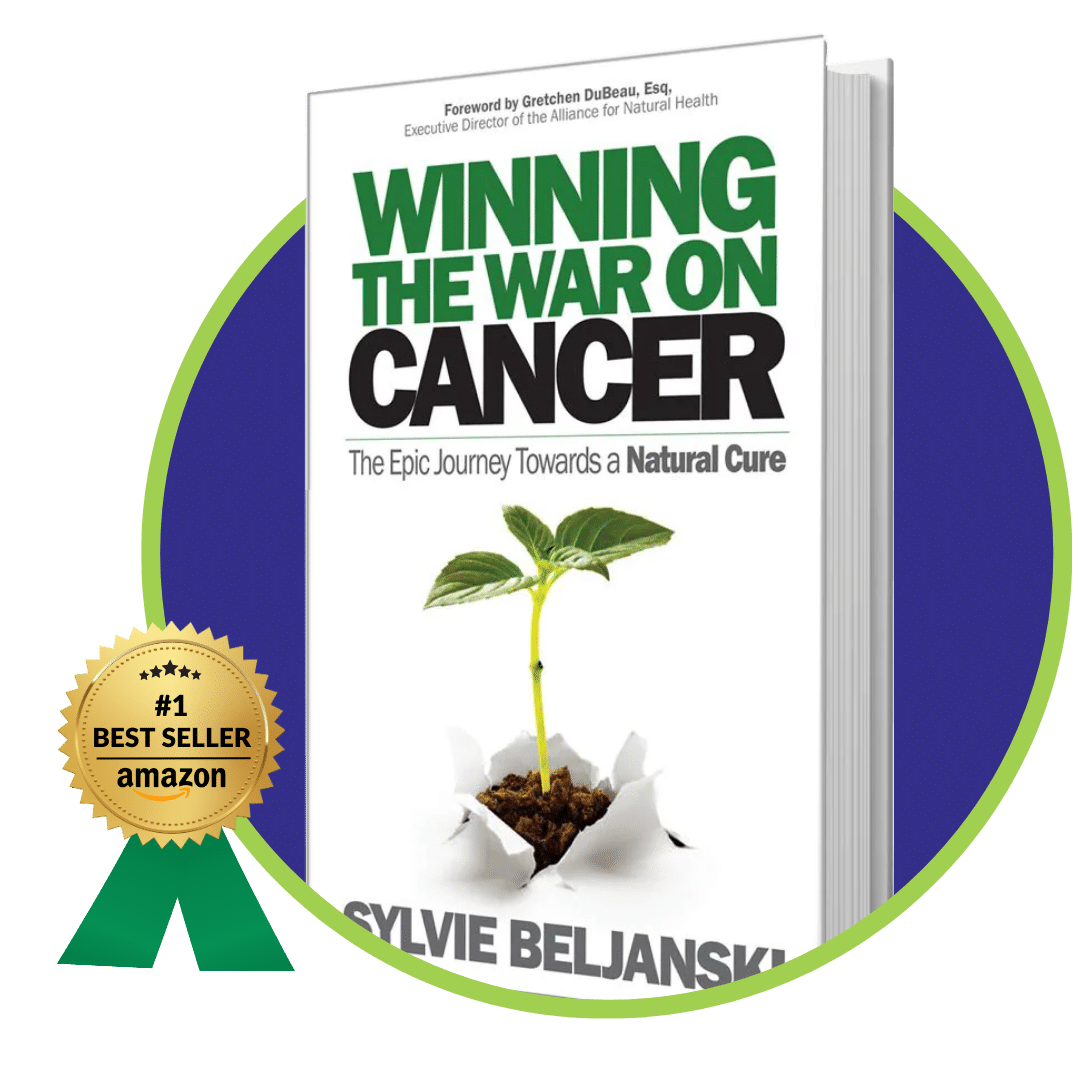
Award-Winning Book On Naturally Fighting Cancer
“For me personally, I think that Winning the War on Cancer by Sylvie Beljanski is one of those books that people should read. I have for a long time believed more in natural remedies than pharmaceutical cures, so I was involuntarily drawn to read the book.
It still preys on my mind on how the government can take up war against something that can save a lot of lives. I mean I know that a sort of thing like a more natural cure would likely actively threaten the pharmaceutical industry, but isn’t the industry on the side of saving people with something that has very little, or indeed no, toxicity at all? It’s so eye-opening and harrowing and I can’t yet state how I feel about everything that I learned.
I would recommend the book to anyone because many people these days are constantly being kept in the dark about natural remedies. What I love most about the book is that, though the book’s main point is cancer and its treatment, it also touches on areas that are vital to leading a healthy life. It points out the importance of detoxifying our body, especially since we live in a world where toxins are constantly released into the air by our technological marvels.”
4 out of 4 stars – Review by Nmesoma – OnlineBookClub.Org