
Episode 51: Rethinking Breast Cancer: Genetics, Hormones, and the Body’s Healing Terrain
This episode is also available on:








What if breast cancer is not only about tumors, but about the environment within the body where disease develops?
In this episode of the Beljanski Cancer Talk Show, Dr. Jenn Simmons shares her powerful journey from conventional breast cancer surgeon to integrative physician after facing a breast cancer diagnosis herself.
She explains why the current medical model focuses too heavily on tumors instead of the internal terrain that allows disease to grow. From immune health and toxic exposure to emotional stress and hormonal balance, Dr. Simmons explores how women can better understand their bodies and take a more proactive role in prevention, screening, and healing.
🔑 Three Key Takeaways
- Discover why breast cancer may reflect deeper imbalances in the body, including immune dysfunction, toxic load, metabolic disruption, and chronic stress.
- Understand the difference between genetic risk and environmental influence, and how lifestyle and epigenetics shape whether cancer develops.
- Learn how integrative approaches to screening, immune support, stress regulation, and hormone health may help women prevent disease and support recovery after diagnosis.
⏳ Introduction and Dr. Simmons’ background
⏳ 03:05 Family history and personal journey with breast cancer
⏳ 05:59 The shift from conventional to holistic cancer care
⏳ 09:15 Discoveries about tumor as a symptom, not the problem
⏳ 11:33 Genetics vs. environment in cancer risk
⏳ 16:22 Safer screening methods and their importance
⏳20:04 Alternative tests for early detection
⏳22:08 Immune health and stress management in cancer prevention
⏳27:26 Addressing trauma and emotional health
⏳34:42 Hormones and breast cancer: Myths and truths
⏳42:20 Upcoming conference and Dr. Simmons’ talk
⏳43:48 Dr. Simmons’ book and final thoughts
Dr. Jenn Simmons (00:00.108)
Let me start off by saying that estrogen is the hormone of life. So that whole narrative that estrogen causes breast cancer or hormones cause breast cancer, that is a narrative that was very intentionally created for the purposes of selling pharmaceuticals. Period. End of story. If women are deprived of estrogen, then they get

brain fog, headaches, memory problems, sleep problems, anxiety, depression, reflux, weight gain, joint pain, osteopenia, frequent urinary tract infections, frequent yeast infections, painful sex. I could go on and on and on, right? And for every symptom, isn't it convenient that we have a drug for that? So if women are deprived of estrogen, then

the pharmaceutical companies can have them on one, two, three, four, five, six, seven, eight, nine, 10 pharmaceuticals easily.

Sylvie Beljanski (01:09.912)
Welcome to the Beljansky Cancer Talk Show where integrative science and holistic healing come together. I am Sylvie Beljansky and in each episode we explore nutrition, lifestyle, mental health and research-backed approaches to support the whole person through cancer and chronic diseases. Hello everybody. Today I have a very special guest, Dr. Jen Simmons and I am very, very excited with this.

looking forward to this conversation with her. She's a very special lady because not only she did not step away from breast cancer surgery, she walked out and sparked a revolution. As a founder of Real Health AMD and Perfection Imagine, she's disrupting the fear, confusion and medical dogma that

come with controlled breast health for generations. The author of the Smart Woman's Guide to Breast Cancer and the unapologetic host to Keeping a Breast Podcast, is redefining how women are diagnosed, treated, and screened, and giving them back the power they should have had all along.

So Jen, welcome to the Belgiansky Integrative Cancer Podcast. Thank you so

Dr. Jenn Simmons (02:37.951)
Thank you. I'm so happy to be here with you. Happy to see you and your beautiful face

Sylvie Beljanski (02:43.15)
Thank you. Thank you so much. I have a question for you because I mean, becoming a breast cancer surgeon is such an achievement. I am sure you did not, you know, achieve that just for the sheer pleasure to walk away. So what happened?

Dr. Jenn Simmons (03:05.762)
Yeah, it's a great question and probably involves a little bit of insanity and grandiosity. But what happened is, first of all, my family is from France, just like you, and I'm born into a breast cancer family on my grandfather's side. And my grandfather was one of 13 and all of his female siblings died of breast cancer and all of their children.

And so I come from a very big family with a lot of breast cancer. And I never knew a time in my life where I didn't know about breast cancer. was absolutely part of the fabric, the tapestry of our family. And growing up, one of my first cousins, her name was Linda Creed. She was a singer songwriter in the 1970s and 1980s, wrote all the music for the spinners and the stylistics. She was the queen of Motown sound in Philadelphia.

brilliant, beautiful, larger than life, and she was my hero. So Linda wrote 54 hits in all, but her most famous song was The Greatest Love of All. So she wrote that song in 1977 as the title track to the movie The Greatest starring Muhammad Ali, but it really received its acclaim in March of 1986 when Whitney Houston would release that song to the world, and at that time it would spend 14 weeks at the top of the charts. Only my cousin Linda would never know because she died of metastatic breast cancer.

one month after Whitney released that song. I was 16 years old and my hero died. Her life and ultimately her death gives birth to my life's purpose because I never want another woman, another family, another community to have to suffer the way that mine suffered. And so I did the only thing I knew how to do. I became a doctor, the first doctor in my family. I became a surgeon. I became the first fellowship trained breast surgeon in Philadelphia, the first oncoplastic surgeon in Pennsylvania.

And I did that really well and for a really long time. And I did it long enough for my aunt to be diagnosed and long enough for my mother to be diagnosed. And then at 46, it was my turn to hear those words. And I'm sitting in the office of my friend and colleague and physician. And he tells me that I need surgery and chemo and radiation and all these things that I say all day, every day without hesitation or reservation. And yet when these words are coming at me,

Dr. Jenn Simmons (05:29.346)
They have different meaning. And I don't know what made me say no in that moment. I don't know where I got the confidence to say no in that moment. I can tell you that there was this voice in my head, again, you can call it God, universe, insanity, like whatever you want to call it, saying there's something more, go find it. There's something more, go find it.

And so I go on this quest to find something more. I had no idea what it was that I was going to find or if I was going to find anything because here I am, a conventionally trained doctor running an NIH accredited cancer program. I didn't know of something more, but God is good. And in very short order, I'm sitting in a room. This tall, lanky guy walks on the stage, introduces himself as a functional medicine physician. Now at this point,

I'm a doctor for 20 years and all I can think of is there's no such thing as a functional medicine physician. What is this quack talking about? And then I remember that I'm sick and I'm there for a reason. So I checked my big fat ego at the door and I tune in and what I learn over the next two hours of my life literally changes everything for me, changes everything. It changes.

the way I think about disease, the way I think about cancer, the way I think about medicine. And mostly what I walk away from that day with is that as a cancer surgeon and cutting out the cancer, I am focused on the wrong thing because what we're focused on grows. And I'm all focused on the tumor, like the entire medical system is focused on the tumor. But the tumor is not the problem. The tumor is the symptom of the problem.

And if all I'm doing is removing the tumor, then I am not changing the trajectory of anyone's life. Because what is to stop the tumor from coming back? And what is to stop the next manifestation of the disease if you never deal with why that person got cancer in the first place? And what I also learned on that day is that I was playing small. I was helping women with breast cancer one by one in an operating room.

Dr. Jenn Simmons (07:54.124)
what I meant to do, what I was put on this earth to do became crystal clear to me. I was meant to help millions of women, not the thousands I would touch in the operating room, but millions of women and help them not only to recover from a breast cancer diagnosis, but God willing, God willing, God willing, prevent women from ever have to suffer from a breast cancer diagnosis. And so,

Even though I'm not grateful for having become a patient, having become a patient allowed me a perspective that I would have never otherwise had. Because I did go to medical school and I did train to be a surgeon thinking that that was the be all end all and that was how I was going to help that, how I was going to contribute. But the truth is that that wasn't enough. And something major had to happen to me.

to allow for a shift for me to understand that I was meant to be so much more and I was meant to forever change the conversation around breast cancer.

Sylvie Beljanski (09:05.719)
So what did you discover and how did you get to help thousands of women?

Dr. Jenn Simmons (09:15.374)
So mostly what I discovered is that in the world of chronic disease and specifically cancer, we as medical professionals, we're entirely trained to focus on the tumor. And the tumor is not the problem. The tumor is the symptom of the problem. Now, this is not to say that we don't need to direct any attention towards the tumor. Of course we do.

Right? We need to control that process. So I'm not throwing the baby out with the bathwater. And I'm not saying that there isn't a role for conventional therapy. There certainly is. But in every single instance, conventional therapy can be made better by understanding how we can enable the innate healing ability of our body. Because our body was meant to heal.

We are brilliant machines made perfectly by God. And the reason that we get sick is because we have what we don't need or we need what we don't have. And if you help the body to restore that balance, to restore that equilibrium, it makes the treatments that are directed at the tumor far more effective and it helps to ensure that that cancer isn't going to come back.

because cancer is a normal response to an abnormal environment. And what we need to do is reinstitute an environment that is healthy, that is happy, that is joyous, that is homeostatic. And when you do that, people get well.

Sylvie Beljanski (11:00.686)
Based on your personal experience, where you started by saying, come from a family where all the women have breast cancer, what part would you consider being genetic? And what part would you consider being the family terrain and environment that could produce the good...

a good time for cancer, for developing.

Dr. Jenn Simmons (11:33.672)
I think in the area of breast cancer, this is a particularly relevant conversation because we believe that genetics is everything, right? And so in believing genetics is everything, we kind of hand over our power to chance the system, the universe, right? There's nothing we can do about it because this is just our genes or what...

You know, this is just the roadmap that we're going to be forced to follow. And it couldn't be further from the truth. Even in families like mine, which are breast cancer families, even in families where they have the BRCA mutation, which is a gene mutation that is associated with pretty high penetrance, meaning that if you have that mutation, a lot of people with that mutation will develop the disease.

But 100 % of people who have a BRCA mutation do not develop breast cancer or ovarian cancer or any of the cancers that are associated with that mutation. And that's because there's something else in play. And that's the environment. That's the epigenetics. you can... First of all, we have to understand what these genetic mutations mean. So that change in the gene code, those genes generally...

code for breast cancer or cancer-suppressive genes. So if you have a mutation in one of your cancer-suppression genes, you are more likely to develop cancer because these are gene repairs. These are gene repair genes. These are DNA repair genes. These are cellular repair genes. And so if you struggle,

with cellular repair, eventually you're gonna get to the point where there's more damage than your body can repair and that's when cancer happens. However, if you can look at it conversely that, okay, I know that I have a genetic mutation, so I have to be incredibly conscious about the toxins I come into contact with, how I detoxify my body.

Dr. Jenn Simmons (13:59.118)
and live with awareness and make a conscious effort to create a healthy environment in on and around you. These are the people that don't develop the disease. However, in our society in general, if all you're doing is living within the confines of the conventional medical system, then you are

conditioned to believe that you're eventually going to get this disease. And the things that are recommended to you all but ensure that you get the disease. And I'll give you an example. If you have a BRCA mutation, these women are screened early and often, right? So the more screening, because what we're currently using for screening is mammogram and MRI, the more screening, the more radiation

the Morgadolinium, this is just increasing your toxic load. This is the surefire guaranteed way to get breast cancer.

Sylvie Beljanski (15:08.984)
When you are facing cancer, you are suddenly facing a myriad of questions. Questions about nutrition, lifestyle, mental and emotional support, and how integrative approaches can work alongside conventional care.

The Belgiansky Integrative Cancer Conference brings the conversation together in one place. From June 26 to 28, join leading oncologists, integrative physicians, researchers and survivors in San Diego, California for three days of science-informed all-person cancer care.

These live events expose evidence-based integrative strategies, emerging research and practical tools you can apply immediately while connecting with the communities that understand the journey. Whether you are a ten-year person or virtually, this conference is designed to educate, empower and support informed decision-making. Learn more and reserve your spot at integrativecancerconference.com.

because better outcomes begin with better conversation.

Dr. Jenn Simmons (16:22.86)
The more screening you have, the more likely you are to be diagnosed with breast cancer. Period. End of story. Now, if instead you approached it in a way that you're still screening, absolutely, but you're doing things like using the ARIA test, which is the tears test to determine if you have the inflammatory precursors to breast cancer. And then if you do, being active in

in responding to that, in mitigating your risk, consciously creating an environment that fosters health rather than disease, and doing screening that doesn't put you at increased risk. And there was a time when that wasn't available, but that time is gone. Now there's QT scans. Now there's high resolution ultrasounds. Now you have a choice of screening that is one

100 % safe. And that's what everyone should be doing, high risk or not, because no one should ever be putting themselves in harm's way for the purposes of screening. for everyone, but especially the BRCA mutation or the mutation carriers, everyone should be safe screening using the ARIA test, the TIRS test, and using either QT or ultrasound. But no one should

ever be putting themselves in harm's way or exposing themselves to radiation or gadolinium for the purposes of screening. Ever.

Sylvie Beljanski (17:56.61)
Yeah, I don't know who came up with the idea that it could be safe to flatten and radiate a healthy breast until it becomes cancerous.

Dr. Jenn Simmons (18:06.636)
Right. So it's not even the person that came up with it, which of course was a man, but it's not even that. It's that we have allowed this narrative to go on for 60 years. There has never ever been a study that shows that mammogram increases survival. There's never been a study.

Sylvie Beljanski (18:35.342)
So tell us more about those alternative testing that are available to women, please.

Dr. Jenn Simmons (18:42.542)
So I believe every woman should be screening, but screening safely.

Sylvie Beljanski (18:50.548)
How often do you think they should screen?

Dr. Jenn Simmons (18:54.936)
I think it depends on your own personal risk factors. And I think that this is a conversation that you should be having with your provider. That said, when screening is 100 % safe, it doesn't matter how often you screen because you're not putting anyone at any risk. So for people who are of average risk, I think you should be doing the tears test every year. And you should probably be doing

some kind of imaging, either QT or ultrasound. And if there are no findings on those screenings and your ARIA test is negative, you should keep doing the ARIA test every year, because things change and the ARIA test is not looking for cancer, it's looking for inflammation. So it's looking for the precursors to cancer in an attempt to prevent a diagnosis. Because if you can...

identify it before the disease starts, that's true prevention, right?

Sylvie Beljanski (20:00.782)
Where can you get those alternative tests?

Dr. Jenn Simmons (20:04.696)
So the ARIA test is just ordered online, aria.care, A-U-R-I-A.care. And if you use my code, drgen20, D-R-J-E-N-N 20, you get 20 % off. It makes it $160 test that you just do from the comfort of your own home. It's a five minute painless, 100 % safe test. Okay, so that's what everyone should be doing every year unless you have a genetic mutation.

and then if you have one of the high risk, high penetrance gene mutations, you should be doing that test every six months. Then as far as imaging goes, imaging is generally once a year, but if you are in that high risk category, and as long as you're doing something that is 100 % safe, you can do it every six months if that makes you feel more comfortable.

If you're doing the ARIA test along with it, it's probably not necessary to do it more than every six months unless you have some reason. But I am talking about the asymptomatic population now. I'm talking about women who don't feel a lump in their breast, don't notice a change in the appearance of their breast, like they have no reason to believe that they have breast cancer. And so I wouldn't screen them more than

than once a year. I just don't think it's necessary. And I think that for the benefit of the system, we've been sold this whole narrative that you should be screening every six months. But all I think that does is develop more anxiety, more expense, and more disease for women.

Sylvie Beljanski (21:52.078)
And how do you assess also the immune health and the way, I mean, people have the capacity, their own capacity to fight cancer when there is a risk?

Dr. Jenn Simmons (22:08.27)
That's a great question and one that is not asked enough. So I think if we would screen people for the health of their immune systems and screen people for the health of their metabolic systems with the same vigor that we screen for breast cancer, we would have far less breast cancer, right? So what I'm doing with everyone as part of my overall screening, because I do have a comprehensive

breast cancer screening program, we are doing the ARIA test, we are doing a CBC to look at your white blood cell count because your white blood cell count should be above 5.5. And if it's not above 5.5, there's a reason why. There's something draining those white blood cells. So it can be everything from you're not sleeping enough, you're not exercising enough, or you're exercising too much.

You are not breaking down your food well and your immune system is being drained by what's going on in your gut, or you're exposing yourself to things in your diet that are not seen as food by your system for whatever the reason. But if your white blood cell count is less than 5.5, there is definitely some chronic drain on your immune system.

It's breast cancer is the intersection of cellular damage and immunodeficiency. And so many of us are walking around in these immunocompromised states. So many of us and completely unknowingly. And we think like, well, I didn't have chemotherapy or I didn't, I haven't taken a ton of antibiotics. And so we don't think.

that there's anything wrong with our immune system. And we don't realize that for people who are walking around in this perpetually stressed state, they don't realize that their immune systems are shifted off because we only understand two states. We understand safety and we understand danger. And if we feel as if we're in danger, we only understand very primitive dangers. We only understand

Dr. Jenn Simmons (24:33.388)
we are being chased by a saber-toothed tiger. We don't understand deadlines. We don't understand marital woes. We don't understand financial challenges. We understand saber-toothed tigers. And everything that is stressful to us feels like a saber-toothed tiger. So your brain says, well, if I am imminently going to be eaten by a saber-toothed tiger, I do not need to worry about the common cold. Or I don't need to worry about

a cancer that will kill me in 10 years because I'm going to be dead in 15 seconds, right? Except the tigers never go away. So our immune system never gets shifted back on. And so these cancers are allowed to develop and allowed to propagate because our immune system doesn't come back online unless you do things to consciously bring the immune system back online. Like,

having a tool or tools to deal with those stressors, having the ability to flip that switch back on because you are calm and managing the stress and able to put yourself into that parasympathetic rest and repair state and doing things like Immunobel Pro. I I use your products, I have to tell you all the time, all the time.

Because you can have people learn how to put themselves into a parasympathetic rest and repair state, but if they're still getting chemotherapy, it's like trying to tell water not to run downhill, right? You're gonna need some help. You're gonna need some support. And that's where your products come in for me. And I use them on everyone who is in active treatment.

everyone.

Sylvie Beljanski (26:32.574)
Well, thank you. Thank you for your trust and for saying those things. You are speaking of the fear and the danger and how people are not processing the real issues and that come to questions that people don't understand very often why they are where they are and that creates some...

a lot of emotional imbalance and anxiety. And it's difficult to separate mental health from physical health. And both can lead also to this cancerous state. How do you address the why of the people who are so, so many of them, especially nowadays are kind of lost the vision of their.

Dr. Jenn Simmons (27:26.026)
No, you're so right. And so many providers, well-intentioned providers who really want to help people, but they never help them get to their why. And that is such an important aspect. And you can eat a perfect diet, you can sleep at night, you can exercise. And if you don't deal with that trauma,

that you relive every single day from your childhood, you're still going to be in that fight or flight state. You're still going to be in that sympathetic dominant state. And I think every provider needs to be having these conversations with their patients about, tell me about the trauma in your life. And a cancer diagnosis alone is a trauma.

But nearly everyone who comes to the table, nearly everyone who gets a cancer diagnosis, there's something there. There's something there that maybe they're conscious of it and maybe they're not. And not that we all need to be trauma experts. Of course, we're not going to be. But we need to recognize that it's present and we need to help people to recognize and see it in themselves.

And I think when you look statistically, if you look at women with breast cancer diagnoses, if you look at early breast cancer, 30 % of them will report having trauma in their past. But if you talk to women with metastatic disease, 80 % of them have trauma in their past. So this is not a negligible thing. It's very, very real.

I know in my patient population, people always want to talk about what should I eat and what should I drink and what supplements should I take? And I get it that they want to talk about that. But what I want to talk about is, tell me what happened to you last year or the year before. Because we're all born with this bucket, right? And everyone is spending their life

Dr. Jenn Simmons (29:49.614)
filling their bucket with all the toxins. And some people have a big bucket and some people have a little bucket. And it doesn't matter, it just matters once that bucket gets full, it just takes that one drop of water to make the entire bucket just spill over, right? And that's what a cancer diagnosis is. We've just exceeded our body's ability to deal with our toxic load, to deal with our allopathic load.

And there's, in my experience with my patients, when I ask them, tell me about the last two years of your life, because there's things before that that filled the bucket definitely, but I always find the drop. They either lost their job or had some significant life event that was negatively impacting them. They got separated, they got divorced, their spouse cheated on them.

They lost their parent. They lost their sibling. God forbid they lost their child. There's always something there. There's always that trigger, that straw that broke the camel's back. There's always that last thing that put them over the edge.

Sylvie Beljanski (31:07.086)
When you are facing cancer, the choices can feel overwhelming, conflicting advices, endless options, and very little clarity. At Maison Belchanski, everything begins with science. For decades, molecular biologist Dr. Mirko Belchanski studied how specific plant extracts interact with cancer cells, work that continues today through independent research and real-world use.

Maison Beljanski offers carefully formulated supplements inspired by that research, along with targeted support for immune health, cellular resilience, digestion, detoxification, and overall wellness. You will also find educational books, organic teas, personalized health coaching, and wellness programs designed to support the whole person, not just the diagnosis.

This is not about quick fixes. It's about informed choices, thoughtful formulations, and supporting the body alongside conventional care. Explore the products, the research, and the resources at maisonbelchanski.com. Because when science leads, wellness follows.

Yeah. And it's breaking the camel's back because their immune system was not strong enough in the first place. That's right.

Dr. Jenn Simmons (32:33.718)
what little they had left of their immune system because nearly all of us are walking around immune challenge now. And I don't know if you want to get into what happened in 2021 and how that affected the immune system of millions and millions and millions and billions of people. But, and for some people that was their trigger, right? Not the virus, but the thing that people took to...

allegedly prevent the virus, which didn't know such thing. But if you're already weak and someone throws something else on to you, you're going to break. And that's what happens. That's what happens is that people are already walking around with a weakened immune system, with an immune system that is already just, just barely holding on. And then you put something else on them.

And that's it. That's what they can't come back from.

Sylvie Beljanski (33:33.358)
That's it.

Sylvie Beljanski (33:37.518)
Speaking of putting something else, mean, for women, we cannot avoid to speak about hormones also, and the decision to add hormones, I mean, for young women to limit their fertility and then for older women to replace what they have lost from their youth. How do you feel about adding that? Do you look at that as an additional disturbance?

or as a way to replenish what should be as a doctor.

Dr. Jenn Simmons (34:13.176)
Let me start off by saying that estrogen is the hormone of life. So that whole narrative that estrogen causes breast cancer or hormones cause breast cancer, that is a narrative that was very intentionally created for the purposes of selling pharmaceuticals. Period. End of story. If women are deprived of estrogen, then they get

brain fog, headaches, memory problems, sleep problems, anxiety, depression, reflux, weight gain, joint pain, osteopenia, frequent urinary tract infections, frequent yeast infections, painful sex. I could go on and on and on, right? And for every symptom, isn't it convenient that we have a drug for that? So if women are deprived of estrogen, then

the pharmaceutical companies can have them on one, two, three, four, five, six, seven, eight, nine, 10 pharmaceuticals easily, easily, right? What we have to remember is if you believe that hormones cause breast cancer, then you have to believe that women were put on this earth for the purposes of developing breast cancer, right? It is literally impossible.

literally impossible. Now, what I'm talking about is bioidentical hormones, because there is indisputable evidence that synthetic non-bioidentical hormones specifically progestins, not progesterone, not the hormone that we endogenously make in our body, but the synthetic non-bioidentical progestins, they absolutely are

mutagenic, meaning that they can mutate the cells. They are carcinogenic. They are cancer causing. But, and so this is the compound that is found in birth control pills. This is the compound that is found in any hormonal birth control formulation. This is also the compound that was found in PremPro or what they used in the Women's Health Initiative study, which is why

Dr. Jenn Simmons (36:40.608)
and also in the European studies like the IMPACT trial. And that's why we saw increased levels of breast cancer in those groups. However, when you're talking about bioidentical hormones like estriol, like estradiol, like progesterone, like testosterone, there is no increased risk of breast cancer. And when you're talking about women who have

had breast cancer, notice I'm not saying have, but had breast cancer, if you give those women bioidentical hormones, they also have no increased risk of recurrence. And in fact, when you look at women who are on hormone replacement and get breast cancer, they have better outcomes as compared to their cohorts who were not on hormone replacement and get breast cancer.

And conversely, when you look at women who had breast cancer, the women who had breast cancer and take hormones, bioidentical hormones, have better outcomes than the women who had breast cancer and don't. So in every scenario, bioidentical hormones are beneficial, not just for the purposes of not getting breast cancer, but for the purposes of the

other things that really affect life, quality of life and lifespan. So less dementia, less heart disease, less osteoporosis, less depression, less anxiety, less sexual dysfunction, everything across the board. So we have to remember that that whole narrative, that entire narrative, that whole anti-hormone narrative

was there for the purposes of selling pharmaceutical drugs and not for the purposes of helping women. And we suffered for 20 years under the misinformation of the Women's Health Initiative and millions of women died prematurely and unnecessarily because of it. And while there are lots of loud voices out there in support of hormone replacement,

Dr. Jenn Simmons (39:05.748)
in the non-high risk or non-breast cancer population, there are seldom few that are out there saying the things that I'm saying. And I know it's because they fear their medical licenses at risk or whatever, but the truth is that there is simply no data to show that hormones put women at any kind of increased risk. And when you are doing it thoughtfully and when you are

actively managing the foundational pieces of health and wellness. Hormones, they're not the be all end all, right? There's no magic, there's no magic pill for anyone. And I treat hormones exactly the way that they should be treated. They are the bow on top of the box. And the box is filled with all of those foundational things that we know create health. And when you have them in place, you know.

that you can put that bow on top of the box and that woman's health will just be enriched because of it. And that's how I see it. And there's nothing to indicate that it's different than that.

Sylvie Beljanski (40:15.576)
Cancer enters your life. The questions don't stop at treatment. You start asking why, what else, and what more can I do to support my body? At the Belzhansky Foundation, we believe cancer care deserves deeper answers, answers rooted in science, not in shortcuts.

For decades, groundbreaking molecular research by Dr. Mirko Belzhansky explored how specific natural compounds selectively target cancer cells while spearing healthy ones. That work continues today through independent research, education, and global collaboration.

At belgianski.org, you will find evidence-based resources, expert-led conferences, books, and conversations that explore integrative approaches to cancer and chronic disease alongside conventional care. Whether you are a patient, a caregiver, or a practitioner, this is the place to learn, to question, and to think more expansively about healing.

Visit belgianski.org to explore the research, attend upcoming events and connect with the Belgianski community. Because informed choices begin with credible science. You are indeed, I'm sure, helping a lot of women in America to get better, feel better about themselves, their emotions, their drive, their hormones, feeling better, their immune system.

and avoiding cancer and how to address cancer when they have been diagnosed. Thank you for everything that you are doing. I'm sure that a lot of women will want to attend your conference. You are going to come to speak in San Diego in the integrative cancer conference. We are very much looking forward to having you. What is, do you know already what kind of the topic of your choice?

Dr. Jenn Simmons (42:20.942)
So I'm going to talk about the safety of hormones in the breast cancer population, but I'm also going to be talking about all the things that you need to be doing in order to use hormones safely. There is a process and a ramp up period, and that process is getting your metabolic health intact, supporting your immune system, and all the things that we know drive health.

And then once you have that in place, you can safely add hormone replacement in. So it's really how to tie your life up with a bow.

Sylvie Beljanski (43:02.604)
beautiful and I'm sure this is going to be a highlight of the conference.

Dr. Jenn Simmons (43:08.066)
Well, I'm very much looking forward to it. The Beljansky Conference is always such an amazing, amazing conference because it brings together providers and patients and it's just an amazing atmosphere for people to really engage and learn and support one another. I like it so much because of its size and accessibility and

It's just a really beautiful place and experience and I think everyone gets a lot out of being there.

Sylvie Beljanski (43:39.887)
Thank you so very much. You have a book also. You are going to come with books and signed books. Can you show us and tell us?

Dr. Jenn Simmons (43:48.566)
I I'm going to bring the Smart Woman's Guide to Breast Cancer. This is my first book. I'm working on my second book now, which is called The Forgotten Woman, which is that is about life after breast cancer and how to recover. But what's in the Smart Woman's Guide to Breast Cancer is everything that everyone needs, both to help them recover from a breast cancer diagnosis, but also how to prevent a recurrence.

So this is required reading for everyone with a breast cancer diagnosis. But the interesting part is that as much as the women with breast cancer enjoy my book, they also give it to their daughters and their sisters and their friends and their neighbors because really everyone benefits from the

Sylvie Beljanski (44:39.176)
course, everyone needs to be prepared, you never know.

Thank you so much, Dr. Simmons. Thank you so much. This was really a great, I think, me and for all women who are listening.

Dr. Jenn Simmons (44:53.006)
Thank you, Sylvie. It's so nice to see you and I can't wait to see you in San Diego.

Sylvie Beljanski (44:58.36)
Absolutely. Thank you. Thank you for listening to the Beljanski Cancer Talk Show. If this conversation supported or inspired you, please follow the podcast, share it with someone who may benefit, and leave a review to help others discover these integrative perspectives. For more resources and to see what we offer, please visit Beljanski.org.
Dr. Jenn Simmons is a former fellowship-trained breast cancer surgeon and the founder of Real Health MD and PerfeQTion Imaging. After more than two decades practicing conventional medicine, her own breast cancer diagnosis led her to explore functional and integrative approaches to healing.
Today, Dr. Simmons focuses on helping women understand the deeper factors that influence breast cancer risk and recovery, including immune health, metabolic function, toxic exposures, hormonal balance, and emotional well-being.
She is the author of The Smart Woman’s Guide to Breast Cancer and the host of the Keeping Abreast podcast, where she educates women on prevention, screening, and reclaiming agency over their breast health.
Connect with Dr. Jenn Simmons

Website



Podcast
Related Episodes
Episode 65: She Skipped Surgery for Breast Cancer. This Is Why | Dr. Toni Galardi
Dr. Toni Galardi shares her breast cancer journey and her "disease to please" theory, exploring how boundaries, toxic relationships, and [...]
Stream Now
Episode 55: The Future of Breast Cancer Screening: Beyond Mammograms & Toward Prevention
Discover a new approach to breast cancer screening beyond mammograms. Learn about QT Imaging, prevention through nutrition, and integrative [...]
Stream Now
Episode 16 – Conquering Cancer with Conventional Treatment and Natural Medicine with Dr. Véronique Desaulniers, DC
In this episode, Dr. Véronique Desaulniers shares her holistic approach to breast cancer treatment, emphasizing stress management, emotional [...]
Stream Now
Episode 40: What Are the Best Natural Ways to Boost Immunity? Expert Insights with Sylvie Beljanski
Is your immune system defending you—or turning against you? Discover the simple science-backed shifts to protect your health [...]
Stream Now
Keep yourself updated!
Sign up below if you want to hear more about the weekly updates of The Beljanski Cancer Talk Show!
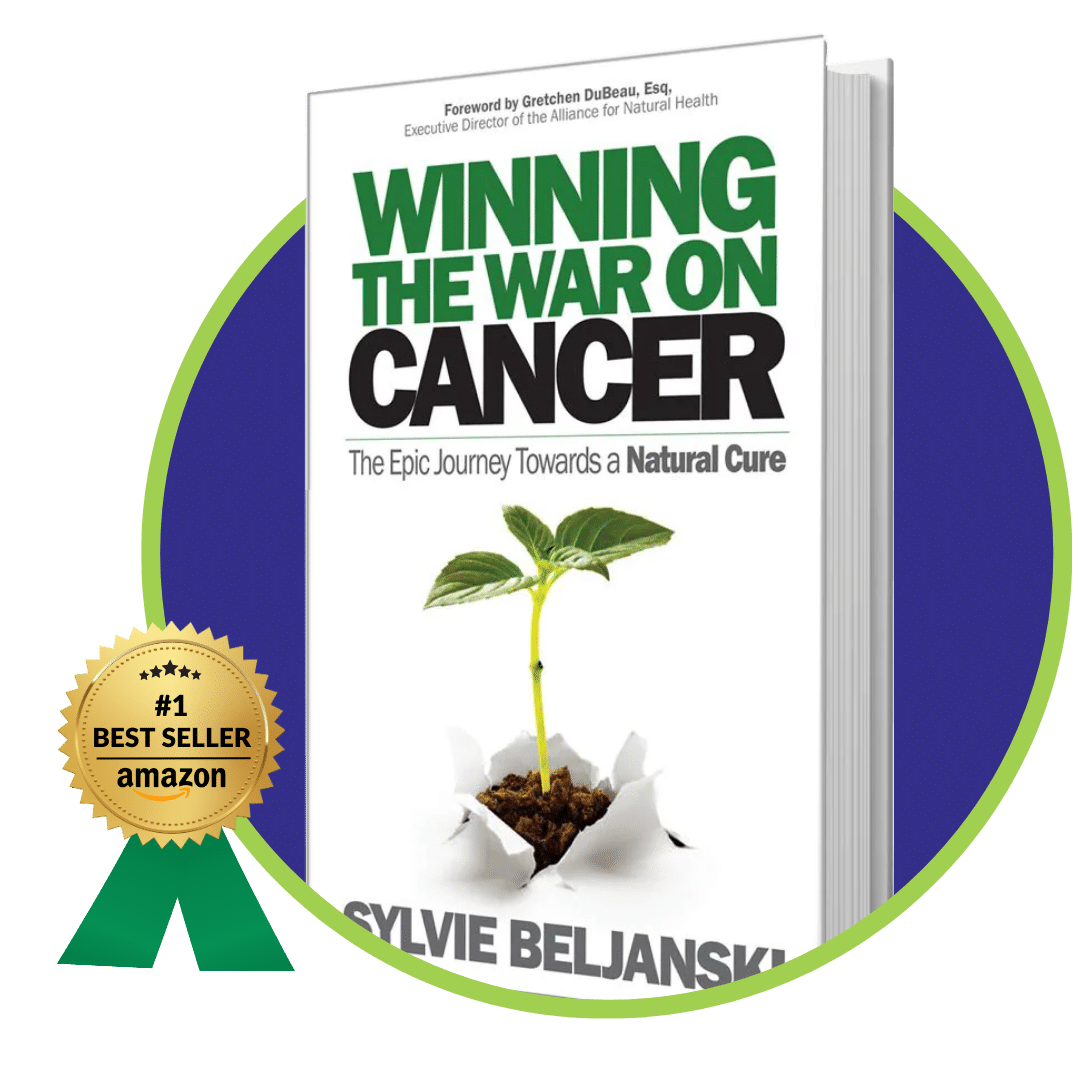
Award-Winning Book On Naturally Fighting Cancer
“For me personally, I think that Winning the War on Cancer by Sylvie Beljanski is one of those books that people should read. I have for a long time believed more in natural remedies than pharmaceutical cures, so I was involuntarily drawn to read the book.
It still preys on my mind on how the government can take up war against something that can save a lot of lives. I mean I know that a sort of thing like a more natural cure would likely actively threaten the pharmaceutical industry, but isn’t the industry on the side of saving people with something that has very little, or indeed no, toxicity at all? It’s so eye-opening and harrowing and I can’t yet state how I feel about everything that I learned.
I would recommend the book to anyone because many people these days are constantly being kept in the dark about natural remedies. What I love most about the book is that, though the book’s main point is cancer and its treatment, it also touches on areas that are vital to leading a healthy life. It points out the importance of detoxifying our body, especially since we live in a world where toxins are constantly released into the air by our technological marvels.”
4 out of 4 stars – Review by Nmesoma – OnlineBookClub.Org